
By Gary S. Vasilash
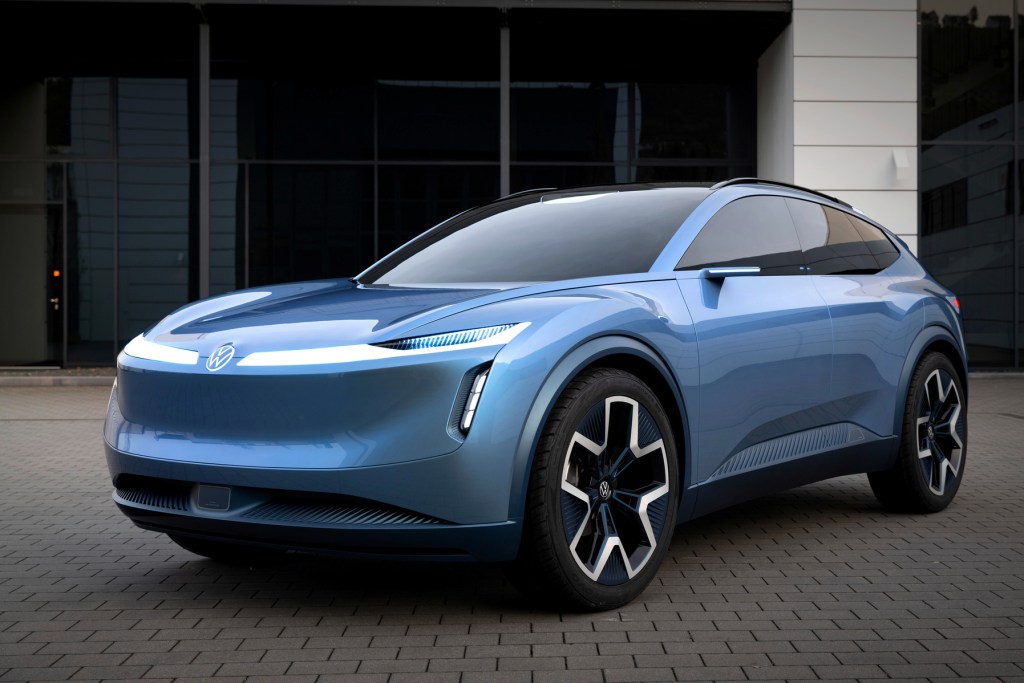
Volkswagen introduced a new electric concept at Auto China 2024, the ID.CODE. And while it is a concept—with a “newly designed living space on board. . .where the real and virtual worlds meet to create a new mobility experience” (no, I have no idea what that means, either)—it is likely to be something that will be coming out within the next few years.
Listen to Oliver Blume, CEO Volkswagen Group, at the company’s China Capital Markets Day in Beijing:
“Over the past 40 years, we have established a robust and very successful business in China. China is a very important market for us and will remain so. There are approximately 50 million of our vehicles on Chinese roads today, and we sell one in three cars worldwide in China. We are therefore proud to call China our second home market.”
So to stay in the game, the Group plans to launch 40 new models in China during the next three years, 20 of which will be electric vehicles, then by 2030 there will be at least 10 new EVs added to that.
To do this, in part, the Group is working with Chinese companies XPENG and SAIC.
It has developed what it calls its “China Main Platform” (CMP) which will be the underpinning for VW brand vehicles in China.
The CMP is engineered to allow the cost of vehicles by 40% by 2026.
It has developed the China Electrical Architecture that it says will further reduce costs.
It has established the Volkswagen Group China Technology Company (VCTC), an R&D center in Hefei.
Through VCTC it plans to reduce the time-to-market for China products by 30%.
While that’s for the Group (the company has divided its brands into Core: VW, VW Commercial Vehicles, Skoda, SEAT, and Cupra; Progressive: Audi, Bentley, Lamborghini, and Ducati; and Sport Luxury: Porsche), the brands have their approaches to the China market.
For example, the VW brand has established three pillars for the China market: a comprehensive vehicle offering; a design language specifically for the market; technical development with Chinese partners to accelerate innovation.
Hmm. . .
Volkswagen Group is betting big on China, which is actually its single-biggest market (it sells more units in Europe, but as a single country, China is the one).
While there is advantage engaging with domestic companies (it owns 4.99% of XPENG), a question is whether Chinese consumers might not have their own “In China, for China” strategy that will focus their purchases on vehicles from Chinese companies.
And to what extent the design approaches and technical developments that it is making in China will be useful in the rest of the world.
After all, should the Chinese consumer not be keen on VW’s “living space on board” and the like, then it surely is going to need to take that investment elsewhere.
 shinymetalboxes