
Because factories have a large carbon footprint. . .
By Gary S. Vasilash
Although the public-facing efforts vehicle manufacturers are making with regard to their environmental credentials are mainly focused on the electrification of vehicles, if the total lifecycle assessment (LCA) of a given light vehicle is assessed, there is an element of that vehicle that is responsible for a considerable amount of emissions: manufacturing.
For a gasoline vehicle, production can account for 23% of its LCA.
For an electric vehicle, which has, of course, no tailpipe, the factory accounts for as much as 46% of its carbon footprint.
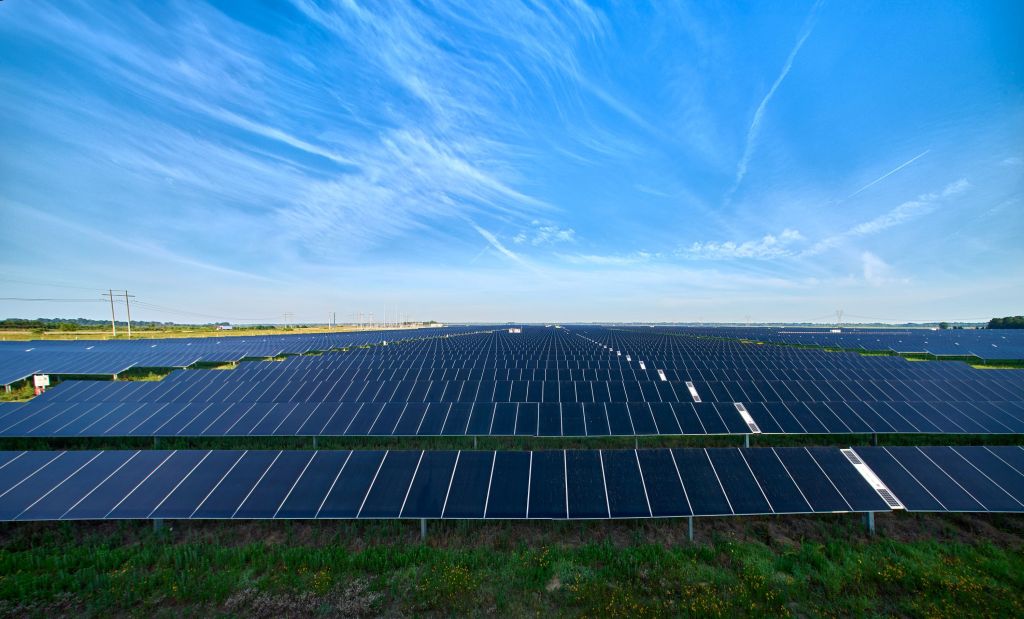
To address factory-related emissions, GM has signed an agreement to source solar power generated electricity for three of its assembly plants.
Electricity will be provided to the Lansing Delta Township Assembly, Lansing Grand River Assembly, and Wentzville Assembly plants via a 15-year renewable energy purchase agreement with NorthStar Clean Energy.
NorthStar’s solar facility in Newport, Arkansas, will be generating the renewable energy that will be sent up to Michigan (for the two Lansing plants) and Missouri (Wentzville).
According to GM, as it has sourcing agreements with 17 renewable energy plants it is the auto industry’s largest buyer of renewable power by capacity, based on BloombergNEF stats.
The vehicle manufacturer plans to have all of its U.S. factories powered by renewables by the end of 2025.
Odds are, unlike predictions of when a given lineup will be full EV, that 2025 plan is undoubtedly going to happen.
 shinymetalboxes