
This time, the vehicle is a hybrid. . . .
By Gary S. Vasilash
The Honda Prelude, which first arrived in the U.S. in 1979, has always been a sporty coupe.
Since its introduction there have been five generations:
- 1979-82
- 1983-87
- 1988-91
- 1992-96
- 1997-2001
Yes, the run ended near the turn of the century.
An issue is simply that sport coupes are pretty much confined to a niche market.
The biggest sales year for the Prelude was back in 1986, when some 80,000 were sold.
Put that number against the number of Accords or Civics sold in a given year, and one might argue that Honda management was nothing if not supportive of the approach to spirited driving provided by the Prelude.
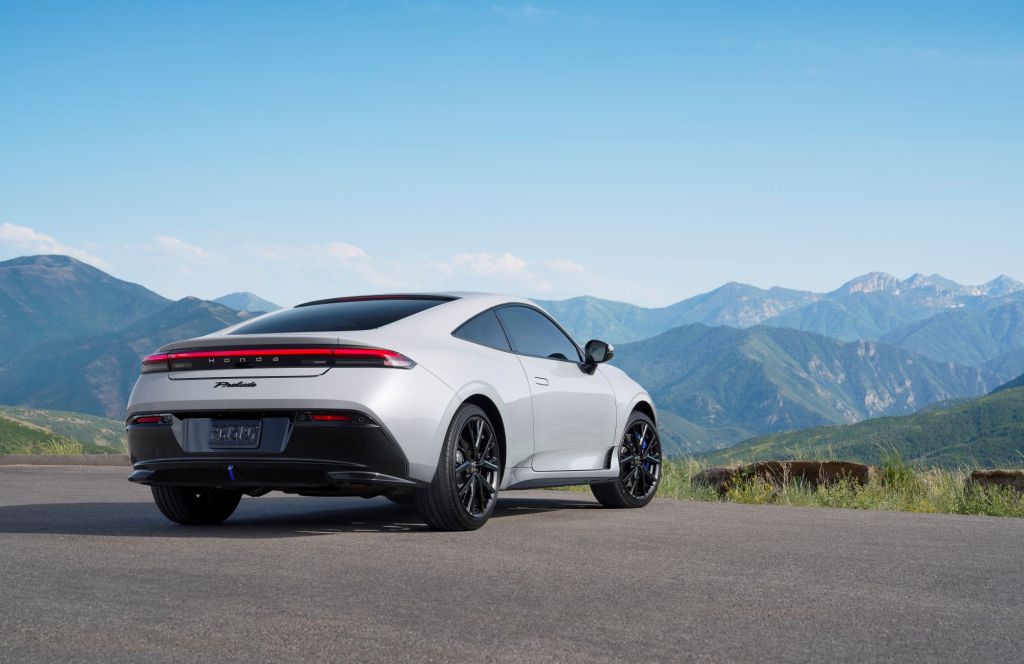
And that spirit will soon be back, as Honda has announced that later this fall the sixth-generation Prelude will go on sale in the U.S.

Yes, it is still a sports coupe.
But what makes this one different is what’s found under the hood:
- A 2.0-liter Atkinson cycle direct-injected engine that is supplemented by two electric motors. The result is a system output of 200 hp and 232 lb-ft of torque.
To help assure the kind of driving performance the Prelude has been known for:
- A new development called “Honda S+ Shift.” This manages the coordination between the engine and the motors, including rev matching and gear holding, that is accessible through the paddle shifters.
- The use of chassis hardware from the Civic Type R, including dual-axis strut front suspension and larger brakes 13.8-inch front rotors with Brembo monobloc four-piston aluminum calipers; 12.0-inch rotors in the back)
- Enhanced Honda Agile Handling Assist, which integrates the powertrain, braking and steering for better control
Of course, sometimes people just want to have a pleasant drive, so there are three drive modes, including Comfort.
No surprise: the other two are GT and Sport.
To simplify things, the two-motor hybrid will be available in one trim.
Not only does this simplify the consumer buying experience, but it also means there is a single model to produce, thereby improving the scale of production, important when it comes to vehicles that aren’t likely to have Civic/Accord-type numbers.
 shinymetalboxes