
Will this be the one that really makes VW a contender in the US market?
By Gary S. Vasilash
Some thoughts about its While many people may associate Volkswagen, still, with the Beetle*, in the US, at least, the Volkswagen brand is predicated largely on, well, with one of the more-popular categories in the market: midsize SUVs.
The VW Atlas, and its sibling the Atlas Cross Sport, both of which roll out of the company’s plant in Chattanooga, Tennessee, had combined sales in the US last year of 102,608 units.
The Atlas alone had sales of 71,044, putting it just behind the Tiguan, which had sales of 78,621, and the Tiguan is in the compact SUV category, which is even more popular than the midsize.
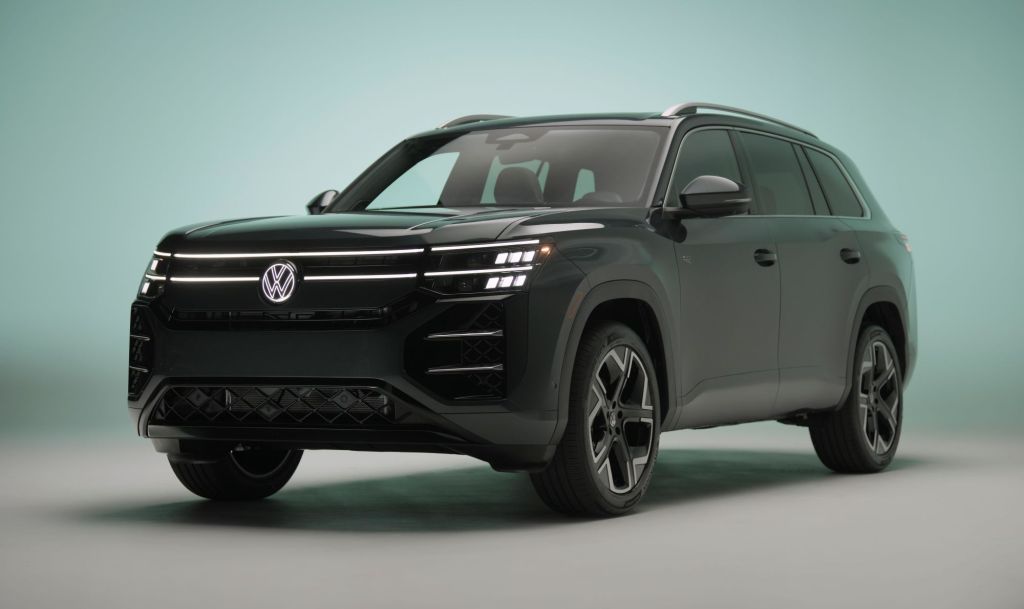
And now VW is upping its game with the second-generation, seven-passenger Atlas.
As Kjell Gruner, president and CEO, Volkswagen of America, put it when announcing the next Atlas, “When we first launched Atlas in 2017, we delivered the space and style the SUV market was missing: practical, well‑designed, and unmistakably Volkswagen.”
Which, of course, is a bit of an exaggeration, as there was an array of three-row SUVs (e.g., Ford Explorer, Honda Pilot, Hyundai Santa Fe, Chevrolet Traverse) that are “practical, well-designed,” but not VW. Of course.
The 2027 has a more aggressive and futuristic front-end appearance than the current model. There are double-stacked LED headlights set in a slab-like surface that projects a sense of solidity.
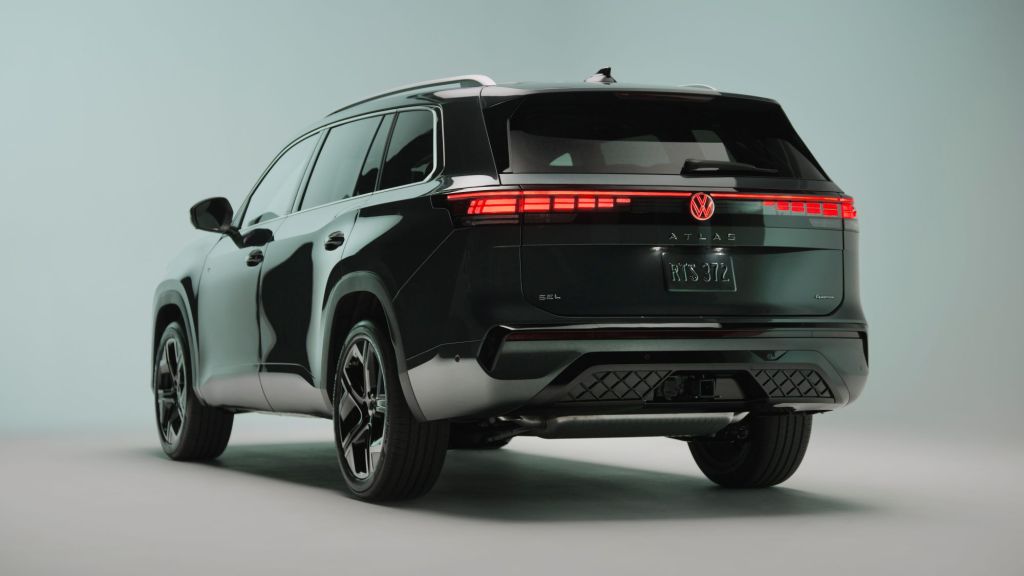
The body side is sleeker, so the notion that this is something created by designers who were deeply influenced by the Brutalist school of architecture doesn’t hold either there, on the side, or when moving around to the back, where there is a more-pronounced spoiler, although it should be noted there is a lower diamond-mesh pattern that echoes the one in the front, so again, some serious elements.
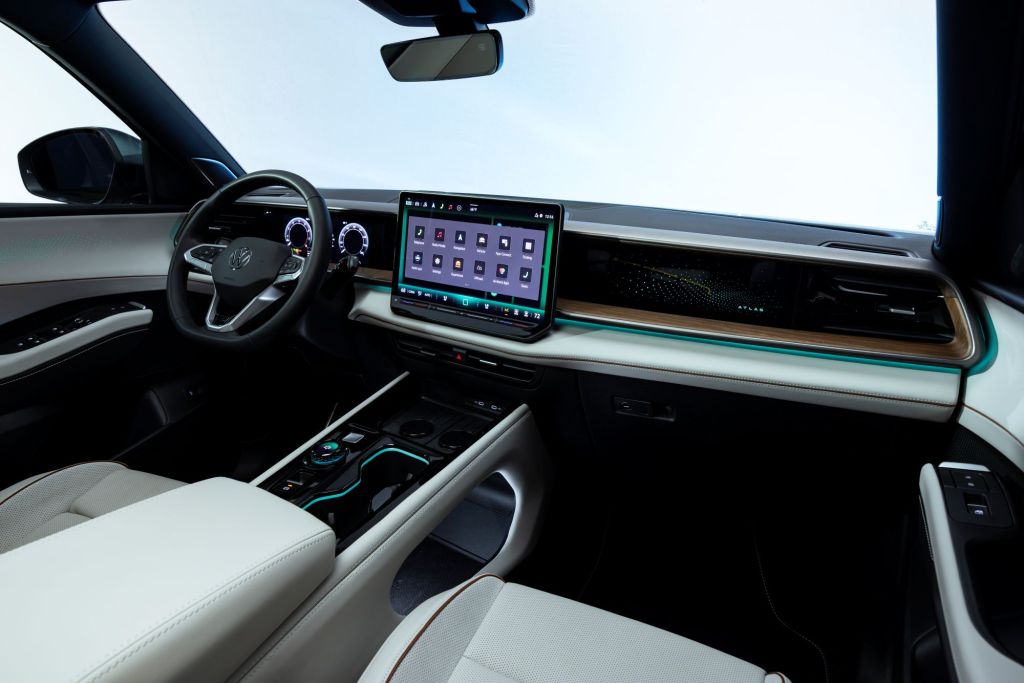
Inside, there is a clean, open look. Whereas one may think of the interiors of vehicles from German brands being a bit too Teutonic, that is far from the case with the new Atlas. Its interior design combines the fresh with the functional.
In the 10 years since the Atlas was introduced the competitive offerings have gotten all the more competitive, particularly in their exterior designs. Although there have been refreshes for the Atlas, including a major one in 2024, which included new front and rear fascias, the 2027 has an appearance that is seriously appealing.
//
*That there is such close association with a vehicle that hasn’t been available new in the US since 2019 is most impressive. There are few auto brands that have established such an icon directly associated with their past and present offerings. VW also has the Microbus in its portfolio, another unmistakable design, which was updated to the ID.Buzz, which, unfortunately, being an electric vehicle, is not doing well in the US market and, as it has limited range (<240 miles), is doing less well than its design might make one think. But ask yourself what is the iconic Chevy or Chrysler? Odds are, ask five people and get five answers.
 shinymetalboxes