
The OEM is contributing to the generation of plenty of green electricity. . .
By Gary S. Vasilash
Although Volkswagen is going through all manner of issues in Europe predicated on things like declining sales in China which has a knock-on effect that reverberates through the entire system, the company is still working hard on the renewable energy front.
“We plan to step up our commitment in the filed of renewable energies each year in line with the development in sales of ID. models,” said Andreas Walingen, CSO and Head of Strategy of the Volkswagen Passenger Cars brand.
He explained: “Through the large-scale development of European wind and solar farms, we intend to support our customers in the region in their efforts to always use their ID. vehicles in a net carbon-neutral way. This shows that our commitment to sustainability goes far beyond the electrification of vehicles.”

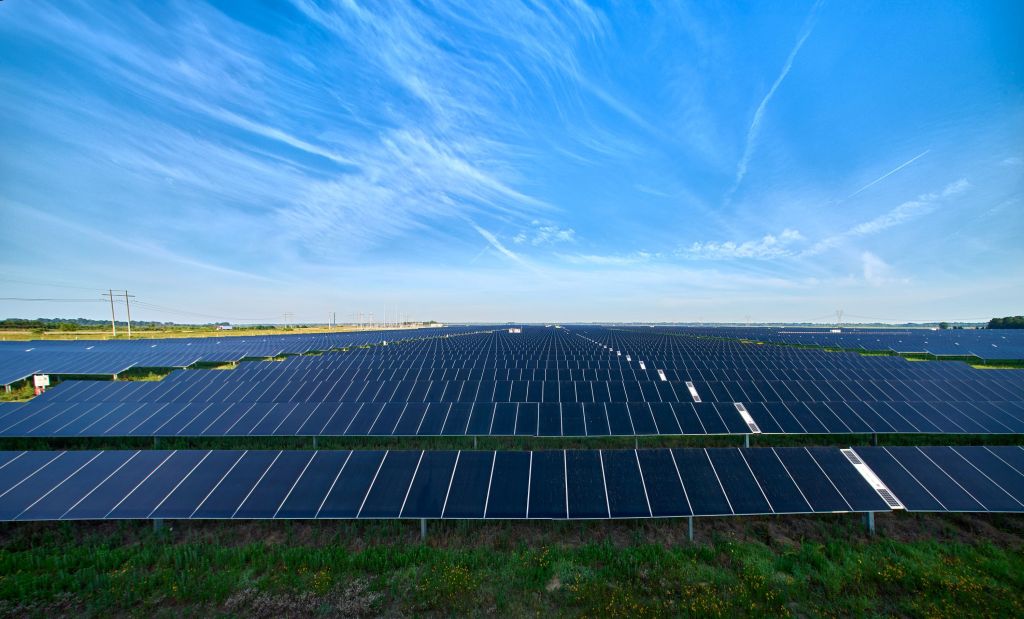
Or, VW is investing in the generation of “green power” that can then be used by drivers of their electric vehicles.
Of course, given that VW is part of the generation of some three terawatt-hours of green energy on an annual basis.
The company performed a life cycle analysis of an ID. model compared with a comparable diesel model. (Yes, there are still diesel vehicles being sold by VW in Europe.) The objective was to determine the carbon footprint of both.
The analysis looked at a period of 200,000 km (or 124,274 miles).
It was determined that an ID.4 Pro has about 25% lower emissions over the life cycle than a diesel vehicle.
“But wait!” you think. “EVs don’t have tailpipes.”
True, but in a life cycle analysis, everything is taken into account, from the creation of the battery to the manufacturing operations to build the vehicle.
Another determination is that if the ID.4 Pro is consistently charged with green electricity, it achieves a lower carbon footprint than a diesel model after some 66,000 km (41,010 miles).
Even if the conventional European Union grid electricity is used the ID.4 becomes lower at 97,000 km (60,273 miles).
So those who are looking to reduce their carbon footprints can know that by rolling in an ID. model they are helping.
Of course, one would imagine that those driving diesels probably aren’t quite as environmentally oriented.
 shinymetalboxes