
Extended range electric vehicles are just the thing for engine manufacturers. . .
By Gary S. Vasilash
Not only is there an array of electric vehicles of all sizes and price points rolling out of Chinese factories, another type of “New Energy Vehicle,” the Chinese government’s term for things that are electrified, that is also proliferating is the extended range electric vehicle (EREV).
Essentially an EREV is like a plug-in hybrid. It uses an internal combustion engine, electric motor and battery. The engine doesn’t turn the wheels, the electric motor does. The engine performs as a generator, adding power to the battery.
If you’re in a company that produces internal combustion engines then hybrids—including EREVs—are ideal because they require what you’re producing, unlike a full battery electric vehicle that sees engines as nothing more than tech that has passed its sell-by date.
HORSE is a company that makes engines. It used to be the powertrain operations of Renault Group. A decision was made to hew it off from the company.
And Geely, the Chinese OEM that is making EVs, EREVs, and other electrified vehicle variants, invested in HORSE.
Renault owns 45%. Geely owns 45%.
The remaining 10%
Aramco. Yes, the petroleum company.
EVs don’t need liquid fuels. Things with engines do.
HORSE is working with Marcopolo, the largest bus manufacturer in South America, and WEG, a Brazilian manufacturer of electronics.
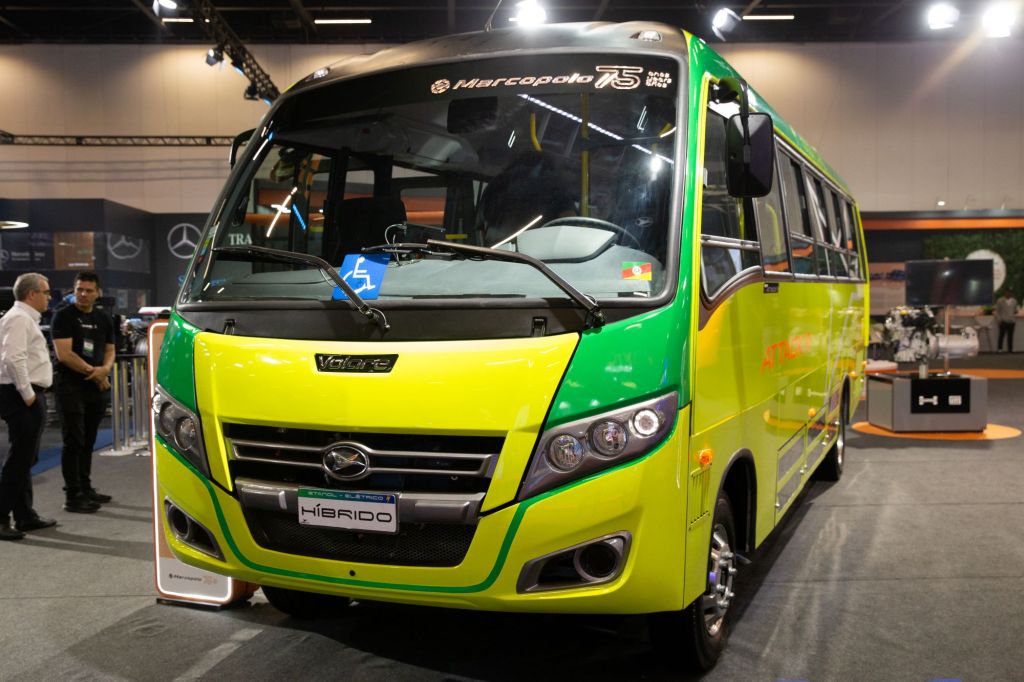
They’ve developed the Volare Attack 9 microbus.
It is an EREV. And its engine will be powered by bioethanol. It’s a 85-kW turbo 1.0-litre, three-cylinder.
The bus, which is to become available in 2026, will have a range of 280 miles.
Certainly a good thing for a microbus.
Patrice Haettel, Chief Executive Officer at HORSE, said: “We hope this will be the start of what will be a range of sustainable solutions using this technology to debut in the region and beyond.”
Yes, more range extenders.
Presumably Geely’s EREV expertise has more than a little to do with the powertrain in the Volare Attack 9.
And the propulsion system makes a lot of sense for those who are not ready to fully embrace electric vehicles or for whom EVs simply don’t make sense.
EREVs in the U.S.?
Wait until next year. Ram will bring out the Ram 1500 Ramcharger to kick things off.
Seems curious how traditional OEMs are lagging in what is likely to become an ever-more important space.
 shinymetalboxes