
You don’t get to decide. . . .
By Gary S. Vasilash
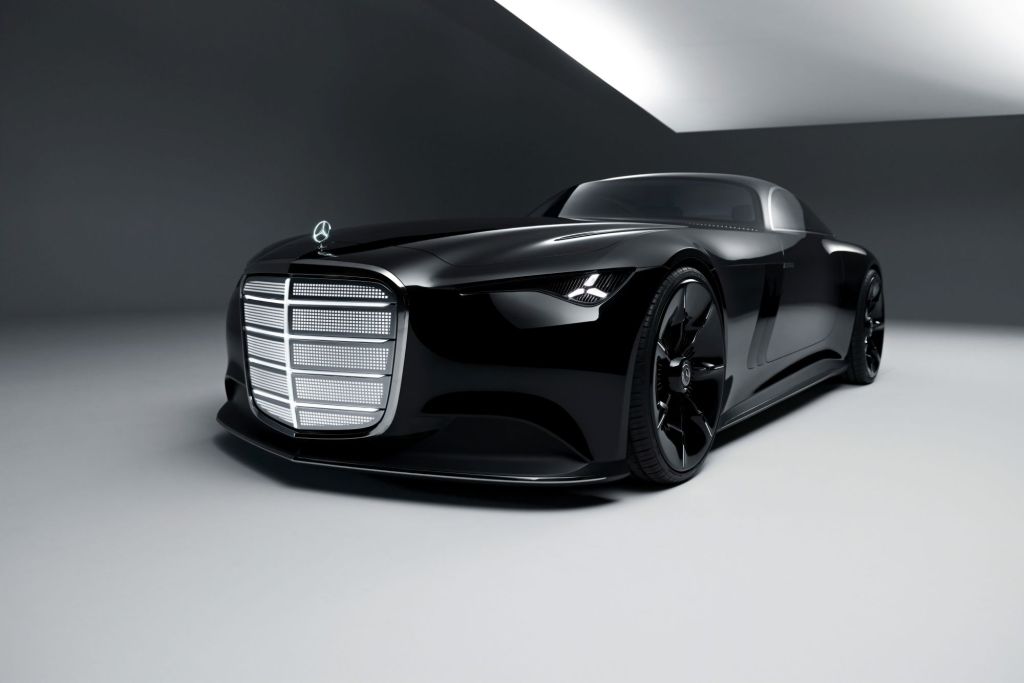
“Inspired by the golden era of automotive design of the 1930s, this show car embodies the pure essence of Mercedes-Benz. With its hood giving it a majestic presence, sculptural flowing lines and a touch of Art Deco, it rises to become a true icon of automotive beauty. The interior with its continuous bench seat and the elegant rear, evoking memories of the legendary 300 SL. Our Vision Iconic is more than just an automobile – it is a sculpture in motion, an homage to timeless elegance and a statement for the future. The symbiosis of traditional craftsmanship, state-of-the-art technology and an unmistakable design language makes it the ultimate expression of value, prestige and grace: the most beautiful, most prestigious kind of thing.”
–Gorden Wagener, Chief Design Officer Mercedes-Benz Group AG
Yes, this concept car may have all of those attributes from the hood to the flowing lines and so on.
But one thing it isn’t is “a true icon of automotive luxury.”
Something becoming an “icon” isn’t a matter of nomenclature (e.g., “Vision Iconic”).
It becomes an icon because there is cultural respect given to something over a period of time.
One could describe the Mercedes-Benz 300 SL, the gull-wing-door vehicle that came out in 1954, as “iconic.” That’s why Wagener is able to cite it as “evoking memories.”
The term “icon” is earned, not labeled.
BMW is eating Mercedes’ Mittagessen in a big way so far as sales are concerned. Perhaps a bit of humility and attention to getting more desirable product on the road now might help Mercedes even if those vehicles aren’t self-proclaimed icons.
 shinymetalboxes