
2025 Hyundai Santa Cruz Limited AWD

Don’t be misled by the box on the back. This is far more than just a pickup

By Gary S. Vasilash

The Ford Maverick pickup and the Hyundai Santa Cruz both came out in 2022 and there was an immediate comparison made between the two vehicles because they both have boxes behind the cabin.

But this is a convenient but false comparison.

The Maverick is first and foremost a truck, a truck in more of the classic sense of being utility-first and everything else gravy.

The Santa Cruz is described by its marketers as a “Sport Adventure Vehicle.” And while no one outside of a Hyundai dealership is likely to describe the Santa Cruz as such, in one regard that is more accurate than calling it a compact pickup truck.

You may recall that when BMW launched its X3 SUV it didn’t want to merely call it an “SUV” because it is, after all, a BMW. So it coined the term “Sports Activity Vehicle.” Which, of course, hasn’t had a whole lot of resonance.
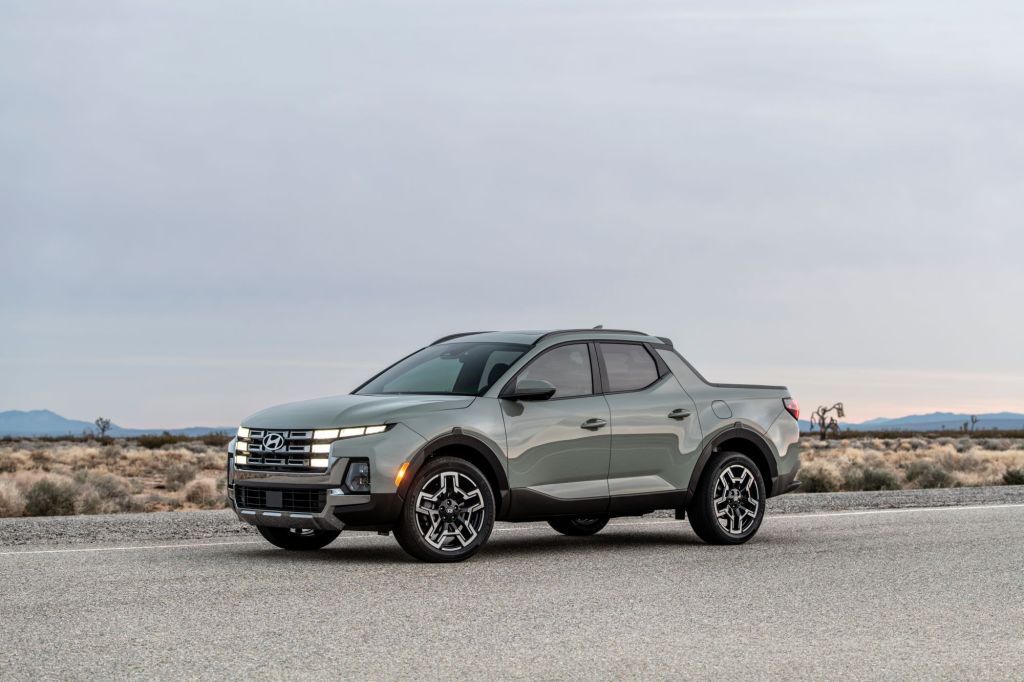
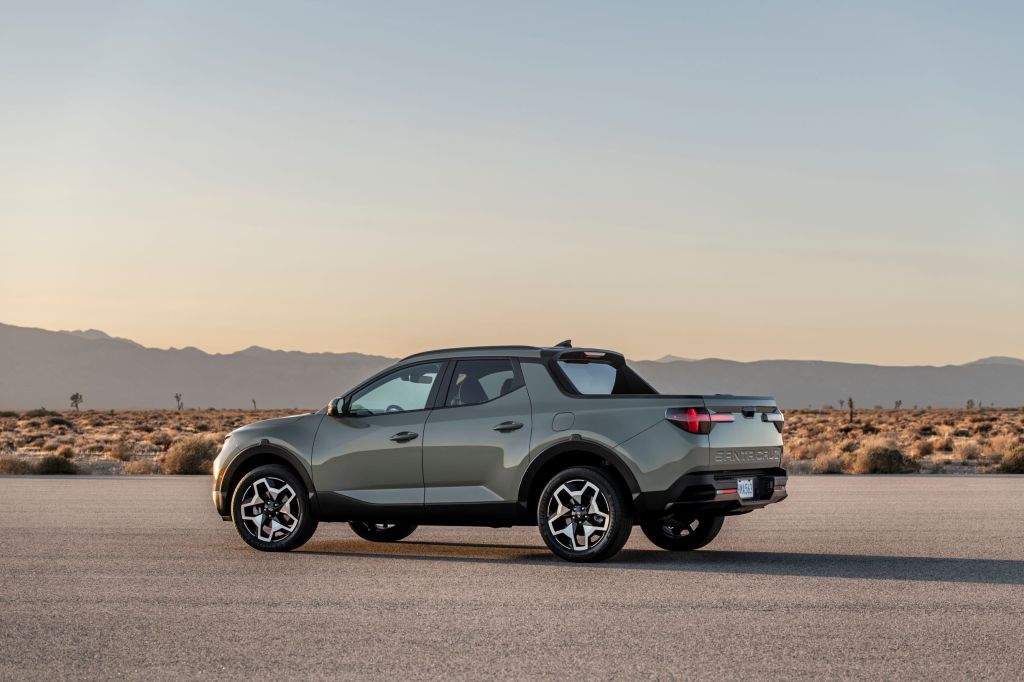
2025 Hyundai Santa Cruz Limited AWD: Style meets substance. (Images: Hyundai)

But the SAV that is the Santa Cruz is in someways closer to the SAV that is the X3 in that the Santa Cruz, certainly, is more like an SUV with a bed on the back than it is like the Maverick, which is like a “Honey, I Shrunk the F-150.”

The level of sophistication in the cabin of the Santa Cruz is simply in a completely different space than the DIY nature of the Maverick.

And while they both have beds, the Maverick’s is not only bigger (54.4 inches long vs. 52.1 inches; 20.3 inches deep versus 19.2 inches; 53.9 inches maximum width versus 53.3 inches; 33.3 cubic feet of volume versus 27 cubic feet), but it simply seems like the sort of thing you’d fill with landscaping material while the Santa Cruz would be more about mountain bikes.

It is a difference between utility and, well, weekend, low-impact adventure.

If there is any product in the Ford lineup that the Santa Cruz resembles, it is the Explorer Sport Trac, which had a run from 2000 to 2010: essentially a four-door Explorer with a box on the back. It was more Explorer than Ranger or F-150.

The Santa Cruz is like a Tucson with a box on the back.

When the refreshed Santa Cruz was revealed last year, José Muñoz, then-president and Global COO of Hyundai Motor Company and president and CEO of Hyundai Motor North America (he has since become president and CEO of Hyundai Motor Company), said, “The development goal for freshening Santa Cruz was to give it an even bolder, stronger design.”

While I agree with the “bolder,” I would quibble with the “stronger,” at least in the context of a vehicle with a box on the back. Usually when “stronger” is used in relation to truck-like vehicles, that means “boxier,” and the style of the front end of the Santa Cruz (or any Hyundai vehicle, for that matter, even the Class 8 Xcient tractor) doesn’t bring a T-square to mind. Rather, with it’s B-LED projector headlamps and LED daytime running lights it looks completely contemporary.

(There are also LED taillights, and LED cargo light on the rear edge of the roof, and LED bed lighting. This vehicle probably has more LEDs than most people have in their houses.)

The Limited is powered by a 281-hp 2.5L direct-injected turbocharged engine. There is an eight-speed wet dual-clutch automatic transmission (DCT). This vehicle can tow up to 5,000 pounds.

Inside there are such things as a powered 8-way driver seat and 6-way for the front passenger; both are heated and ventilated. There are leather surfaces on the seats. There is leather for the steering wheel and the shift knob.

That circle on the black rectagular surface is something you ordinarily don’t see in vehicles. It is a biometric interface: just like on smartphones, it is a fingerprint recognition system that allows the Santa Cruz to be started and it also loads the profile preferences for the person who is identified.

There is a 12.3-inch digital gauge cluster (i.e., what’s in front of the driver, with the speedometer, for example) and a 12.3-inch infotainment touch screen with the now-obligatory wireless Apple CarPlay and Android Auto.

Bose premium audio. Plenty of USB-C ports. Wireless charging.

There is Hyundai Digital Key 2 Touch, which allows a phone to be used in lieu of the fob.

There is even a fingerprint authentication system that allows a fingerprint to unlock the vehicle, start it, and load driver profiles.

There is BlueLink+ a connected vehicle service (remote start; lock-unlock; emergency assistance; etc.) that is. . .subscription free.

The point is, yes, the Santa Cruz may be truck-like because of the bed on the back, but it has contemporaneous amenities and style such that it really might make someone refer to it as a “Sport Adventure Vehicle.”
A Look at the Class of 2021

Vehicles, not college grads, that is.

By Gary S. Vasilash

There are lots of new vehicles that have been or will be introduced this year. So on this edition of “Autoline After Hours” we dedicate the show to talking about some of them.

And the “we” includes “Autoline’s” John McElroy; Jennifer Newman, editor-in-chief of Cars.com; Gary Witzenburg, president of the North American Car, Truck and Utility of the Year Awards and freelance journalist, and me.

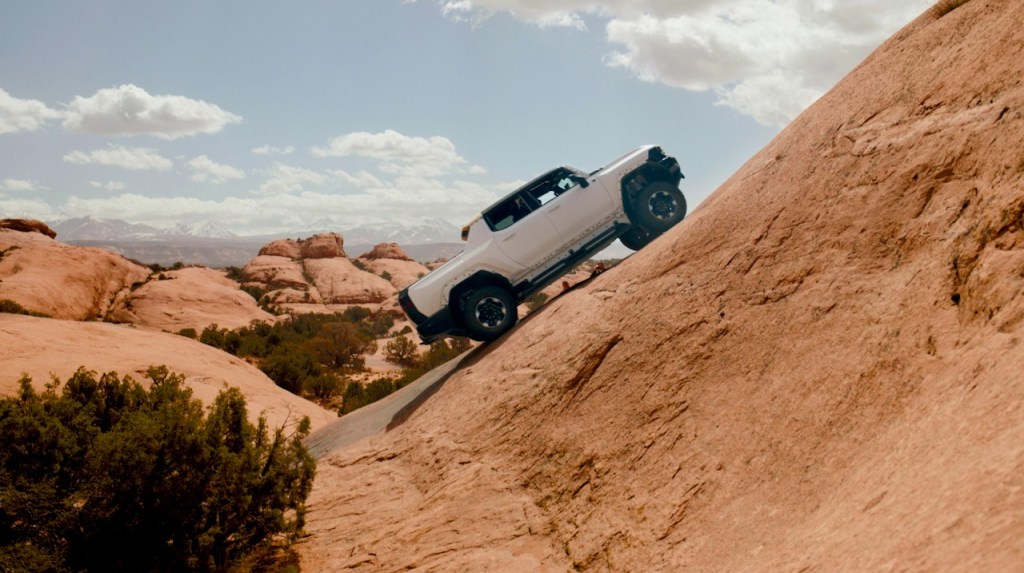
The GMC HUMMER EV Pickup (Image: GMC)

Among the vehicles discussed:

  • Acura MDX: Fourth generation of the utility. Three rows. Edgier styling. Solid suspension. What’s not to like? Apparently the True Touchpad Interface.
  • Buick Envision: A crossover with meticulous attention to detail, inside and out. Does the fact that it is made in China have anything to do with that?
  • Cadillac CT5-V Blackwing and CT4-V Blackwing: A lesser bat-out-of-hell (the 4 has a 472-hp engine) and a full-blown one (the 5 has a 668-hp engine).
  • Chevy Bolt EUV: The second electric vehicle (EV) in the lineup that looks more like an SUV, presumably to appeal to those who can’t get enough of that body style.
  • Ford Bronco: A hard-core off-road vehicle, coming soon to a driveway near you. Get the Sasquatch Package and get extra ground clearance and the approach and departure angles that make climbing rocks not an issue. Get the optional Honda
  • GMC HUMMER EV Pickup. 1,000 hp 11,500 lb-ft of torque. 0 to 60 mph in 3 seconds. 350+ miles of driving range. Fast charge up to 100 miles in 10 minutes. You can’t get a reservation for Edition 1, which is coming out this fall and has an MSRP of $112,595. In the fall of 22 there will be more available with a reduced price: $99,995.
  • Honda Civic Sedan: The 11th generation appears to be what will bring Honda back to being Honda. Which should make sedan enthusiasts every enthusiastic.
  • Hyundai Santa Cruz and Tucson and IONIQ 5: whether it is a little truck-like vehicle, a compact sport ute that comes with two flavors of hybrid as well as a conventional ICE powertrain, or a fully electric crossover, seems that Hyundai is the Overachiever of the Year.
  • Kia Carnival: Don’t call this a “minivan.” Don’t.
  • Nissan Frontier: It has been a while since Nissan has brought out a new version of its pickup (e.g., the one that is out now appeared in. . . 1998), so they’ve clearly had time to get this one right.
  • Rivian R1T: Will this electric pickup from a startup be a success in the market?

And much, much more.

Which you can see right here.

Hyundai Reveals the 2022 Santa Cruz

Four doors and a box on the back of a compact vehicle

By Gary S. Vasilash

Of the 2022 Hyundai Santa Cruz, which will be available late this summer, Jose Munoz, president and CEO, Hyundai Motor North America, says, “Our customers will wonder just how they managed before owning one.”

He also says the vehicle “breaks open all new segment territory, both for Hyundai and the industry as a whole.”

What is it?

A compact crossover with a box on the back like a tiny pickup. The bed length is 48.4 inches on the upper level and 52.1 inches below.

Think of it as about four feet.

Really not much for those who are looking for a pickup-like capability.

2022 Hyundai Santa Cruz. (Image: Hyundai)

But to be fair to the Santa Cruz, a 2010 Ford Explorer Sport Trac has a bed length of 49.2 inches, so the Santa Cruz is right there.

Which leads one to wonder about opening up a new segment.

One could argue that although the Honda Ridgeline is positioned as a pickup truck, it is in many ways like an Accord with a 63.6-inch box on the back instead of a truck (and the reference to the Accord is a good thing).

Which leads one to wonder about opening up a new segment. Or living without it.

Oh, well.

Hyundai isn’t referring to the Santa Cruz as a pickup. Nor is it calling it an SUV. Rather, it is a “Sport Adventure Vehicle.”

When BMW brought the X5 to market in 1999, it didn’t like the “sport utility vehicle” nomenclature. So it insisted that the X5 was an SAV—a Sport Activity Vehicle.

That didn’t stick.

In customer research, Hyundai found that people—“often living in urban environments”—wanted something that they could use for stuff, whether it is stuff that they bought at REI or Home Depot. Throw and go: the bed is ready to accommodate whatever.

Again, not a whole lot of stuff, but if you’re living in an apartment in an urban setting, you don’t have a whole lot of stuff.

Hyundai makes comparisons of the Santa Cruz with pickups. When it comes to beds, there is really no comparison—the Nissan Frontier is the next shortest, at 59.4 inches.

The Santa Cruz is wider than the Frontier—75 v. 72.8 inches—and just a smidge narrower than the Toyota Tacoma, which is 75.2 inches. The Tacoma, however, is 212.2 inches long, compared with 195.7 inches for the Santa Cruz.

A comparison with a traditional pickup doesn’t really play to the potential advantages of the Santa Cruz.

Credit to Hyundai to delivering on the concept that it showed at the North American International Auto Show in 2015 in a manner that looks extremely close to the show car.