
Every OEM creates vehicles that are termed “athletic.” But Genesis does something else, too. . .
By Gary S. Vasilash
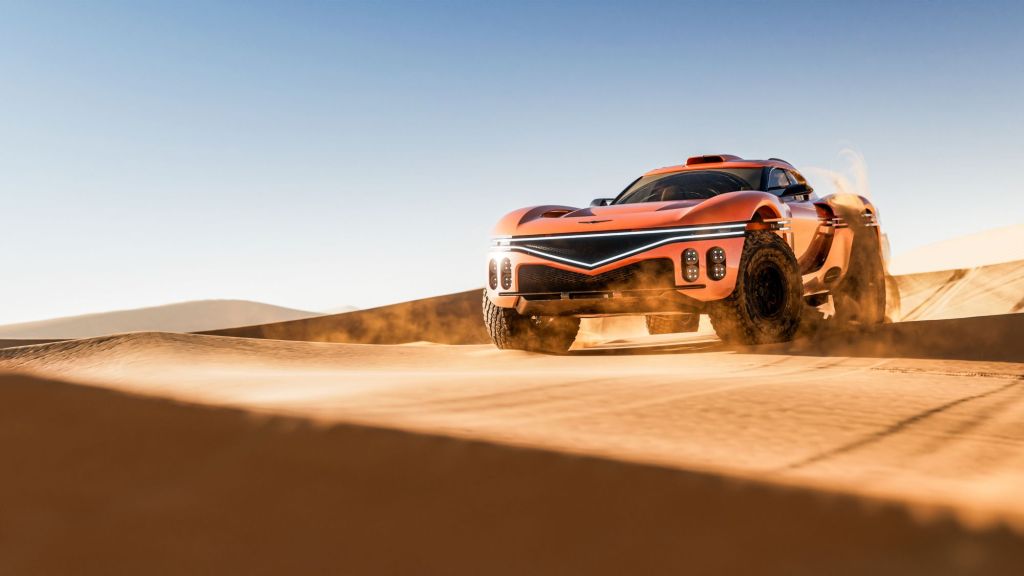
At the Liwa Oasis, United Arab Emirates, Genesis presented its latest concept vehicle, the X Skorpio Concept.
What’s interesting about this vehicle is that according to the company the X Skorpio Concept is “an off-road concept vehicle designed to perform across demanding terrain including deserts, in the Rub’ al Khali ‘Empty Quarter’ desert in the United Arab Emirates.”
Which seems somewhat specific.
But presumably vehicles like this would have more appeal in that part of the world than, say, Kansas, though it would also likely be seen crawling along places like Collins Avenue in South Beach (where the Brembo Motorsports brakes will get a workout as the X-Skorpio Concept is fitted with a 1,100- hp V8).
Talking about the marque’s approach to developing concept vehicles, Genesis Chief Creative Officer Luc Donckerwolke said:
“We create concept cars to inspire and ignite authentic passion for our vision. They are designed to deepen the emotional connection with our customers by showcasing the ultimate desirability they’ve always dreamt of. At Genesis, we craft cars that drive emotional expansion, showcasing not only our design philosophy but also the future technologies that personalize and elevate lifestyles.”
Which sounds pretty much like what all auto designers say about developing concepts and production vehicles.
But there’s something that is notable about the Genesis approach.
Again, like many brands, there is a design philosophy that the designers hew to. In the case of Genesis this is termed “Athletic Elegance.” (It is remarkable how often terms related to athleticism are applied to vehicles—“taut forms,” “strong haunches,” etc.—even though a point of driving is not having to run or walk to one’s destination.)
Here’s the Genesis difference:
There are “three emotional facets” involved in creating designs predicated on “Athletic Elegance.”
They are:
- Luxury: Rewarding experiences exemplified by Korean refinement through intricate craftsmanship, understated beauty and meticulous attention to detail.
- Sport: Represents quiet confidence equipped with ample power for those who enjoy challenges while balancing speed and composure.
- Cool: Embodying adventurous and lifestyle-driven designs driven by individual taste and self-expression.
And what’s cool is that they actually use the word “cool.”
While designers use that word when talking about what they’ve done, it is almost never admitted to be a defining factor by car companies.
“Luxury” and “Sport”—no problem.
But “Cool”?
This undoubtedly contributes to how Genesis not only produces concept cars that are cool, but production vehicles, as well.
And that’s very cool.

 shinymetalboxes