
By Gary S. Vasilash
This sounds like something out of a movie where scientists in an isolated lab create something that is, well. . . .
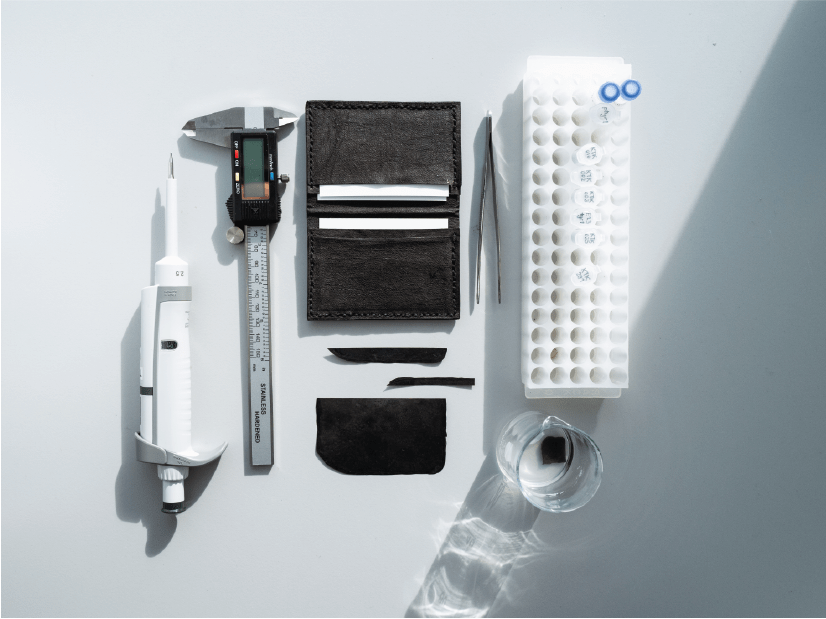
Researchers at Imperial College London have created a way that self-dyeing, vegan, plastic-free “leather” can be grown.
They’ve modified the genes of a bacteria species that produces sheets of microbial cellulose with the modification also making the bacteria produce a dark black pigment know in the lab world as “eumelanin.”
Beyond Black
But they’ve also found that using genes from other microbes they can produce colors. They shine blue light on the surface of the bacteria that respond by producing colored proteins. This allows the creation of logos and other patterns in the materials.
While they’ve produced a shoe and a wallet as examples, there are other applications for the material about which Professor Tom Ellis of Imperial College London’s Department of Bioengineering said:
“Bacterial cellulose is inherently vegan, and its growth requires a tiny fraction of the carbon emissions, water, land use and time of farming cows for leather.
”Unlike plastic-based leather alternatives, bacterial cellulose can also be made without petrochemicals, and will biodegrade safely and non-toxically in the environment.”
As automotive interiors become increasingly less plastic- and cow-intensive, presumably this could translate into seating surfaces and trim.
Seems at least somewhat creepy.
 shinymetalboxes