
When I think “fuel economy” I think of, well, fuel. Liquid fuel. Gasoline. Things measured in miles per gallon, not miles per kilowatt hour.
So when I looked that the just-released “Model Year 2024 Fuel Economy Guide” from the U.S. Dept. of Energy I was more interested in seeing what the fuel economy ratings are for various vehicles, ignoring the full electric vehicles*, but giving attention to the plug-in and standard hybrids because in some cases, like minivans, there really is no option when consulting the “Fuel Economy Leaders”:
Minivans
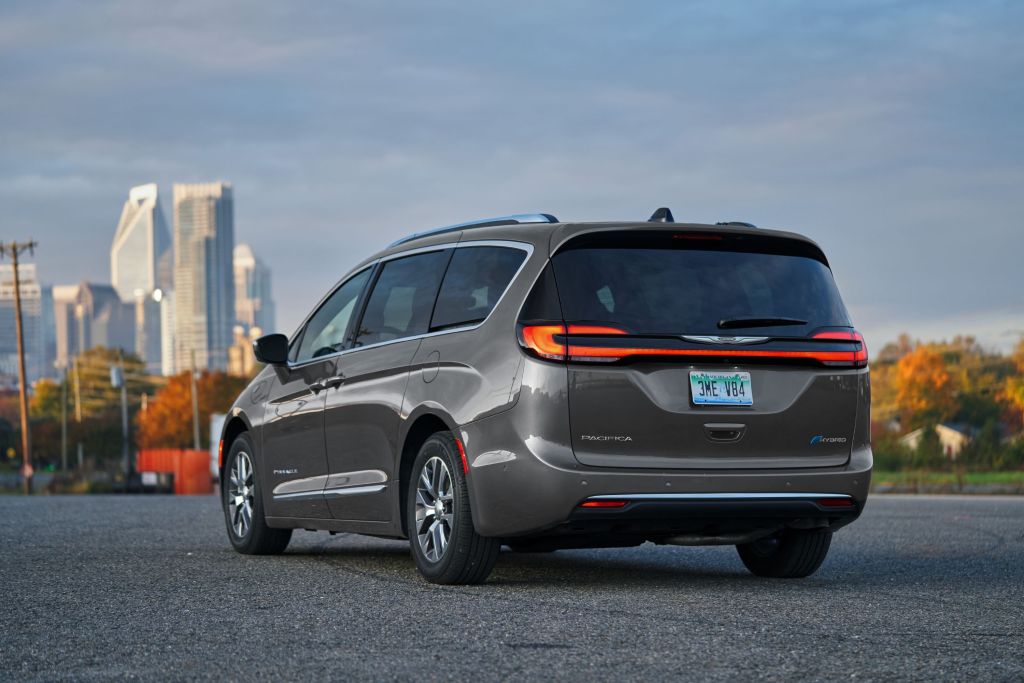
- Chrysler Pacifica Hybrid (PHEV): 48 mpg combined
- Toyota Sienna 2WD (hybrid): 36 mpg combined
Other top performers:
Subcompact cars
- Audi A3 (hybrid): 32 mpg combined
- MINI Cooper Hardtop (2 and 4 door): 32 mpg combined
Compact car
- Toyota Corolla Hybrid: 50 mpg combined
Midsize car
- Toyota Prius (hybrid): 57 mpg combined
Large car
- Honda Accord Hybrid: 48 mpg combined
Small pickup truck
- Ford Maverick HEV FWD (hybrid): 37 mpg
Standard pickup truck
- Chevrolet Silverado 2WD (diesel): 26 mpg combined
Small SUV
- Kia Nio FE (hybrid): 53 mpg combined
Standard SUV
- Toyota Grand Highlander Hybrid: 36 mpg combined
Something for everyone—especially those who don’t like to pay a lot at the pump.
*The whole MPGe ranking strikes me as being almost meaningless. While one could say the same for the mpg rating, I think that there is a notion that if a car gets 25 mpg and the average size of a fuel tank is at least 10 gallons (actually it is more on the order of 12.5, but that’s trickier math-wise), then 25 mpg means 250 miles. But unless someone knows the capacity of the battery and is able to do the math, the MPGe is a cipher.
 shinymetalboxes