
By Gary S. Vasilash
While John Heywood’s A Dialogue Conteinyng the Nomber in Effect of all the Prouerbes in the Englishe Tongue (c. 1538) isn’t the sort of thing that is likely read outside the walls of Oxford or Cambridge, there is one phrase from that source that is if not commonly used, certainly familiar:
“Rome wasn’t built in a day.”
This came to mind in relation to a comment made by Rivian CEO RJ Scaringe during the announcement of the EV company’s 2023 earnings—or lack thereof (it had net losses of $5.4 billion—which it at least better than 2022’s $6.8 billion).
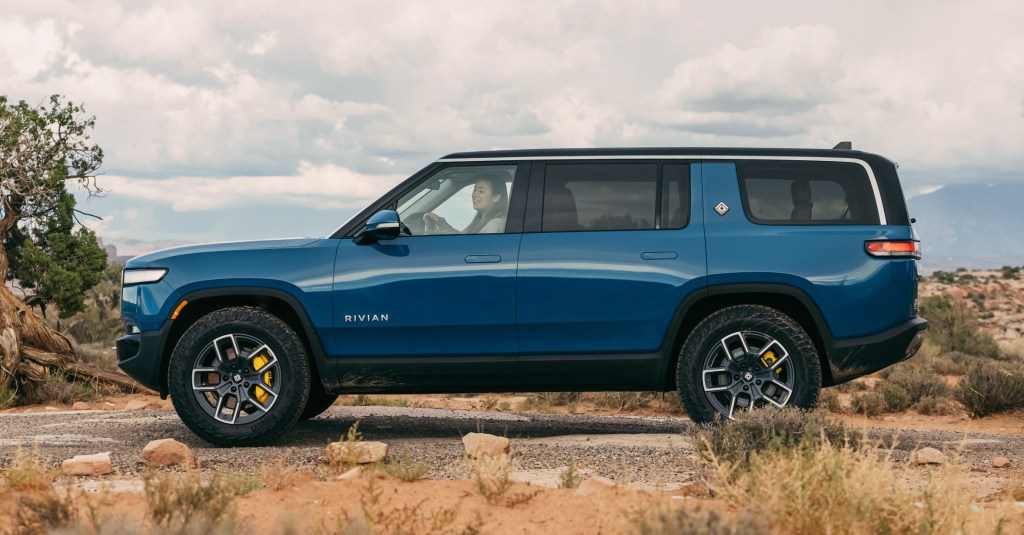
Scaringe:
“We firmly believe in the full electrification of the automotive industry, but recognize in the short-term, the challenging macro-economic conditions.”
This in relation to the announcement that approximately 10% of its salaried workers are going to be let go.
Wall Street thinks short term. Technology change can take longer. Much longer.
According to History.com:
“The number of active automobile manufacturers dropped from 253 in 1908 to only 44 in 1929, with about 80 percent of the industry’s output accounted for by Ford, General Motors, and Chrysler.”
That means that 41 manufacturers had 20% of the market.
Unfortunately for them, on October 29, 1929 there was Black Tuesday, a.k.a., the Stock Market Crash.
And the number of vehicle manufacturers crashed, accordingly.
We are now in a period that is somewhat analogous to 1908 on its way to 1929, with there being a number of start ups—including Rivian—in the EV market space.
A difference is that Ford, General Motors and Chrysler (yes, yes, Stellantis) don’t have a huge scale advantage in EVs, as they have single-digit shares of the EV market (yes, 0 is a single digit; Stellantis will soon bump that up).
Let’s face it: EVs are still costly to produce, not only because they are a comparatively new thing, but because the things that go into them are more expensive to make (while this is admittedly a trivial example: it is a hell of a lot cheaper to blow mold a gas tank than it is to manufacture an EV battery case).
And because of that, it is going to take time for manufacturers to make money on making vehicles (according to Electrek, Rivian lost $43,372 for every vehicle it delivered in Q4 2023—which is certainly better than the $124,162 per vehicle it lost in Q4 2022).
For some the time will run out because the money will have.
 shinymetalboxes