
Ford makes it easier for EV buyers to charge at home. What do Bronco buyers get?
By Gary S. Vasilash
Earlier this year the Boston Consulting Group released a report that says, in part, “perhaps the biggest challenge for OEMs is to produce the next generation of EVs profitably. We estimate that most OEMs currently lose around $6,000 on each EV they effectively sell for $50,000, after accounting for customer tax credits.”
Given that the current generation of EVs is what’s presently on dealer lots, that’s lots of money that the legacy OEMs are spending to move the metal.
But because of the billions of dollars they have spent on building out the capacity to produce EVs, they want to keep the production lines running.
Consequently, they are coming up with things that will make EVs more appealing to customers, the $6,000 be damned.
Earlier this week Ford CEO Jim Farley wrote, “Cheap lease deals on electric vehicles are popping up everywhere. Ford believes it will take more than jumbo rebates to truly break through with the estimated 19 million people in the U.S. interested in electric vehicles.”
Note that he writes “it will take more”—something additive. The rebates and incentives are still part of the game.
Farley goes on to provide details on how Ford is addressing this, through what they call the “Ford Power Promise.”
To provide ease of mind for people, this includes such things as complementary roadside assistance, expanded 24/7 advisor support, and the ability to use its Plug and Charge service that allows a driver to plug in at a charging station and have the electricity charged to the driver’s FordPass account.
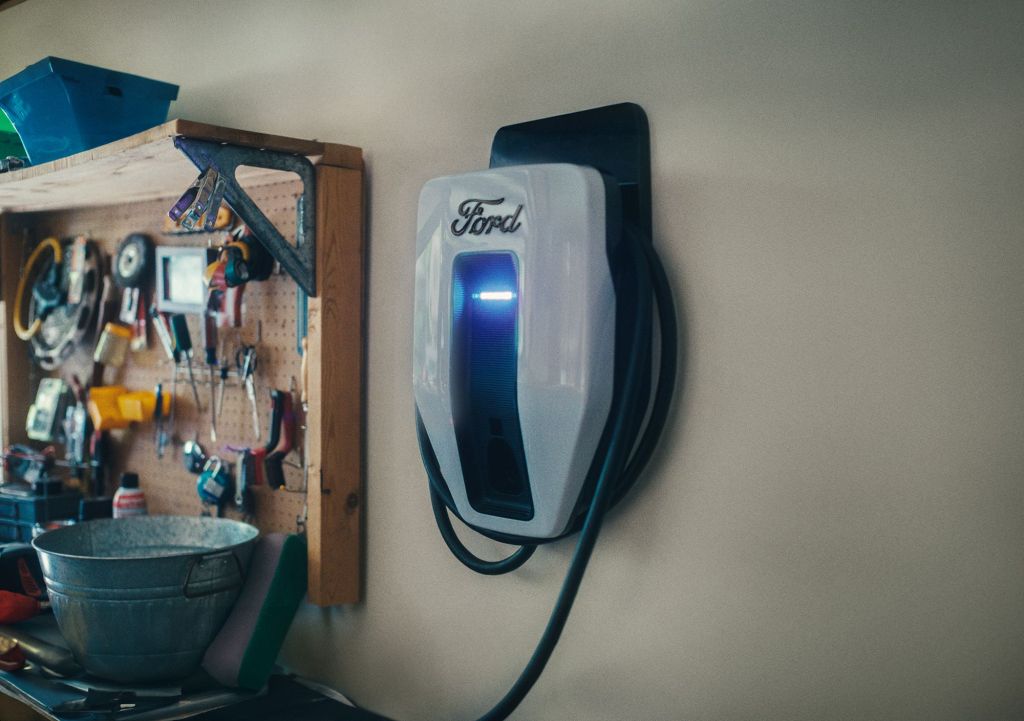
But perhaps most significantly, Farley writes: “Buy or lease a retail Ford Mustang Mach-E, F-150 Lightning or E-Transit and take a complimentary home charger with you or have it delivered, and when you’re ready, an expert comes out to install it at no charge for a standard install.”
That’s right: Ford is paying for customers to have home charging capability, something that costs, on average, $1,000.
This could be a clever marketing approach to getting more people in Ford EVs now (the offer expires on January 2, 2025) and presumably next-gen EVs—after all, if the charger is there, people probably figure they might as well use it.
Consider that both the Mach-E and the E-Transit qualify for the IRA tax credit of $3,750 and the F-150 Lightning the full $7,500.
Go buy an Explorer or Bronco and the only tax-related thing will be the sales tax that you’re paying.
Seems that this EV transition is not only costing the OEMs an enormous amount of money, but let’s face it: the government isn’t magically making those credits appear, so all tax payers are kicking in, as well.
 shinymetalboxes