
Something to know about some numbers. . .
By Gary S. Vasilash
Some people spend a lot of time searching out stats before buying a vehicle, which is certainly a good thing to do because there is that very big stat, which is the MSRP, which then comes along with plenty of additions that make what might have started out as a reasonable number a whole lot higher.
When it comes to electric vehicles, one of the stats that is highly significant is range: how many miles the vehicle is expected to go on a full charge of its battery.
(It has occurred to me that there are few vehicles powered by gasoline that ever even talked about range. Miles per gallon, which is more about efficiency than anything else, yes, but range? The only ad I can remember touting range was in the mid-teens, pre-Dieselgate, when two guys were driving a VW Golf TDI across country and refueling wasn’t an issue because the vehicle had a combined range of nearly 500 miles.)
So if someone looks at the range stat for a 2023 Toyota bZ4X XLE FWD they’re going to see a range of 252 miles. Since that 2023 model Toyota has dropped the last two alphanumerics on the name and made some other changes.
Like the range of the 2026 bZ XLE FWD being 235 miles.
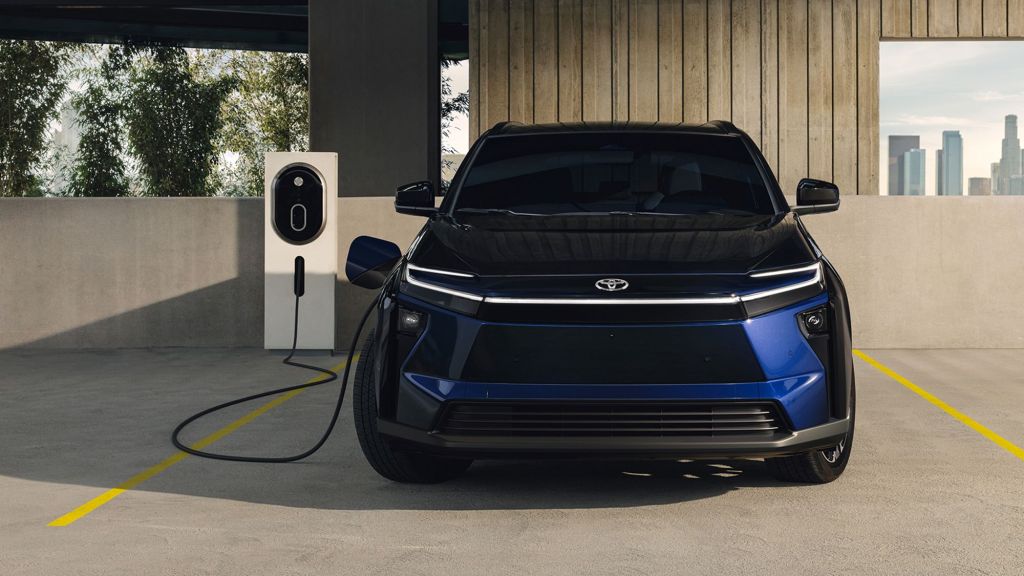
Clearly a move in the wrong direction, right?
What’s more (or less) is that the power output of the 2023 model is 201 hp. It is 168 hp in the 2026 model.
But then we get to the really important number, the base MSRP for each of the vehicles.
For the 2023 XLE FWD it was $42,000.
For the 2026 XLE FWD it is $34,600.
Toyota did something else for the 2026 model.
It added the XLE FWD Plus model.
It provides 314 miles of range. It generates 221 hp. And it has a starting price of $39,100.
And it—and the other bZ trims—has the NACS charging port (a.k.a., the Tesla port) so the bZ can use Tesla Superchargers. (It also comes with an adapter so it can use the non-Tesla CCS stations, too.).
A most interesting feature of the bZ is it offers support for Apple Maps EV Routing via Apple CarPlay. What this means is that Apple Maps has access to real-time vehicle information so that drivers can get routed to chargers on their way to wherever they’re going. Not only does it take into account the battery performance and charge, but any elevation changes along the way (which, again, is something that drivers of ICE vehicles pay little attention to unless they are traversing the Alps or something). This is displayed on the bZ’s 14-inch multimedia screen.
Know that Toyota has developed its own operating system (Arene) so it is not wholly relying on third parties like Apple.
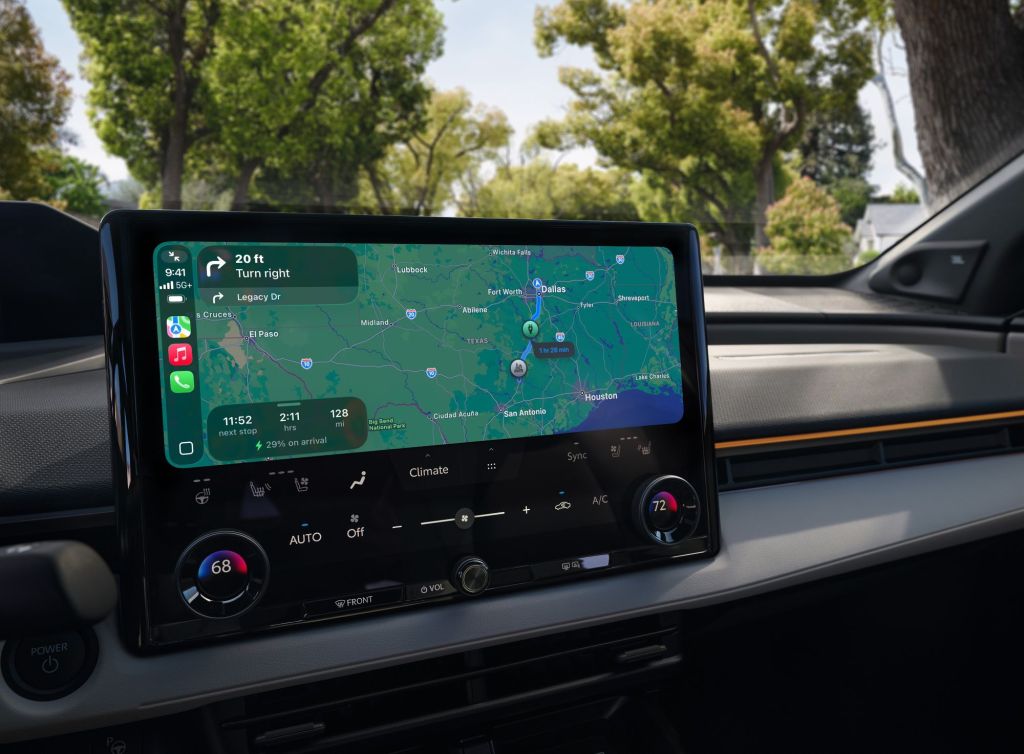
But it clearly recognizes lots of customers—including customers of EVs—are part of the Apple ecosystem and want to use it, something that General Motors thinks isn’t particularly important.
The 2026 bZ is a competent car crossover. (It looks like an enlarged hatch, not like any of the other Toyota crossovers, with the exception of the Crown, which also seems very car-like to me.)
Going back to the spreadsheet, there are a total five variants of the bZ, the two mentioned, as well as the XLE AWD (288 miles; 338 hp), Limited FWD (299 miles; 221 hp), and Limited AWD (278 miles, 338 hp).
 shinymetalboxes