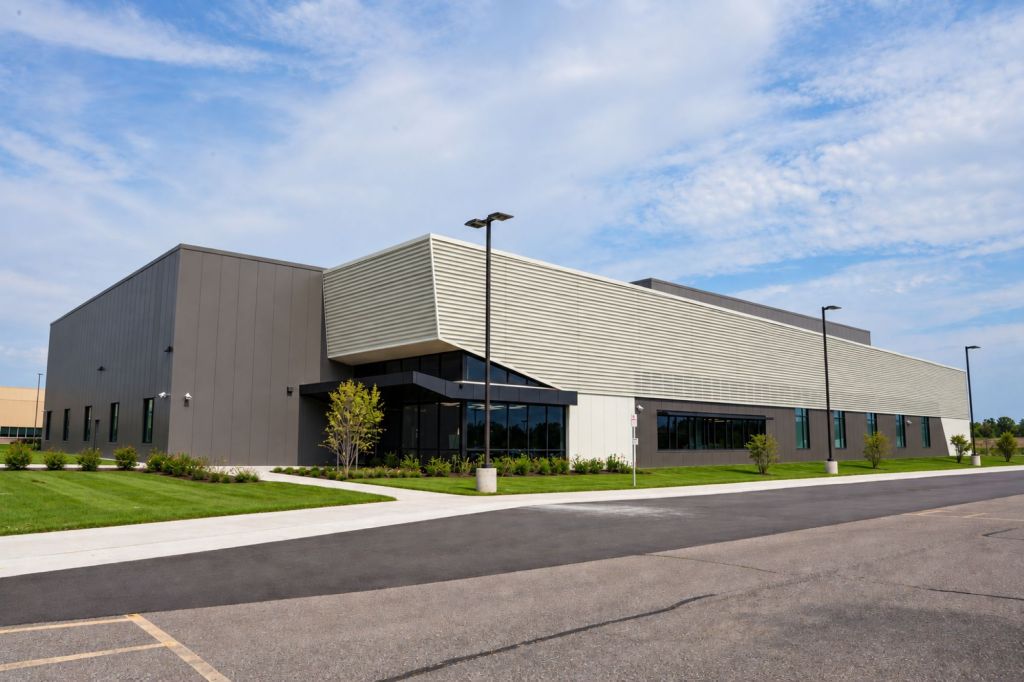
Enhancing support for its portfolio approach to propulsion for consumers, it opens a new battery research facility
By Gary S. Vasilash
Toyota was once excoriated by environmentalists and journalists alike for having a seemingly less-than robust approach to electric vehicles.
The company that arguably put the word “hybrid” into the vocabulary with its Prius, introduced in the US in 2000, was charged with slow-walking its EV initiatives or putting out underwhelming vehicles.
The company argued that hybrids were more likely to appeal to everyday drivers and that as a global company it needed to address needs of drivers around the world, where even diesel might be the fuel of choice.
Meanwhile, it kept working on its powertrain portfolio, including EVs.
On October 1, Toyota and General Motors released their sales numbers for the first three quarters of 2026.
Toyota brand has three EVs on its list. Chevrolet has four EVs on its list.
And the numbers are these:
–C-HR: 7,215
–bZ: 24,944
–bZ Woodland: 2,600
==
–Blazer EV: 4,427
–Bolt: 8,090
–Equinox EV: 18,154
–Silverado EV: 5,327
Which results in:
–Toyota: 34,759
–Chevy: 35,998
Not only is the “laggard” doing pretty well—1,239 behind Chevy—but looked at from the all-important aspect of scale, it is doing better:
Toyota: three nameplates, or an average of 11,586 units
Chevy: four nameplates, or an average of 9,000 units
What’s more, for the first three quarters the comparison with year-to-date sales in 2026 compared to the same period in 2025 by percentage are notable:
–C-HR: 240,400%
–bZ: 103.4%
–bZ Woodland: Not available
==
–Blazer EV: -78.7%
–Bolt: 6,477.2%
–Equinox EV: -65.6%
–Silverado EV: -43.2%
Overlooking the absurd results (in the first three quarters of 2025 there were three C-HRs delivered and 123 Bolts), it certainly appears there is growth in one company and decline in the other in terms of EV sales.
What’s more, because of its robust hybrid sales*, 55.3% of Toyota’s sales in the first three quarters are electrified.
GM’s figure: 4.1%.
Also on October 1, Toyota officially opened its Toyota Battery Center of North America (TBC) in Saline, Michigan.
This is a $50-million, 30,000 square-foot facility.
It will be used for the development and evaluation of lithium-ion, LFP, solid-state, and other battery chemistries.
And as the company notes, the new facility:
“Supports Toyota’s electrified vehicle lineup — hybrid (HEV), plug-in hybrid (PHEV), battery electric (BEV), and fuel cell electric vehicles (FCEV)
Yes, the entire electrified portfolio.
*In the first three quarters Toyota delivered 260,684 Camrys—all of which are hybrids. Sticking with the Chevy comparison, with the exception of the Silverado light-duty pickup (279,614 delivered), it sold no vehicle in the same time period that had sales even near the Camry’s—the closest is the Equinox, of which it sold 191,578.