VW AG: Game On

Have a phone? You’ve got an in-vehicle game controller, too. . .

By Gary S. Vasilash

One of the features that some OEMs have offered in vehicles, once to help deal with bored kids, now to reduce the level of fidgeting among those who grew up playing video games and now find themselves spending too much time in their vehicles not going anywhere (perhaps waiting to pickup the aforementioned kids from school), is video games.

One of the issues that some of those deployments present is a vexing one: the game controllers have a tendency to do what happens to plenty of things in vehicles: disappear or break, and not necessarily in that order.

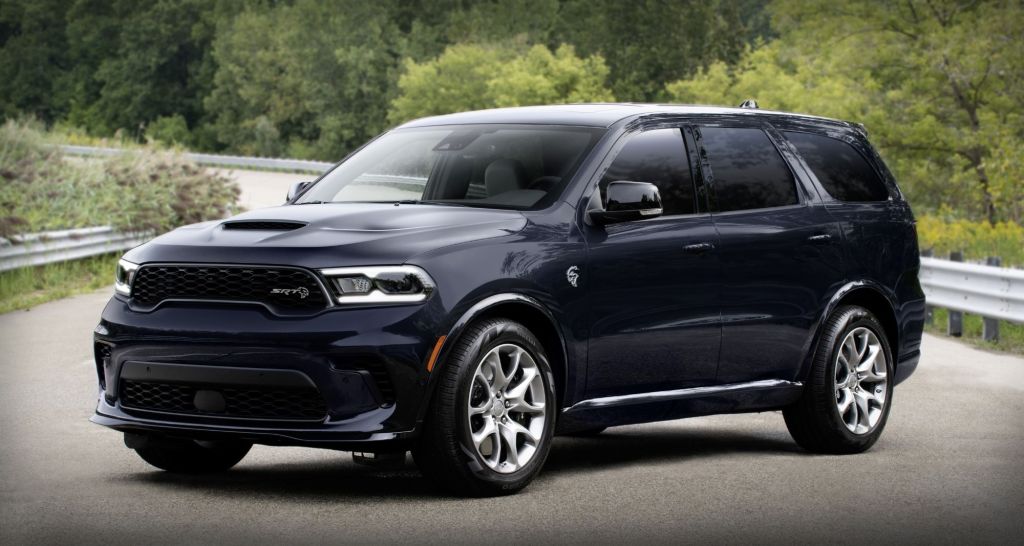
So Volkswagen AG (not Volkswagen of America), working with a Swiss company named “N-Dream,” is offering the N-Dream AirConsole gaming platform to its vehicles.

What’s notable about this is AirConsole uses smartphones as controllers.

The vehicle’s infotainment screen becomes the game console.

Look carefully at those game controllers: They’re smartphones. And Leo and Dennis are using those devices to play a game on the screen of a VW ID.7. (Image: AirConsole)

It is easy to pair the phones with the system: when the AirConsole app is opened a QR code appears on the screen. Scan it and it is ready to go.

Multiple players can participate in a given game.

However, play can only occur when the vehicle is in Park.

VW AG will begin offering AirConsole next month in the ID.7, ID.5, ID.4, ID.3 (from ID. software 4.0), the new Passat, the new Tiguan, the new Golf, and the new Golf Estate.

Odd are that this will make its way to this side of the Atlantic before too long.

2024 Toyota bZ4X Limited AWD

You’ve got to start somewhere. . .

By Gary S. Vasilash

This is the interior of the first-generation Toyota Prius (2000):

This is a similar shot of the first-gen Toyota bZ4X (2024):

Yes, there is nearly a full demographic generation separating the two.

But the bZ4X makes me think of that Prius.

If you look closely in front of the steering wheel on that early Prius you’ll note that there is no conventional gauge cluster.

That info is displayed in the horizontal slot in the middle of the instrument panel.

There is a more-conventional gauge cluster in the bZ4X in a more-conventional location.

But it is in a binnacle, set further back than is the norm for gauge clusters.

The rationale for both executions is arguably the same: the driver should keep eyes on the road.

While the Prius execution left something to be desired on that account—as in if the driver keeps eyes on the road, then there is the possibility that because there is no ready check of the speed, that could be problematic in terms of potential speeding tickets (although that risk was ameliorated by the lack of pep when you got on the throttle)—the bZ4X approach requires but a slight downward adjustment of one’s eyes to check the speed, a better approach.

The first-gen Prius instrument panel was completely different.

And while the bZ4X’s is more conventional, centered on the standard 12.3-inch touchscreen, there is something of a uniqueness to the interior, such as the use of a fabric on the interior even in places where some polymer would ordinarily be placed and the lack of a glove compartment.

Ten years after the first-gen Prius was released, in a retrospective Toyota acknowledged:

“Not all early reviews were flattering. One car magazine said, ‘With a real-world 35 mpg, this is a car that neither enthusiasts nor greenies can fully embrace.’”

And so far as the bZ4X goes, not all reviews are flattering because the electric vehicle doesn’t go particularly far vis-à-vis competitive electric crossovers:

  • XLE grade has an estimated 252-mile range in a front-drive setup; 228 miles for AWD
  • Limited grade is 236 miles FWD and 222 AWD

So here’s the thing about the bZ4X that needs to be taken into account: This one is the first Toyota EV, just as that Prius was the first back then.

People liked the first-gen Prius sufficiently well that they bought it and did so in sufficient numbers that there were the second generation and beyond.

People who buy the first-gen bZ4X will probably like it sufficiently well—and there is good reason to, mainly that it is a Toyota, and so it comes with all of the confidence that that brand brings to one’s driveway—and it will lead to future Toyota EVs.

And while they will be better, the current one isn’t bad.

(all images: Toyota)

2025 Bronco Sport Goes Sasquatch

The small SUV emulates its big brother. . .

By Gary S. Vasilash

Because more than 50% of Ford Bronco Sport owners have been known to take their small SUV off the tarmac, according to Mike Weller, brand manager for the vehicle, for 2025 the vehicle is being upgraded, taking that adverturousness into account. While this is across the board for the vehicle, it is particularly germane for the 1.5-liter Outer Banks and 2.0-liter Badlands models, which can be equipped with the Sasquatch off-road package.

Eddie Khan, Bronco Sport vehicle engineering manager, notes that some other small SUVs have the appearance of ruggedness, but “Bronco Sport is engineered rugged from the inside out and top to bottom.” (According to Ford, Bronco Sport drivers go off road 3.5 time more often than competitive vehicles, so that engineering is important for go, not just show.)

The 2025 Bronco Sport. Some people drive them to the grocery store. Some people drive them over rocks and sand and such to get to the grocery store—or just because they can. (Image: Ford)

Designed to Perform

It must be admitted, however, the Bronco Sport Sasquatch has functional features that make it look rugged, as in a standard front brush guard, steel skid plates, and front and rear bumpers that are fitted with steel bash plates. There are two cast two hooks in the front and a pair of cast D-rings in the back that serve as recovery points.

But beyond those visible modifications there are several things that make the ’25 Sasquatch-fitted vehicles more capable.

Such as:

  • A twin-clutch rear-drive unit
  • Locking rear differential
  • 29-inch 235/65/R17 Goodyear Territory all-terrain tires
  • Bilstein rear shocks with position-sensitive damping and piggyback reservoirs
  • New front and rear springs to provide additional suspension travel (8.3 inches in the front and 8.7 inches in the rear)

For both the standard Bronco Sport Badlands and the Badlands Sasquatch models there is a new Rally G.O.A.T. (Goes Over Any Type of Terrain) mode that allows the vehicle to be driven on sand at higher speeds via holding gears longer, improving throttle demand, and increasing steering feedback.

Off Road Aides

Another borrowing from the bigger Bronco there is the addition of Trail One-Pedal Drive to the Bronco Sport, which allows the vehicle to be driven with the accelerator pedal alone during rock crawling.

Also available is a 360° camera that have Trail View. When put in Off-Road or Rally G.O.A.T. modes, the camera is activated. The Badlands and Sasquatch Badlands models also have a “Split View” for the camera system that shows the front tires of the vehicle.

On the inside of the 2025 Bronco Sport (all models) are features including a 13.2-inch center display that runs the SYNC 4 system (wireless Apple CarPlay and Android Auto are standard) and a 12.3-inch digital instrument display. Recognizing that people like to accessorize their vehicles, there is an abundance of “Bronco Bolts” inside and out, fasteners specifically engineered for users who may want to add lightbars up front or mount cameras inside.

When?

The 2025 Bronco Sport Big Bend, Outer Banks and Badlands models will be available at dealers in November. The Sasquatch models will arrive in Q1 2025.

Bentley Joins Leather NGO

Sustainability is the name of the game. . .

By Gary S. Vasilash

One of the considerations that OEMs—especially in the higher end of the market—have to come to grips with is developing vehicles that are as environmentally sound as they can be. This isn’t simply an issue of sticking motors and batteries into propulsion systems. It also goes to the point of the types of materials that are used in the vehicles.

Let’s face it: while companies may use recycled steel and aluminum and plastic, odds are end consumers don’t pay a whole lot of attention to that.

What they do pay attention to is what’s on the inside of vehicles.

Which brings us back to the environmental aspects.

As in:

“Leather is a timeless, luxury material that has always epitomized the elegance, durability and quality of a hand-crafted Bentley interior. It has a rich history that dates back decades in our cars and has always stood the test of time.”

That’s Marc Stang, Technical Expert, Leather and Colour Development at Bentley Motors.

The problem is one of sustainability. Leather is generally iffy in that regard.

Somehow tanning leather with olive oil byproducts even seems like it would be nicer to touch than leathers treated with all manner of potentially hazardous things. (Image: Bentley Motors)

So Bentley Motors has become the first automotive member of Leather Naturally, an NGO that focuses (no surprise) on using certified, properly-sourced leather in a variety of industries.

One of the things that Bentley is doing regarding the leather it offers is to deploy a sustainable leather tanning process.

Rather than the heavy metals, minerals and aldehydes that are typically used in tanning, the Bentley Olive Mill Waste Water tanned Leather is produced using an organic byproduct of the olive oil industry (which goes to the point of that name).

Presumably this will allow leather to stand the test of time a little longer at the venerable motor car company.

New Design Head at Polestar

Römers understands the importance of first impressions. . .

By Gary S. Vasilash

“Polestar is the role model of a design-driven automotive company and it’s a great honor to take on the responsibility for the Design department. I’m looking forward to working with the creative team to design the next generation of Polestar cars,” said Philipp Römers, who is taking the Head of Design position at the electric vehicle company, succeeding Maximilian Missoni.

Römers is moving to the company from AUDI AG. He has been with the Volkswagen Group for the better part of his career. (He had had a stint at Ford.)

Born in Cologne in 1979, Römers studied transportation design at Pforzheim University.

He started at Volkswagen in 2005, where he designed exteriors for models including the Golf 7 and the Passat B8.

Philipp Römers, new head of Design at Polestar. (Image: Audi).

Then he moved from Wolfsburg to Ingolstadt in 2014, where he led teams developing the Audi A3, A6 and Q8.

And undoubtedly his work in the Audi e-tron and the e-tron GT, both electric, will serve him well in his position at Polestar.

While at Audi Römers  said:

“The very first thing that people who are interested come into contact with is still the exterior. It has to arise desire. Ultimately, the first impression is decisive with respect to whether someone stays or just walks away, zooms in on their screen or quickly keeps browsing. Ideally, aesthetic form and function are combined.”

That approach should serve him well at Polestar.

VW Announces 2025 ID. Buzz EPA-estimated Range

“Your typical city involved in a typical daydream. . . .”

By Gary S. Vasilash

Dead & Company played 30 shows at the Sphere in Las Vegas in July and earlier this month to legions of dedicated Deadheads, a large percentage of whom are pushing into or out of their middle years.

The venue seats 18,600 people, so over 30 shows that means 558,000.

The Microbus and the 2025 VW ID. Buzz. (Image: Volkswagen of America)

Presumably a percentage of them will be interested in the Volkswagen ID. Buzz, the electric evolution of the beloved Microbus.

Almost a built-in audience for the band. (Which didn’t go unrecognized by VW, as it had a display of the vehicles—old and new—at the Sphere.)

VW has revealed the EPA-estimated range for these EV vans, which will become available in the U.S. later this year.

Rear-wheel drive models will achieve 234 miles, while the 4Motion (a.k.a., AWD) models will go 231 miles before charging.

That three-mile difference is not a big deal, even for those who have a history of racking up many miles following their favorite musicians, be they the Dead or otherwise.

There are there models in the lineup:

  • Pro S. It is a RWD model that starts at $59,995
  • Pro S Plus. This starts at $63,495 for RWD. The AWD model starts at $67,995.
  • 1st Edition. This is the special setup. It starts at $65,495 for RWD and $69,995. This is the one that the people who are really interested in tributes—to the Microbus, not necessarily Dark Star Orchestra or Bearly Dead—as it comes in two-tone pain schemes: Candy White top with Cabana Blue, Energetic Orange, Mahi Green, Metro Silver, or Pomelo Yellow below. All would look good with a dancing bear sticker or several. And just as important as the look is the sound: a 700-Watt harman/Kardon audio system.

“Chicago, New York, Detroit and it’s all the same street. . . .”

2024 Toyota Corolla Hybrid XLE

Capability counts. . .

By Gary S. Vasilash

There are two things that someone who is buying a compact car wants, even though these two things aren’t written about a great deal.

One is size.

The second is performance.

Now admittedly, when someone is interested in a compact car, they want something, well, compact.

Not small.

Not tiny.

But not medium.

Not large.

This may be a financial consideration.

Or it simply may be that it makes sense.

A metric that I consider when behind the wheel of a compact car is whether I feel comfortable in it vis-à-vis the other vehicles on the road. And where I drive there is a high proportion of light-duty pickups and full-size SUVs.

There are few things worse that driving in congested traffic surrounded by giant vehicles—a Chevy Suburban is more than 18 feet long, 6.5 feet wide and over 6 feet high; an F-150 is 17 feet long, 8 feet wide and 6 feet high—and wondering whether you’re going to be seen.

Toyota Corolla Hybrid: competent and capable. (Image: Toyota)

The Corolla Hybrid is 182.3 inches long (about 15 feet), 70.1 inches wide (just under 6 feet) and 56.5 inches high (under 5 feet).

And it seems as though it has the size to allow one to drive with confidence.

Then there is the issue of performance.

This is something that has to be considered in the classic “horses for courses” sense.

Meaning that the Corolla Hybrid is meant to drive people in their daily activities not the Nürburgring.

The Corolla Hybrid has a system horsepower (which means what it gets from the engine and the motor) of 138. Which is pretty much a meaningless number.

The “performance” characteristic is: Can the vehicle drive on a freeway and have enough oomph to be able to deal with everything from full-size sedans and semis—and do so at speed?

And so having spent time on I-75 with it, I found the answer to that question is “yes.”

No, I didn’t blow the doors off of anything.

But I was able to maneuver with sufficient alacrity such that I was able to keep moving at a brisk pace.

And then, of course, there is the fact that this is a high fuel-efficient vehicle.

The sticker has it at 53 mpg city, 46 mpg highway and 50 mpg combined.

My combined was 49 mpg (most of the miles were accumulated on the highway).

This means that I could have driven approximately 550 miles before having to stop for a tank of gas (it has an 11.3-gallon tank).

So while that is comparatively thrifty (with the national average of a gallon of regular being $3.50, that means 550 miles for under $40), there is nothing about the way the Corolla Hybrid operates, nor about its interior execution and amenities, that makes you think “econo-box.”

A good thing.

EV Public Charging Isn’t Doing Much Better

J.D. Power sees improvement. But were we grading on the usual scale. . .

By Gary S. Vasilash

The J.D. Power 2024 U.S. Electric Vehicle Experience (EVX) Public Charging Study is out, and the research firm finds improvement in that experience.

Sort of.

Said Brent Gruber, executive director of the EV practice at J.D. Power, “While the customer satisfaction scores for public charging continues to prompt concern, the results offer reasons for optimism.”

He’s undoubtedly an optimistic individual.

The study found that on a 1,000-point scale, the satisfaction with speed at Level 2 chargers has dropped 4 points to 451.

DC fast charger speed is more satisfying, up from 588 in 2023 to 622.

While that 34 point bump is good, remember Power is using a 1,000-point scale, so if you were in school and got that 622 on a test. . . .

And then there is the issue of non-charging. As in showing up at a charging station and not being able to charge.

Power found 19% of the surveyed EV owners had that problem. A one-point improvement over 2023.

The researchers found that nationwide 61% said the reason there was a wasted visit was because the charger was out of service or didn’t work.

Huh?

The average transaction price for an electric vehicle in July was $56,520, according to the latest figures from Kelley Blue Book.

So someone buys an EV for that price, glides into a charging station—and nearly one out of five times has to leave because the damn thing doesn’t work.

Yes, some 80% of EV owners charge at home, but that means some 20% of EV drivers don’t.

In addition to which, some of the 80% of EV drivers who charge at home are likely to take trips at some point—vacation or business—which could likely mean they need to charge along the way.

And they’re likely to find some 20% of those chargers out of order.

GM Adds More Solar

Because factories have a large carbon footprint. . .

By Gary S. Vasilash

Although the public-facing efforts vehicle manufacturers are making with regard to their environmental credentials are mainly focused on the electrification of vehicles, if the total lifecycle assessment (LCA) of a given light vehicle is assessed, there is an element of that vehicle that is responsible for a considerable amount of emissions: manufacturing.

For a gasoline vehicle, production can account for 23% of its LCA.

Solar in Arkansas will be used to power GM factories in Michigan and Missouri. (Image: GM)

For an electric vehicle, which has, of course, no tailpipe, the factory accounts for as much as 46% of its carbon footprint.

To address factory-related emissions, GM has signed an agreement to source solar power generated electricity for three of its assembly plants.

Electricity will be provided to the Lansing Delta Township Assembly, Lansing Grand River Assembly, and Wentzville Assembly plants via a 15-year renewable energy purchase agreement with NorthStar Clean Energy.

NorthStar’s solar facility in Newport, Arkansas, will be generating the renewable energy that will be sent up to Michigan (for the two Lansing plants) and Missouri (Wentzville).

According to GM, as it has sourcing agreements with 17 renewable energy plants it is the auto industry’s largest buyer of renewable power by capacity, based on BloombergNEF stats.

The vehicle manufacturer plans to have all of its U.S. factories powered by renewables by the end of 2025.

Odds are, unlike predictions of when a given lineup will be full EV, that 2025 plan is undoubtedly going to happen.

Bridgestone & the Eight Es

A new tire for lux trucks & SUVs developed to deliver performance—and on sustainability concerns, too

By Gary S. Vasilash

Bridgestone Americas, as you probably know, makes tires of all types and sizes. (Yes, the usual phrase is “all shapes and sizes,” but the tires are all round, so a bit of modification was required.)

But what you probably don’t now is that Bridgestone has what it calls its “E8 Commitment,” which is part of its sustainability efforts.

The eight are:

  • Energy
  • Ecology
  • Efficiency
  • Extension
  • Economy
  • Emotion
  • Ease
  • Empowerment

The company has just released the Dueler A/T Ascent tire for luxury and high-end trucks and SUVs.

It is designed to provide on-road manners that one would expect from a premium tire for a premium vehicle.

But given that it is a truck or SUV it may be called upon not only for a daily commute but a weekend drive that may take the vehicle off road, so the tire is engineered with a tread pattern that provides the traction needed in those conditions, as well as in the wet and during the winter.

As Jeremy Norwood, Chief Engineer, Consumer Replacement Product Engineering, put it,    “Our mission with Ascent was to develop a luxury truck tire that could tackle the trails on the weekends without sacrificing the comfort of the daily commute.”  

So, given that (as well as a 60,000-mile limited warranty and fitment for up to 22-inch rims),  what area the E’s that the Dueler A/T Ascent encompass.

[Think about it for a moment. The answer is after the tire picture.]

Bridgestone Dueler A/T Ascent. (Image: Bridgestone)

The answer:

  • Emotion
  • Extension

No, I can’t explain it. Either.