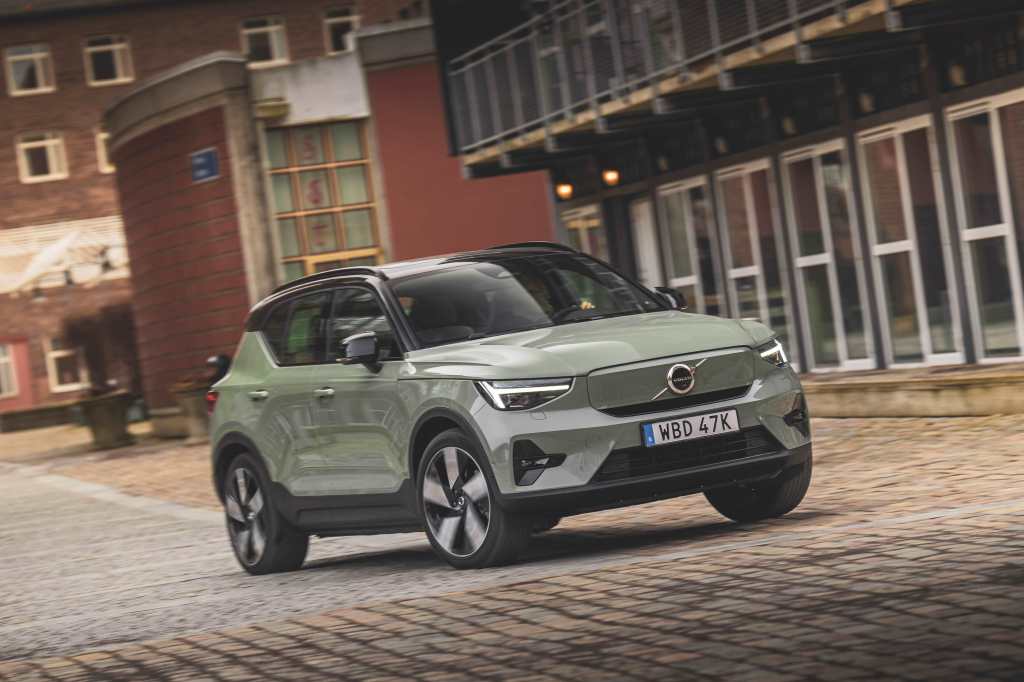
Can an EV Save You Money? (Maybe.)

By Gary S. Vasilash

The average price of a new gasoline-powered vehicle in March (the latest figure available) was $47,218.

That according to Kelley Blue Book.

The average price of a new electric vehicle in March was $54,021.

So quick math has it that there is about a $6,800 difference.

Energy Savings?

Researchers at Argonne National Laboratory have done some calculations regarding the amount of money that an EV can save a driver versus the same driver in a gas-powered vehicle.

They estimate that an EV can provide a savings of “up to $2,200 annually.”

Which essentially means, in effect, that in year four of owning the $54,021 EV rather than the $47,218 ICE the savings would start to accrue. (Yes, this would assume the unrealistic outright purchase of the vehicles, though an argument could be made that with comparative financing rates, the comparison works.)

Expensive Gas, Cheap Electricity. . .

However, the researcher found: “The largest fuel savings were found in areas with high gasoline prices, low electricity prices, preferences for larger vehicles and high annual mileage driven.”

So this sounds like the stars need to be aligned for that $2,200 to be achieved.

There’s Another Shoe to Drop

What’s more (or less), according to the National Association of Insurance Commissioners, “On average, EVs cost up to $44 more to insure per month than gas-powered vehicles, with the most expensive to insure being Tesla’s Model Y and Model 3.”

That would be an additional $528 per year, which would reduce the $2,200 to $1,672. Not trivial. But not as robust.

DIY Cost Check

The folks at Argonne have developed a web-based calculator that allows you to figure out how much you’d save based on the size of vehicle, annual mileage, fuel prices, electricity prices, and other parameters.

You can find that here.

All that said: How many people make a decision about what vehicle to buy predicated on how much they’ll save at the pump or socket?

I’m guessing not a whole lot.

EVs and the Power Shortage

By Gary S. Vasilash

Although U.S. Congress approved $7.5 billion for the construction of EV chargers a couple years ago—the Biden administration has a target of 500,000 by 2030—things aren’t going particularly well in that regard.

The Washington Post reported in late March that the number of charging stations that have been opened as a result of that funding is. . .seven.

Those seven stations provide a combined 38 chargers.

However, private companies are installing chargers at a more rapid pace.

According to the most recent report from the National Renewable Energy Laboratory (NREL):

“In Q3 2023, the number of electric vehicle supply equipment (EVSE) ports in the Station Locator grew by 7.7%, or 12,986 EVSE ports, bringing the total number of ports to 181,026.”

However, the NREL estimates that if there are 33 million EVs on the road in the U.S. by 2030 that will require 28 million EV charging ports.

Which is a far cry from that 181,026 number.

But the NREL figures that of the 28 million charging ports, 25.7 million of them will be at private residences. That’s right: 92% of the chargers will be in garages and car ports across the land.

So consumers who are going to buy an EV ought to save up some more money to hire electricians.

However, the Inflation Reduction Act has money in it for people who install equipment in their garages.

According to the U.S. Dept. of Energy:

“If you purchase EV charging equipment for your principal residence, you may be eligible for a tax credit for the charging station. This credit is generally 30% of the item’s cost, up to $1,000.”

Those tax credits are supposed to be good until 2032.

Meanwhile, over in the European Union, the number of chargers is severely lagging the number of vehicles.

The European Automobile Manufacturers’ Association (ACEA) has released a report showing that while slightly over 150,000 public charging points were installed in the EU last year, or about 3,000 per week, in order to reach the 8.8 million charging points that will be needed overall by 2030, the pace of installation would have to be more than 22,000 per week—some eight times the current rate.

ACEA Director General, Sigrid de Vries:

“Easy access to public charging points is not ‘nice to have’, but an essential condition to decarbonize road transport, in addition to market support and a competitive manufacturing framework in Europe. Investments in public charging infrastructure must be urgently ramped up if we are to close the infrastructure gap and meet climate targets.”

Of course, as the available billions of dollars for public charging infrastructure in the U.S. shows, it will take more than money to get the necessary chargers installed.

Tesla Q1 Quotes Considered

By Gary S. Vasilash

During its Q1 2024 earnings call, there were some interesting comments made by Elon Musk, CEO and Product Architect (previously Technoking).

So here are some of Musk’s remarks prefaced with some thoughts.

Of course he thinks they’re doing the right thing because otherwise, why are they doing it?

Musk: “As we all have seen, the EV adoption rate globally is under pressure and a lot of other order manufacturers are pulling back on EVs and pursuing plug-in hybrids instead. We believe this is not the right strategy and electric vehicles will ultimately dominate the market.”

In vaguely describing the more-accessible models that will be coming, he described what sounds to be like some sort of kluge, possibly because they want to do something new while using the equipment already installed—something that traditional OEMs have been doing for years.

Musk: “These new vehicles, including more affordable models, will use aspects of the next-generation platform as well as aspects of our current platforms, and we’ll be able to produce on the same manufacturing lines as our current vehicle lineup.”

This leads to a question of what gasoline cars that are autonomous will be analogous to:

Musk: “And I go back to something I said several years ago that in the future, gasoline cars that are not autonomous will be like riding a horse and using a flip phone.”

If an autonomous car has half the accident rate of a human-driven car, while that is safer, is it safe enough for regulatory change or should that accident reduction be less than 50%?

Musk: “I think if you’ve got at scale, a statistically significant amount of data that shows conclusively that the autonomous car has, let’s say, half the accident rate of a human-driven car, I think that’s difficult to ignore because at that point, stopping autonomy means killing people. So, I actually do not think that there will be significant regulatory barriers provided, there was conclusive data that the autonomous car is safer than a human-driven car.”

The key phrase in the following is “when that day happens” because he’s been talking about that day, in effect, since 2016 or, to be generous, 2019, when he said: “We expect to have the first operating robotaxis next year.”

Musk: “But really, the way to think of Tesla is almost entirely in terms of solving autonomy and being able to turn on that autonomy for a gigantic fleet. And I think it might be the biggest asset value appreciation history when that day happens when you can do unsupervised full self-driving.”

Yes, he earlier discovered that making cars is hard, but he managed to get through and is making EVs at a rate other OEMs can only dream of. But this seems to indicate that those who have invested in the company because they figure that their will be an ROI predicated on vehicles are making a mistake. Huh? What’s more, also during the call Vaibhav Taneja, Tesla CFO, said: “We are also getting hyper-focused on capex efficiency and utilizing our installed capacity in a more efficient manner. The savings from these initiatives, including our cost reductions will help improve our overall profitability,” which is all about making solid objects that will carry the promised autonomy.

Musk: “If you value Tesla as just like an auto company, you just have to–fundamentally, it’s just the wrong framework and if you ask the wrong question, then the right answer is impossible. So, I mean, if somebody doesn’t believe Tesla is going to solve autonomy, I think they should not be an investor in the company.”

Here he comes up with a notion that could be useful in a future advertising campaign—yes, Tesla doesn’t advertise like traditional OEMs do, but it seems that of late—with price cuts and dictates to its analogue to “dealers” that they work to upsell people on FSD—it seems that the company is on the road to the traditional. In addition to which, why the regular references to horses?

Musk: “I mean, we’re putting the actual auto in automobile. So, sort of we go like, well, sort of like tell us about future horse carriages you’re making. I’m like, well, actually, it doesn’t need a horse that’s the whole point.”

Here he is talking about not only the self-driving tech that will (someday) be in Teslas but in achieving another revenue stream by licensing it to other OEMs. What he doesn’t seem to address is the cost of making a car a smart car. Which is in line, perhaps, with the $25,000 Tesla that seems to be taken off the table.

Musk: “The people don’t understand all cars will need to be smart cars, or you will not sell, or the car will not–nobody would buy it. Once that becomes obvious, I think licensing becomes not optional.”

Volkswagen in China: Big Plans

By Gary S. Vasilash

Volkswagen introduced a new electric concept at Auto China 2024, the ID.CODE. And while it is a concept—with a “newly designed living space on board. . .where the real and virtual worlds meet to create a new mobility experience” (no, I have no idea what that means, either)—it is likely to be something that will be coming out within the next few years.

Volkswagen ID.CODE concept developed for the China market. (Image: Volkswagen)

Listen to Oliver Blume, CEO Volkswagen Group, at the company’s China Capital Markets Day in Beijing:

Over the past 40 years, we have established a robust and very successful business in China. China is a very important market for us and will remain so. There are approximately 50 million of our vehicles on Chinese roads today, and we sell one in three cars worldwide in China. We are therefore proud to call China our second home market.”

So to stay in the game, the Group plans to launch 40 new models in China during the next three years, 20 of which will be electric vehicles, then by 2030 there will be at least 10 new EVs added to that.

To do this, in part, the Group is working with Chinese companies XPENG and SAIC.

It has developed what it calls its “China Main Platform” (CMP) which will be the underpinning for VW brand vehicles in China.

The CMP is engineered to allow the cost of vehicles by 40% by 2026.

It has developed the China Electrical Architecture that it says will further reduce costs.

It has established the Volkswagen Group China Technology Company (VCTC), an R&D center in Hefei.

Through VCTC it plans to reduce the time-to-market for China products by 30%.

While that’s for the Group (the company has divided its brands into Core: VW, VW Commercial Vehicles, Skoda, SEAT, and Cupra; Progressive: Audi, Bentley, Lamborghini, and Ducati; and Sport Luxury: Porsche), the brands have their approaches to the China market.

For example, the VW brand has established three pillars for the China market: a comprehensive vehicle offering; a design language specifically for the market; technical development with Chinese partners to accelerate innovation.

Hmm. . .

Volkswagen Group is betting big on China, which is actually its single-biggest market (it sells more units in Europe, but as a single country, China is the one).

While there is advantage engaging with domestic companies (it owns 4.99% of XPENG), a question is whether Chinese consumers might not have their own “In China, for China” strategy that will focus their purchases on vehicles from Chinese companies.

And to what extent the design approaches and technical developments that it is making in China will be useful in the rest of the world.

After all, should the Chinese consumer not be keen on VW’s “living space on board” and the like, then it surely is going to need to take that investment elsewhere.

EV Evidence: Not Good

By Gary S. Vasilash

Think of it as validation of what everyone seems to know about the electric vehicle market in the U.S.:

The AlixPartners 2024 International Electric Vehicle Consumer-Sentiment Survey found that compared to a similar survey it ran in 2021 U.S. interest in EVs is flat.

Yes, despite the additional years of Tesla, Tesla, Tesla. Despite products like the Chevy Bolt and the Ford Lightning, which have increased familiarity with EVs, AlixPartners found that the number of respondents who said they are “very” or “moderately” interested in acquiring an EV is 35%. The same number as back in 2021.

Growth? What growth?

(While the 35% number seems robust, know that the share of market in the U.S. for EVs is 7.6%. . .and may hit 10% this year.)

What are people in the U.S. turning to?

Arun Kumar, global co-leader of the Advanced Mobility Practice at AlixPartners: “In the U.S. and Europe, BEV-intentioned buyers are turning their interest to PHEVs, seeing them as a completely legitimate substitute for meeting near-term needs and addressing charging and range concerns.

“This shift in preference presents a monumental challenge for traditional automakers, suppliers and dealers as they deploy resources to compete in the BEV transition.”

Or said differently: the OEMs and suppliers have been shoveling money into the BEV transition and are now discovering that returns seem exceedingly elusive.

End of the Renaissance?

A remembrance of the RenCen

By Todd Lassa*

First time I saw Detroit’s Renaissance Center was 1982, when my friend Tom Cesarz and I borrowed my dad’s 1980 Mazda RX-7 to drive the 375 miles from Milwaukee (Dad always was generous about letting me drive it) to attend our first-ever live Formula 1 race.

We showed up early Saturday evening, too late to watch qualifying, but in time to get a lay of the land and to be somewhere in the vicinity of Alain Prost, Keke Rosberg, Niki Lauda, Nigel Mansell, and the like. After we parked near the RenCen and its massive concrete sidewalk barriers, three locals walking by spotted the Wisconsin vanity plate, HMMMM7, on the RX-7. One of them said, presumably having seen the “America’s Dairyland” slogan on the plate, “Ya bring your cow?”

In retrospect, we should have jumped back in the sports car to quickly drive away lest some local assembly line workers carrying tire irons walk by the Japanese two-seater. Remember this was 1982. But we instead tried to find our way into the RenCen. Built by Henry Ford II some five years earlier as a “city within a city” (locals called it “The Deuce’s Last Erection”) the one car we found on-display inside among the European-ish throng of F1 fans was one of the Ford GT40s that ran the 24 Hours of Le Mans.

Wouldn’t one of Jim Clark’s Lotus Ford DFVs have been more appropriate?

We couldn’t afford to stay at the RenCen Westin and instead returned to the RX-7 to find it apparently untouched, and drove off to a Holiday Inn near Ann Arbor.

Our $30 seats, cheapest available for the first-ever Detroit Grand Prix, allowed us the largely walled-off view of a first-gear corner at what was then named Cobo Hall (now Huntington Place), where we watched John Watson’s McLaren-Ford (another potential display car) lead a parade of downshifting F1 cars to the win.

Fourteen years later I moved to Detroit to take a staffer job at Autoweek and a year after that, 1997, I moved to a turn-of-the-century warehouse converted to apartments about a mile east of the RenCen. Offices of Crain Communications, which owned AW at the time, weren’t far from the RenCen, so I went there with colleagues once or twice a week for lunch.

The maze inside the seven connected cylinders was as confusing as its walled-off exterior was intimidating. Finding my way to the appropriate corporate office for an interview or press conference held within the structure was not unlike making my way between the U.S. Capitol and the Rayburn House or Dirksen Senate office buildings via their connected basements, as I had for four years prior editing Capitol Hill newsletters.

Wikipedia says Ford sold the RenCen to General Motors in 1996, the year I moved to Detroite, though my faulty memory placed the sale later in the ‘90s. Ford had trouble keeping the complex filled with retail stores and services, and while GM managed to sign a couple of decent restaurants over the years, there were still more than a few vacant storefronts. The RenCen multiplex movie theater closed—and in that part of Detroit there weren’t a lot of screens. The raised People Mover monorail, which has a stop at the RenCen, was never much more of a tourist novelty, except when shuttling fans from parking garages to Red Wings, Tigers or Lions games, or me, some times, to the North American International Auto Show.

My best memories of the place involve attending the Detroit Jazz Festival and Electronic Music Festival held outdoors on the plaza west of the seven cylinders.

Another close friend, Tim Bailey, was an assistant comptroller for the RenCen Intercontinental Hotel in the mid-‘80s. He told me hotel rooms were difficult and expensive to keep warm because of their rounded outer walls. Not exactly beneficial for the hotel’s utility bill.

The good news is after GM’s 2009 bankruptcy, the automaker undertook a renovation on the seven cylinders that included knocking down those exterior concrete barriers. It was no longer a “city within a city,” a fortress you had to drive to, designed to keep out the locals who didn’t have business there (with all the racism that implies). Now it was a place you could walk or bike to, and around. The grand southern entrance faces downtown Windsor, Ontario, and leads to a walkway along the Detroit River.

I’m not sure what more can be done to turn the seven-cylinder fortress into a more welcoming place that can attract tenants who in turn would attract locals and visitors alike, but that’s the plan. GM has announced it will move out of the RenCen in 2025 and into a new office building at the landmark site of the downtown Hudson’s department store, which was imploded in 1999.

GM, along with the Bedrock real estate firm (which almost singlehandedly rebuilt Detroit’s downtown during the last 15 or 20 years) and the city will develop “ideas to remake the seven-building Renaissance Center,” according to The Associated Press. GM is not selling the RenCen and instead plans to return someday — after it is “remade.”

I have to wonder why, or if, GM really will return. The location it is moving to is on a conventional, easily accessible city block and there are probably bike lanes on Woodward Avenue, which it faces, by now. And from the renderings released of the new building, it looks something like a giant fuel-cell stack. Now that’s a future.

And the still-under-construction Hudson’s Tower will be the second-tallest building in Detroit.

Henry Ford II’s structure remains the tallest.

*Todd Lassa is editor-in-chief of The Hustings and contributing editor to Autoweek.

Uh-Oh (Euro)

Sticking with the Euro theme, the European Automobile Manufacturers’ Association (ACEA) released its figures for March 2024—and there’s a decline.

The EU car market was down 5.2%.

A factor?

The Easter Bunny.

That’s right. According to the ACEA, “The timing of the Easter holidays negatively impacted last month’s sales across most EU markets.”

Oddly enough, last year Easter was in April and EU car sales were up 17.2%.

As is the case in the U.S. EV sales were down (now 13% of the market there, or nearly double of what they are here (OK: less than double as EV sales in Q1 in the U.S. are 7.3%, per Kelley Blue Book)) and hybrid sales up, now at 29% of the total market.

One interesting thing about the 13% EV market share.

It is 0.6% greater than. . .diesels.

That’s right. Diesel passenger vehicle registrations in the EU are 12.4% of the market.

In March diesel registrations fell an overall 18.5%, with major drops in France (-32.1%), Spain (-38%) and Italy (-27.6%).

In Germany, however, sales were down only 0.5%. (No, that’s not because it is the home of Rudolf Diesel. He was born in Paris.)

Lots of Golfs (Mainly Elsewhere)

Although the VW Golf is available in the U.S. only in performance-oriented variants—as in the Golf GTI and the Golf R—in other parts of the world it is also a car that is, well, a car.

Last week at VW’s main plant in Wolfsburg, Germany, in Hall 12 of the complex, VW held a line-off ceremony for the refreshed 8th-generaiton Golf.

Start of production of the new Golf in Wolfsburg. (Image: VW)

A few interesting numbers:

  • Since 1974 there have been more than 37 million Golfs produced. Approximately half of that number were built in Wolfsburg. Plant manager Rainer Fessel: “Wolfsburg is the Golf—and the Golf is Wolfsburg.”
  • The Golf is the most-built vehicle at Wolfsburg. The Beetle is the second-most produced. Between 1945 and 1945 some 12 million Beetles were built at the plant.
  • The Golf is available with five propulsion options: a conventional ICE engine, a mild hybrid, two plug-in hybrids, and a diesel.
  • There have been a total 48 million vehicle built in Wolfsburg.

2024 Hyundai IONIQ 5 Limited AWD

By Gary S. Vasilash

Although Tesla seems to be in the sort of fix that one might expect a traditional OEM to have rather than it, maybe that is because Tesla is turning into something of a traditional OEM, yet it isn’t quite capable of making the transition, which exacerbates the problem.

Now to be fair, the EV market in the U.S. is still pretty much in two categories:

  • Tesla
  • Everybody Else

So when you look at the increase in sales of Everybody Else’s EVs you have to recognize that in terms of overall numbers, there are certainly models that have internal combustion engines in their lineup that may have percentage decreases yet, in terms of the overall number delivered, well above the EV.

However, one of the issues that Tesla faces and doesn’t seem to be particularly interested in addressing is that the technological heat seekers, those who are constantly on the lookout for What’s Next, have likely purchased a Tesla or two. Now this is not to say that they’re suddenly going to go buy an EV from someone else but, rather, to say that there is a set of those people and they’ve pretty much been saturated.

The upside in the EV market will be people who are interested in something advanced but not completely challenging.

Let’s face it: Although driving an EV is pretty much like driving any a vehicle with a combustion engine, there are differences that require some adjustment on behalf of the driver. So at this stage in the proliferation of the technology it is probably a good thing for OEMs to provide prospective EV owners with vehicles that progressive without being perplexing.

Which brings me at last to the Hyundai IONIQ 5, an EV crossover that could draw plenty of customers into Hyundai stores and if they drive off the lot with one they’re not going to have to study how to use it.

Quick: how do you adjust the temperature in the IONIQ 5? Some things make superior ergonomic sense. (Images: Hyundai)

For example: Want to adjust the HVAC? Yes, there is a 12.3-inch touchscreen. . .but more familiar, on a conductive surface, are red and blue arrows: touch them to get the job done. No searching required through the screen.

Yes, there are buttons and switches. A minimal but familiar assortment of things that can be adjusted.

The design of the IONIQ 5 is superb. There is the now seeming obligatory minimalism, but, more to the point, there is the addition of artistry in the patterns on some of the surfaces that are subtle and provide an overall sense of freshness. This is in contrast to the near-Brutalist approach that is taken inside a Tesla.

The exterior of the IONIQ 5—from the LED lighting up front to the LEDs around back—provides an appearance that is purposeful yet futuristic. I am puzzled by the apparent appeal of the bland front fascia of the Tesla Model Y: the front end of the IONIQ 5 appears as though it was created by a team of innovative engineers and artisans; the Model Y front appears as though the objective was to make a shape that could be readily released from the injection molding tooling.

The exterior is fresh and forward.

And the creases in the body side of the IONIQ 5 speak to a knowledge of forming metal in an aesthetic manner, something that, arguably, is lacking in something like the—admittedly not a competitor—Cybertruck which, again, seems to have been designed so that it could be formed with a press brake rather than a servo press.

The IONIQ 5 comes in RWD and AWD versions, with different motor and battery sizes.

The vehicle driven here is an AWD model; its permanent magnet synchronous motors (one in the front, one in the rear) produce a combined 320 hp. It has a SK Innovation 77.4 kWh lithium-ion battery that provides the vehicle with a range of 260 miles. The on-board charger is capable to being charged at a station with up to 800 v/350 kW; that means the battery charge can go from 10% to 80% in as little as 18 minutes.

People are catching on to the IONIQ 5. In March sales were up 58%. There were 3,361 delivered. The sales of the Hyundai Palisade—a bigger vehicle with an internal combustion engine—were also up 58% in March. There were 9,785 delivered.

The point being, there is a ways to go before there is greater consumption of EVs.

The IONIQ 5 is a vehicle that will help get more people there.

EVs in Europe (The Brits Like Them)

The populations of Germany, the U.K. and France are 83.26 million, 67.96 million and 64.86 million, respectively.

So when it comes to the purchase of EVs in those three countries, it might seem to be the case that they’d rank in that order.

Not so.

Schmidt Automotive Research has found that the U.K. is led EV acquisition in Q1 2024 for the first time ever.

The Q1 numbers for EV sales are:

  • U.K.: 84,314
  • Germany: 81,337
  • France: 79,823

This means EVs represent 15.5% of the U.K. new car market.

And in the U.S. in Q1 2024?

EVs represented 7.15% of the new car market, less than half the take in the U.K.

And demographically, the population of the U.S. is 341.81 million, or 125.73 million more people than the Germany, the U.K. and France combined.