
By Gary S. Vasilash
The Chinese Belt and Road Initiative was launched in 2013 by Xi Jinping. BRI is a means by which China, though investments and development projects around the world, aims to have increased global influence. According to the Council on Foreign Relations (certainly not something you’d imagine would be cited on a site like this):
“China’s overall ambition for the BRI is staggering. To date, 147 countries—accounting for two-thirds of the world’s population and 40 percent of global GDP—have signed on to projects or indicated an interest in doing so.”
What’s more, CFR points out:
“Beijing could seek geopolitical leverage over BRI countries. A 2021 study analyzed over one hundred debt financing contracts China signed with foreign governments and found that the contracts often contain clauses that restrict restructuring with the group of twenty-two major creditor nations known as the ‘Paris Club.’ China also frequently retains the right to demand repayment at any time, giving Beijing the ability to use funding as a tool to enforce Chinese hot button issues such as Taiwan or the treatment of Uyghurs.”
All of which is to say that the Belt and Road Initiative is somewhat controversial in places other than Beijing.
CFR quotes French president Emmanuel Macron saying during a 2018 trip to China that BRI could result in the countries that have signed up for the loans and/or development programs becoming “vassal states.”
Which makes it odd to see this headline on a recent news release:
Deepening “Belt and Road” Initiatives: Remarkable Global Expansion for DENZA in 2023
DENZA is a car brand that was established in 2010 by Chinese company BYD and Mercedes-Benz. While it started out as a 50:50 joint venture, last year Mercedes sold all but 10% of its share to BYD.
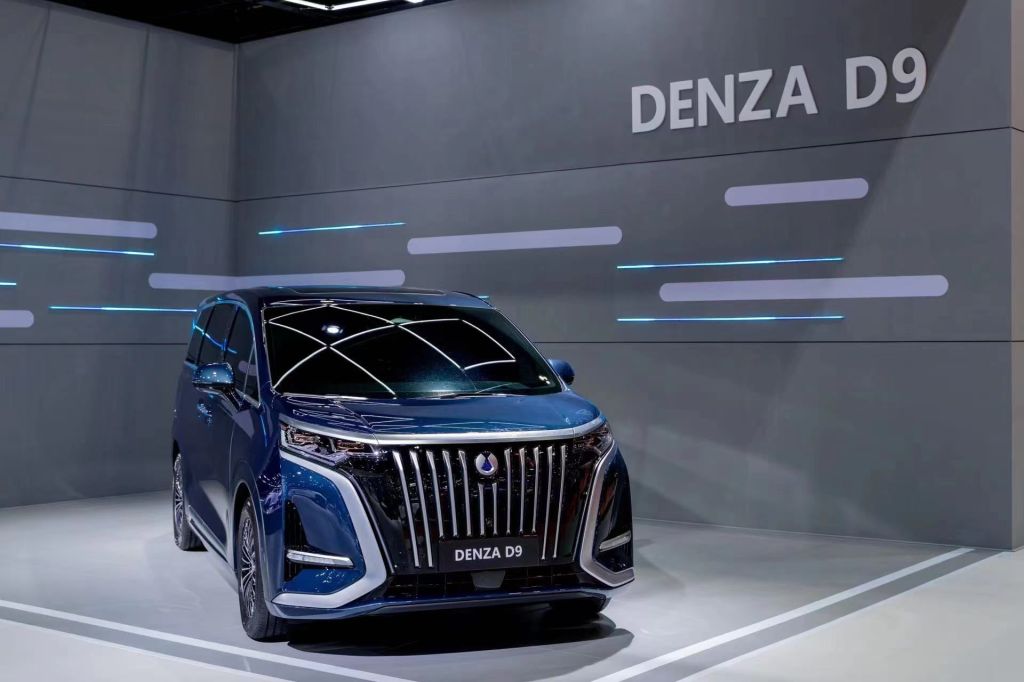
The original announcement about the company noted it would combine BYD’s capabilities in vehicle electrification (BYD is a world leader in that space) and Mercedes’ capabilities in providing luxury and quality. A sensible approach for a startup: the best of both worlds.
While DENZA has been somewhat quiet over the past several years, the company describes 2023 as its “inaugural year on the international stage.”
And then there’s this from the news release:
“With a steady and orderly international expansion, DENZA has not only won the hearts of global media and customers but has also laid a solid foundation for becoming a leading international high-end brand, poised to be the ‘business card’ of Chinese new energy luxury cars, redefining China’s automotive industry and introducing DENZA to a global audience.”
Which, going back to the Belt and Road Initiative, really sounds rather, um, ominous, given the methodical approach that is being taken, especially in contrast to the less-consistent execution by some Western OEMs (i.e., from being all-in on EVs to being sort-of-in to. . .). DENZA has a plan and they’re working it.
And seeing more business cards being passed out by several other Chinese EV companies goes to explain, in part, why the European Union launched an investigation this past Fall into whether Chinese EV OEMs, which are gaining considerable traction in the European market, are benefitting from what could be considered “unfair” government subsidies.
This could cause a considerable concern for European OEMs given the importance of the Chinese domestic market to them and the possibility that the Chinese government could retalitate to things like the imposition of tariffs on Chinese EVs coming into the EU by making it more difficult for EU-based OEMs in the China market.
For example, through Q3 2023 Mercedes-Benz Cars sold the following number of vehicles:
- Germany: 172,900
- U.S.: 216,700
- China: 570,600
Presumably the folks in Stuttgart aren’t going to want to agitate any issues with their biggest market by volume, and they aren’t the only ones.
Somehow the auto industry is becoming as much political as it is technical.
 shinymetalboxes