
Self-Driving Is Desirable. So Is Cake Without Calories.

By Gary S Vasilash

The “Consumer Attitude’s Around Autonomous Vehicle Technology Survey” indicates that there is a solid base of consumers who are ready to spend money to buy self-driving capability for their next vehicle.

Perhaps.

That is, there is a blur between advanced driver assistance systems (ADAS) and autonomous driving, even though the survey conducted for Ghost Autonomy, a developer of autonomous driving software, provides definitions of both, with ADAS including “automatic emergency braking, blind spot and pedestrian detection, lane keeping assist, surround view, parking assist, driver drowsiness detection and gaze detection” and autonomous driving technologies based on the SAE five levels, but claiming “L3-L5 is considered fully autonomous driving that does not require human backup,” which is not the case, because L3, while it lets the driver do other things, also requires that the driver be capable of reassuming, well, driving.

BMW Pesrsonal Pilot L3: yes, a driver is still required to regain control when needed. (Image: BMW)

For example, BMW has launched “BMW Personal Pilot L3,” which will be available to purchasers (adding 6,000 euros to the sticker) of the BMW 7 Series—in Germany only.

According to BMW this system provides “Level 3 capability as defined by the Society of Automotive Engineers,” and it “allows drivers to redirect their focus to other in-vehicle activities when travelling at up to 60 km/h (37 mph) on motorways with structurally separated carriageways.”

However, the driver “still has to be ready to reassume the task of driving at any time – i.e. as soon as the situation on the road requires them to or the stretch of road suitable for using the BMW Personal Pilot L3 comes to an end.”

In other words, “human backup.”

According to the Ghost Autonomy survey, 52% of those who have experienced self-driving (which arguably would be those who have ridden in a Cruise or Waymo vehicle, as FSD’s name notwithstanding, Tesla’s product isn’t self-driving, at least not within the existing classification, and it actually requires that the driver keep hands on the wheel) would “consider buying a car with full autonomy sooner if the technology was available today,” which is sort of a moot point because (a) it isn’t and (b) its not likely to be anytime soon.

What’s more, those “drivers who’ve experienced self-driving,” 78% of them, are willing to pay $5,000 or more upfront. Arguably this will be a lot more than $5,000 because the aforementioned BMW system would be about $6,600, and the Tesla FSD package (“Your car will be able to drive itself almost anywhere with minimal driver intervention and will continuously improve”) adds $12,000 to the sticker.

One finding in the survey that is certainly laudable is that when asked to rank the factors considered when they purchase their next vehicle they are:

  1. ADAS
  2. Keyless or phone-based entry and start
  3. Premium infotainment screen and sound
  4. Premium interior/exterior trim
  5. EV/battery powertrain

Yes, safety systems rank first.

But one wonders whether that answer isn’t analogous to what people say at the dentist office when asked about their brushing and flossing habits.

Who is going to say even on a survey that awesome audio is more important to them than safety?
Robo Woes

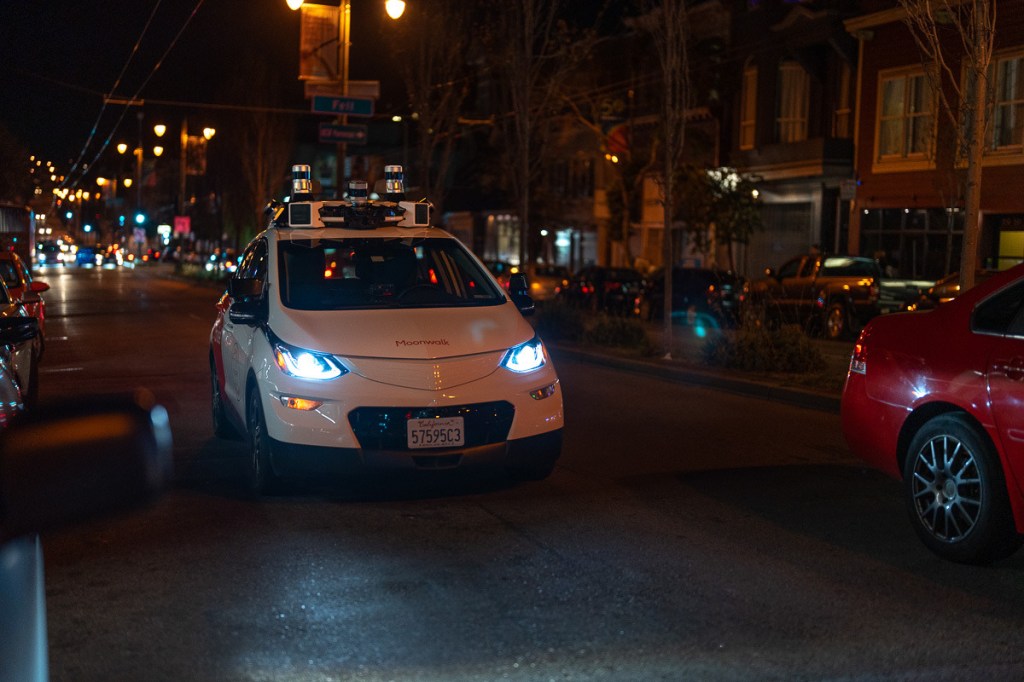
As the National Highway Traffic Safety Administration (NHTSA) begins an investigation into Cruise based on a couple of incidents regarding the self-driving vehicles and their protocols (behaviors?) around pedestrians, there is more not-so-good news for the purveyor of driverless taxis rides.

Cruise driverless vehicle at night. (Image: Cruise)

J.D. Power has released results of a survey, the J.D. Power U.S. Robotaxi Experience Study, the indicates consumers are not all that chuffed with the prospect of driverless rides and aren’t all that keen on having the vehicles rolling around in their neighborhoods.

As in:

  • Only 20% of all consumers are comfortable with automated vehicle tech being tested on the streets and highways in their locale.

What’s more, although Cruise never fails to point out that it maintains its vehicles are safer than humans, J.D. Power found that “nearly 60% of both riders and non-riders say they don’t think a robotaxi drives any better than a human.”

While those who have never taken a ride can be dismissed (e.g., would you believe someone who never ate chocolate ice cream who said it isn’t as good as vanilla?), that even riders are in that cohort isn’t good from a PR point of view.

Kathleen Rizk, senior director of user experience benchmarking and technology, J.D. Power:

“Automated vehicle technology is built on the promise of alleviating distracted driving, impaired driving and collisions attributed to human error.

“However, the benefits result from consumer acceptance, which is why it’s imperative to ensure these first deployments are flawless—not only for the riders but also especially for those who are not early adopters, including non-riders who are experiencing AVs in their community and those learning from a distance through social media and other news outlets.”

When people are learning about things like NTHSA investigations, that can’t be good for Cruise (and to be fair, Waymo).

Driving Done Remotely

Imagine being driven in an autonomous vehicle that’s being controlled by someone who is remote

By Gary S. Vasilash

Most companies that are developing autonomous driving technology for vehicles—companies like Waymo and Argo AI and Cruise—are doing so such that the autonomous vehicle is. . .autonomous.

The sensors and the processors and the actuators necessary to making a given vehicle drive without human input are all embedded in said vehicle.

Teleoperation in Berlin. (Image: Vay)

Sure, the vehicle may access the cloud every now and then for an update of some sort (e.g., perhaps for some information regarding location), but otherwise autonomous is as autonomous does.

But then there’s a company out of Berlin named Vay.

Vay’s approach to autonomy is different.

Vay has developed a “teledriving” system.

This means that there is a “teledriver.” Someone who is not in the vehicle but who is in control of the vehicle.

Think of it, perhaps, like an air traffic controller combined with someone who is playing some version of Forza.

Vay co-founder and CEO Thomas von der Ohe: “As our system does not rely on expensive 360-degree lidar sensors, and is therefore comparatively inexpensive, our way of rolling out driverless vehicles will not only enable consumers to experience driverless mobility sooner, but also provide a highly scalable solution that can be integrated into every car.”

It seems that the plan is learn from the teleoperation so that they will be able to roll out autonomous features gradually.

Vay has vehicles operating in Berlin right now, but there are safety drivers on board. The company believes that they will be able to operate fully teledriven next year.