ZF & Remanufacturing

Everything old isn’t precisely new again—but an increasing number of products are being remanufactured for the good of the environment. . .

By Gary S. Vasilash

One of the ways that the environment can benefit without much in the way of sacrifice for consumers is through the use of remanufactured products rather than new.

While some might thinks that “remanufactured” is simply a euphemism for “used,” and that “used” is typically substandard compared with “new,” a “remanufactured” product doesn’t mean “second-hand,” with all of the questions that go along with that, but reprocessed in a factory so that it is like-“new,” even though it isn’t.

In other words, this isn’t the classic case of “buying someone else’s problem.”
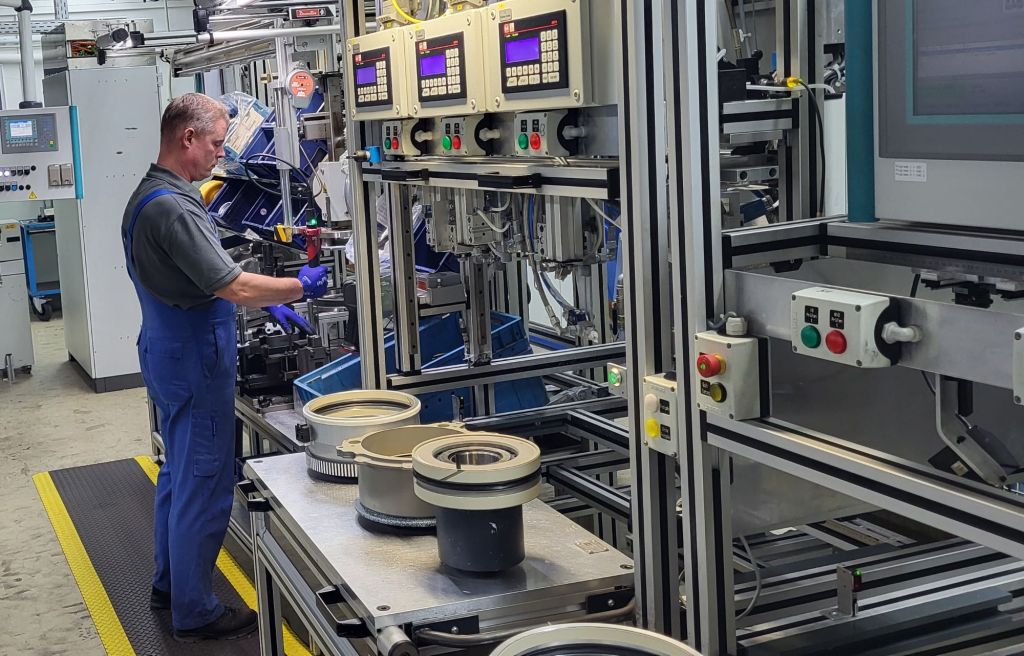
Drivetrain modules being remanufactured at the Bielefeld plant. (Image: ZF)

Auto supplier ZF, which is best known for making new things, like transmissions and chassis systems, is also an evident leader in performing remanufacturing.

It recently received the German Sustainability Award from the Germany Sustainability Award Foundation (obviously a case of the award name being a reuse of the words in the title of the organization).

The award was given in the context of its activities in the “transformation field of resources.”

Or remanufacturing.

ZF operates 25 remanufacturing sites worldwide.

One, in Bielefeld, Germany, has been in operation since 1963.

There products come in and are disassembled, cleaned, tested, refurbished and reassembled.

According to ZF, compared to a new part, the remanufactured part means

  • On average a reduction in material use of up to 95%
  • Energy and CO2 savings up to 90%

At the plant there are some 180,000 clutch pressure plates and disks, 10,000 torque converters, and 55,000 clutch release systems that come in used and go out remanufactured.

Presently, up to 35% of the products that were originally manufactured at Bielefeld return to the plant for remanufacturing. An objective is to increase that to 90% over the next five years.

Powering a Tugboat with Ammonia

Cleans floors. . .and can be turned into fuel

By Gary S. Vasilash

Most people are probably familiar with ammonia in its addition to household cleaning products—the ones that really smell, well, like something.

The biggest use on ammonia is not to help keep surfaces clean but in fertilizers, which accounts for about 90% of its use.

Tugboat powered by ammonia. (There is a little chemistry involved, of course.) (Image: Amogy)

But a company named Amogy, headquartered in Brooklyn, New York has another idea for where ammonia can be used: as a marine fuel.

But not as just any marine fuel, but one that is carbon-free.

To prove its viability Amogy retrofitted a tugboat built in 1957 with it ammonia-to-electrical power system.

The tugboat, renamed the NH3 Kraken, was then sent out on a voyage on a tributary of the Hudson River.

The name of the vessel, incidentally, is predicated on the chemical formula of ammonia.

The way its system works is that it cracks the nitrogen from the hydrogen, with the latter then being used in a fuel cell that generates electricity that powers the boat.

Further underscoring its environmental correctitude, green ammonia—made with renewable energy—was used on the NH3 Kraken.

According to Seonghoon Woo, CEO and co-founder of Amogy, “Ammonia is the world’s second most produced chemical, with around 20 million tons moving around the globe through 200 ports per year.”

Which sounds as though there is something of a nautical infrastructure, or at least one that could probably be brought up fairly quickly.

That said, the International Maritime Organization is targeting net-zero emissions by 2050, so there’s evidently some time.

BMW Addressing Emissions

Those associated with paint shops in this case. . .

By Gary S Vasilash

While there is a considerable—and justified—amount of attention paid to tailpipe emissions, there is also plenty of spew associated with the production processes that create those cars and trucks.

Like when the vehicles are painted.

You know how fresh paint has a pungent fragrance?

That is generally the result of things like volatile organic compounds that are not particularly good for the environment.

So in automotive paint shops there are measures taken to clean the exhaust before sending it out the smoke stacks (a.k.a, chimneys).

This includes running the exhaust through a bed of ceramic media that is at very high temperatures—as in 1,000 degrees Celsius.

To get those temps natural gas is usually deployed for the ovens.

BMW has completed testing on a method that uses electricity from renewable sources to achieve these temperatures.

It’s called eRTO—for “electric regenerative thermal oxidation).

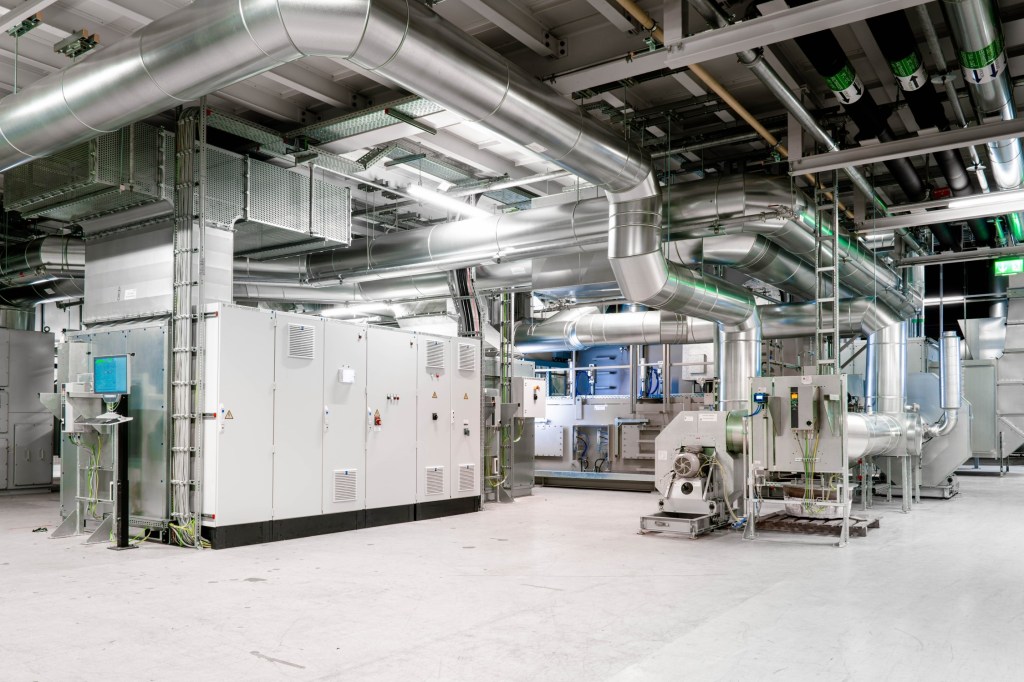
BMW is installing paint shop equipment that will help clean exhaust using electricity from renewable sources rather than natural gas. (Image: BMW)

Says Michele Melchiorre, head of Production System, Planning, Tool Shop, Plant Construction at BMW Group:

“For other energy-intensive paint shop processes, such as vehicle drying and water heating, solutions already exist for working without natural gas. So, electric exhaust purification is the final steppingstone for the BMW Group to run its paint shops on regenerative energy in the future.”

And that future is pretty much now in BMW plants in Germany and China, where eRTO is working along side the natural gas process.

Next year, a new BMW Group plant in Debrecen, Hungary, will have eRTO only.

EVs and Oil Investments

By Gary S. Vasilash

Although there seems to be a propulsive inevitability of the electric vehicle such that by the time 2030 arrives we’ll all be rolling around in electron-powered machines, there are a few things that are making this seem less. . .inevitable.

Last week ExxonMobil announced it is acquiring Pioneer Natural Resources, an oil and gas exploration and production company, for $59.5-billion.

As ExxonMobil described this: “Together, the companies will have an estimated 16 billion barrels of oil equivalent resource in the Permian. At close, ExxonMobil’s Permian production volume would more than double to 1.3 million barrels of oil equivalent per day (MOEBD), based on 2023 volumes, and is expected to increase to approximately 2 MOEBD in 2027.”

Or simply put: More access to more oil.

Today Chevron announced it is buying Hess Corp. for $53-billion. Hess “is a leading global independent energy company engaged in the exploration and production of crude oil and natural gas with leading positions offshore Guyana, the Bakken shale play in North Dakota, the deepwater Gulf of Mexico and the Gulf of Thailand.”

Chevron “produces crude oil and natural gas; manufactures transportation fuels, lubricants, petrochemicals and additives; and develops technologies that enhance our business and the industry. We aim to grow our traditional oil and gas business, lower the carbon intensity of our operations and grow new lower carbon businesses in renewable fuels, hydrogen, carbon capture, offsets and other emerging technologies.”

With Hess it will most certainly grow its traditional oil and gas business.

McKinsey & Company just released its “Global Energy Perspective,” which looks at the likelihood of the industrialized world meeting the goal of keeping global warming growth below 1.5°C. There are four scenarios about the energy transition, ranging from “Fading momentum” to “Achieved commitments.”

In all cases they predict that oil will peak in 2030.

But then there is a question of what happens next: what is the angle of decline by 2050?

It could be big: as much as a decrease of barrels of oil by 50%

It could be small: as little as a 3% decline.

Odds are ExxonMobil and Chevron are betting on something closer to 3 than 50.

Which leads to a bit of wonder about the rate of adoption of EVs in the U.S.

As of August, J.D. Power had the share of EV sales in the U.S. at 8.6%. That number is a bit opaque because Tesla accounts for 63% of all of those EV sales, so it is not like EVs that aren’t Teslas are growing in ubiquity. (Even Ford has taken a shift out of the production of the F-150 Lightning, and F-150s (well, with combustion engines) are otherwise produced at such a rate that other vehicle manufacturers can only look on with envy.)

So while the number is easily going to be greater than 3% come 2030, perhaps the idea that EVs will be 50% of the market by 2030 is a bit too optimistic.

Toyota’s Approach to Environmentally Appropriate Vehicles

By Gary S. Vasilash

There is an on-going criticism of Toyota that it is behind other OEMs when it comes to electric vehicles.

Which is true if the companies in comparison are Ford and GM.

At present, Toyota has one full battery electric vehicle, the bZ4X. It also has one hydrogen-powered electric vehicle—generally referred to as a “fuel cell electric vehicle” or “FCEV”—the Mirai.

At present there are no Lexus electric vehicles, battery or otherwise.

The EPA has recently published “The 2022 EPA Automotive Trends Report.” It examines greenhouse gas emissions and fuel economy.

In the report it shows that from 2016 to 2021, the miles per gallon for the aggregate of vehicles produced by the following companies are:

  • Ford:                      22.8 to 22.9 mpg
  • GM:                       22.4 to 21.6 mpg
  • Stellantis:               21.5 to 21.3 mpg

In other words, Ford improved by 0.1 mpg while GM and Stellantis both went in the wrong direction.

Similarly, the CO2 measures are:

  • Ford:                       389 to 385 grams per mile
  • GM:                        397 to 414 grams per mile
  • Stellantis:               413 to 417 grams per mile

In the case of CO2 measures, less is better. Ford got a bit better. The other two didn’t.

Stellantis presently has no full battery electric vehicles. It does have plug-in hybrid (PHEV) versions of the Pacifica, Wrangler and Grand Cherokee.

Ford has battery electrics. The F-150 Lightning, the Mustang Mach-E and the E-Transit. It also has hybrid versions of the Escape, Maverick, F-150, and Explorer. Lincoln offers hybrid versions of the Aviator and the Corsair but no battery electrics.

GM has the Chevrolet Bolt EV and Bolt EUV, Cadillac LYRIQ and HUMMER EV battery electric vehicles at present and no hybrids.

So how does Toyota measure on the EPA metrics?

  • Toyota:                    25.0 to 27.1 mpg

and

  • Toyota:                    355 to 327 grams per mile

Or simply put, in the aggregate, the vehicles that the company put out in the market between 2016 and 2021 are, from an environmental standpoint, better than the vehicles from the other three manufacturers.

And it is worth noting that in 2021 Toyota, with sales of 2.3-million vehicles, was the top manufacturer in the U.S. GM sold 2.2 million, Ford 1.9 million and Stellantis 1.8 million.

It didn’t have the bZ4X last year, so that doesn’t count in its numbers. It did have the Mirai, but the number of those it sells could pretty much fit in the parking lot of a large stadium.

But what it does have are the Prius and Venza and hybrid versions of the Corolla, Camry, Avalon, Sienna, Highlander, Sequoia, RAV4, Tundra, and Lexus ES, UX, NX, RX, LS, and LC.

It could be argued that those vehicles contributed a lot to the “greener” performance of Toyota compared with Ford, GM and Stellantis.

It could also be argued that especially compared with Ford and GM Toyota is some sort of Luddite when it comes to green powertrain technology. . .yet the EPA figures don’t indicate that what it is putting on the road is in any way behind the curve.

On this edition of “Autoline After Hours” we are joined by Jordan Choby, vice president of Powertrain Control at Toyota Motor North America R&D. He joins us from the Toyota Gardena, California campus where fuel cell development is occurring.

Choby explains that, yes, Toyota is working on battery electric vehicles and it plans to have 30% of its global volume be electric vehicles by 2030, but that the company is operating on model that is providing consumer choice regarding the type of engine or motor that is under the hood of their vehicle.

Choby talks with “Autoline’s” John McElory, Tom Murphy of Autoweek, and me.

And you can see the show here.

(Brownish) Green Acres

Although agriculture is not something that we ordinarily (or ever) write about here, activities that Bridgestone Americas is undertaking in the southwestern portion of the U.S. is of note:

It has invested more than $100-million in research into guayule, a woody desert shrub that grows in places where many other plants would wither, and has just announced an additional $42-million to develop the means by which there can be commercialized planting and harvesting of the shrub at scale.

No, Bridgestone is not getting into the nursey business for cacti and the like.

Rather, it is developing guayule as a source of natural rubber.

Yes, rubber that can be used to produce tires.

It made its first guayule-based tire in 2015, and as part of its continuing of its developmental work, the Big Machine Music City Grand Prix IndyCar race that was held in Nashville (home of Bridgestone Americas’ HQ) earlier this month had the tires as alternates for the race cars.

The guayule plant and a tire made with rubber from the shrub. (Image: Bridgestone Americas)

While it has a 281-acre guayule farm in Eloy, Arizona, the new investment will include working with farmers and Native American tribes to up the acreage to about 25,000 between now and 2030.

Nizar Trigui, Chief Technology Officer and Group President, Solutions Businesses, Bridgestone Americas, Inc., said, “With guayule, we can reduce the environmental impacts that come with overseas sourcing while also realizing a more sustainable agricultural system for parts of this country that are facing persistent and worsening climate conditions, so it’s really something with many benefits for our environment and our economy.”

According to Bridgestone, more than 90% of the world’s natural rubber come from para rubber tree plantations that are located in Southeast Asia. Although the trees originated in Brazil, in the early 20th century South American Leaf Blight hit the crops, which is why there was the shift to the other side of the world.

That said, turns out that white root rot disease is on the rise there, so presumably guayule is a really good idea for simply being able to make tires going forward.

Ford Using Waste Plastics from Oceans

But the amount is, well. . .

Citing a figure from the Pew Charitable Trust, Ford Motor says that there are up to 13 million metric tons of plastic deposited in the world’s oceans each year.

Part of that waste consists of plastic fishing nets.

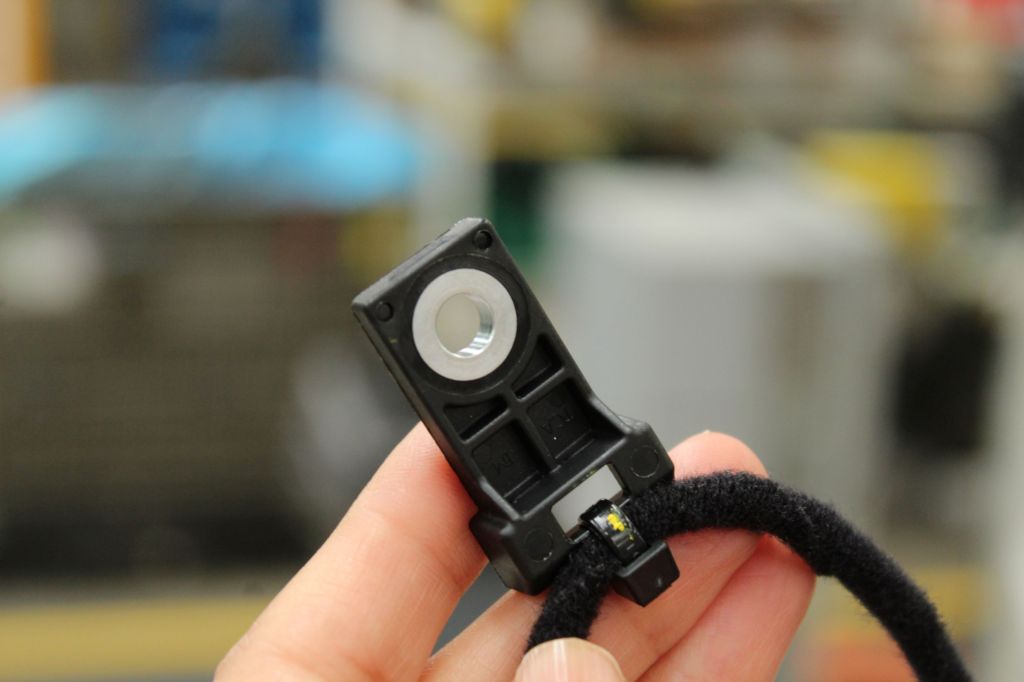
So working with DSM Engineering Materials, Ford is taking the discarded nylon fishing nets, transforming them into pellets, that are then injection molded by HellermannTyton into wiring harness clips.

Clip made with recycled plastic from the ocean. (Image: Ford)

The clips are used to guide the wires that power side-curtain airbags in the Bronco Sport.

While this is certainly laudable, there’s one thing to take into account.

Each of the wiring harness clips weighs about five grams.

One ounce is equal to 28 grams.

There are 35,274 ounces in a metric ton. Or 987,672 grams.

A lot of clips are going to be necessary to put a dent in the ocean.

EVs Can Be More Green

Assuming you’re concerned with your carbon footprint

By Gary S. Vasilash

Polestar, the growing EV brand, is running life cycle assessments of putting its vehicles on the road, from start to finish.

One of the areas of focus is on the materials and manufacturing. They can deal with the carbon footprint there.

But then the vehicle goes into the hands of consumers.

And then they reach the end of their usefulness and are recycled (good) or scrapped (bad).

Polestar has expanded its focus to the vehicle-in-use stage. To that end it is working with a Dutch solar designer, Marjan van Aubel, working on increasing the amount of vehicle charging that is being performed via renewable sources.

Van Aubel: “There still needs to be significant integration. Solar energy only accounts for a small percentage of the electricity in the European grid, and just 34% of the energy we use comes from renewable resources. But together, we’re expanding the possibilities of generating energy from wind, water and solar sources. Designers are coming up with completely new ideas, too. They are proof that we are well on our way to creating a fully renewable energy grid and truly sustainable electric mobility.”

Here’s something to consider: In the U.S. solar adds 3.3% to the grid.

The importance of renewables in charging an EV: Polestar has determined that by using renewable electricity the carbon footprint of an in-use EV can be cut in half.

Non-trivial.

Conti Goes Renewable for Tire Concept

Yes, even reused water bottles make the mixture

By Gary S. Vasilash

Tires are made of lots of materials. Yes, there is natural rubber. And synthetic rubber.

There are carbon black and silica.

There are cables, both metal and textile.

And there are various chemicals added for good measure.

Continental has developed what is says is a considerably more sustainable tire, one that has more than 50% of its materials being traceable, renewable and recycled.

There are lots of organic materials, including the natural rubber from dandelions (not necessarily the ones you have in your lawn, but similar), silicate from rice husks, and vegetable oils from, well, vegetables rather than petroleum products from prehistoric plant matter and sea creatures.

Conti’s clever “green” tire. (Image: Continental)

Thirty-five percent of the Conti GreenConcept tire (yes, this is still conceptual; you can’t get one—yet) consists of renewable raw materials.

Then there are recycled materials, which account for about 17% of the tire. Things like the polyester recovered from PET bottles—bottles that are used for soda and water.

Another clever aspect of the tire is that it is lighter than a comparable conventional one. This helps lower the rolling resistance, and that means that less energy is necessary to turn the tires. This can mean as much of an improvement of 6% in the range of an electric vehicle.

(It knows a little more than a little about EVs as it has its tires on EVs from companies ranging from Audi to Vinfast—and, yes, Tesla.)

According to Continental CEO Nikolai Setzer, “Continental will completely convert its global tire production to the use of sustainable materials by 2050 at the latest.”

While that might seem like a long time, they’ve been making tires for some 150 years, so it is relative.

BMW Goes Circular

No, not the roundel logo. The way it is conceiving and building its vehicles

By Gary S. Vasilash

When people think/talk about environmentally appropriate vehicles, the tendency is to talk about the tailpipe—or the lack thereof.

That is, an electric car (no tailpipe) or a fuel-cell-powered car (which has an exhaust to let the water vapor escape) is seen to be good because it is an electric car or a fuel-cell-powered car. (Trucks and SUVs can be used in place of “car.”)

But what somehow gets overlooked is the fact that there is a heck of a lot more to a motor vehicle than the type of propulsion system that it uses.

There is all of that other “stuff” that goes into making a vehicle.

BMW i Vision Circular (Image: BMW)

Things like the chassis and the body panels. The steering wheel and the seats. The carpet on the floor and the headliner on the ceiling.

And so on.

The production of these things has an effect on the lifecycle emissions of a given vehicle.

Sure, the use of the vehicle has a huge impact on the vehicle’s effect on the environment.

So while it is not exactly a leader in the electric vehicle space, which is leading some people to raise an eyebrow, credit to BMW for introducing a concept vehicle at the IAA Mobility 2021 event (what used to be known as “the Frankfurt show” until it was moved, this year, to Munich) that has an absolute basis in sustainability.

It is called the “BMW I Vision Circular.”

“Vision,” I suppose, because this is something that is for 2040.

“Circular” because the vehicle is entirely developed and built using principles of the circular economy, as in it is built with 100% recycled materials and 100% of those materials can be recycled again.

Even the battery for this electric vehicle, a solid-state battery (of course, although BMW is working on this technology, it is still a ways off for production vehicles, but works quite well in a one-off concept) is designed to be recycled.

While recycled materials have generally thought of as having a premium price, BMW chief Oliver Zipse made an interesting observation: “the current trend in commodity prices clearly shows the financial consequences in store for any industry that is reliant on finite resources.”