2026 Toyota Corolla Hybrid SE

It’s got nice looks and the fifth-generation Toyota hybrid system. A competent combo. . .

By Gary S. Vasilash

“What kind of car is that?” my brother-in-law asked as we arrived for Thanksgiving.

“A Toyota Corolla.”

“They sure have come a long way,” he responded, shaking his head with a bit of disbelief. “Corollas didn’t look like that before.”

Yes, that’s true. Previously, Corollas had a design that indifference could be an appropriate response to. Not bad. But not the sort of thing that would cause comment like that which took place in this instance.

Now the Corolla is sporty in its styling, which is remarkable for a vehicle that, in all manifestations, has an MSRP of under $30,000 (from the Hatchback SE at $24,180 to the Hybrid XLE at $28,940).

Some people may be surprised to learn that that’s a Toyota Corolla. The style is notable, as is the fact that this model is fitted with a hybrid system that makes stops at gas stations comparatively infrequent. (Image: Toyota)

///

And that there is a Corolla Hybrid makes the proposition for getting a highly fuel efficient vehicle that is sporty all the more interesting.

How efficient?

Well, here is the lineup and the EPA estimated fuel economy numbers for each:

  • LE/XLE: 53 / 46 / 50 city/highway/combined mpg
  • LE AWD: 51 / 44 / 48
  • SE: 50 / 43 / 47
  • SE AWD: 47 / 41 / 44

The Corolla Hybrid is powered by Toyota’s fifth-generation hybrid system. There is a 1.8-liter four-cylinder engine as the core element. With the attendant electrification the propulsion system produces 130 hp and 105 lb-ft of torque.

While the styling might make it seem as though the Corolla Hybrid is something that goes really, really fast and gets there really, really fast, the acceleration and overall performance is more conventional compact car.

But again, it allows you to quickly go past gas stations for a longer period of time than is the case of some even bigger vehicles from other OEMs who are still working out their hybrid strategies.

And the available all-wheel drive (there is a rear-mounted electric motor that kicks in when needed, not only when the sensors determine slippery conditions, but when starting from a stop and getting on the throttle) is certainly a good feature.

///

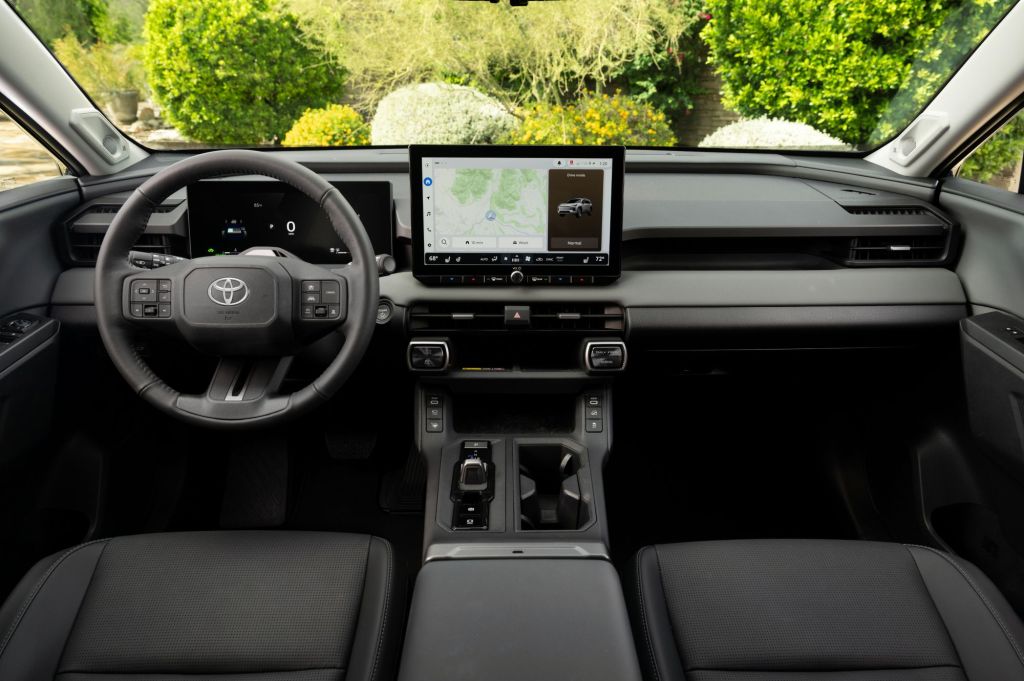
The vehicle as driven has the “SE Premium Package,” which means there is a 10.5-inch Toyota Audio Multimedia screen (the standard size is 8 inches), six audio speakers, a 12.3-inch digital gauge cluster, and a wireless charger.

While the steering wheel is wrapped with leather, the seats are “Sport Fabric-trimmed), a.k.a. cloth.

A helpful and useful standard feature is Blind Spot Monitor with Rear Cross-Traffic Alert, with the first part of that being helpful when driving and deciding whether to move from one lane to another and the latter when, say, backing out of a parking space at the grocery store, when you’re likely to have two full-size pickup trucks on either side of you.

After all, the overall height of the Corolla Hybrid is 56.5 inches, so you’re comparatively low.

That’s one of the sacrifices you make for sporty styling.

2026 Hyundai Palisade Hybrid Calligraphy

Some somewhat technical aspects of an immensely impressive three-row SUV. . .

By Gary S. Vasilash

The 2026 Hyundai Palisade Hybrid is the first deployment of the Hyundai next-generation hybrid system. Which is important to know simply from the standpoint that it has been offering hybrids in the U.S. market since 2011. It hasn’t stopped. And as this indicates, it has continued to work on the technology.

The Palisade Hybrid features a 2.5-liter turbocharged four-cylinder engine.  There are two electric motors, one that has the primary function of providing power to the wheels and the other, secondary, motor that supports starting and regenerative braking and power flow. All in, the result is system horsepower of 329 and 339 lb-ft of torque. The motors—know in the technical hybrid community as P1 (the starter motor, 17 hp) and P2 (the drive motor 72 hp) are integrated with the vehicle’s familiar—at least more familiar than Honda’s transmission-free two-motor hybrid system (there is a lock-up clutch deployed when needed) or the Toyota e-CVT—six-speed automatic transmission.

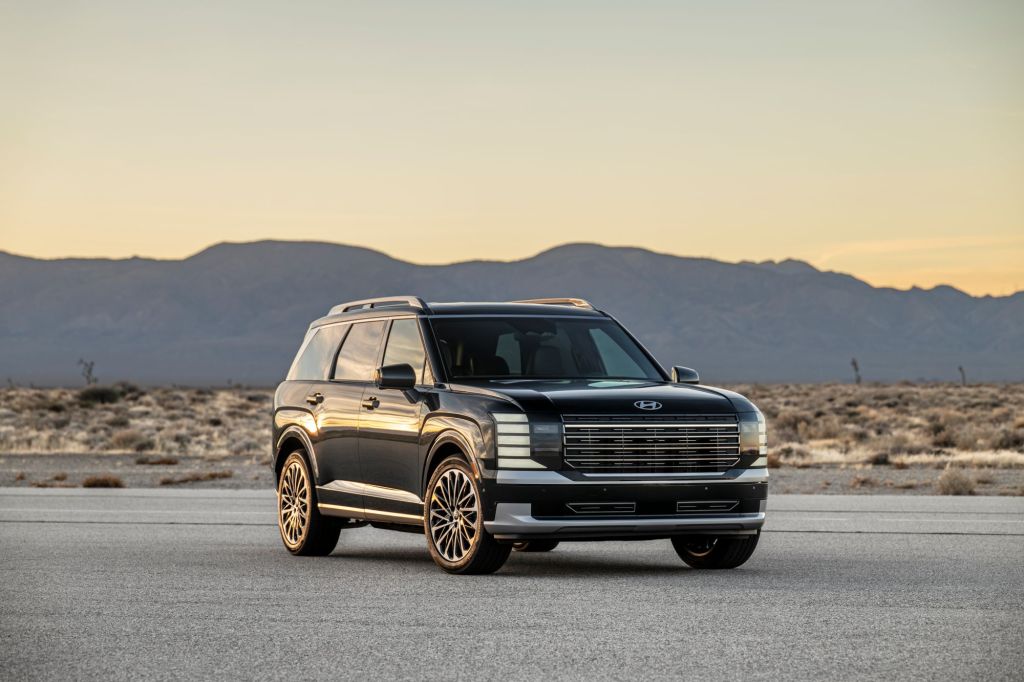
’26 Palisade Hybrid Calligraphy: looks great. Drive far (564 miles FWD; 528 miles AWD). (Image: Hyundai)

There are a couple things to keep in mind about what might seem to be an usual transmission choice.

One is that it provides a more natural driving “feel.” Odds are, even if you don’t think about it, you are used to discerning when a vehicle shifts gears when you accelerate (not so much when you decelerate). And it actually feels odd when you’re driving a vehicle with a CVT (now often with programmed steps to simulate a more natural, mechanical feel). (One reason why people driving an EV become surprised when they take it out for the first few times and look at their speedometer and see a high number is because there is linear acceleration: it just goes.)

Another is that they’re taking advantage of the mechanical advantage provide by the step-gear transmission. Know that the Palisade is a big vehicle. . .

  • 116.9-inch wheelbase
  • 199.2 inches long
  • 78 inches wide
  • 69.5 inches high

. . .that offers plenty of interior space. . .

  • 159.6 cubic feet of passenger volume
  • 19.1 cubic feet of cargo space behind the third row

. . .and provides the ability to tow 4,000 pounds.

As this is sort of techy with that P1 and P2, it is also worth knowing (even if it isn’t wholly understood) that the 2026 Palisade makes extensive use of third-generation steel (average strength 69.2 kgf-mm2). What this means is the structure of the vehicle is remarkably solid, which is helpful when it comes to minimizing any squeaks and rattles from the structure (they take care of things like road noise with an extensive use of sound-absorbing material and thicker glass on the windshield, front doors and tailgate).

Also, by using hot-stamped components (most stamping for vehicles is done at room temperatures, but some of the steels used in the Palisade have to be heated up to make them more ductile so they can be stamped—otherwise they might break the dies), the cage structure adds safety, which is an important thing for a people-mover.

The Palisade comes in a gas-only version. That has a 287-hp V6 and an eight-speed automatic. In the front-drive setup it provides 19/25/21 mpg city/highway/combined and 18/24/20 mpg for the AWD version.

The Palisade Hybrid provides 31/32/31 mpg in the FWD configuration and 29/30/29 mpg in AWD.

A significant difference. And a key reason why the Palisade Hybrid is a notable vehicle for today.

2025 Toyota Highlander 25th Edition AWD

The 25th anniversary is the Silver Anniversary. This anniversary Highlander is available in Heavy Metal. . .

By Gary S. Vasilash

One of the things Toyota did early on that caused many of those in Detroit to grumble was use the platform from one vehicle for another. This wasn’t a case of simply slapping new fascias on a car and using different seat fabrics and saying “Voila! something different!” but of creating something different.

This approach had several advantages. It spread engineering costs from one vehicle to another. It increased scale for a given platform. Both of these things led to better quality (focused engineering resources) and lower costs for consumers (economies of scale).

Case in point: the Toyota Highlander. The vehicle was introduced at the 2000 New York Auto Show as a model year 2001 vehicle.

It was based on the platform used for the Camry sedan, with slight modifications to accommodate things like a higher ride height.

Toyota Highlander 25th Edition. Celebrating a quarter century. (Image: Toyota)

This was not only clever, but arguably revolutionary, given that back then vehicles with that body architecture had frames, like pickup trucks. Cars like the Camry, with unibody construction, provided a more comfortable ride.

So one could say that the body-on-frame vehicles were sport utility vehicles (SUVs) and the first gen Highlander ushered in the midsize crossover utility vehicle (CUV). (The first-generation Toyota RAV4, introduced in the U.S. for the 1996 model year, was based on the Corolla platform, so it gave rise to the compact CUV segment.)

There was something else that happened with the Highlander that’s of some significance.

Model year 2006 was available with a hybrid powertrain. That made the Highlander the first Toyota after the Prius that had one. While it might have seemed that the Camry would get a hybrid after the Prius, that didn’t occur until model year 2007.

(The hybrid in the Highlander could have had something to do with the fact that also in model year 2006 the Lexus RX 400h was launched: the “h” is for “hybrid.”)

Currently, the Highlander is in its fourth generation. It is clearly a case of improvements all along the way.

For the 2025 model there is a special edition, the 25th Edition. Perhaps not the cleverest of names, but a well-appointed Highlander.

The celebration of the milestone is performed with a variety of touches, inside and out.

On the exterior view there are—yes, changes to the front and rear fascias (silver accents on the bumpers), 20-inch wheels, and side rockers.

Inside there are carpeted floor mats and an all-weather rear cargo liner. The seats have leather trim.

And in the space between inside and out there are illuminated door sills and puddle lamps (although they shine on the outside, they are meant to help you get to the inside, so we’ll put them in this intermediate space).

The powertrain (there is a 2.5-liter four-cylinder engine coupled with three permanent magnet motors (two front, one rear)) provides a combined output of 243 hp.

This results in EPA fuel efficiency numbers of 35 mpg city, 34 mpg highway and 35 mpg combined.

Which is most impressive for an AWD vehicle with a third row.

But about that third row. . . .

The legroom back there is 28 inches. No, not a whole lot of room.

The 25th Edition is based on the Highlander Limited Hybrid grade which provides things like a 12.3-inch infotainment touchscreen and 11-speaker JBL audio system. Yes, there is a small volume knob for those who prefer torquing a knob rather that using the steering wheel controls.

The base MSRP for the vehicle is $52,680, which is certainly reasonable for something that (1) is so well-appointed, (2) a hybrid and (3) is limited to 2,500 units.

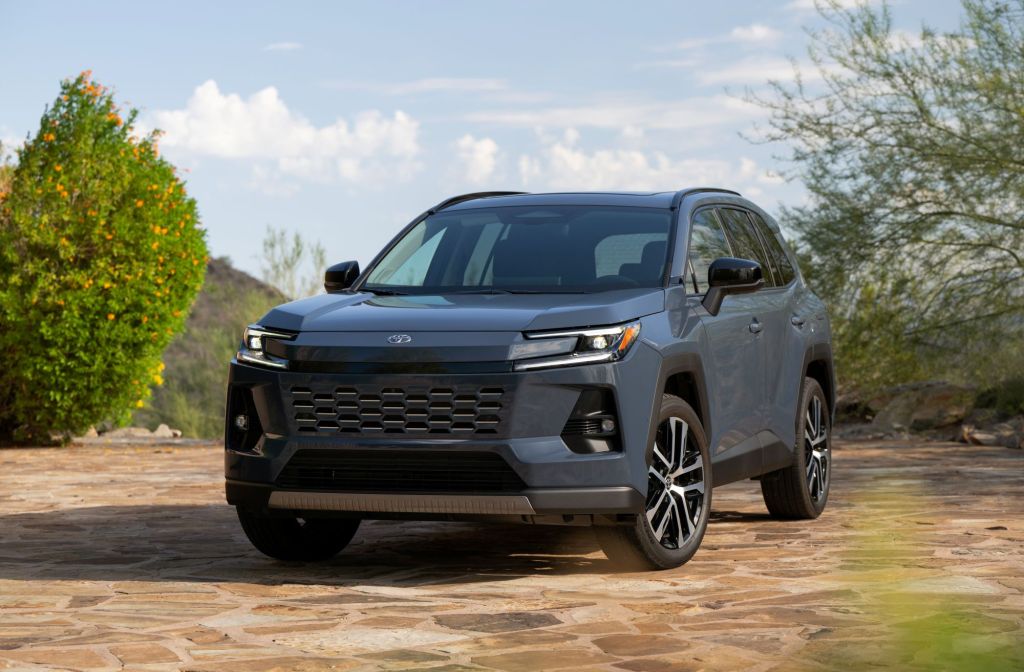
Toyota Unveils Sixth-Gen RAV4

The market leader gets a wider suite of offerings. And hybrids across the board. . . .

By Gary S. Vasilash

A thing about the Toyota RAV4 is that when the company accurately describes it as “America’s best-selling compact SUV” it isn’t entirely clear just how much of a best selling compact SUV it is.

In 2024 Toyota delivered 475,193 RAV4s in the U.S. market

In the same period, the combined number of Chevy Equinoxes (207,730) and Ford Escapes (146,859) is 359,589. Well below the RAV4 number.

So Toyota really has something going for it, and for the sixth generation of the RAV4 it is, on the one hand, doing something expected, but on the other, somewhat unexpected.

As for the expected part, it is expanding the offerings within the marque.

That is, there are three styles:

  1. Core
  2. Rugged
  3. Sport

Then within the styles it is offering things like the Woodland trim (Rugged) and GR Sport (Sport).

The unexpected part—well, maybe not entirely unexpected as this is, after all, Toyota, the company that offers a model that is still synonymous with “hybrid”: Prius—it is offering the 2026 RAV4 as a hybrid-only vehicle.

But there are two variants of that, two, either a straight-up hybrid or a plug-in.

And, of course, front-wheel or all-wheel drive (AWD) variants are available.

The new RAV4 trio–Sport (the red one), Rugged (the left) and Core (in the rear—for 2026. (Image: Toyota)

Some Numbers

The hybrid versions produce 236 hp for the AWD models (up from 219 hp in the current generation system). There hadn’t been a front-drive RAV4 hybrid previously available so the comparison has to be with the ICE-only model: the hybrid produces 226 hp, whereas the current gen gas-only model produces 203 hp.

The plug-in version, AWD only, has an output of 320 hp. That’s up from the current 302 hp.

The all-electric driving range is 50 miles, up from the current 42 miles.

The PHEV system in the XSE trim and the Woodland feature DC fast charging: from 10 to 80% in ~30 minutes.

Both hybrid systems include a 2.5-liter four-cylinder engine.

Some Platform Mates

The first-gen RAV4 in the U.S.—model year 1996—shared a platform with the Corolla.

This sixth-gen RAV4 has literally gone up in the world, as it is based on the TNGA-K platform, which also underpins vehicles including the Camry, Highlander, and Crown.

David Christ, group vp and general manager, Toyota Div., TMNA—a virtual one at the Cosm Dallas—introducing the 2026 RAV4. As you can see, they’ve sold a lot of the vehicles over the years. (Image: gsv)

Woven

Toyota has a company named Woven by Toyota.

Woven is undertaking some huge projects, like the creation of Woven City, a municipal testbed in Japan for things ranging from autonomous mobility to advanced logistics for goods and services.

No less notable but certainly on a smaller scale, Woven personnel have developed “Arene,” a software development program for vehicles. It facilitates things like advanced safety, connectivity and multimedia features. It allows Toyota and its suppliers to develop software that can be readily integrated into vehicles.

As the company describes it:

“Arene is built on the concept of kaizen, or continuous improvement. Rather than traditional linear development, the Arene platform is designed to make use of the latest iterative development methodologies. And Arene’s vehicle data capabilities allow these improvements to continue after-market based on in-market insights, extending the value of the vehicle.”

So it is not one-and-done.

There is the wherewithal for additions.

The 2026 RAV4 is the first vehicle deploying Arene.

A Thought

Now there will be a set of RAV4s for varying tastes: straightforward, utile and sporty.

One could argue that the Ford Escape sales numbers in 2024 were as low as they were because some customers opted for the Ford Bronco Sport, which is based on the Escape platform. That would add 124,701 units to the 146,859, which is a solid 271,560, but still far south of the 475,193 of the RAV4. . .and now there is something like the RAV4 Woodland.

And what other company is offering—in the mainstream market—a sporty crossover like the GR SPORT?

Although there are certainly externalities—like the tariffs—that could completely distort things, but odds are that the RAV4 is going to stay at the top of shopping lists in U.S. households with this sixth generation.

2025 Hyundai Elantra Hybrid Limited

This is an impressive package, especially for those who like to not frequent gas stations

By Gary S. Vasilash

The current-generation Hyundai Elantra, the seventh, is not what one might think of when pondering the sedan.

That is, you might think “Compact car,” with the bigger Sonata being “midsize car.”

But it turns out the Elantra, which measures:

  • Length:                            185.4
  • Width:                              71.9
  • Height:                            55.7
  • Wheelbase:                  107.1

is actually in the EPA “Midsize” segment. (And, yes, Sonata “Full-size.”)

The Elantra is a sizeable sedan (comparatively speaking, of course) and there’s plenty of interior room—as in 99.4 cubic feet in the passenger compartment—as well as adequate cargo-carrying capacity—14.2 cubic feet.

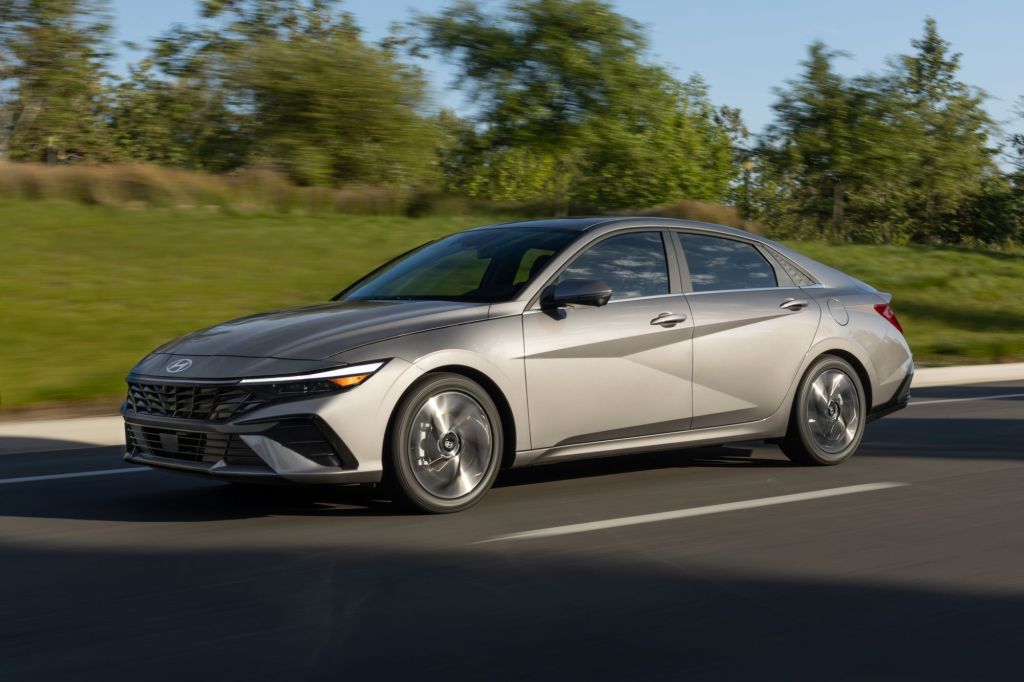
2025 Elantra Hybrid: stylish and with ~500 miles on a tank of gas, it is quite a compelling package (Image: Hyundai)

The exterior sheet metal has an array of creases and facets that make the car continue to have a distinctive appearance, even though model year 2021 is when the body styling first appeared on the car. Making something look fresh for that many years is no mean feat.

The interior has a clean look. Meaning that it is not overwrought. There are a 10.25-inch digital gauge cluster and a 10.25-inch infotainment screen. It is hard to imagine anyone needing any more digital real estate than that in a car. There are actual buttons to control the HVAC. There is a Drive Mode button that allows the selection of Eco, Smart or Sport; when making a selection the colors on the gauge cluster change (e.g., go Sport and there’s, of course, red).

The seats, covered with a simulated leather (H-Tex), are comfortable. The rear seats can accommodate adults, but odds are if you’re taking some colleagues, say, out to lunch, they’re going to be calling “Shotgun.”

One of my quibbles is the drive mode defaults to Eco. I would have liked it to stay in Smart because that adjusts the throttle and the transmission based on driving conditions.

“Sport?” you wonder.

Yes, there is a discernable difference in performance when making that selection.

But we’re talking about a hybrid here. It has a 1.6-liter Atkinson Cycle engine that produces 104 hp and 109 lb-ft of torque; with the 32-kW electric motor supplement the output is increased to 139 hp and 195 lb-ft. The Elantra Hybrid has a six-speed dual-clutch transmission (a transmission type that is becoming increasingly rare).

The point is, this is about fuel efficiency, not leaving the other vehicles behind when the light turns green.

And on the subject of fuel economy, the sticker says 49 mpg city, 52 mpg highway, and 50 mpg combined. I found my driving experience to be closer to the 49 mpg overall than the 50, though I did switch drive modes every now and then—yes, including Sport, which was handy in freeway driving.

The MSRP for the this top-trim hybrid is $29,450, It is quite an impressive package for the price for at least a couple of reasons.

First, there is the fuel efficiency that the hybrid provides. Consider that with its 11-gallon fuel tank it is good for about 500 miles before having to go to the local Shell station.

Second there’s the MSRP. For a not-very-large car payment, with the Elentra Hybrid you can get a lot of car. What’s not to like about that?

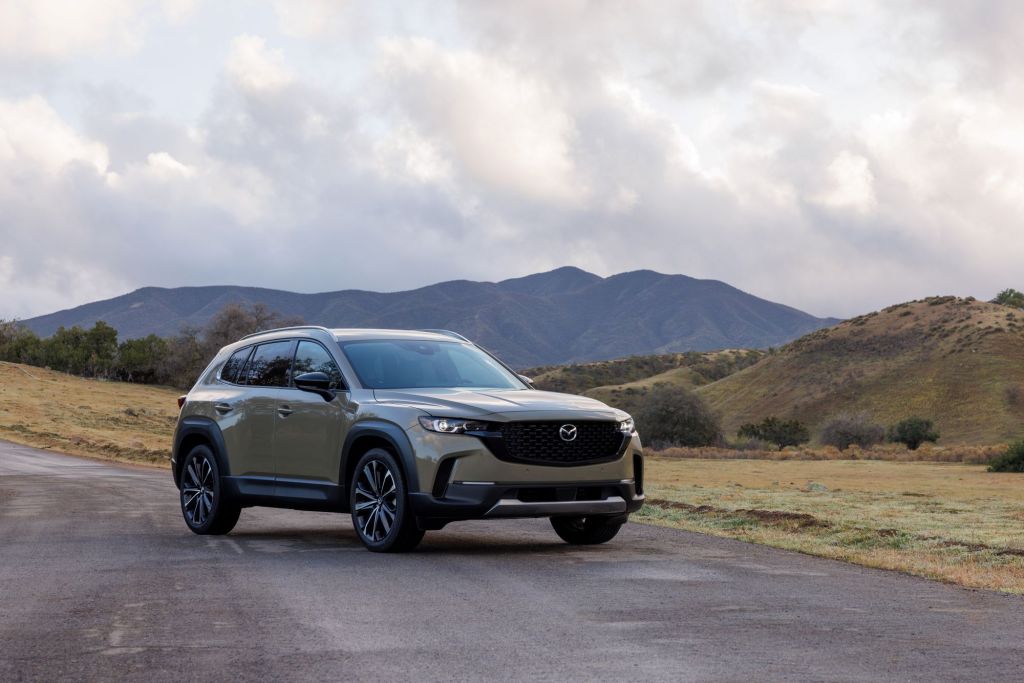
2025 Toyota RAV4 XSE Hybrid

An increasingly popular vehicle. . .

By Gary S. Vasilash

When it comes to compact crossovers, the Toyota RAV4 is a pioneer, having made its way to U.S. showrooms in January 1996.

The acronymic designator is said to stand for “Recreation Active Vehicle with 4-wheel drive.”

That “4” bit has morphed somewhat as (1) you can get a RAV4 with “all-drive,” not four-wheel drive (a primary difference being a transfer case, which the ute doesn’t have) and (2) the vehicle is available with front-wheel drive (though all-wheel is an option).

The vehicle is now in its fifth generation.

What is somewhat astonishing is the vehicle’s market performance in the U.S. in 2024. It became the best-selling vehicle in the U.S. To get to the top it had to supplant the Ford F-150 pickup, which had been #1 for so long that were someone to have an oversized foam finger with the Ford logo on it from when the F-150 got there it would now be crumbly.

Who would have thought that a compact SUV would supplant a full-size pickup in the U.S. market? Not me.

Through the years the exterior design of the vehicle has gone from boxy and functional (presumably as in “utility”) to softer to sharper to where it is now, which is fairly truck-influenced.

Maybe this is why it is doing so well in the market against trucks.

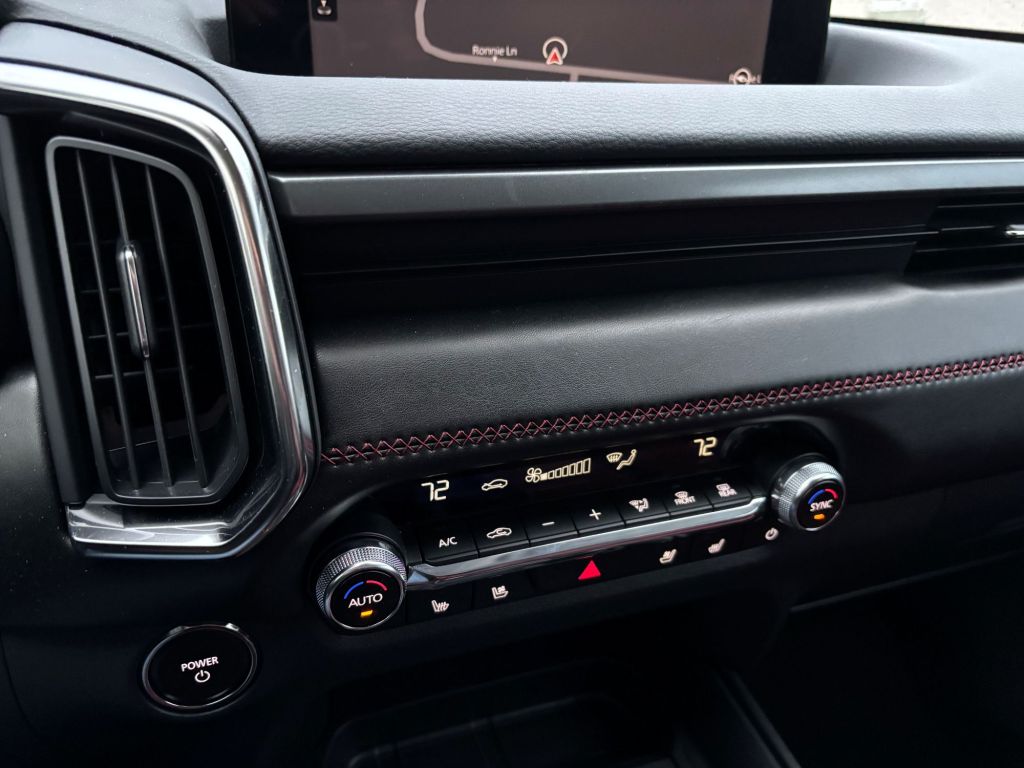
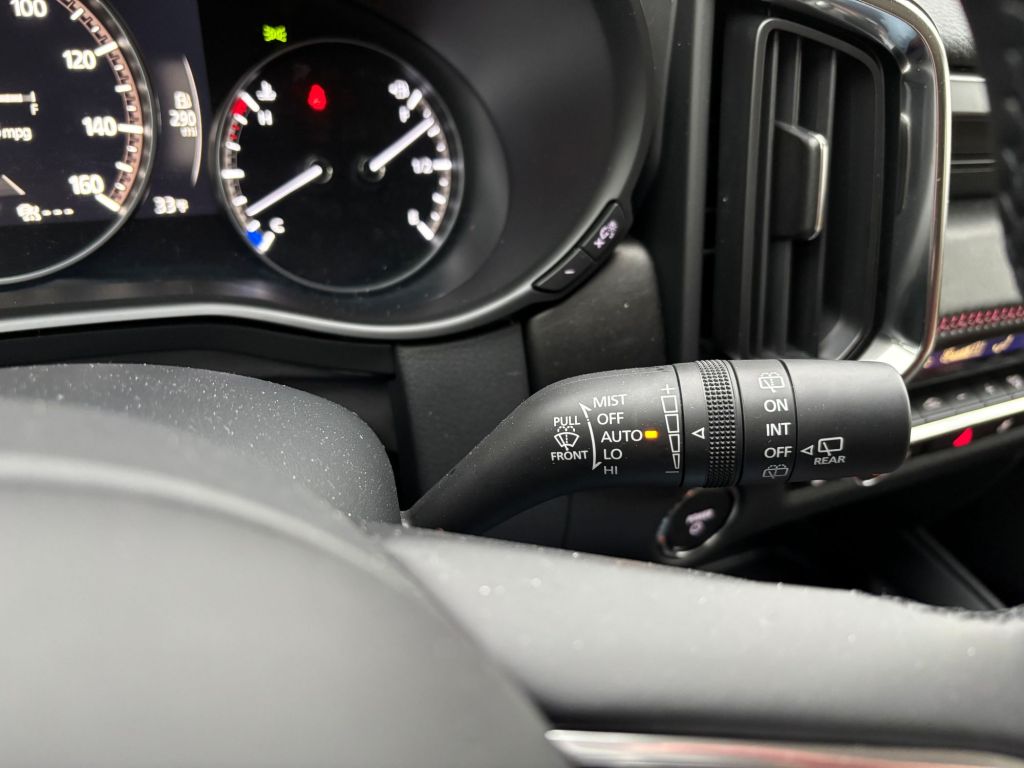
Even on the inside there are things like rubber-wrapped knobs that allow good grip and there are even buttons that are used, for example, to activate the heated steering wheel (this is an upper grade XSE model, incidentally). It has a wonderful simplicity compared to so many vehicles in this category (and others) that are focusing on doing things through screens and capacitive interfaces rather than, well, knobs and buttons.

Look: Real knobs and buttons!

(“But wait!” you say. “There aren’t any knobs or buttons on my phone, and that works just fine, thank you very much.” Yes, that is true, but consider this: you are holding your phone and staring at it in order to do something. A vehicle that weighs nearly two tons (in this case 3,775 pounds) and is traveling at, say, 70 mph is not the same thing: you’re eyes need to be on the road not trying to get to the right position on a surface to adjust the temperature.)

Oh, there is a 10.5 inch screen for infotainment. Toyota offers “Connected Services Drive Connect” that includes an “Intelligent Assistant” that is accessed via a “Hey Toyota.” Using that you don’t need to use any knobs or buttons or screens or surfaces. Just your voice.

The vehicle driven here is powered by a 2.5-liter four-cylinder engine that is orchestrated with two motor generators and a continuously variable transmission. There is one motor in the front and one in the rear which provides the all-wheel drive capability. The rear motor operates as needed and without a torque distribution system. Otherwise, the vehicle operates as a front-wheel drive vehicle, thereby helping optimize fuel economy.

And on that subject, the estimated fuel economy is 41/38/39 mpg (city, highway, combined). So with a 14.5-gallon fuel tank, you’ve got a considerable range.

The vehicle isn’t going to throw you back into your seat when you mash the accelerator—but then why would you? This is not engineered for that.

As for the “utility” aspect, there’s 37.5 cubic feet of cargo volume with the second row in position and 69.8 cubic feet when that seat is folded.

Seems like people who don’t haul things like gravel or equipment on a regular basis and so need a pickup have figured that that is enough volume to make that Costco run with a RAV4.

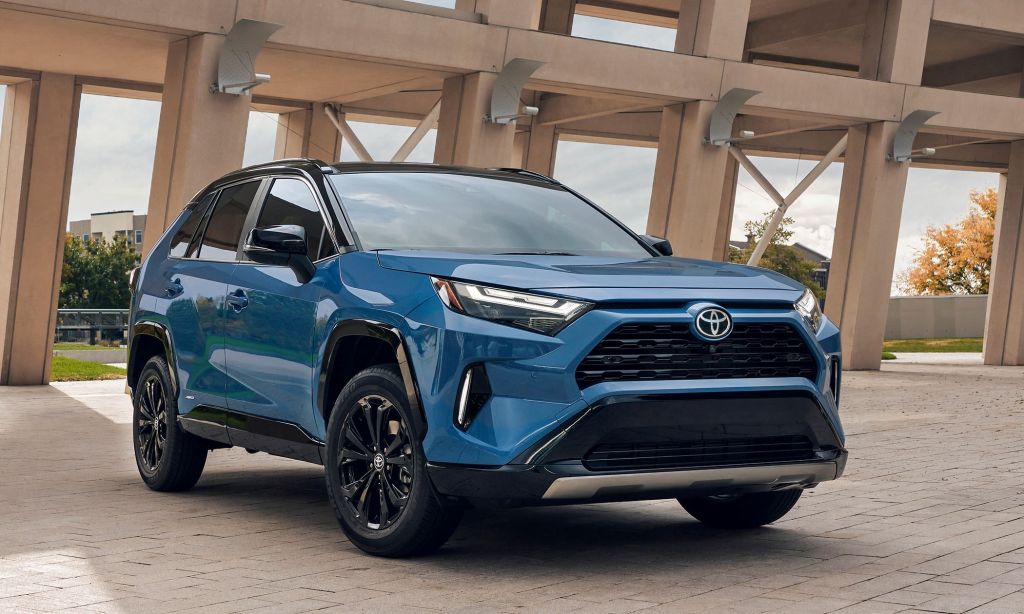
Fifth-gen RAV4. Exterior design is biased toward the “utility” rather than the “sport” in the SUV. (Image: Toyota)

This Hybrid Could Really Be “Super”

But somehow the math doesn’t make sense. . . .

By Gary S. Vasilash

Although not available in the U.S.—and not likely to be anytime soon—there is an array of vehicles coming from China-based brands that have some purported capabilities that are rather astonishing.

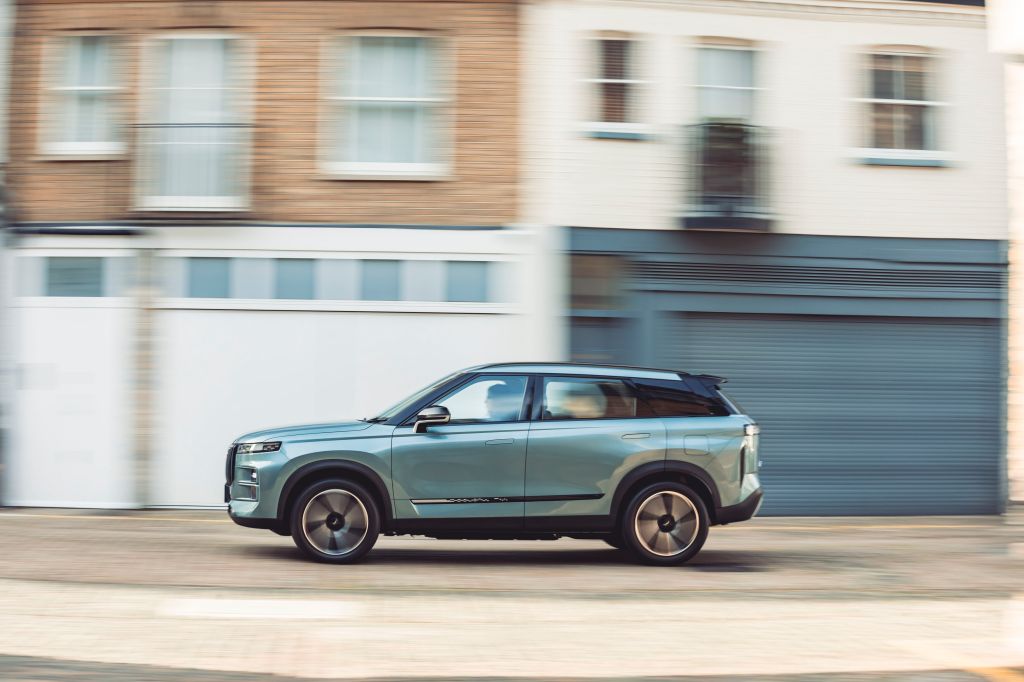
Take, for example, the forthcoming JAECOO 7 SHS, an SUV that is going on sale in the U.K. market.

This vehicle, a plug-in hybrid, is claimed by the company, which is part of the Chery Group, to deliver, on the WLTP test procedure, a fuel efficiency of. . .

403 mpg

The “SHS” in the name comes from “Super Hybrid System.”

If it gets 403 mpg, it really must be super.

Brits might forget what petrol stations look like they’ll be there so infrequently. (Image: JAECOO)

The range is stated at 745 miles.

The vehicle has a 1.5-liter engine that produces 143 bhp. The engine has six technologies the company says contributes to its efficiency.

They are: Deep Miller cycle; i-HEC internal combustion; i-HTM intelligent thermal management system; HTC efficient turbocharging; i-LS intelligent lubrication and HiDS high dilution.

I don’t know what they are, either.

Then there’s a transmission that has four technologies:

Quad-core dual electronic control MCU; IGBT double-sided water cooling; a high-efficiency dual motor; hydraulic split cooling.

Which is slightly more understandable.

And then there’s a 18.3-kW lithium iron phosphate battery pack.

It provides, according to the company, the ability to drive 58 miles on electricity alone.

The JAECOO 7 SHS has a starting price in the U.K. of £35,065 (~$43,000).

Here’s something that seems a bit mysterious, though.

It has a 60-liter fuel tank. That’s 15.68 gallons.

If it is rated at 403 mpg, then shouldn’t the 15.68 gallons of gas be good for 6,319 miles?

2024 Lexus LS 500h AWD

Dependable luxury. . .

By Gary S. Vasilash

One would assume that when buying a vehicle in the >$100,000 vicinity it will have a full suite of amenities, both infotainment and safety-oriented (a.k.a., “stuff,” albeit that being a somewhat plebian term), as well as comfortable (e.g., seats that could be utilized in an upscale house) and capable (as in all-wheel drive).

One thing that may not has as top-of-mind consideration as it probably should, something that may be taken for granted, is the level of dependability of the vehicle.

It is one thing to feel a bit of quiet satisfaction of dropping off one’s luxury vehicle with the valet at the front of the club. It is something else entirely to be waiting for the valet to return said vehicle because there happens to be a glitch in the lot.

Or it could be simply the issue of getting something to work (e.g., perhaps if you want to open the glove box you should simply, well, use the pushbutton-style mechanism to open the glove box, not have to find a button or something on a screen to do it—otherwise, it could be frustrating/annoying).

Which is to say that all luxury vehicles aren’t built with the same levels of quality and dependability as others.

And there is information to back this claim up.

The J.D. Power 2024 U.S. Initial Quality Study (IQS), which surveys owners 90 days after they’ve owned their vehicles. Presumably that is sufficiently long to get a sense of one’s vehicle and if something is going to break early, it has.

Lexus comes in second in the Premium category of the survey, behind Porsche (174 for Lexus and 172 for Porsche, with lower being better). Although one might argue that Lexus models and those from Porsche are largely different (but both are big in the SUV space), the most Porsche-like Lexus model, the LC, had the highest initial quality of any vehicle surveyed.

But there is another study that J.D. Power does, one that is more about the long run. It is the J.D. Power Vehicle Dependability Study (VDS). While IQS is after three months, VDS is after three years.

The categories VDS asks about include climate, driving assistance, driving experience, exterior, features/controls/displays, infotainment, interior, powertrain, and seats.

In the 2024 VDS Lexus comes out on top—by a considerable margin.

That is, the metric is “problems per 100 vehicles,” or PP100. A lower number is better.

Lexus has a score of 135 PP100.

Porsche came in second. It scored 175 PP100.

(Oddly enough, whereas Porsche came in first in the IQS but a Lexus was the overall highest in initial quality, in the VDS Porsche, second overall to Lexus, has the vehicle with the highest dependability, the 718.)

So one can feel confident that the LS 500h is something that is built with quality and dependability.

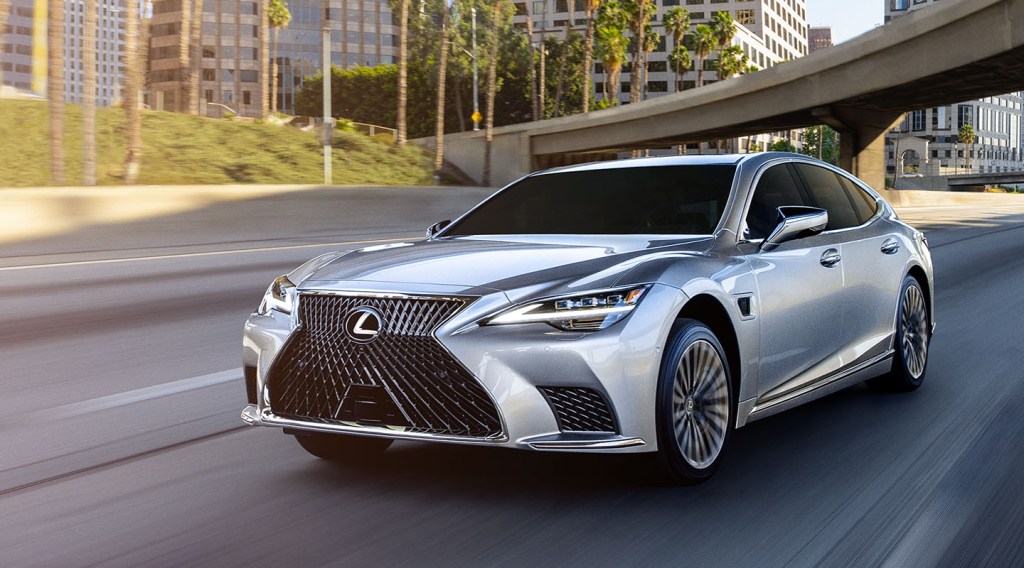
LS 500h AWD: Looks good. Drives well. Brings the amenities. And is built to be a quality vehicle. (Image: Lexus)

The Look

The sedan is low and lean. Specifically, 206.1 inches long, 57.5 inches high, and with a 5.8-inch ground clearance. It rides on 20-inch wheels. And the other obligatory specs are that it has a 123-inch wheel base and is 78.8 inches wide.

The Power

This is a big sedan, one might feel environmentally awkward driving it.

But this is a hybrid. There is a twin-turbo 3.5-liter V6 engine that is supplemented by electric motors so the total system horsepower is 354. This may not be the stuff of being pushed back in your semi-aniline leather seat when you push down on the accelerator (there are other LS trim levels for that), but it is something that results in a combined fuel economy number of 25 mpg, which is certainly outstanding for something of this scale.

(And going back to the issue of dependability, know that Toyota started building the Prius in October 1997, so it is undoubtedly the most capable producer of automotive hybrid powertrains by a long shot.)

The Interior

Luxurious. Sumptuous. Like that.

Leather is leather. Wood is wood. Metal is metal.

You’d think that’s, well, normal.

It’s not.

But it is normal in the LS.

Which is impressive.

(Although I must confess that when there’s white leather seating surfaces, I have some, well, concern. . . .)

The Tech

There is Lexus Teammate, a Level 2 advanced driver assistance system that provides the means for hands-off driving predicated on both a sensor suite (radar, lidar and camera sensors) and GPU processors. Eyes must be kept on the road and it works on highways that have been digitally mapped. Arguably, this type of system de rigueur for vehicles in this category, and in the case of Teammate, it provides the hands- and feet-free capability as would be expected.

A Thought

LS 500h AWD: All that is expected—and then some—in a reliable package.

Ford’s Latest Police Interceptor Utility

Things you probably don’t want to know about. . .

By Gary S. Vasilash

Here’s something you probably don’t want to experience: aspects of the standard features offered in the new 2025 Police Interceptor Utility:

Police Perimeter Alert. . . Police Engine Idle. . . Police Dark Car Feature. . . Rear Camera on Demand. . . H8 AGM Battery. . . Blind Spot Monitoring with Cross-Traffic Alert . . .Manual Police Pursuit Mode – Steering Wheel Switch Execution. . . Red/White Dome Lamp – Cargo Area. . . Rearview Camera with Washer Viewable in 8″ Center Stack Screen. . . Ford Pro Upfit Integration System. . . Keyless Entry with 4 Manual Keys. . . 6-Way Power Passenger Seat. . . Police Accessory Independent Timed-Release Output (PAITRO) – Output Tied to Liftgate Release Switch. . . Climate Control – Rear Aux A/C System. . . Updated Police Grade Cloth Trim Seat Material. . . 12.3″ Digital Instrument Cluster with Certified Calibration. . . Keyless Entry – Key FOB Only (Less PATS). . . Simple Fleet Key (w/o microchip, easy to replace: 4-keys). . . Two 50-amp power distribution junction box

The 2025 Ford Police Interceptor Utility. Departments looking for fuel economy can opt for a hybrid powertrain. (Image: Ford)

Seems like the only thing you’d really be interested in were you to find yourself in the back of one is that rear aux A/C system. And perhaps the seating material.

The rest of the stuff is germane to the professionals.

The Police Interceptor is based on the Explorer that you can find in a dealer near you.

But this vehicle isn’t simply an Explorer with additional lights and a profoundly different paint scheme.

It is engineered to be a police vehicle. It is being offered through Ford Pro, underlining that this is a commercial, not consumer, vehicle.

There are three powertrain options. There is a 3.3-liter V6 that produces 285 hp. A 3.0-liter EcoBoost V6 that produces up to 400 hp—but that’s if the vehicle is using Premium gas, which is probably not something that municipalities are in favor of.

And there is a 3.3-liter V6-based hybrid that produces a system output of 318 hp.

One of the arguments that Ford makes for the hybrid is that the onboard equipment operates even when the engine shuts off. This, it is calculated, means a savings of up to 838 gallons of gas per year because the engine isn’t idling so that various things in the vehicle work.

So, if gas is at $3.50 per gallon, this can translate into a savings of $17,500 over a six-year period.

Which matters as budgets at municipalities are stretched.

(Here’s something interesting: the new consumer version of the Explorer is not offered with a hybrid, something that had been available before the recent midcycle refresh. Given the popularity of that powertrain—as consumers budgets are being stretched—it seems likely Ford may rectify that. After all, they like fuel efficiency, too.)

EVs in the UK in May

Yes, more are being bought. By fleets. . .

By Gary S. Vasilash

Although the number of vehicles sold in a given month in the UK isn’t particularly large, from a percentage standpoint there are undoubtedly some people at US OEMs who wish they’d have the kind of EV registration numbers that exist in the UK:

According to the Society of Motor Manufacturers and Traders (SMMT), in May EVs have 17.6% of the market.

While the whole market was up 1.7% in May, SMMT figures show that EV sales were up 6.2%. Clearly, EVs in the UK are doing rather well.

Do British consumers know something that American consumers don’t?

Well, maybe not.

Turns out that consumer retail EV sales were actually down 2%.

The uptick in the EV market came from fleets.

In the UK there is something called the “Vehicle Emissions Trading Scheme” that mandates zero-emissions vehicles represent 22% of a manufacturers’ annual sales.

Apparently there are incentives available to businesses for getting EVs that are not open to consumers. The SMMT believes that it is necessary for “the next government to provide consumers with meaningful purchase incentives.”

Conservative leader Rishi Sunak, current UK prime minister, will square off against Labour leader Keir Starmer on July 4.

Mike Hawes, SMMT Chief Executive:

“As Britain prepares for next month’s general election, the new car market continues to hold steady as large fleets sustain growth, offsetting weakened private retail demand. Consumers enjoy a plethora of new electric models and some very attractive offers, but manufacturers can’t sustain this scale of support on their own indefinitely. Their success so far should be a signpost for the next government that a faster and fairer transition requires carrots, not just sticks.”

While of the subject of incentives and such, it should be noted that in May plug-in hybrids were up 31.5% are regular hybrids up 9.6%, both handily outperforming EVs.

And while the May ’24 market share for plug-ins is 8% and hybrids 13.2%, each below the EV’s 17.6%, combined they represent 21.2% of the market.

Evidently consumers aren’t against reduced emissions but are in favor (favour?) of the convenience and range provided by hybrids.