
Why you might take advantage of a compelling package. . .
By Gary S. Vasilash
Earlier in my career I needed to get a new job.
There was, it seemed to me, a hitch: The unemployment rate at the time was quite high.
I figured there were few jobs and plenty of people looking for them.
Consequently, I thought, the odds would be stacked against me for finding a job.
When I explained that idea to someone smarter than me, she simply replied:
“You only need to find one job.”
The number of unemployed was irrelevant. The number of people who were looking for work didn’t matter.
It came down to me.
(I eventually found one.)
What, you might wonder, does this have to do with the 2026 Hyundai Tucson PHEV Limited AWD?
Well, it’s this: Plug-in hybrid vehicles (PHEVs) are knocked more than they are lauded.
Just as there were those—mainly in office buildings in southeastern Michigan—who used to harumph about plain, unpluggable hybrids as being too expensive or too complicated or too much for them to handle (though they didn’t say the last one out loud), there are those and then some who are critical about PHEVs because not only do they have all of the issues of the regular hybrids, but they have an additional battery and attendant electronics, too.
Holy moly!
But it isn’t about them. It is about the customer.
(Notice how Toyota managed to sell, one by one, far more hybrids than the others have sold anything other than full-size pickups.)
And then there are those who criticize PHEVs because not only do they have that “complicated” propulsion system (i.e., engine and electric motor) but they have a bigger hybrid battery (they still have the same 12-v that’s found in all manner of vehicles, too).
That’s apparently a bridge too far.
But then there’s another smack on PHEVs.
It is that plenty of people don’t plug them in.
Consequently, they operate just like a “regular” hybrid.
This brings me back to the singular nature of some things.
I needed a job.
You could buy a PHEV. Say a Tucson PHEV.
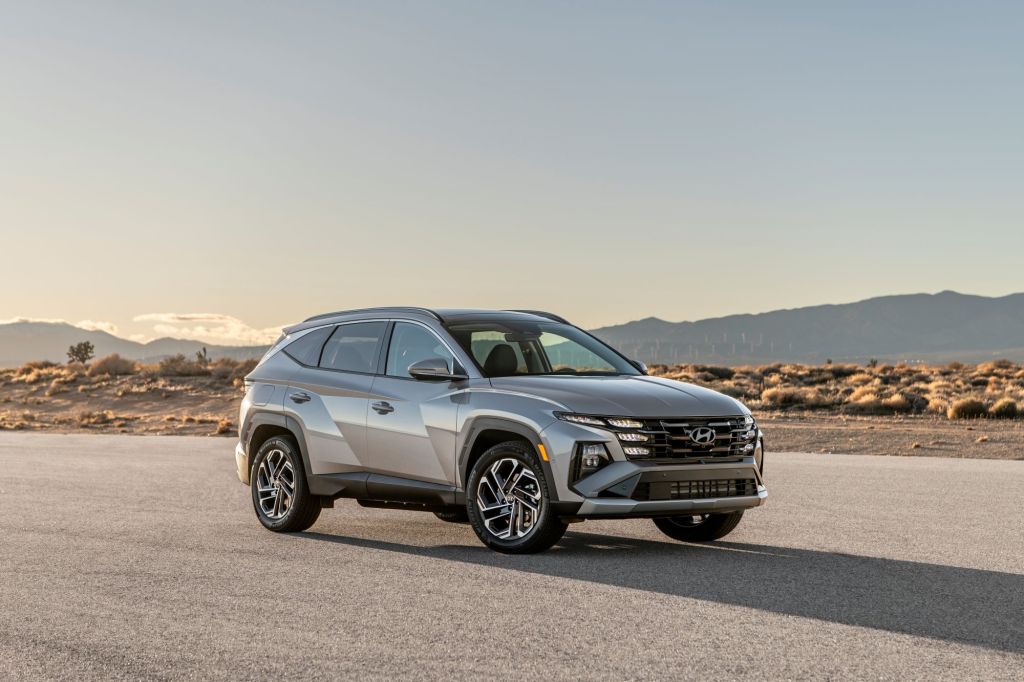
You could plug in to a common 120-v outlet when you got home from work.
About 12 hours later the 13.8-kW lithium battery would be charged.
You would then be able to drive your Tucson for about 32 miles on electricity alone.
No gas.
Lots of other people might not do that.
But you certainly could.
Consider: otherwise the vehicle is just sitting in your garage or driveway. (If you live in an apartment this might not be so easy, but if your apartment complex provides Level 2 chargers, your Tucson PHEV can be regularly plugged in and fully charged there in just two hours.)
Cleverly, however, you would be taking advantage of that 13.8-kW battery.
And conceivably (depending on commute) drive to work and back the next day without a drop of gas.
The battery would drive the 72-kW (a.k.a., 97-hp) electric motor, which is sufficient for normal driving.
And when there’s insufficient energy to do that solo, then the gas engine (a 178-hp, 1.6-liter, turbocharged four) joins in. This provides a system horsepower is 268 hp. A solid number for a compact crossover.
You would have a compelling package.

