On the Ferrari Luce Design

Something entirely different—especially on the inside

By Gary S. Vasilash

What’s interesting about the Ferrari Luce, the first-ever five-seat Ferrari as it is (1) based on an all-new platform and (2) happens to be an electric vehicle (according to Ferrari, its conventional setup with a front-mid engine and a rear gearbox doesn’t allow that center rear seating position), is that it doesn’t look like a Ferrari.
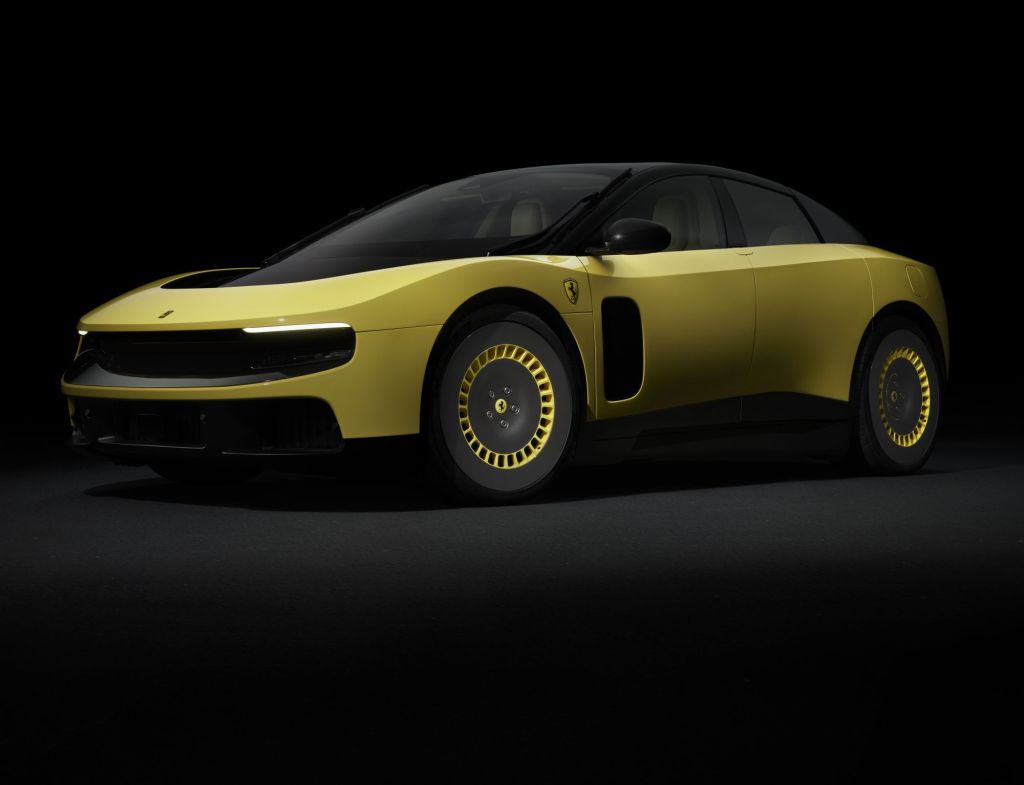
Ferrari Luce. (Image: Ferrari)

Which is probably a good thing for a new generation of buyers who don’t even remember the reboot of Magnum PI, to say nothing of the original.

The primary reason why it looks un-Maranello is because it wasn’t designed in the Ferrari Design Studio but by LoveFrom, “a creative collective of designers, architects musicians, film makers, writers, engineers and artists.”

Which was established by Sir Jony Ive of Apple fame. Who has been joined by Marc Newson, who has designed everything from furniture to table wear to the Ford 021C concept car of 1999 which, incidentally, he designed at the Carrozzeria Ghia in Turin, Italy.
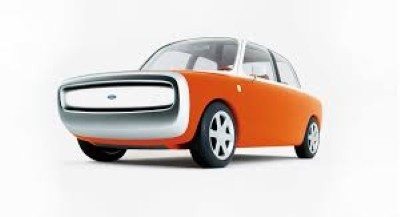
Ford 021C concept (Image: Marc Newson Studios)

Small world. (Maranello is about 190 miles from Turin.)

Ive may have developed a car, too, the one that Apple worked on, but at the moment that’s not apparent to the outside world.

In the description of the 021C proffered by Newson’s studio it says:

“The car interior is a primary focus, relating strongly to Marc’s signature furniture designs.”

And arguably the interior of the Luce says “This wasn’t designed by typical automotive interior designers” far more forcefully than the exterior says “This wasn’t designed. . . .”

There are mechanical buttons. Dials. Toggles. Switches. Aluminum. Gorilla Glass (a nod to the iPhone?).
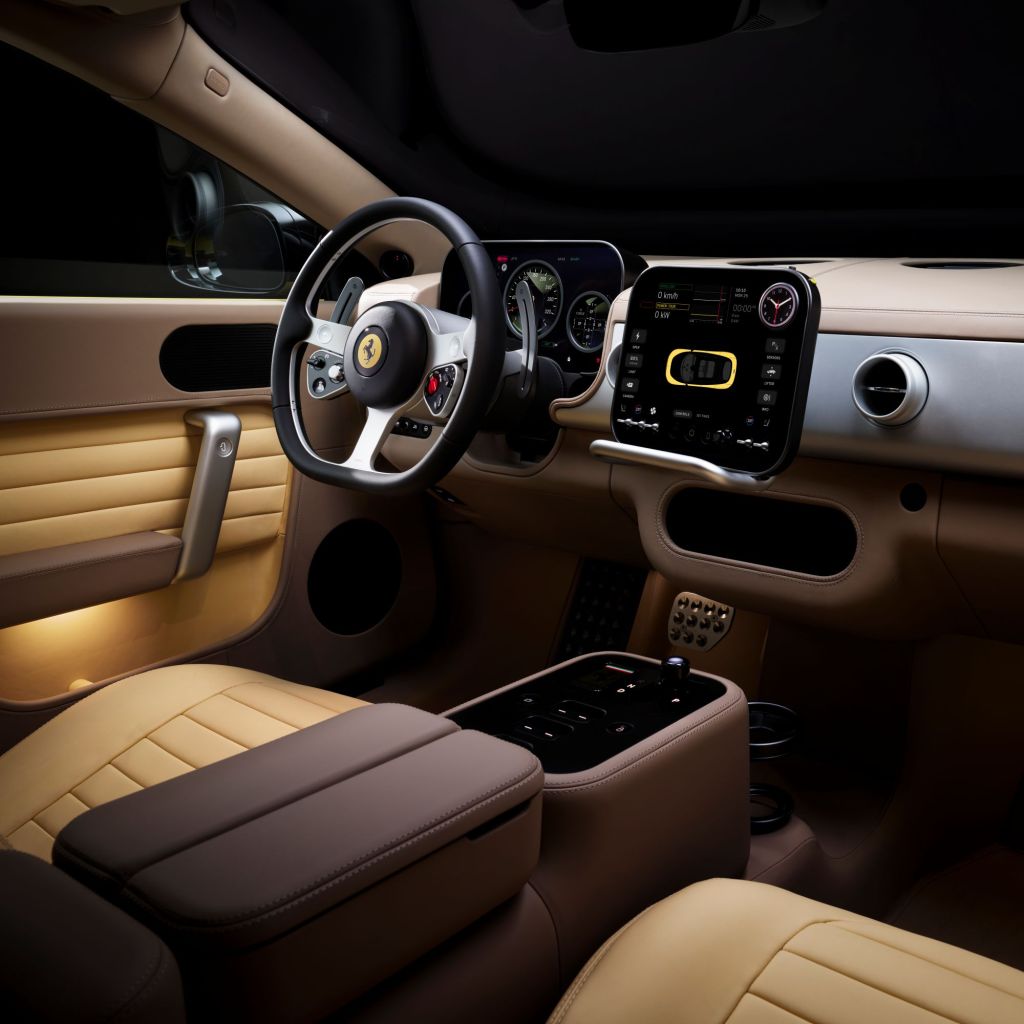
An interior designed for physical engagement. (Image: Ferrari)

The analog clock looks remarkably like the classic Braun alarm.

Yes, yes, there is digital tech, too.

But the interior design is something that the driver tactually engages with.

And that is what I think Ive brings to it. He knows there is a difference between staring at a screen and directing a vehicle with a reported 0 to 100 km/h time of 2.5 seconds.

That’s the difference between a guy who spent his career designing for the leading consumer digital products company and someone who works in the auto industry and wishes they were in Cupertino.

2025 Lexus NX 350 F Sport

It is a well-done compact crossover. . .

By Gary S. Vasilash

(Image: Lexus)

It has a 2.4-liter four-cylinder engine that produces 275 hp.

It has an eight-speed automatic transmission.

It has all-wheel drive.

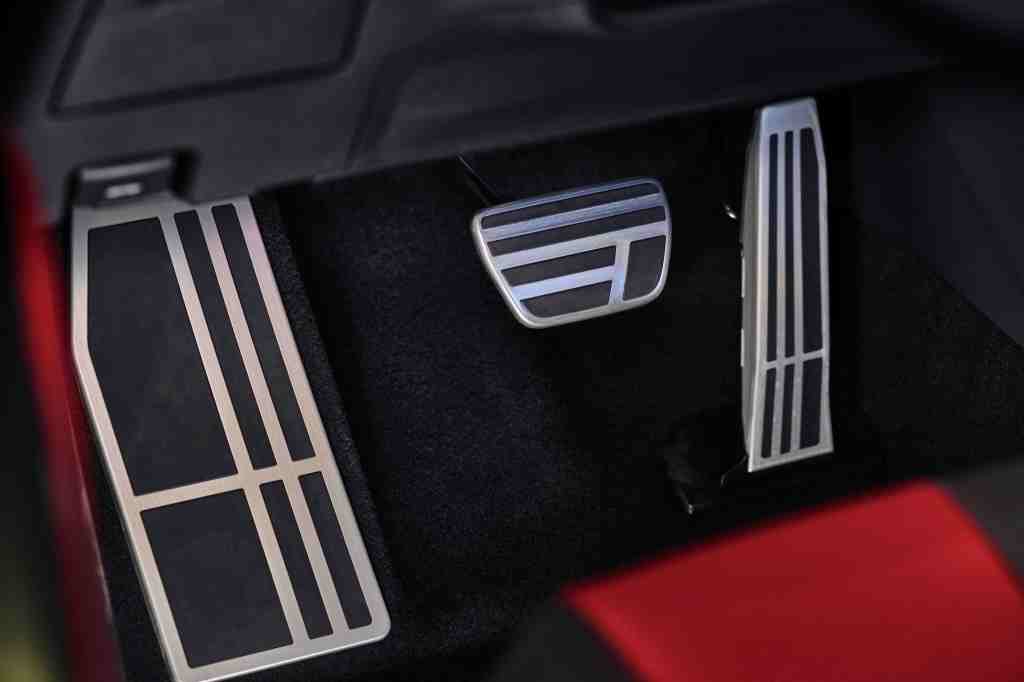
It has aluminum pedals and an aluminum scuff plate.

It has bolstered driver and passenger seats.

It can tow up to 2,000 pounds (when appropriately setup).

It has LED lamps, fore and aft.

It has a 14-inch touchscreen, with wireless Apple CarPlay and Android Auto.

It has a head-up display.

It has 20-inch alloy wheels.

It has a panoramic glass roof.

It has adaptive variable suspension and performance dampers.

It has features like these that are fairly common to other compact crossovers.

It is a Lexus NX 350, which makes it somewhat different from other compact crossovers.

It is built on the Toyota TNGA-K platform.

It shares that platform with the Toyota RAV4.

It is not simply a RAV4 with better accoutrements.

It is different in terms of overall execution, inside and out.

It is a stylish, fashionable vehicle as the RAV4 has become a truckier vehicle.

It stands out with its sheet metal in a good way, one that telegraphs that this is not just one of many in the category.

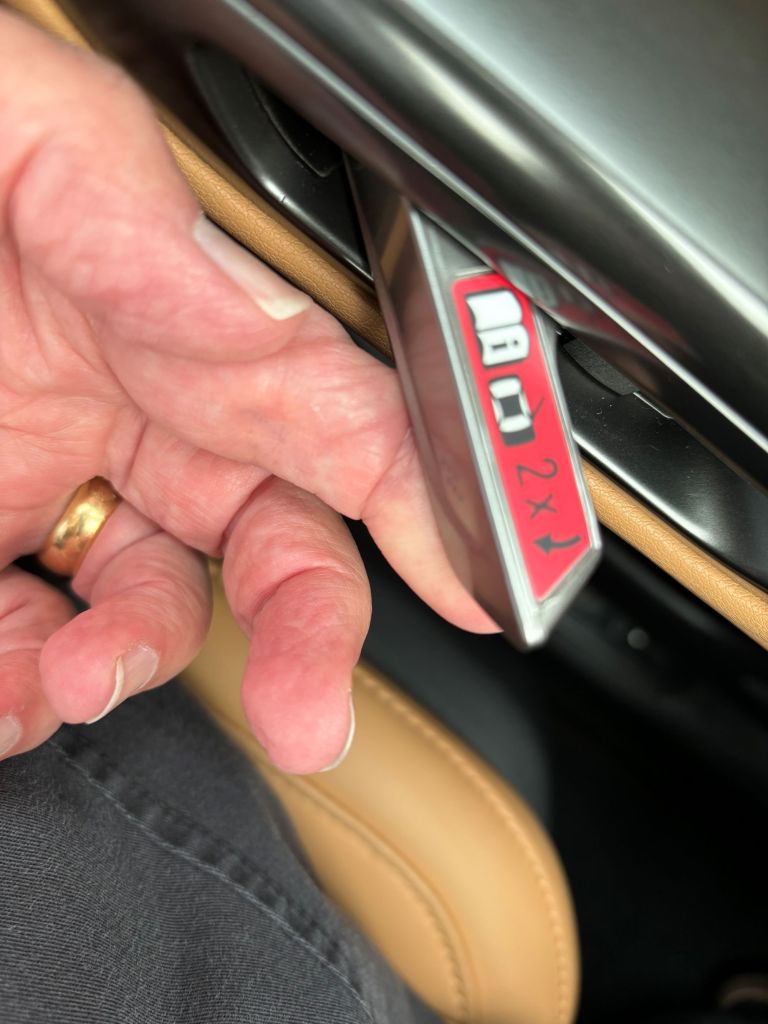
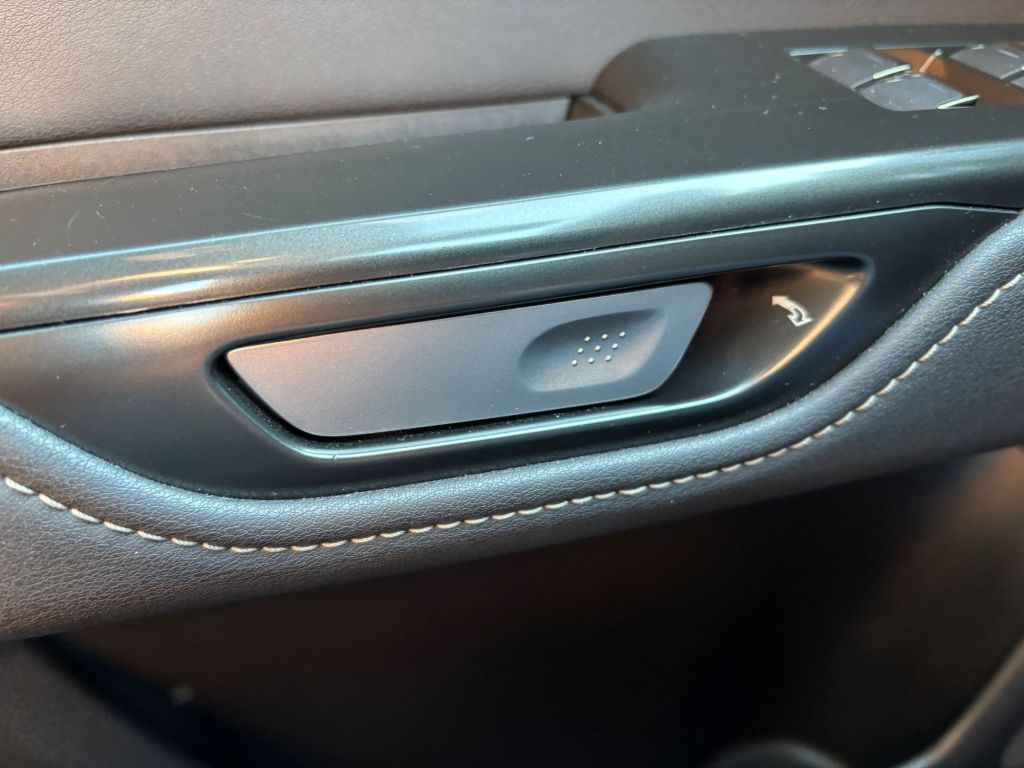
It has an odd interior door opening mechanism.

It looks like this in the closed position.

(Image: gsv)

It is activated by doing this—twice.

(Image: gsv)

It is something that someone with large fingers might find difficult.

It is something that someone with long fingernails is not going to like at all.

It is a small thing.

It is a small thing that people use every day, often multiple times per day.

It is not good ergonomics.

It is echoed, in a way, by a comparatively diminutive volume knob for the impressive Mark Levinson audio system.

It can be contrasted with the excellent knobs (driver and front passenger) that are used to adjust interior temperature.

It has all-speed dynamic radar cruise control, lane tracing assist, lane departure alert with steering assist, road sign assist, and other tech.

It warns you of cross traffic.

It is pleasant to drive—quiet, confident.

It has an MSRP of $49,335 but with the addition of the sporty F SPORT package ($2,865) and other options, adding in the delivery, processing and handling fee, it has a total, in this instance, of $59,505.

It has metal pedals, indicating some sportiness.

(Image: Lexus)

It is assembled in Fukuoka, Japan.

It is likely to be more expensive with the 15% tariff on Japan-built vehicles.

It is worth considering, depending on the size of your fingers.

2024 Lexus NX 450h+ AWD

This is not something that was designed in Cupertino. . .

By Gary S. Vasilash

“Apple design” isn’t as often in the conversation today as it once was.

While for some people it was essentially just a matter of using a clean, simple white surface and a name that had the letter “i” stuck on its front, that really misses the fundamental nature of Apple design.

It came down to something that someone could use without having to read a user’s guide or manual.

What is astonishing about this is that no matter what product Apple designed—from computer to phone—it was a highly technical product, something that in the pre-Jobs period necessitated study to use.

A subtle proof that Jobs wanted people to use products right after they were unboxed is that there is a charge in that iPhone (as there had been in iPods) so that it isn’t necessary to plug it in and wait.

Its use would be both intuitive and immediate.

All of which might make you wonder what this has to do with the 2024 Lexus NX 450h+ F Sport luxury compact crossover.

It’s this:

The inside door handle is confusingly absurd. (While it would be grammatically appropriate to just use the word absurd and leave it at that, this handle takes it up a notch.)

It is a metal component that is flush with the surface of the arm rest it is embedded in. To use it it is a matter of inserting your finger into a space between the plastic housing and the handle.

But the is not just pulled once. It is necessary to pull it twice.

And to use what is ordinarily a simple lever of some sort, Lexus has added small iconic instructions on both the plastic housing (an arrow with points on each end indicating the intended movement to be achieved) and on the door pull’s top surface, a red label.

I’m sorry, but this is a horrible execution.

Is it a deal-breaker for those who might be interested in getting a nice, well-handling plug-in hybrid that features sumptuous seats and an array of safety tech and infotainment tech, a vehicle that provides an approximate 36-mile electric-only range before it reverts to a conventional series-parallel hybrid that has an EPA-estimated 36 mpg combined?

Probably not.

Although the thing is, this is something that the buyer will have to live with. Certainly it is something that she’d get used to. Certainly something that would be highly annoying were a freshly manicured fingernail to be fractured by working the handle. Certainly something that would come to mind every time the owner was in a model with a more-utile actuator.

And maybe the folks in the Lexus Handle Department got an atypical assignment and assiduously went at it.

On the outside there are what appear to be conventional door handles that you reach in from the top or bottom and pull toward you.

In the case of the NX there is a rubberized surface on the interior surface of the handle that covers an electronic button. By pulling the button is activated and the door opens.

Is this a “luxury” feature or, well, a solution to a non-existent problem?

Again, overall—from the exterior styling to the cargo capacity (22.7 cubic feet with the rear seat up; 46.9 cubic feet when folded down)—this is a nice vehicle.

It is based on the GA-K platform that it shares with the hybrid-only Toyota Venza and the Toyota RAV4—in all of its powertrain configurations—so one can have not only Lexus-level amenities with the NX, but Toyota-level reliability.

Still, this would be a better vehicle if some of the designers and engineers asked themselves, “What would Steve do?”

(Image: Lexus)

The Future of Interior Materials Is Now

Material changes are coming fast. . .

By Gary S. Vasilash

(Image: BMW)

Although you might be thinking that the picture is a scene from Denis Vileneuve’s Arrival II, which doesn’t exist, it is actually a shot taken in the colour (yes) and materials section of the MINI Design Studio.

One of the things they are doing there is determining applications for a 2D weaving process that uses “yarn” from recycled polyester for things like the instrument panel and door panels.

While in the photo there appears to be essentially one colour (with the lighter being a reduction of the darker), according to Elena Schwörer, designer for materials and weaving, “The weaving process allows us to create unique dual-colour designs that bring a special aesthetic and atmosphere to the interior.”

For those who are familiar with interiors with surfaces that are mainly textured but uniformly molded, fabric surfaces are beginning to be used in an increasing number of vehicles.

While the tradition interior materials tend to lend themselves to cleaning with a few quick swipes of Armor All, one wonders how the fabric materials can be cleaned.

Undoubtedly Schwörer and her colleagues have that handled.

Conti Demos Crystal Display

By Gary S. Vasilash

“With the Crystal Center Display as a key component, we want to turn the world of interior design on its head and create an innovative focal point for premium vehicles of the future – one that grabs attention and stirs emotions. We are moving away from the straightforward display of information and elevating it to a highly personalized user experience,”–Dr. Boris Mergell, head of the User Experience (UX) business area, Continental.

Conti’s collaboration with Swarovski. (Image: Continental)

Dr. Mergell is talking about an infotainment display that Continental has developed with crystal company extraordinaire Swarovski. Turns out that in addition to producing necklaces, rings, bracelets, and the like, there is another part of the company, Swarovski Mobility.

Continental developed a microLED display that is integrated into the crystal panel. The microLEDs provide the brightness and contrast for the 10-inch infotainment display. The information displayed seems to float in the slim crystal slab.

Seems like Conti is going for something of a Steampunk aesthetic for its displays: classic decorative crystal meets the cloud.