
The ES sedan has come a long way since it was unveiled on a snowy day in Detroit in 1989. . .
By Gary S. Vasilash
The first-generation Lexus ES, the first-generation Lexus LS, and Lexus itself were all introduced in Detroit at the North American International Auto Show in January 1989.
The ES back then was the ES 250. It was positioned as something of an executive sedan (ES, get it?), which was more affordable than the LS 400. (Let’s face it: if you were a dealer back then for a brand-new brand, you undoubtedly wanted something that you could possibly get more volume with: the LS 400 had a base price of $35,000 and the ES 250 $21,050—remember, these are 1989 prices.)
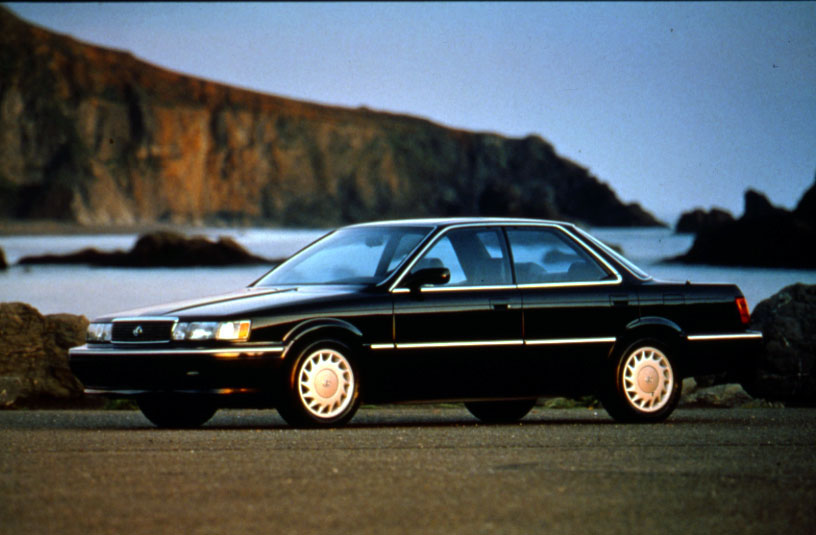
As time has gone on, the sales of the ES in the US market has been on the order of 1.4 million units while the LS number is about 450,000.
(Model year 2026 is the last for the LS in the US market.)
Clearly, from a volume point of view the ES has been the more popular sedan of the two vehicles, both in the US and globally.
And Now It’s New
The 2026 Lexus ES is all-new.
But it wasn’t introduced in Detroit.
Rather, at the 2025 Shanghai International Automobile Industry Exhibition.
Times change.
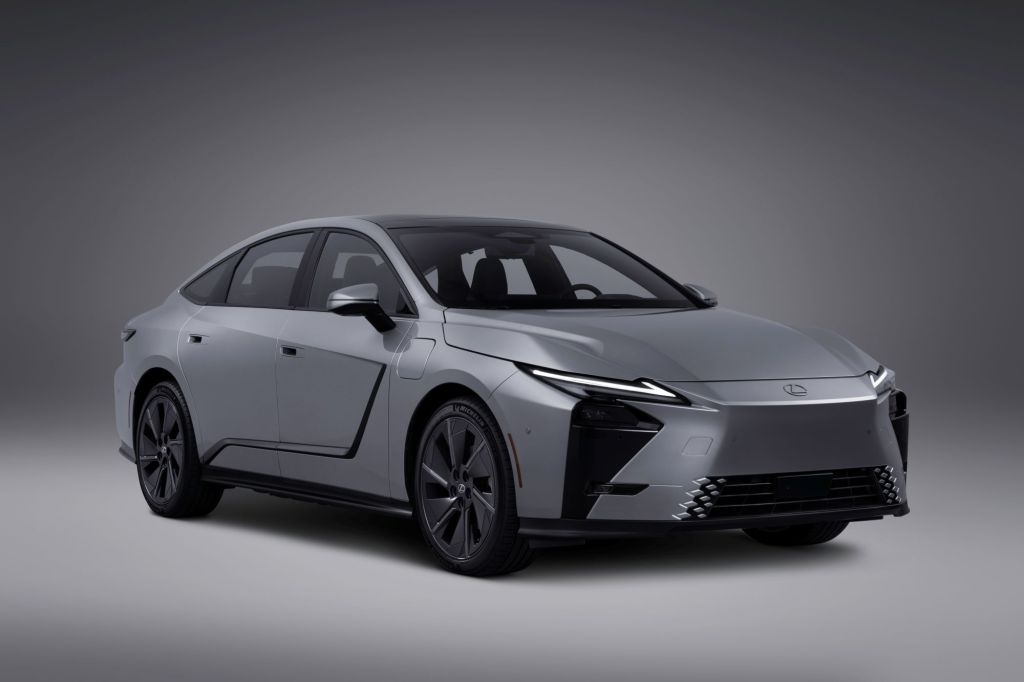
And while the first ES had a V6 engine, the ES is now available as either a hybrid (no surprise there) or as an electric vehicle (surprise there).
While that early ES produced 156 hp, the 500e is the most-powerful ES, with a total system horsepower—there are electric motors on both the front and rear axles—of 338, more than double the horsepower of the original ES.
Of course, to be fair to the first ES, the 500e has a starting price of $51,895, which is more than twice the price of the original, so that 156 hp is certainly respectable.
Beyond the “Spindle Grille”
The controversial Lexus “spindle grille” was introduced in production on the 2012 GS sedan.
The 2026 ES has a “spindle body,” according to Lexus International Chief Designer Yahiko Kumai.
Said another way: compared to all previous generations of the ES, this is the greatest step-change of all. And perhaps this change has something to do with the fact that the ES is only available as an electrified vehicle.
Kumai said the design, based on the concept “Clean Tech x Elegance,” was executed by starting from a “super-ideal” design, then working to make it something that could be produced, rather than starting with the existing product and modifying it to make it new.
Bigger. Of Course.
Dimensionally it is bigger than the ES that preceded this, the eighth gen of the sedan. It is 202.4 inches long, 75.6 inches wide, 61.2 inches high, and has a 116.1-inch wheel base.
A big change is in the height: from 56.9 inches in the last generation to the current 61.2 inches.
In order to provide a look that is long and clean, the body side features a black molding that runs from the bottom of the character line on the front door to meet the rocker at the back of the rear door.
From the front to the rear, the whole execution has an appearance of an of-the-moment sport sedan, which takes the sporty appearance of the seventh generation and turns it up to 11.
Some of The Tech
While many EVs have flush door handles that pop out when necessary for aerodynamic reasons, the ES features a pocket-style exterior door handle. You stick your hand in and then depress a pad to actuate the door release. This might be problematic for people with long finger nails (as would be the interior door release, a design that is used on other Lexus models).
On the interior more remarkable than the horizontally oriented 14-inch infotainment screen is the use of touch-capacitive “buttons” on a trim piece that runs below the screen and to either side of the cabin. So it is functional and decorative. These control the HVAC settings as well as seat settings. There are additional touch-capacitive buttons on the steering wheel. Perhaps as a nod to actual tactility, there is a knurled roller knob for adjusting audio volume.
The gauge cluster is a crisp 12.3-inch screen with an anti-glare surface. The information pops. And when driving a head-up display allows eyes-always-forward driving: the speed you’re traveling is right there.
(One of the things you should know about EVs is that because there is no traditional engine and transmission it is very quiet. One thing about the traditional setup is that the engine and transmission both make noises that give you a sense of how fast you’re going. You don’t have that with an EV, so you may suddenly realize you are going too fast. The head-up display might save you from a speeding ticket.)
The ES is the first in the Lexus lineup with Lexus Safety System+ 4.0, which includes features such as front pre-collision with pedestrian detection, risk avoidance emergency steer assist, intersection turn assist, and much more.
One of the things that strikes me as underwhelming about the ES 500e is its range: 276 miles. NACS charging capability notwithstanding, that is, at the very least, about 24 miles below what its minimum ought to be. (And really, for a Lexus, a 300-mile range might even be a bit too short. After all, it is a Lexus.)

