
What a concept: a good-looking, well-equipped new car with an affordable price tag. Something important in today’s market
By Gary S. Vasilash
Although when you are buying a new car you are (likely) buying the newest version of that car available. What it currently is and what it currently has is what matters.
Still, there is something to be said for legacy.
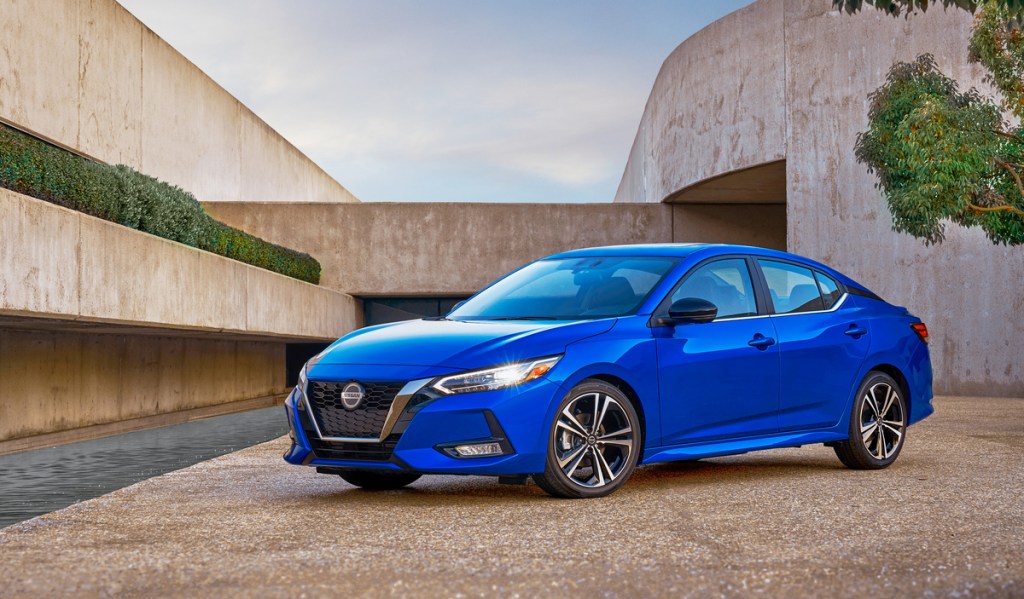
The Nissan Sentra has been around since 1982. Nine generations. There have been more than 6.5-million sold in the U.S. during this period.
So for someone who is looking to buy a new, 2026 Sentra, there should be confidence that there’s more than a little something right about the car as it has endured.
///
And on the subject of timing, Nissan is nothing if not timely.
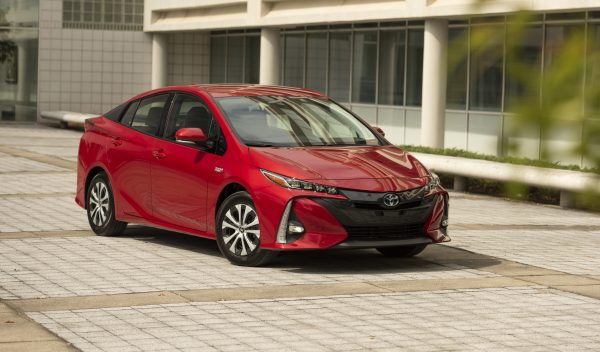
Among the competitors for the compact sedan are the Toyota Corolla and the Honda Civic.
The current-generation Corolla (and credit to it: it is now in its 12th generation) was launched as a sedan in early 2019 (model year 2020).
The current-generation Civic (and points to it, too: 11 generations) was launched in mid-2021 as a 2022 model.
So the Sentra is the freshest of the three.
///
While the conventional wisdom has it that sedans are pretty much dead, Gauthier Bayard, Nissan senior planner, Chief Marketing Manager, said that they have numbers showing that in the next five years there’s going to be some incremental growth in the category.
And things aren’t as sad for sedans as you might think.
Through Q3 Honda sold 185,225 Civics, Toyota 179,983 Corollas, and Nissan 125,741 Sentras.
And while you probably think that crossovers crush those sorts of numbers, that’s not necessarily so.
Again: Sentra 125,741 through Q3 2025.
Ford Bronco Sport: 103,261.
Ford Escape: 114,728.
Bronco: 109,921.
Somehow that compact sedan number doesn’t look too bad.
///
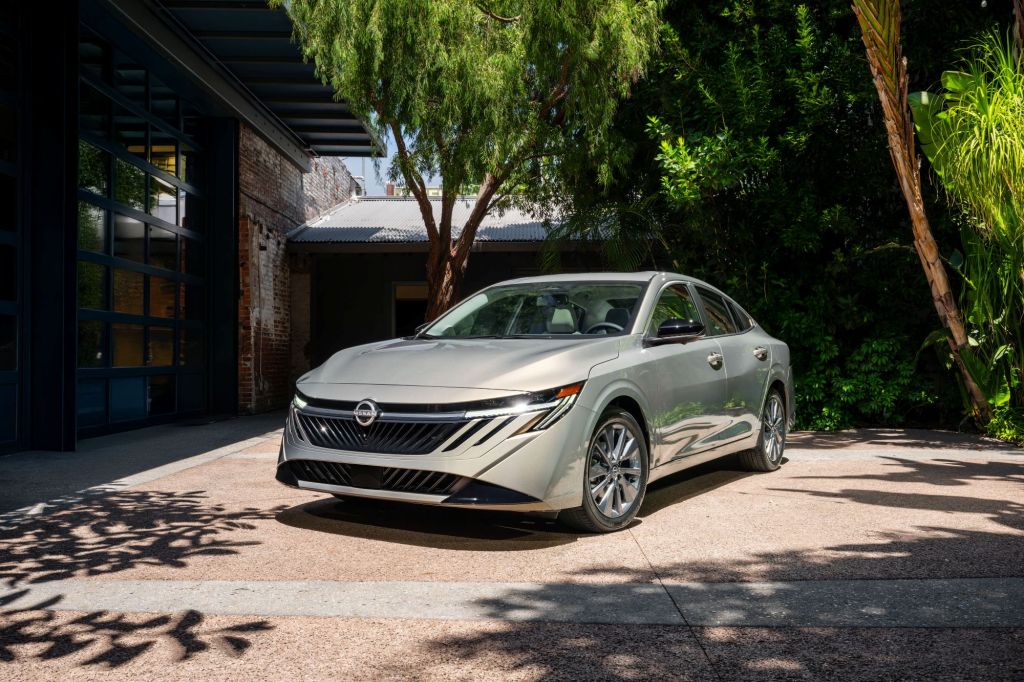
And now the Sentra is better.
There is one thing to know before we look at some of that.
Another thing that everyone knows—and knows far too well if they’ve been actively in the market of late—is that vehicles are breathtakingly expensive.
The Sentra S is the starting trim. It has an MSRP of $22,400.
The SV, $23,170.
The SR, $25,000.
The SL, $27,990.
The sort of prices that regular people can afford without having to take out a loan with a length that would be so long the car would qualify for a driver’s license by the time its paid off. (Slight exaggeration. According to LendingTree.com the average auto loan term is 68.9 months.)
///
The old saw has it that the styling of a vehicle gets people into a car and the interior (if done right) keeps them there.
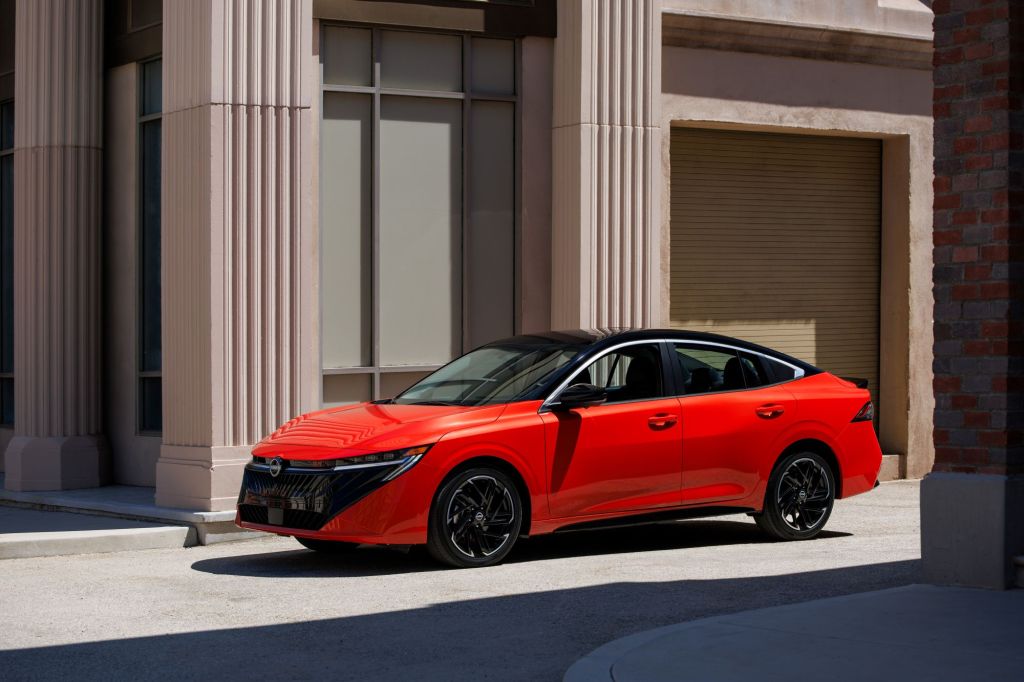
According to Lihao Yu, design director at the Nissan Global Design Center, the exterior styling is characterized by the Japanese word shun, which means agile, yet effortless.
Through the clever use of colors and execution of the front fascia, there is a sporty appearance for the SR Sentra and a more sophisticated look for the SL.
And they continue to pay that off on the interior, with the SR having red accent stitching on the seats and the SL quilted seating surfaces.
///
And then, of course, there’s the tech, both outside and in.
That is, on the outside there are LED headlamps that have more than 70% greater light dispersion than the previous headlamps. When approaching at night there is a minor light show that commences, welcoming you to the car.
And the outside is seen from the inside with the Intelligent Around View Monitor that makes use of a front camera that provides a wider view than the previous one.
While approaching the vehicle the key fob is detected and the doors unlocked.
Inside there’s a 12.3-inch screen for the gauges and another 12.3-inch screen for infotainment (at least on all trims with the exception of the entry S. It has a 7-inch gauge info display but the 12.3-inch infotainment screen). There’s available Bose premium audio. And there are things including automatic emergency braking with pedestrian detection, intelligent forward collision warning, lane departure prevention, high beam assist, traffic sign recognition, and more.
///
The powertrain is a 149-hp, 146 lb-ft of torque inline four mated to a continuously variable transmission. This is familiar from the last-generation Sentra. The rationale is simple: it works well, so use it. To be sure they’ve tuned it for improved operations.
///
When considering the customer, Bayard said they project it will be gender balanced and aged between 25 and 54. The household income will have a fairly wide range, from $50,000 to $150,000 (this latter figure may be a bit generous: according to the US Bureau of Labor Statistics, median weekly earnings in Q2 2025 were $1,196, which translates to $62,192 per year, so even if there were two wage earners in the household. . .$150K is unattainable.)
What they have developed is what plenty of people need: a well-equipped, affordable, reliable car. And as for that reliability, it is worth noting that in the J.D. Power 2025 US Initial Quality Study, the Senta takes the Compact Car category, besting the Kia K4 and the Hyundai Elantra, two non-trivial competitors.
So if we assume the new one is even better. . .then they really have something special.




 shinymetalboxes