Beyond That First bZ

Yes, Toyota has been, continues to be, and will be all about getting things better. . . .

By Gary S. Vasilash

When the model year Toyota bZ4X was launched in the U.S. it was roundly reviled for its range and its name. The range ranged from a low of 222 miles for a Limited AWD to a high of 252 for an XLE with FWD. And those, of course, are the EPA estimated numbers, so in the real world they vary—often going in the wrong direction.

And the horsepower wasn’t any great shakes, either: 201 hp for FWD and 214 for AWD.

Guffaws Galore

People scoffed at Toyota for putting out the vehicle. They dusted off the term “compliance car” for the midsize SUV, claiming that Toyota put out what they considered a pathetic attempt at an electric vehicle.

As for the other aspect of low dudgeon: What kind of name is “bZ4X”? It sounds like the name of a ‘droid in a knock-off Star Wars movie.

The explanation was:

  • bZ: Toyota’s “Beyond Zero” initiative for zero-emissions vehicles. (Why it isn’t “BZ” isn’t clear, nor is the whole notion of “beyond zero”: given that positive integers beyond zero are things like 1, 2, 3, etc., might that not indicate positive emissions?)
  • 4: This is reportedly meant to indicate that it is approximately the same size as a RAV4 (although the bZ4X is longer (184.6 in. vs. 180.9 in.), wider (at 73.2 in., up by 0.2 in.), but lower (65 in. vs. 67 in.)).
  • X: Crossover.

When you have to explain something at several levels it is more like hermeneutical analysis than something you’re going to do at your local dealership.

This Is How They Do It

But anyone who knows approximately anything about Toyota knows that the company is all about “continuous improvement,” a philosophy and methodology that is still highly important even though people sometimes claim that Tesla’s nonlinear improvement (i.e., “great leaps forward”) is the name of the game.

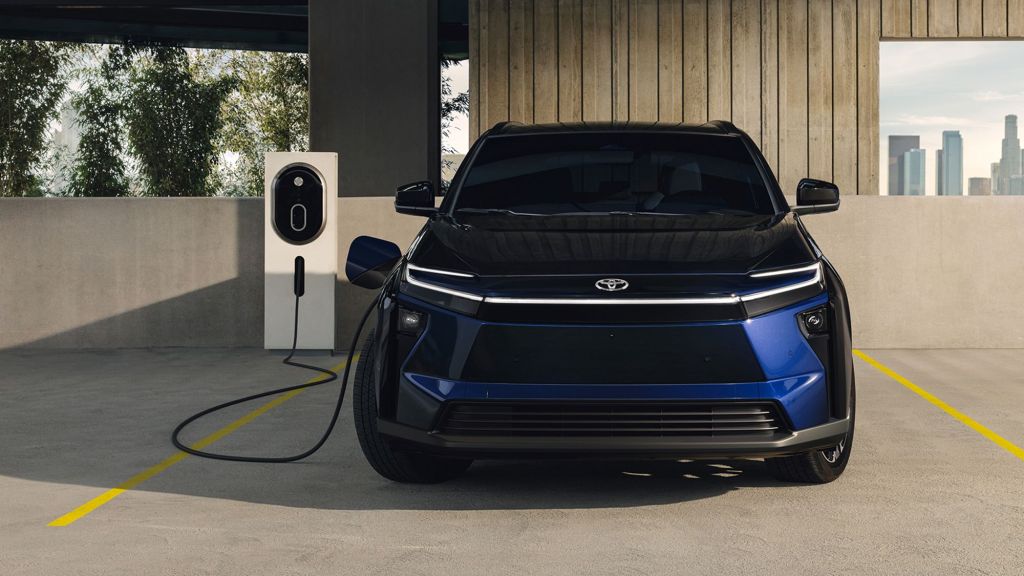
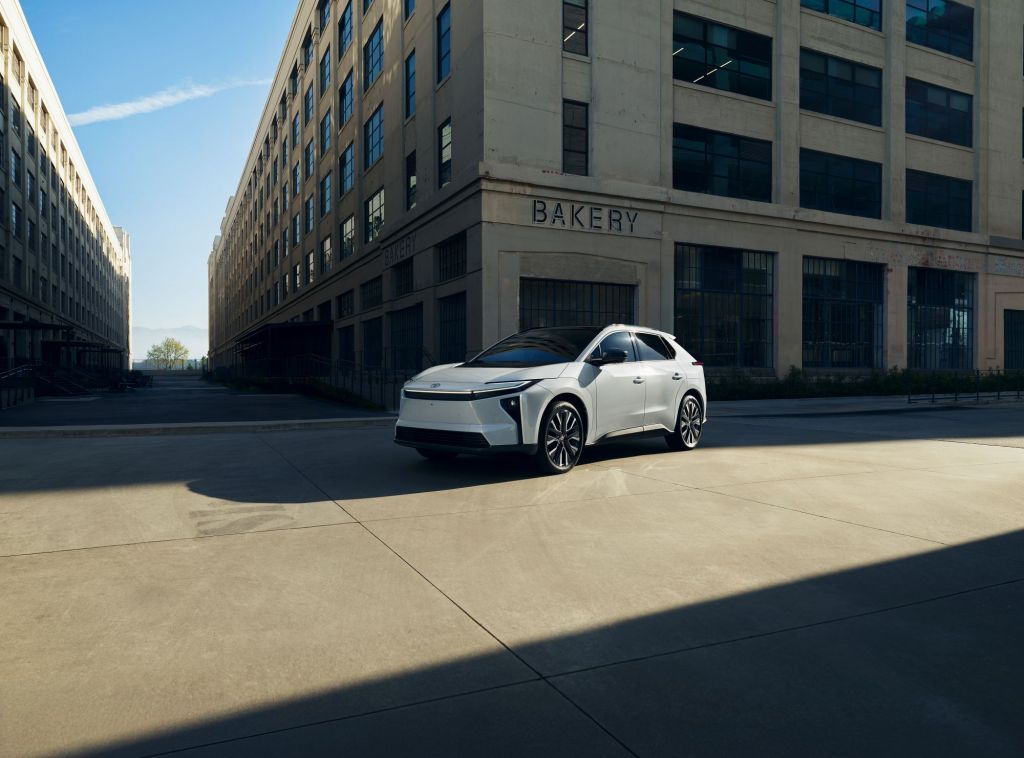
2025 Toyota bZ: second time is a charm. (Images: Toyota)

Toyota has introduced the 2026 bZ. Yes, half the nomenclature has been eliminated. Given that the Lexus side of the house has used two letters for names since its start, two is good for the name of this model.

Long(er) Run

But then there’s the ranges offered by the new model.

The least range is 235 miles for the XLE FWD. The top end is 314 miles for the XLE FWD Plus model.

There are horsepower improvements, too: the Limited AWD and XLE AWD are both at 338 miles. On the low end there’s the XLE FWD, with a curiously low 168 miles. The XLE FWD has a 57.7-kWh lithium-ion battery, while the other models have a 74.7-kWh battery, which explains the low range.

While pricing hasn’t been announced yet, I wouldn’t bet against that XLE FWD having an exceedingly economic MSRP. (The vehicle becomes available later this year.)

The Stuff

The 2026 bZ comes with a NACS charging port that allows high-speed charging (e.g., at Tesla Super Chargers). The company estimates that with DC fast charging the battery can go from 10% to 80% in about 30 minutes.

In terms of overall dimensions, there is no change.

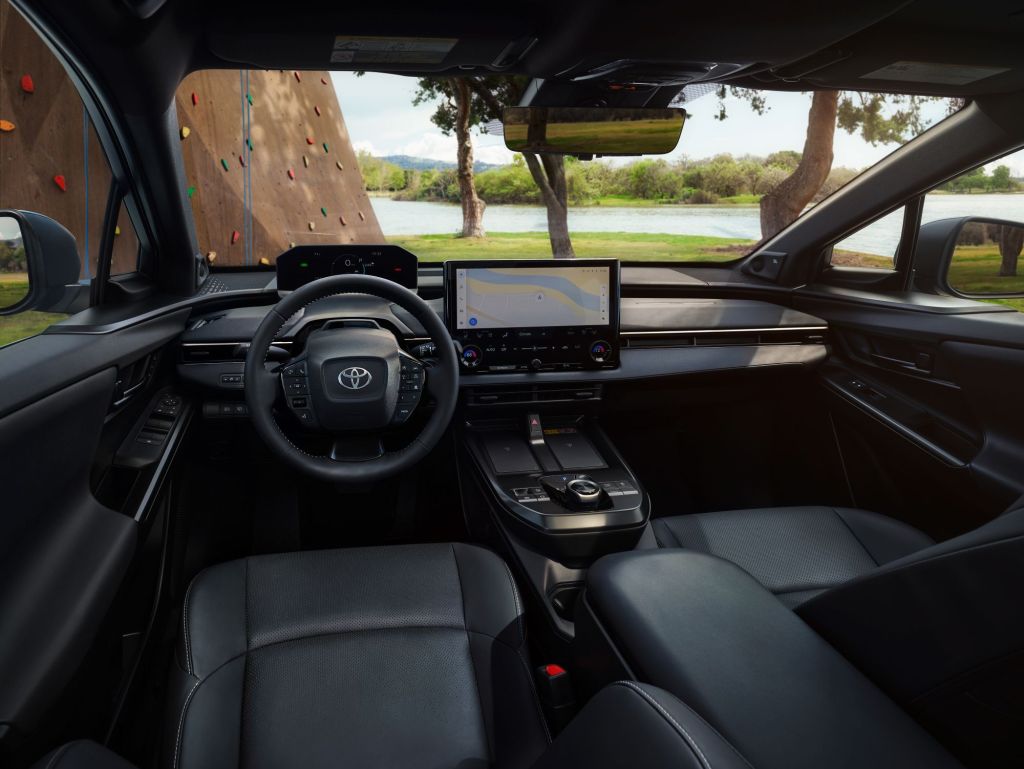
While there are some exterior mods—mainly to the fascias—compared to the bZ4X, the major changes are found in the interior.

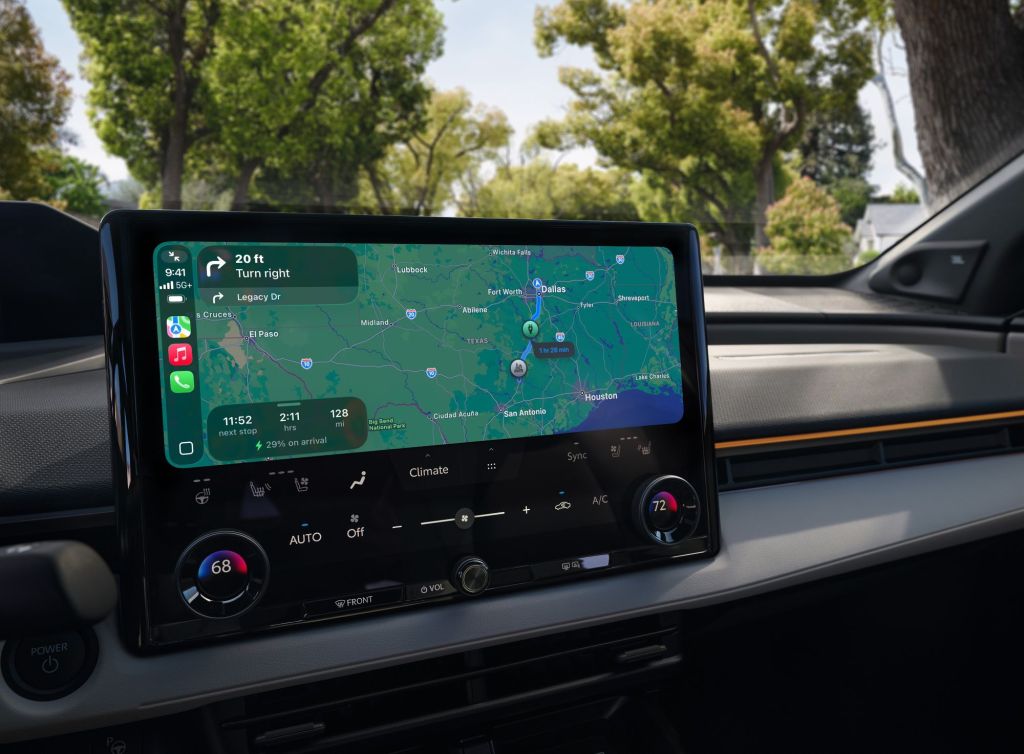
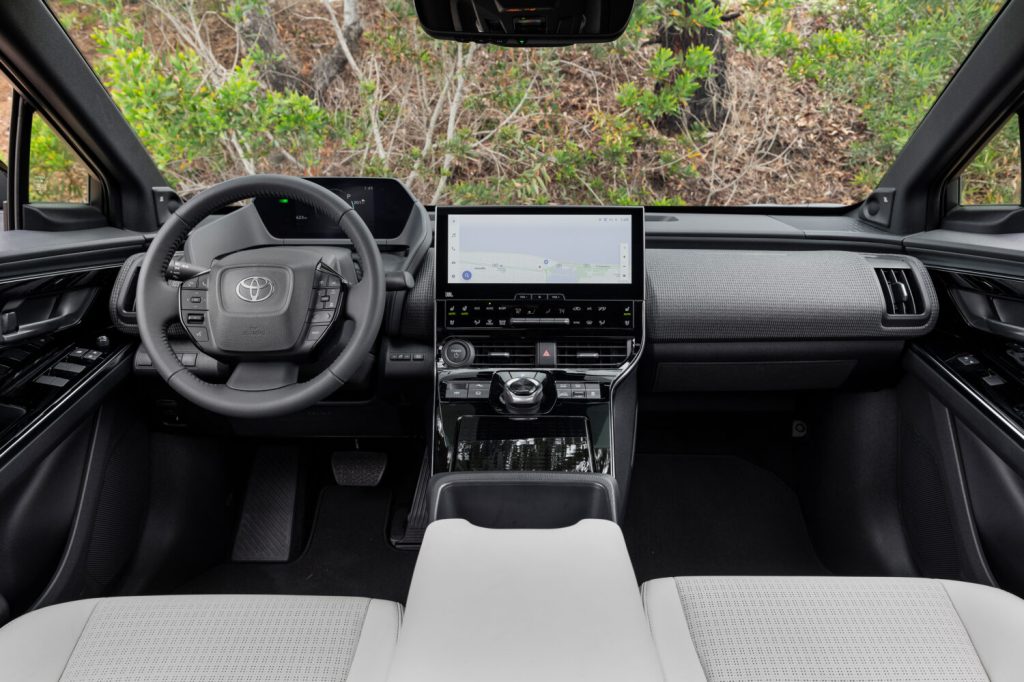
Inside amenities are improved. All models get that 14-inch screen.

The dashboard is redesigned—which is no trivial change from an engineering perspective. All trims have a 14-in. touchscreen for infotainment. It runs the Toyota Audio Multimedia system, developed by Toyota in Texas, so its functionality is what Americans have come to expect (“Hey Toyota take me home”).

Because this is an “environmental” vehicle, the seating surfaces are either cloth or Toyota’s synthetic leather, SoftTex, which is made with thermoplastic polyurethane, which is actually a good facsimile or the real thing.

Driven

As for driving the bZ: quite honestly, the bZ4X drives well. After all, this is a vehicle that is primarily meant to be appropriate transportation for those who are inclined to reduce their carbon footprint, not a hot vehicle that one is going to put one’s foot to the floor in.

And the bZ, albeit quicker, also drives well. Generally, it drives for a longer period and you’re in more comfort while doing that driving.

Bottom Line

Now the real question comes down to the price. At present the Toyota shopping site has the MSRP for an 2025 XLE $37,070. That model has an estimated range of 252 miles.  The company is going to have to meet or beat that with the 2026 models.

2024 Toyota bZ4X Limited AWD

You’ve got to start somewhere. . .

By Gary S. Vasilash

This is the interior of the first-generation Toyota Prius (2000):

This is a similar shot of the first-gen Toyota bZ4X (2024):

Yes, there is nearly a full demographic generation separating the two.

But the bZ4X makes me think of that Prius.

If you look closely in front of the steering wheel on that early Prius you’ll note that there is no conventional gauge cluster.

That info is displayed in the horizontal slot in the middle of the instrument panel.

There is a more-conventional gauge cluster in the bZ4X in a more-conventional location.

But it is in a binnacle, set further back than is the norm for gauge clusters.

The rationale for both executions is arguably the same: the driver should keep eyes on the road.

While the Prius execution left something to be desired on that account—as in if the driver keeps eyes on the road, then there is the possibility that because there is no ready check of the speed, that could be problematic in terms of potential speeding tickets (although that risk was ameliorated by the lack of pep when you got on the throttle)—the bZ4X approach requires but a slight downward adjustment of one’s eyes to check the speed, a better approach.

The first-gen Prius instrument panel was completely different.

And while the bZ4X’s is more conventional, centered on the standard 12.3-inch touchscreen, there is something of a uniqueness to the interior, such as the use of a fabric on the interior even in places where some polymer would ordinarily be placed and the lack of a glove compartment.

Ten years after the first-gen Prius was released, in a retrospective Toyota acknowledged:

“Not all early reviews were flattering. One car magazine said, ‘With a real-world 35 mpg, this is a car that neither enthusiasts nor greenies can fully embrace.’”

And so far as the bZ4X goes, not all reviews are flattering because the electric vehicle doesn’t go particularly far vis-à-vis competitive electric crossovers:

  • XLE grade has an estimated 252-mile range in a front-drive setup; 228 miles for AWD
  • Limited grade is 236 miles FWD and 222 AWD

So here’s the thing about the bZ4X that needs to be taken into account: This one is the first Toyota EV, just as that Prius was the first back then.

People liked the first-gen Prius sufficiently well that they bought it and did so in sufficient numbers that there were the second generation and beyond.

People who buy the first-gen bZ4X will probably like it sufficiently well—and there is good reason to, mainly that it is a Toyota, and so it comes with all of the confidence that that brand brings to one’s driveway—and it will lead to future Toyota EVs.

And while they will be better, the current one isn’t bad.

(all images: Toyota)