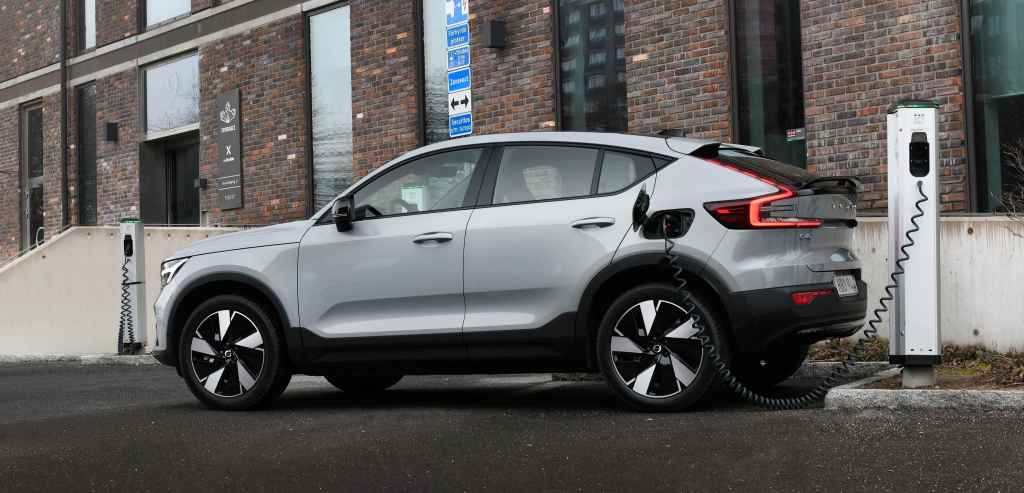
Polestar 3: Dual Motor, Pilot, Plus, Performance

(That’s a lot of Ps in that name. . )

By Gary S. Vasilash

One of the things that interests me when I am in a vehicle is the extent to which people notice it.

You may be surprised at how few vehicles garner some comment from people. The last vehicle I had that drew lots of attention was the VW ID.Buzz. And as I think about that vehicle, I realize that I’ve not seen a lot of them since.

And while that van drew attention largely because of the nostalgia factor, the Polestar 3 has no such fond memories for anyone, as it has been available in the US market only since late summer 2024.

A friend I was meeting at a restaurant came in and pointed out a window to the Polestar 3 in the lot: “Are you driving that? What is it?” The waiter stopped and looked at it, too, while listening to my explanation of how it is a brand from a company headquartered in Gothenburg, Sweden, once a sub-brand of Volvo. (This gets into organizational complexity with the bottom line essentially being that there is Volvo, owned by Geely, and there is Polestar, owned by Geely. So while the two companies are separate, they have the same parent and there is a non-trivial amount of sharing between the two siblings.)

They were both unaware of the brand.

Which is not entirely surprising. Through the third quarter 2025 Polestar has delivered 44,482 vehicles. Globally.

To put that into context, Cadillac delivered 46,525 vehicles. Domestically. In the third quarter alone.

Polestar is still a stealth brand.

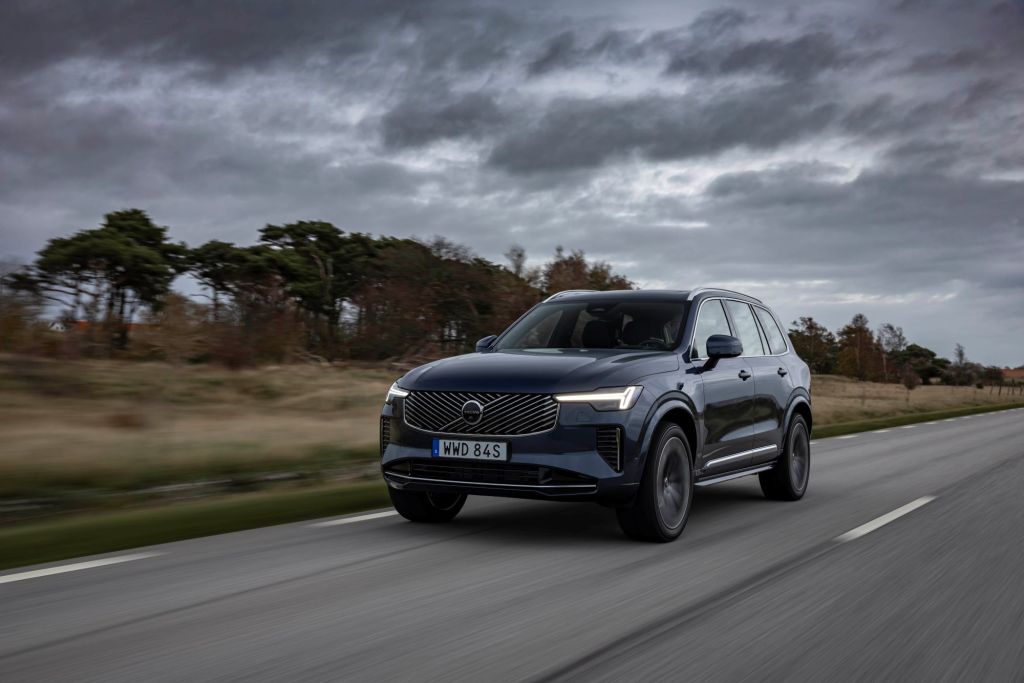
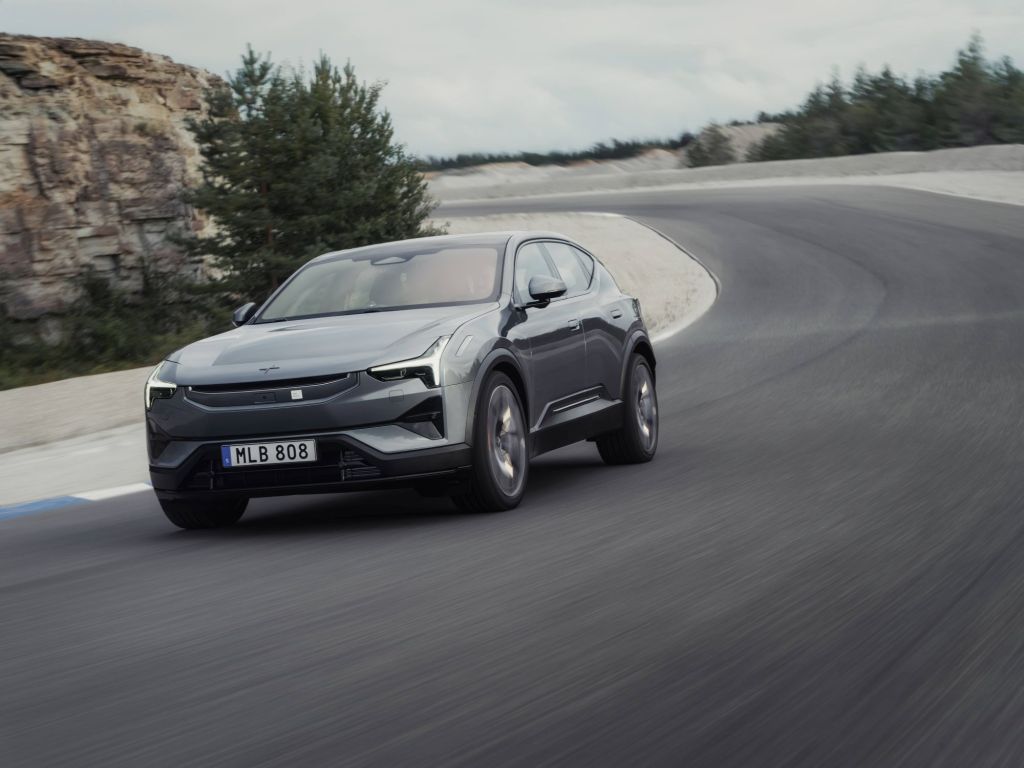
This is not particularly pricy when you realize this is a performance vehicle. (Images: Polestar)

A neighbor who was walking her dog past my house while I pulled into my driveway literally turned around and came back to talk to me about the Polestar 3, wondering what it was, saying that she liked the way it looks, both in terms of size and styling. (She is right about that.)

The not-so-good news for the folks at Polestar: She is in the market for a vehicle and is likely going to buy a Chevy Equinox. “EV?” I asked. “No. Gasoline.”

That is not-so-good on two levels.

First of all, the top trim level AWD Equinox has an MSRP, including destination, of $37,395.

The MSRP, including destination, for this AWD Polestar, which is at the top of the line, is $86,300.

Clearly, my neighbor has a good eye, even though she has a different kind of budget.

And second, of course, the Polestar 3 is an electric vehicle, not fueled with gas, which accounts for part of the difference.

And it is interesting to note that whereas that 2025 Equinox she is considering is built in the GM San Luis Potosí plant in Mexico, the Polestar 3 is assembled in Ridgeville, South Carolina (that is nominally a Volvo plant, which goes back to the previous comment about the sibs).

Without going too Volvo about this, it is worth noting that the Polestar 3 is based on the Scalable Product Architecture 2 platform, which underpins the Volvo EX90, that brand’s flagship electric vehicle.

And because it has Volvo DNA it is engineered with safety in mind, ranging from having a boron steel safety cage to an extensive list of sensor-based safety tech that facilitates accident-free driving (note: it helps; it is up to the driver and others to prevent accidents).

One interesting thing is that while model year 2025 vehicles have to have a rear seat reminder system to advise the driver to check the back seat to make sure that a child or pet is not being left behind, many of these systems are simply based on the vehicle being put in park and the alert showing up.

In the Polestar 3 there is actually interior radar that monitors the situation.

So what does one get for the not-minor amount of money.

Well, there are two electric motors that provide a combined output of 517-hp, which means this can be quick. They also provide AWD. But this power also means that the range is somewhat limited: an EPA estimate of 279 miles.

There is active air suspension. 22-inch wheels. A panoramic glass roof. Over-the-air-updates for life.

An example of the interior details that show considerable consideration was paid to the execution of the inside.

The infotainment is based on the Android Automotive OS, with Google built in. (There is wireless Apple CarPlay, too).

The interior is both comfortable and well designed, with details on things like the door trim that subtly make you know that someone spent time considering what they were doing.

2026 Volvo V90 Cross Country B6 AWD Ultra

A wonderfully executed wagon. . .

By Gary S. Vasilash

If you’ve watched the TV series “Wallander,” you’ve seen the title character, played by Kenneth Brannagh, driving a Volvo XC70 SUV. The program is based on crime novels written by Henning Mankell. He is Swedish. The show is based in Sweden. And Volvo, of course, is based in Gothenburg, Sweden.

The vehicle is completely appropriate for the series. If you’re going to drive in Sweden, drive Swedish.

But perhaps if police detective Kurt Wallander was more serene he would up his game and drive the Volvo V90 Cross Country. . . .

It is easy, however, to imagine Brannagh (who, by the way, was knighted by Queen Elizabeth way back in 2012, so the man isn’t simply a wonderful actor and director) rolling around in a V90, as it would be in keeping with both the functional: presumably directors travel with some gear. . .

. . . and the comfortable, as working on a set all day is certainly tiring, so that ergonomic, leather-clad, driver’s seat that provides heating and cooling and, as an $800 option, a massaging function, is certainly something that would be appealing. In addition to which, there is an optional adaptive air suspension system on the vehicle as-driven ($1,200) which smooths the ride notably.

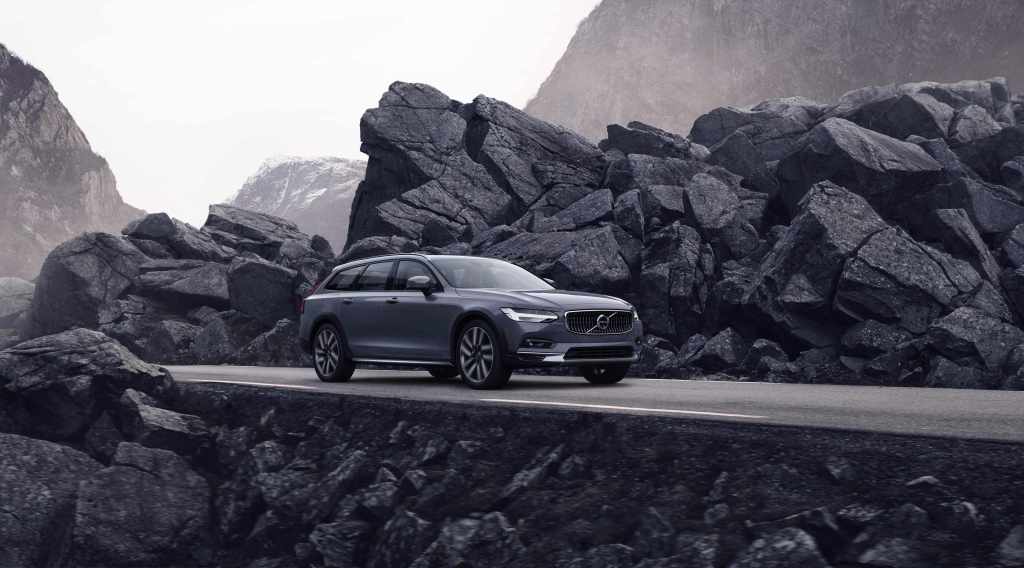
It rides well in less rocky environments, too. (Image: Volvo)

(There is, of course, the crystal Orrefors shift knob, but Sir Brannagh is probably used to seeing things like that.)

The V90 has an electrified powertrain. There is a 48-volt mild hybrid system that uses regenerative braking; it has an integrated starter generator (so the auto start-stop isn’t in the least bit troubling, for those who find that fuel-saving function unsettling). The turbo-charged 2-liter engine (mated to an eight-speed automatic) produces 295 hp and 310 lb-ft of torque.

The powertrain provides good performance (let’s not lose sight of the fact that this is a station wagon that is meant for daily drives, not something to leave people pinned back into those comfortable Scandinavian seats) and good fuel economy: 22 mpg city, 29 highway and 25 mpg combined. But you want to run it on premium (91 octane).

A word about it being a station wagon rather than a utility. First know that Volvo has an array of SUVs (EX90, EX40, EC40, EX30, XC90, XC60, and XC40).

While the V90 does provide solid cargo space—69 cubic feet with the second row folded; 19.5 cubic feet with the second row up—it is not as capacious as, say, an XC90. But how often does someone pack their vehicle to the max? (And let’s face it, if there is a whole lot that needs to be transported, one can get a Thule roof-top cargo carrier. (Yes, although there are other brands, Thule is Swedish, too, so let’s keep it thematic.))

That said, the V90 rides, handles and maneuvers much more lithely than a ute, and that makes a big difference during those daily drives.

In fact, I submit that were one to go to their local Volvo dealer and test drive back-to-back an XC90 and the V90, although the higher H-point and consequent visibility of the XC90 is certainly an advantage, the overall drivability of the V90 is a real benefit.

I also suspect that as many people have been driving utes for the past few years they’ve forgotten how driving something that’s more sedan-like can feel.

2025 Volvo EX30 Twin Motor Performance

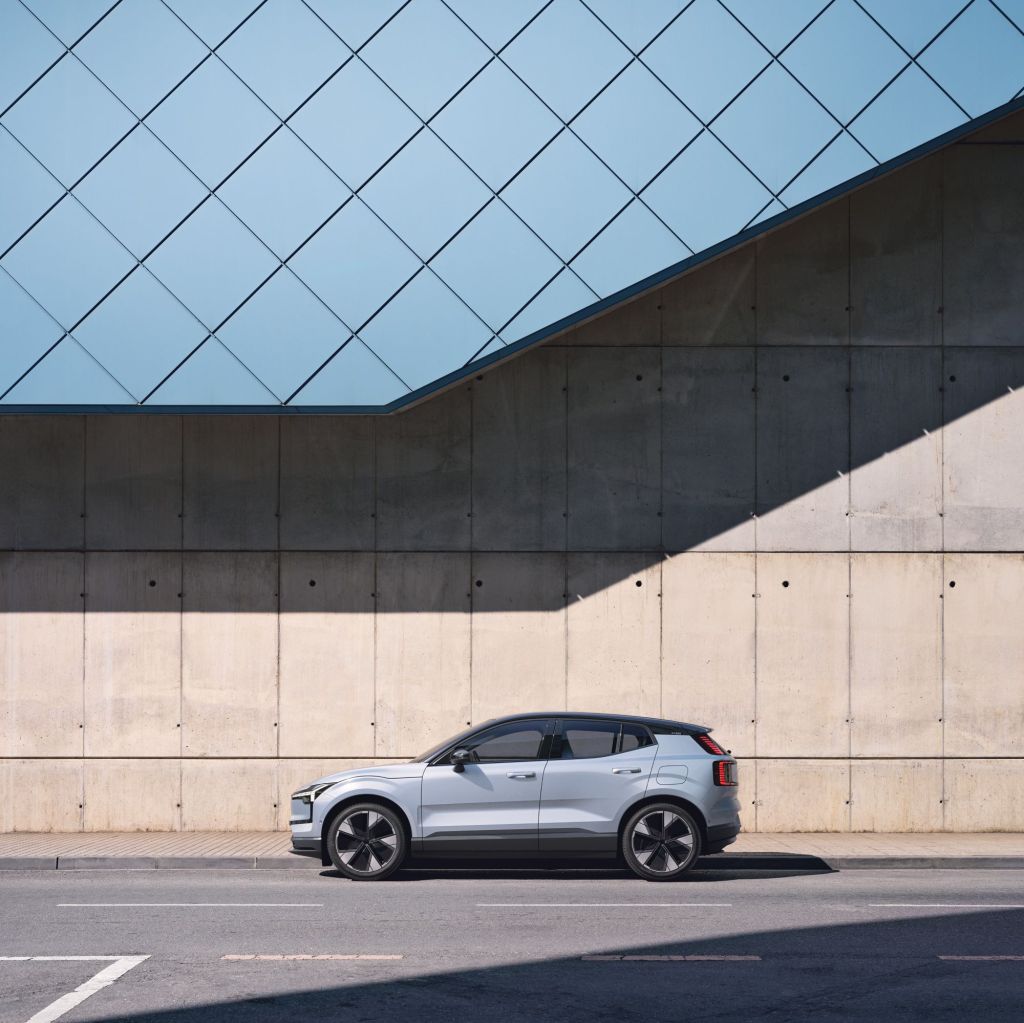
(Images: Volvo)

Small but pricey. And probably more so soon.

By Gary S. Vasilash

The Volvo EX30, a small electric SUV, had been a strong contender for an award in the 2024 North American Car, Truck and Utility of the Year (NACTOY) awards.

But the company had to pull it from contention due to it not having vehicles in the U.S. market by the end of 2023. Logistical issues. The vehicle was being built in Zhangjiakou, China. The company added capacity by also building them in Ghent, Belgium. Know that it is a global vehicle so plenty of markets are interested in the EX30. In 2023 in the U.K., for example, it won the Sun Car of the Year Award and the Sunday Times Small SUV/Crossover of the Year. Evidently there were more of them in the U.K. than there were in the U.S.

When the car was introduced to the media in late July 2023 in New York City, the company touted that this was a vehicle that was engineered with the environment and sustainability in mind, as they used a variety of materials especially on the interior that began their existence as other things before being reprocessed to Volvo trim. (E.g., the seat cushions and lower backrests are covered in Nordico, a material made, in part, from pine oil. The seat uppers and door inserts are covered with a knitted material than is derived from PET bottles.)

Things Change

The initial plan had it that the starting MSRP for a single-motor EX30 would start at $34,950.

But things—including the aforementioned logistics—changed and the EX30 is available in the U.S. only in a dual-motor setup (which provides a maximum 422 hp).

Consequently, the starting price has gone up. It is $46,195.

Not a trivial difference, but again, the vehicle has more oomph than the original entry and it is an all-wheel-drive vehicle.

Not Long

The EX30 has a 69-kWh battery that provides an estimated range of 253 miles. Not great, but then you have to look at that 422 hp.

Also, EVs are heavy. The EX30 has a curb weight of 4,151 pounds. That may not be particularly telling in itself so know that a 2025 AWD Toyota RAV4 with a gasoline engine weighs 3,490 pounds. That’s a 16% difference.

Quite Minimal

One of the things that the EX30 is is minimalist.

There are very few conventional interfaces on the interior. Things like is a nice metallic door handle for opening. Tabs for adjusting the HVAC louvers. A wiper stalk. A gear shift stalk. And switches for window operation.

But pretty much everything—including opening the glove compartment—is done via the 12.3-inch center display. Or with capacitive buttons on the steering wheel.

And “everything” includes encompassing what a driver would typically find on the other side of the steering wheel: a gauge cluster.

If you want to know how fast you are driving you have to look to the right. Which strikes me as being ergonomically inappropriate, especially for a company that has long been synonymous with “safety.”

Maybe researchers in Gothenburg determined that it is no problem, but this driver in Detroit found it to be troublesome.

Brighter Not Always Better

Another issue I encountered was a result of the panoramic—as in the size of essentially the entire roof—sunroof. The glass panel may have been treated to deal with sun load and radiation, but I found it to let in far more light than I would like. Quibble, quibble.

It does have all manner of sensor-based tech—from pedestrian and cyclist steering avoidance to adaptive cruise control, from a blind-spot information system to a door opening.

The exterior look is clean and contemporary. There is 31.9 cubic feet of cargo capacity, which is suitable for a vehicle of this type and size (166.7 inches long; 72.4 inches wide; 61.2 inches high; 104.3 wheelbase).

But here’s a thing: the issue of tariffs have to loom large regarding this vehicle. The one Driven here was built in China. . .and while keeping track of what’s what on the tariff front, one thing is for certain: when it comes to China they’re not going away.

2025 Volvo XC90 T8 PHEV

When you need something big but still want to have efficiency. . .

By Gary S. Vasilash

For good reason the folks at Volvo are chuffed with the EX90.

That’s the company’s flagship, seven-passenger SUV. The one that’s all electric.

But the vehicle in question here has a slight modification of the alphanumeric designation: XC90.

It is the company’s flagship, seven-passenger SUV. That features a gasoline engine.

In this case it is a 310-hp, 2.0-liter, four-cylinder turbocharged engine.

But also in this case, that engine is supplemented by an AC electric motor.

A hybrid powertrain.

And as a result, the output is a maximum 455 hp.

When I had the XC90 a colleague, who races—and I mean at places like Sebring, not up and down Woodward or Telegraph–, said, “Oh, you’ve got the quick one.”

Think on that a moment.

Here’s a vehicle that is 195 inches long, 76.1 inches wide, 69.7 inches high.

A vehicle that has three rows.

A vehicle that provides, with the second and third rows folded, 85.7 cubic feet of cargo capacity.

And my colleague described it as “quick.”

No, he wasn’t suggesting that this is something he’s going to take to the track.

But he was pointing out that for something of its size, something that is largely meant to be about getting from here to there and Costco in between, it really moves well.

Three rows, hybrid power and overall competence: XC90 T8 PHEV (Images: Volvo)

The Distance

As mentioned, this is a hybrid. But it is a plug-in hybrid (PHEV).

Which means that on the driver’s side front quarter panel there is what seems to be a fuel door—but that’s on the passenger’s side rear quarter panel.

The one on the front is the socket to charge the vehicle. A Level 2 charger will get it filled in about five hours.

The point of a plug-in hybrid versus, well, a hybrid, is that there is a comparatively extended all-electric range.

The XC90 PHEV provides up to 32 miles running on electricity alone.

However, the estimated combined fuel—as in gasoline—economy is 27 mpg.

So given that there is an 18.8-gallon tank, if you were to want to leave yourself a margin of 0.8 gallons, you could drive for 486 miles.

In other words, no worry.

The Difference

One of the things that one might say is that there are plenty of three-row SUVs out there, even luxury hybrids (BMW, Lexus, Land Rover, Lincoln. . .).

So how does one decide?

I think all else being relatively equal, one of the places the XC90 is really an achiever is in the interior execution.

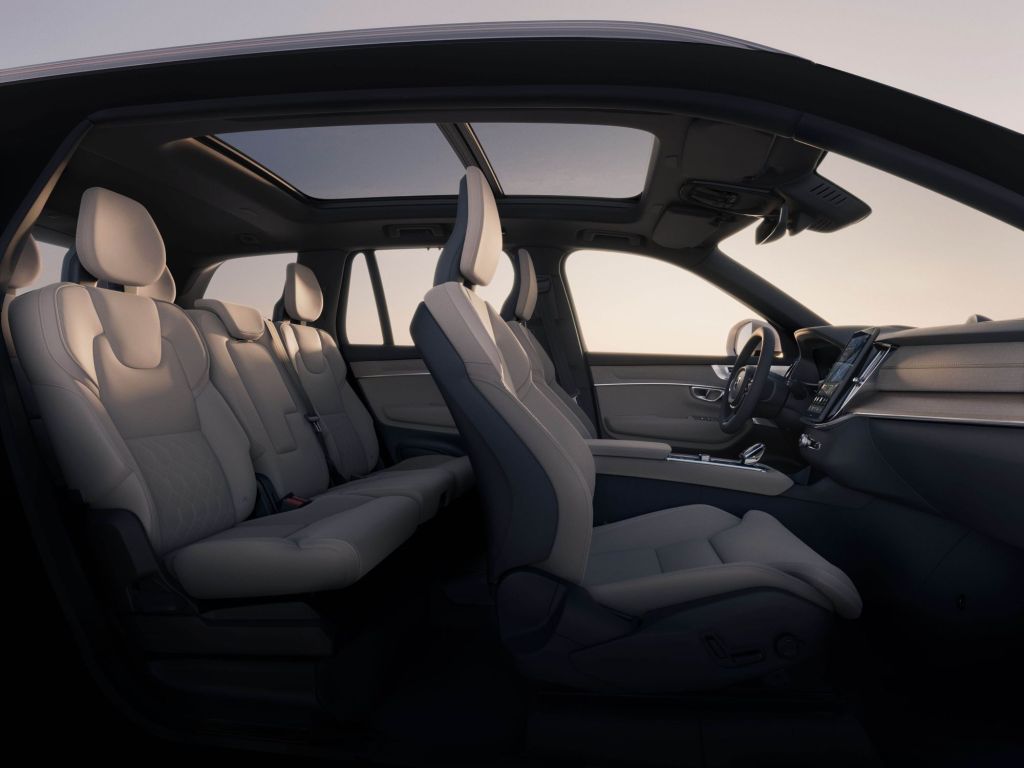
While other brands all have seats that move this, that and the other way, all you have to do is open the door and look at the driver’s seat of the XC90 and you know that this is purposeful Scandinavian design.

If you’re driving 32 miles or 486 miles, you’re in the seat. It might as well be a superb one.

Inside the XC90

2025 Volvo XC60 B5 AWD Ultra

A winner and not just with awards. . .

By Gary S. Vasilash

The Volvo XC60 is a compact luxury SUV, although some characterizations have it as a midsize.

I’d opt for the latter. (The EPA is the arbiter of what goes where. On the Monroney for the vehicle driven it is described as a “Small Sport Utility.”)

Think of it as something that competes with the Cadillac XT5 and the Lincoln Nautilus—or maybe that would be the Lincoln Corsair, as the former is the midsize and the Corsair compact.

Moving on.

The XC60 did rather well in 2024 in terms of garnering awards from consumer outlets.

There were the “2024 Newsweek Auto Awards.”

The XC60 was “Best” for both “Suburbanites” and “Single, Powerful Women.”

It was “Top Pick” for “Empty Nesters.”

While a single, powerful woman could live in a suburb, the “Suburbanites” category was actually for people who have families that need to be transported. Or people who at some point will become “Empty Nesters.”

The XC60 seats five. Which is likely a sufficient number for any of those categories.

Good Housekeeping, in its “2024 Best New Family Cars Awards,” picked the XC60 as its “Best Luxury Compact Crossover SUV” (which brings us back to that category question).

Whether you simply eyeball it or follow the documented categorization, know that the XC60 has lots of competition. Not only the aforementioned Cadillac and Lincolns, but the BMW X3 and the Mercedes GLC, among others.

What is truly a distinctive difference is found in the interior.

If you go to a furniture store there is likely a section that is dedicated to and labeled as “Scandinavian.”

There is likely not one that says “American” and really not likely “German.”

And when you enter the cabin of the XC60 you know from the execution of the leather, wood and metal on the instrument panel (well, keep in mind this is the Ultra, top-of-the-line model) and from the comfort and support of the seats that this is a Scandinavian product.

(For those wondering: Yes, this vehicle was built at the Volvo plant in Torslanda, Sweden.)

The vehicle has a Bowers & Wilkins audio system that features 15 speakers and 1,400-W output, such that you might want to just sit in the leather-covered seat for a while after your trip is complete simply to listen

Volvo has a commitment to electrification. The XC60 is part of it. Albeit a small one.

The XC60 is powered by a 2.0-liter turbocharged four. And supplementing it is a 48-Volt hybrid system. This is a “mild hybrid” system. It permits regenerative braking to recharge the battery and provides a boost when accelerating. It also adds 13 hp to the output so the total horsepower is 247.

It is a more-than ample amount. When first driving the XC60 I was pleasantly surprised by the throttle response.

The vehicle is stickered at 26 mpg combined. In my experience that was, um, optimistic as I generally got more toward the city number of 23 mpg rather than the highway 30 mpg—even though I had a mixed drive.

If we go back to the “Suburbanites” or simply “Family,” odds are that cargo is a key consideration when selecting a vehicle. So to that end know that with the rear seat I place there is 22.4 cubic feet of space and with the seatback folded 63.3 cubic feet.

Volvo uses Google for its maps and the Google Assistant. There is a 9-inch infotainment touchscreen. (The Assistant is accessed via voice.) Even though this is Google-centric, there is Apple CarPlay and, no surprise, Android Auto.

The vehicle driven was not only Ultra, but it was loaded with other things—like that audio system, which adds $3,200 to the sticker. The Ultra alone has an MSRP of $57,000. The add-ons for the model driven—like the 22-inch five-double spoke matte black diamond cut alloy wheels—and other things, as well as the $1,295 for destination, kicked the bottom line up to $68,245.

But for a lux vehicle in whichever category you consider it, that really is reasonable.

(Image: Volvo)

2024 Volvo XC90 Recharge Ultra

What a wonderful SUV. . .

By Gary S. Vasilash

Several years ago, when I was covering advanced automotive manufacturing technologies, Volvo invariably came to the fore in one area: Laser welding.

I can’t think of a conference where there were presenters from other companies talking about that subject.

While you might be thinking, “Erm, ah, good for Volvo. Good for laser manufacturers,” it really is significant in terms of the product.

Typically, vehicles are assembled with spot welds.

And the spot welds go along a seam like this:

•   •    •   •   •   •   •

Laser welds go like this:

______________________________________________

Or sometimes there are spaces:

______________   _______________   _______________

The point being that the long(er) laser welds are superior to the spots make with resistance welders.

And again you’re thinking, “Gee, that’s just swell for manufacturers, but I’m not a builder or a welder, so. . . .”

Why I bring this up is because lasers provide a better build.

One of the consequences of this is encompassed in statements like this:

“Safety is at the core of everything we do at Volvo Cars. As part of our company’s longstanding commitment to safety, we constantly strive to raise safety levels. The Volvo XC90 reflects our safety legacy, and we are proud it was recognized by the IIHS given our shared dedication to the advancement of automotive safety with the goal of reducing traffic related deaths and injuries.”

That’s Mike Cottone, Head of USA and Canada at Volvo Cars, this past August after the XC90 received a 2024 TOP SAFETY PICK+ award from the Insurance Institute for Highway Safety.

Volvo XC90 Recharge: A PHEV SUV with lots to like. (Image: Volvo)

Among the reasons why the vehicle did well are:

  • Solid structural performance in the updated moderate overlap test
  • Excellent passenger protection for the driver
  • Good ratings in the small overlap front and updated side tests

All of this goes to the point of how the vehicle is put together.

Of course, it isn’t just about the welding (and I don’t know the extent to which lasers are used), but the types of materials used in construction. And again, I recall Volvo presenters being ahead of the curve when it came to discussions of things like boron steels.

To be sure, a stronger structure is a safer structure. And using the right materials can help assure that the structure is stronger where it needs to be.

Yes, but. . .

No one likely buys a premium midsize SUV thinking, “Yes, I think I’ll get this because when I get into an accident I’ll be safer.”

But that safety is an advantage, even if it isn’t thought about.

There is a characteristic that all of this leads to that is experienced each time you’re behind the wheel of an XC90, one that is highly satisfying: It feels solid. Substantial.

And going back to the “right materials,” it doesn’t feel like something that is overbuilt and wallowing.

It feels right.

Hush

What’s more, there is something that the structure brings that’s less: noise.

Think of the silent solidity of a vault and compare it to something like a mobile home.

A huge difference.

And when in this trim level, that structural silence makes the 1410-Watt, 19-speaker Bowers & Wilkins audio system sound all the better.

Power & economy

The XC90 Recharge, which has seating for six or seven (depending on the type of seats selected), is a plug-in hybrid. Which essentially means that when the battery is charged up the SUV has the ability to travel up to 32 miles on electricity alone. But once that’s depleted, then the vehicle operates as a hybrid, meaning the turbocharged four-cylinder engine works in concert with an AC motor: together there is a system horsepower of 455.

Yes, this vehicle moves with alacrity when needed.

A word about fuel economy. Because it can go on electricity alone, there is an EPA rating of 58 MPGe. Then there is the gasoline-alone rating, which the EPA has at 27 mpg combined. Conceivably you could go 530 miles with a full lithium-ion battery and a full fuel tank. Unless you are fairly diligent you’re probably going to let that battery run down and simply operate the vehicle as a hybrid most of the time.

In a Detroit-Chicago round trip I got an average of 25 mpg, lower than the EPA estimation, but given factors like the air conditioner working hard to deal with the ambient temperatures and the wildly fluctuating speeds predicated on extensive I-94 construction, I was more than pleased, premium gasoline notwithstanding.

To the point of several hours behind the wheel I found the seat (heated (didn’t need) and ventilated (did)) to be both supportive and comfortable. While there is Google built-in and accessed through a nine-inch touchscreen well integrated into the IP, I used CarPlay for Waze rather than Google Maps and listened to Spotify.

Sizable

While I was on a quick trip and certainly didn’t need it, there is a cargo capacity of up to 85.7 cubic feet.

The vehicle is 195 inches long, 69.9 inches high, 84.3 inches wide (with mirrors), and has a 117.5-inch wheelbase, which means it is sizable, yet it was easy to drive in congested Chicago traffic and in comparatively compact parking structures. (The blind-spot information system helps with the former and a four camera system for a 360-degree view around the vehicle the latter.)

The long run

The starting MSRP for the top-of-the-line Ultra trim is $80,895.

Which brings me back to some of those manufacturing conferences.

Another topic that was frequently discussed was the “life-cycle assessment.” When it came to investment in things—say laser welding equipment—while the upfront cost might be more, when considered over the life of the system, it very well could be more economical than something that was less expensive at the start.

I suspect that someone investing in the XC90 Recharge is going to have it for a long time. Consequently, spread out over a number of years, that initial price is more than made up for—especially when the attributes of the vehicle are taken into account.

2024 Volvo C40 Recharge Single Motor Ultimate Extended Range

A stylish small SUV. . .

By Gary S. Vasilash

The Volvo C40 Recharge is, as its name implies, a vehicle that needs recharging because it is an electric vehicle. A small SUV. But a stylish small SUV, as it has what is, for SUVs, a coupe-like roofline, sloping back. In fact, arguably it is the most stylish among the Volvo SUVs, of which there are numerous (XC90, XC90 Recharge, XC60, XC60 Recharge, XC40, EX90, XC40 Recharge, and the forthcoming EX30.)*

The XC40 Recharge is the C40 Recharge with a different top on it. It is what is historically the more Volvoesque of the two, meaning it is boxier. And style comes with a bit of a price, and not just in terms of MSRP, although there is that, too (C40 Recharge starts at $53,600; XC40 Recharge starts at $52,450).

Dimensionally the two vehicles are the same with the exception of one thing.

They are both 174.8 inches long and have a 106.4-inch wheelbase. They are both 80.1 inches wide.

But the C40 Recharge is 62.6 inches high and the XC40 Recharge is 64.8 inches high.

A consequence of that difference is that the C40 Recharge has a cargo capacity of 49 cubic feet and the XC40 Recharge has 57.5 cubic feet back there, so it is a non-trivial difference.

Volvo C40 Recharge: Charge and go. (Image: Volvo)

Still, it is not like the C40 Recharge is lacking in capacity. And sometimes you just have to sacrifice a bit to standout with more style.

And speaking of styling, the vehicle has great-looking 20-inch wheels, which add presence to the exterior. I must confess that I am not wholly engaged yet with the replacement of a grille with a solid slab with the badge affixed in the middle.

One of the interesting things about this vehicle is that it comes with a four-year subscription to the Digital Services Package. While some OEMs want to have their own digital setup, Volvo is working with Google so that this vehicle has Google built-in, as it were, so that there are native Google Maps, Google Play Store and Google Assistant. And that four-year package provides all these.

(And perhaps not entirely coincidentally, there is 48-month/50,000-mile limited warranty coverage (48 months = 4 years), and complementary factory scheduled maintenance for the first four years or 40,000 miles. Four years evidently is a key metric vis-à-vis the C40 Recharge.)

The C40 Recharge is Volvo’s first leather-free vehicle. One of the available material options is a wool blend seating fabric that is an exceedingly nice alternative even were leather to be available. In fact, it speaks to the style of the vehicle: A man’s suit in leather looks, well, goofy (or creepy) in most wearings (sure, some guys can get away with it, but they are few and far between); a good wool suit is stylish and classic regardless of the person inside.

Of course, as this is an electric vehicle, we’ve got to get to the battery-related things.

The “Extended Range” in the name of the vehicle goes to the 82-kWh battery that provides an estimated range of 297 miles on a single charge. And on the subject of charging, on a Level 2 (11 kW) charger, such as you might get installed in your garage, it can be charged from 10% to 90% in eight hours; with a DC fast charger, 20 minutes will take the battery from 10% to 80%.

This vehicle has a single 248-hp motor driving the rear wheels. Although people talk about a benefit of EVs is their ability to go quickly quickly, there is another characteristic that is beneficial for driving: their comparatively sizable mass provides a sense of solidity, which combined with the power means a feeling of improved control.

Having said plenty of positive things about the style I do need to point out something that I found understandable but unusual.

Because the rear glass (a.k.a., backlight) is at a somewhat fast angle, the view from the rearview mirror is truncated. Yes, there are 360-degree cameras when maneuvering, say, out of a garage, and there are highly noticeable blind-spot detector warnings in the side mirrors. But still, a glance in the mirror to see what’s going on back there is not fully informative.

The usual part is that the C40 Recharge has a “panoramic” roof—essentially, with the exception of what amounts to a frame, the whole roof provides a fulsome view of, well, the sky. Not exactly handy, of course, when you’re driving.

2024 Volvo V90 Cross Country B6 AWD

When you want something that few others have. . .

By Gary S. Vasilash

So my neighbor, a guy in is mid-20s said: “I really like that car a lot. I quite nearly bought one.”

He was talking about the 2024 Volvo V90 Cross Country B6 AWD.

Volvo V90 Cross Country. OK. Maybe this doesn’t look like your neighborhood. But it takes a good-looking vehicle to hold its own with that impressive setting. (Image: Volvo)

Which is surprising for two reasons:

  1. He is in his mid-20s
  2. The car in question is a station wagon

He said that not only does he like the styling of the Volvo, but he’d taken one for a spin and thought it drove well.

To fill out this little vignette, know that he bought an Alfa Romeo Giula sedan instead.

He had had another Giulia, a Quadrifoglio, that he’d leased. He purchased the one now in his driveway.

He said he bought the Alfa because he likes the way it handles.

It is worth noting that in the first quarter of 2024 Alfa sold 640 Giulas in the U.S., so perhaps my neighbor is something of an outlier.

Style vs. Utility

The station wagon body style—more puzzling referred to in other markets as a “shooting brake” (not that “station wagon” isn’t odd: the “wagon” bit makes sense because it can carry goods, but the “station” part seems to indicate that it is something that is static, like a train station—has gone out of favor for the sport utility vehicle.

In part, this goes to the notion that the sport utility vehicle configuration provides utility. Presumably that means the ability to contain a lot of stuff, whether it is golf clubs or hockey gear, suitcases or Costco-sized personal paper items.

The V90 Cross Country provides 25.2 cubic feet of cargo capacity with the second-row seat back up and 69 cubic feet if that is folded down.

So let’s say someone opts for a Jeep Grand Cherokee. Let’s face it: that vehicle is the absolute poster child for an SUV with comfort and style. The Jeep, of course, has four-wheel drive, which makes it incredibly capable when the pavement has given way to an undeveloped surface.

The Volvo has all-wheel drive, which means that it is configured to handle things like snow (after all, Volvo HQ is in Sweden, so they know more than a little something about that).

For what most people are likely to encounter in their driving, AWD is the ticket.

Anyway. . .the Grand Cherokee offers 37.7 cubic feet behind the second row, which is significantly greater than what the Volvo provides, but the Grand Cherokee has 70.8 cubic feet of space with the second row back folded, so it is pretty much a wash.

The V90 Cross Country is longer than the Grand Cherokee—195.2 inches vs. 193.5 inches—but with mirrors folded narrower—74 inches vs. 77.5 inches—and a lot lower: a height of 60.5 inches vs. 70.8 inches. All of which is to say that doing a bit of geometry explains the differences in capacity.

Looks Right. Drives Right.

But let’s get back to my neighbor.

He said he finds the styling of the Volvo appealing, which goes to show that the company has gone a long way from when it seemed as though the designers were kitted with a T-square and right-triangle. It could also go to the point that it very well may be that given the endless proliferation of SUVs and crossovers there may be a small-but-growing group of people who are looking for alternatives.

Yes, he didn’t buy the Volvo, but he did buy a sedan.

Also, he said that he thought the Cross Country handled well. Presumably this has something to do with the vehicle having a lower center of gravity than, say, an SUV.

The Volvo is a mild hybrid. Which means that there is, in addition to the regular 12-Volt battery, a 48-Volt battery that recovers some of the energy produced by braking and stores it until it is used when it works through an integrated starter-generator to provide assistance when starting from a stop.

The vehicle has a 2-liter turbocharged four-cylinder engine. It is mated to an eight-speed automatic. There are 295 hp and 310 lb-ft of torque. All of which is to say that it comports itself as you would expect something like a station wagon to. What’s more, it has a maximum towing capacity of 3,500 pounds. Combined fuel economy is 25 mpg.

Volvo has gone all-in with Google, so there are Google Maps, Google Assistant and Google Play. (Yes, it does support CarPlay.)

Will the Era End?

Swinging back to the Giulia, as previously mentioned, there weren’t a whole lot sold in the U.S. in Q1 2024.

But there were fewer V90 Cross Country models sold during that same period: 164.

At some point, perhaps, more people are going to want to get something that they don’t see in every other driveway on their block. On mine there is an array of F-150s.

And a Giulia.

But I suspect that car makers—Alfa and Volvo alike—are going to have to phase out things that are not gaining traction.

And add to the proliferation of SUVs.

Volvo, Polestar & Geely: Adjustments Being Made

By Gary S. Vasilash

Volvo Cars CEO Jim Rowan said on CNBC this morning about Polestar, the EV brand that it has some 44% of the shares of:

“They’ve have got a very exciting future ahead of them, they’ve moved from being a one-car company to a three-car company, they’ve got two brand-new cars coming out very shortly, in fact in the first half of this year, and that’s going to take them to a new growth trajectory.”

Sounds good, right?

But then there’s the fact that the reason Rowan was interviewed on CNBC is because Volvo Cars has announced it is going to reduce its holdings in Polestar.

Volvo Cars and Geely Holding essentially own Polestar.

In a press release from Polestar it says, in part,

“Volvo Cars is evaluating a potential adjustment to its shareholding in Polestar including a distribution of shares to its shareholders, with Geely Sweden Holding being the primary recipient. Volvo Cars will remain a strategic partner in areas across R&D, manufacturing, after sales and commercial.”

Which one could read as:

Geely China and Geely Sweden are going to own the majority of Polestar. So it is Geely, pure and straightforward.

Given that Geely owns Volvo Cars, there are probably just some bookkeeping adjustments being performed in Hangzhou. In Gothenburg the books are getting some line items removed so there can be an increased focus on its vehicles.

One wonders: Is this a further sign that the EV slowdown is having some consequences, especially on new OEMs trying to grow up?

Question About Charging Location

When Volvo and Starbucks announced a partnership last month for electric vehicle charging, it seemed reasonable.

ChargePoint DC fast chargers would be installed at up to 15 Starbucks outlets between Seattle and Denver. So when someone needed to get some “juice” they could also get some “joe.” (Admittedly corny but irresistible.)

In the case of a Volvo C40 Recharge, the battery could go from a 20% state of charge to 90% in about 40 minutes with a fast charger.

Hanging out at a Starbucks for 40 minutes is certainly the sort of thing that people do.

Which brings us to an announcement made by Chase, as in the bank, that it is partnering with EVgo. The two will install 50 EVgo chargers at 50 Chase branch locations.

This arrangement will offer 100-kW and 350-kW chargers which can bring vehicles up to an 80% charge in from 15 to 40 minutes.

Does anyone spend that amount of time at a bank?