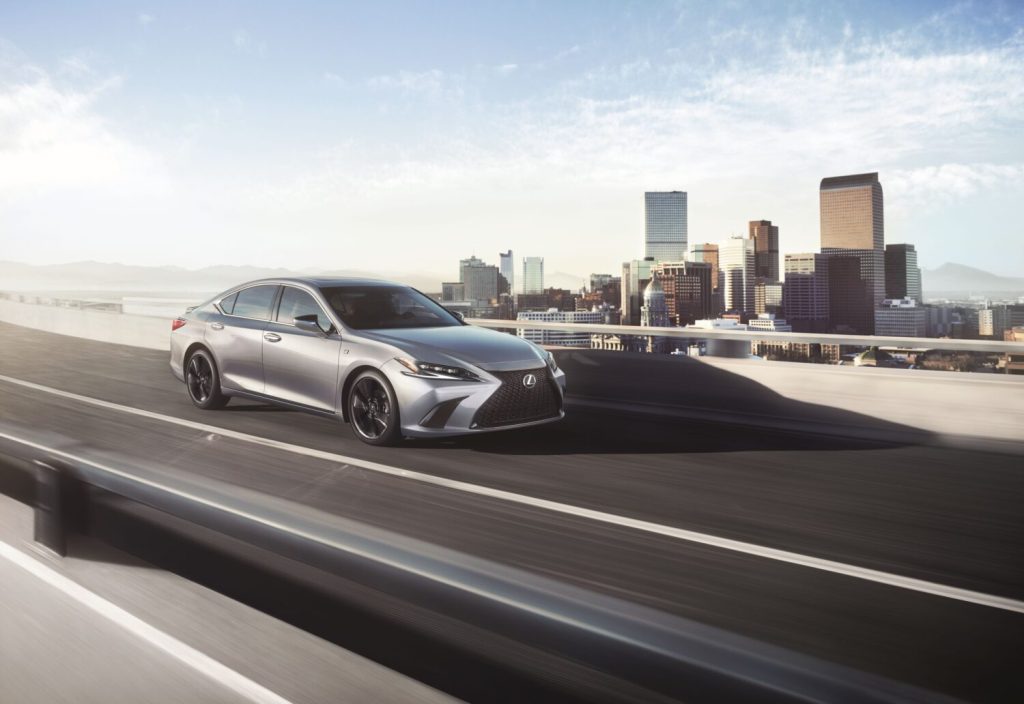
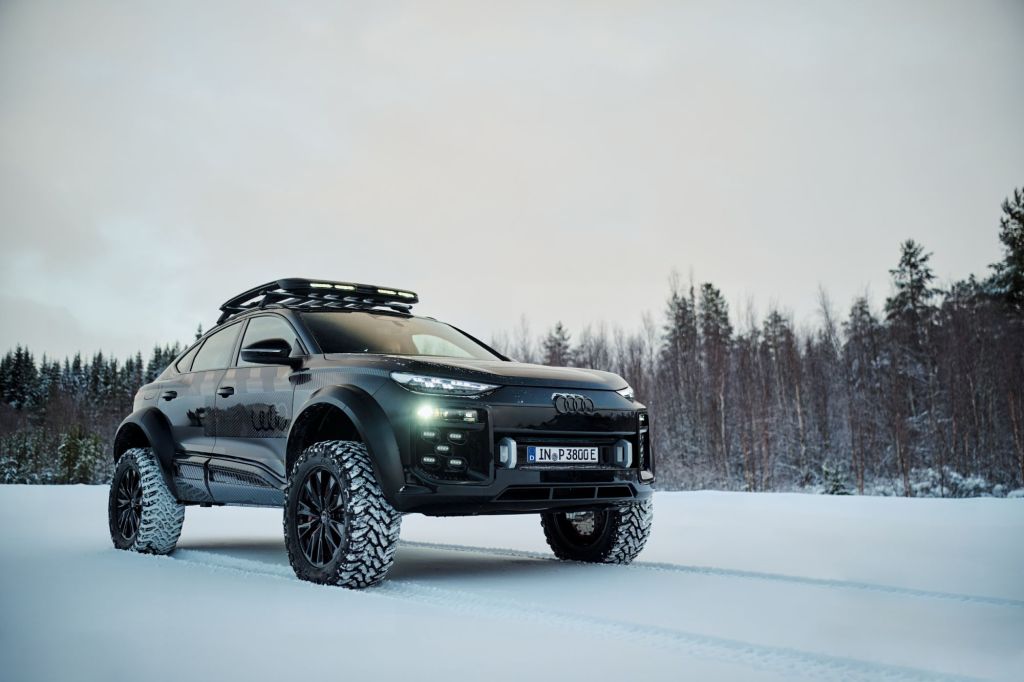
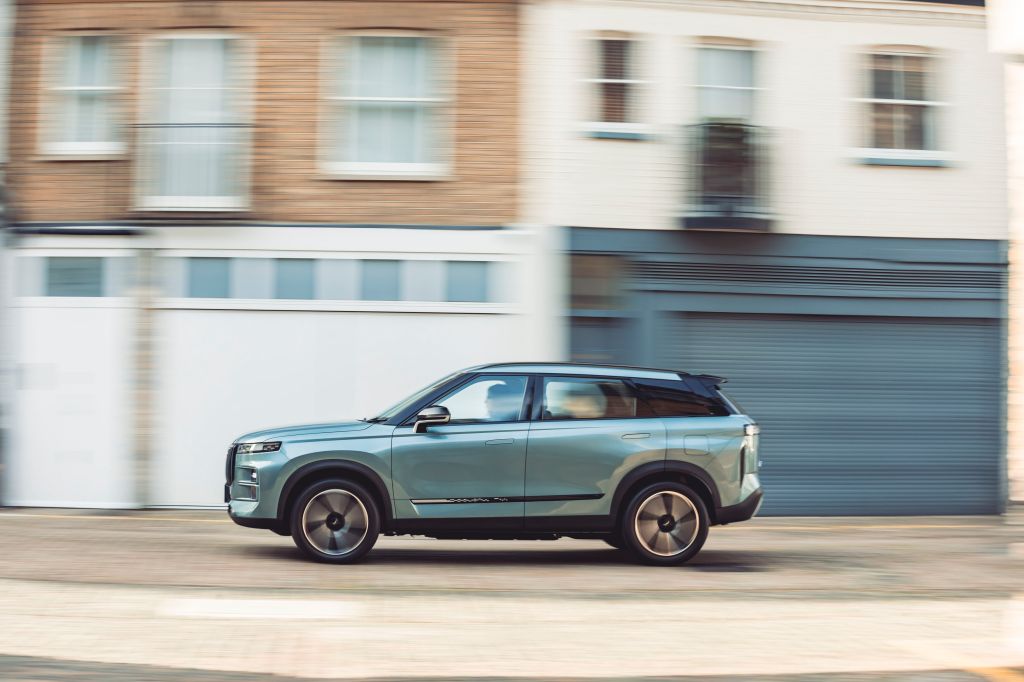
The winners of the 2025 North American Car, Truck and Utility of the Year (NACTOY) were announced this morning at the Detroit Auto Show.
They are:
Car: Honda Civic Hybrid
Truck: Ford Ranger
Utility: Volkswagen ID.Buzz
The three vehicles were selected by a jury consisting of 50 journalists*, so there was a diverse number of people and associated opinions. That is, it isn’t like they all work for the same outlet, so there was no “house opinion.”
The selections are made based on metrics including innovation, design, safety, performance, and value.
Consumers can use the winners as a good rule of thumb should they be in the market for new sheet metal.
The NACTOY awards have been presented since 1994.
It is worth noting the vehicles were up against in the finalist round:
Car: Kia K4, Toyota Camry
Truck: Ram 1500, Toyota Tacoma
Utility: Chevrolet Equinox EV, Hyundai Santa Fe
In other words, the nine vehicles are all notable but three of the nine are even more notable.
A couple of fun facts:
The Honda Civic is no stranger to NACTOY trophies. It also won in 2022. 2016 and 2006.
When you think “Ford” and “truck” immediately thereafter, you’re not wrong. The Ranger win is the fifth victory in a row for Ford trucks. The Super Duty won in 2024, the F-150 Lightning in ’23, Maverick in ’22, and F-150 in ’21. The F-150 also won in 2015, 2009, 2004, 1996. The Transit Connect won in 2010.
It is showing at CES in Las Vegas a production-intent model with aero validation performed in Italy. Huh?
By Gary S. Vasilash
Aptera is a vehicle company that seems to have been around a lot longer than it actually has, probably because the vehicle that it has been promoting is pretty much unlike anything else out there: a three-wheeled, two-person vehicle that has a shape more akin to a teardrop than what is ordinarily thought of during this age of Large Rectangular Vehicles That Can Accommodate More People Than They Typically Ever Do.
It was founded in 2019.
The Aptera model is an electric vehicle that gets supplemental power via built-in solar charging. It is said to be able to provide 40 miles of range on a daily basis through the solar panels alone.
(Image: Pininfarina)
In association with the vehicle being at CES 2025, Pininfarina has announced that the vehicle underwent aerodynamic validation at the design house’s wind tunnel in Turin, Italy.
(According to Aptera the vehicle has a low coefficient of drag of 0.13, compared with the 0.23 figure for a Tesla Model 3.)
Said Chris Anthony, Co-CEO of Aptera Motors of the model at CES: “Our production-intent vehicle is not only a testament to years of innovation and engineering but also a tangible solution to reducing carbon emissions and redefining how we think about energy-efficient mobility. We’re excited to show the world that Aptera is ready to hit the road and deliver a cleaner, more sustainable future.”
The company says it has $1.7-billion in pre-orders.
It had previously announced that it would go into production in 2024, which obviously hasn’t happened.
One curious thing: Why did the company, based in Carlsbad, California, determine it was necessary to go some 6,000 miles to do wind tunnel testing?
After all, there are some that are closer, like the A2 Wind Tunnel in Mooresville, North Carolina, which is used by motorsports teams and offers general pricing of $595 per hour.
Yes, I understand that there is a difference between Turin and Mooresville, but were I one of the claimed nearly 50,000 people waiting for my car, closer would be quicker and consequently better.
ZF is supplying a system that uses hydraulic-fluid-free braking
By Gary S. Vasilash
One of the things (among many) that most drivers probably don’t think much about is brake fluid, a glycol- or silicone-based hydraulic fluid that is pressurized when the brake pedal is depressed (roughly: the pedal initiates a vacuum booster that activates the master cylinder which pushes brake fluid through the brake lines so that it goes to the wheel caliper and then forces a set of pistons that apply the brake pads so the vehicle will slow or stop).
Which is probably something most don’t think about, either.
Or that it is generally recommended that brake fluid be changed every two years or 30,000 miles.
Who knew?
Some lucky drivers of vehicles produced by an unnamed “global manufacturer” will be getting vehicles that at least have a reduced amount of brake fluid on board, as those vehicles will be equipped with an electro-mechanical braking system (EMB) from supplier ZF.
Rather than brake fluid, this ZF system uses electric motors for brake actuation. (Image: ZF)
The EMB is a “dry brake-by-wire” system.
That is, when pressure is applied to the brake pedal a signal travels to electric motors that generate the pressure needed to provide braking.
No fluids are involved.
However, in this particular application the EMB is being used for the rear brakes with hydraulics at the front, so the entire braking system isn’t entirely dry.
According to ZF the EMB system is a contributor to software-defined vehicles.
That is, there can be adjustments made to the performance parameters EMB made via code, something that is not going to happen on a purely hydraulic setup (which would require adjustments with a wrench).
Of course, drivers are still going to have to be aware of that need to replace brake fluid in those vehicles. . . .
Capable and comfortable. And you’ll probably recognize the latter more than the former
By Gary S. Vasilash
One of the most-memorable new vehicle drive programs I ever participated in was for the Lexus GX. It was held in Park City, Utah. Yes, an appropriately swanky venue for what was, in 2002, the third SUV entry in the Lexus lineup, with the LX and the RX preceding it (although some may say that because the RX is a unibody and the LX and GX are body-on-frame, the RX is a crossover not a bona-fide SUV, but whatever it is, the RX has, year after year, dominated its category, so the people at Lexus probably don’t mind whatever it is categorized as).
Now, near Park City is the Wasatch range, part of the Rocky Mountains.
That was deliberate, too.
Because the chief engineer of the original GX wanted to show that the vehicle is as capable off road as it is comfortable on road.
So we drove the GX on terrain that then, as now, seemed an absurd place to find a brand-new Lexus.
I mean, there was a brand-new vehicle with nary a door ding on the paint being driven over rocks and through flora, and it was a Lexus. Admittedly, I’d driven brand-new Jeep models in similar (and more demanding) situations which had always made me wonder why someone would buy a brand-new vehicle and put it through paces that would end up making it look less-than brand-new. I guess it has something to do with a variation on George Mallory’s quote about Everest: “Because you can.”
Underpinnings: Solid
Yes, the GX, has a ladder frame (the GA-F platform, which is also used for the LX), which is engineered to handle the twists, turns and torques that are encountered while driving in places where people ordinarily don’t.
But because no one (slight exaggeration) buys a Lexus because they want to go banging over fallen trees and through washes (there are things like the Toyota 4Runner for that) but because they spend time cruising on the road, there is a double-wishbone front suspension and a multi-link rear that provides a Lexus-like ride for that daily drive.
Lexus GX 550 Luxury+: Looks good. And you could readily drive off that tarmac onto the unpaved terrain. (Image: Lexus)
Capable: Well, You Could. . .
But for those who are interested in that off-road ability, know there are such things as a Torsen limited-slip locking center differential and full-time 4WD.
(In effect, the GX capabilities are like those of the Omega Speedmaster wrist watch, which is associated with U.S. astronauts: the watch is made with the ability to deal with far more than a typical terrestrial wearer will ever realize or recognize, but were you suddenly required to leave Earth. . . . Because you can.)
Power: Oomph!
The GX is powered by a 349-hp twin-turbocharged 3.4-liter V6 that produces 479 lb-ft of torque, which is handy to have in a variety of situations, including when starting from a stop and towing something—yes, there is up to 7,800 pound of towing capacity for the Luxury+ trim; other variants can bring that to 9,063 pounds. The GX has a 10-speed automatic.
Inside: Styled
Considering both types of driving (on and off), it should be noted that in the interior there is a combination of technology with functionality, something that is too often ignored in high-end vehicles as OEMs work to be perceived as tech companies, failing, it seems, to take into account that the interfaces that the driver is dealing with tend to be engaged while the driver is piloting a vehicle that weighs over 2.5 tons.
There are knobs and buttons. There is, of course, a 14-inch touchscreen.
The arrangement of things on the instrument panel combines a sense of style and purposefulness. Which is the point of a luxury SUV.
Outside: Sharp
In terms of its exterior styling, the GX now has more of a sharp-edged, truck-oriented geometry to it, especially evident on its faceted face. The long controversial spindle grille becomes a supportive element in the overall look; one might argue that this is the best implementation of the grille.
The GX as driven is fitted with 22-inch alloy wheels; while some vehicles with 22s look as though they are on stilts, on the GX they contribute to its presence.
Assessment: Elevated
As OEMs across the board have upped their games when it comes to vehicles it almost seemed as though Lexus didn’t lose its luster but that others began to shine brighter than they had.
But for those who are either unfamiliar with what a “Lexus” is or have become somewhat indifferent to what it has on offer because of what the others are bringing, the GX is something that needs to be experienced.
The difficulty of developing self-driving vehicle capabilities can’t be underestimated. . .
By Gary S. Vasilash
Something you may have missed over the holidays. . .
In 2015 a company was founded in San Diego with the objective of developing autonomous technology for commercial trucking applications.
It was named “TuSimple.”
Nothing if not optimistic.
Certainly there is something to be said for focusing on trucking as there are a number of factors that somewhat simplify things.
For one thing, there are fewer Class 8 trucks produced than there are passenger vehicles. In 2023 (’24 numbers are yet to be established) there were some 310,000 Class 8 trucks produced in the U.S. There were some 1.7 million passenger vehicles. So fewer means a greater ability to concentrate one’s efforts.
For another, whereas passenger vehicles go here, there and everywhere, the big rigs generally have a point A to point B routing, often on interstates. Yes, there is the need to get on and off the interstates, but arguably that could be handled by a human driver, who could then have the autonomous driver take over.
And what’s more, there is undoubtedly a better economic argument to be made for autonomous vehicles in commercial applications than there is for hopping in one’s vehicle to make a Target run.
TuSimple was, like other companies in that space, on something of a roll, with things like UPS buying a minority share in the company and partnerships with ZF and Navistar.
TuSimple had a facility in China and worked with truck companies there.
In 2021 TuSimple had an IPO that valued the company at some $8.5 billion.
But in December 2023 it announced it was moving its main operations to China.
And in December 2024, on the 19th, Reuters reported this:
“TuSimple Holdings said on Thursday it would rebrand as CreateAI and pivot from autonomous trucking to AI gaming technology.”
One of the questionable Christmas presents that car companies doing business in the UK happened just before the holiday, when the country’s Department of Transport, which has on the books a mandate that by 2030 there will be no new vehicles sold with gasoline or diesel engines under their hoods, announced an eight-week period during which the OEMs would have the opportunity to weigh in on how this can be achieved.
Note this is not an “If.”
As things stand, there are annual targets that must be achieved in terms of zero-emission vehicle—a.k.a., electric vehicles—by the companies.
The UK government is committed to this, apparently, although one wonders if the auto industry begins to crumble because of the penalties associated with not meeting the targets.
Penalties in the form of a fine of £15,000 for every vehicle sold that doesn’t meet the target.
For example, consider Ford, which has been part of the UK’s automotive structure since 1911.
The mandate has it that 22% of a carmaker’s sales in 2024 are electric.
How did Ford do? Apparently 6.8% for the first 11 months, so unless there was some massive change, it will be well below the government bogey.
Which means serious fines.
This is sort of an insult-to-injury situation in that the company has been investing billions of dollars/pounds/euros—pick your currency—in EVs, and because people aren’t as interested in buying them as they are other products, it costs Ford (and other companies that don’t meet the mandate) more.
“Aside from the billions invested in new technologies and products, it has cost manufacturers in excess of £4 billion in discounting in the UK this year alone. This is unsustainable and, with the 2025 market looking under even greater pressure, it is imperative we get an urgent resolution, with a clear intent to adapt the regulation to support delivery, backed by bold incentives to stimulate demand.”
Which probably means that the government is going to have to pony up more money in order to generate demand.
And Ford isn’t the only company with the lack-of-demand situation. It is estimated EVs will represent 18.7% of the UK car market in 2024, not the mandated 22%.
In 2025 that goes up to 28%.
Hawes’ “unsustainable” is an understatement.
This isn’t just a UK issue.
In the US, where EV sales in 2024 were on the order of 9%, currently standing EPA greenhouse gas regulations have it that more than 50% will need to be EVs by 2030.
The company just keeps refining it year after year, making it all the better for truck buyers
By Gary S. Vasilash
You’ve got to hand it to the men and women at Ford who have been mightily working for 48 years, dedicated to making the F-Series trucks the best-selling truck models in the U.S. for all those years running.
Ford F-Series: It climbs to the top and stays there. (Image: Ford)
Realize that of all of the segments in the showroom the pickup is the one where there is absolutely intense competition, especially with General Motors in the form of the Silverado and Sierra pickups and Stellantis with the Ram offerings.
Toyota keeps hanging in with its Tundra full-size, which racks up about a quarter of what a Ford or Chevy does in a given quarter.
Nissan realized its Titan wasn’t as mighty as it had hoped, so it has left the scene.
GM, in particular, has been working hard to take some of the luster off of the Ford crown. It often sums the Silverado and Sierra sales so that it can show as a corporation it is selling more pickups. But when someone goes into a showroom to buy a truck, they probably don’t want to have to go to visit the store of another brand to check its offerings (i.e., going from a Chevy dealer to a GMC outlet).
Ford with the F-Series simply checks more of the boxes on the needs and wants lists.
In addition to being the best-selling truck for 48 years in a row, the F-Series sets another record: It is the best-selling vehicle of any type in the U.S. and has been since the Gerald Ford administration (43 years running).
One of the interesting things about the F-Series is that while the F-150, the truck that you probably imagine when someone uses the term “F-Series” (I do), seems to have been around for approximately forever, is actually celebrating its 50th year in 2025.
There could be a big problem for GM if there are 25% tariffs on vehicles coming into the U.S. from Mexico
By Gary S. Vasilash
There is, of course, a whole lot of unknowns regarding what the forthcoming Trump administration is going to do vis-à-vis the auto industry.
This is not just a question of the elimination of the tax credit for EVs, which would undoubtedly have a huge negative effect on EV sales in the U.S. in 2025, but more troubling, the possibility of 25% tariffs on products from Mexico and Canada.
John Murphy, senior North American automotive equity research analyst at Bank of America, thinks that the 25% may be something of a negotiating tactic, not a hard-and-fast decision.
In a recent interview with Yahoo Finance, Murphy said the 25% tariff on parts and products is “unlikely to come through.”
But “unlikely” isn’t a definitive “no.”
So there could be a problem, especially for General Motors.
Mexcio is an important source of pickup trucks, including the Chevy Silverado, for General Motors. (Image: Chevrolet)
Murphy points out that nearly a third of GM products for sale in the U.S. come from outside the U.S., mainly Mexico.
Notably, there are Chevy Silverado and GMC Sierra pickups built south of the border.
“That creates real problems,” Murphy said.
“The question is how fast you”—or in this case, “GM”—“can react to that.”
After all, it is not as though there is some GM truck plant sitting idle in the U.S.
“They just can’t pick up and move.”
Which may be something that isn’t fully understood by politicians.
Murphy suggested that if the tariffs block the import of Chinese parts and vehicles into the U.S. that will be a “net positive” for the domestics, as well the Japanese and Korean manufacturers with an existing U.S. manufacturing footprint.
European drivers still buy them. So a better fuel alternative is important. . .
By Gary S. Vasilash
Although “diesel” is something of a dirty word in the U.S.—at least so far as personal vehicles go: let’s face it, most of those Class 8 trucks hauling cargo across the country and across town are powered by diesel fuel—according to the most recent figures from the European Automobile Manufacturers’ Association, this past October of the light vehicles registered in the European Union, 10.9% were powered by diesel.
While that is a far cry from what the percentage once was, it is important to know that the 10.9% is greater than the percentage of registration for plug-in hybrid vehicles, which as 7.7%.
Which explains why, for example, BMW Group is building diesel models in addition to an array of vehicles with other powertrains.
Fueling a BMW before it leave the plant with a hydrotreated vegetable oil fuel. (Image: BMW)
But BMW will be fueling the vehicles that leave its plants with HVO 100, a 100% hydrotreated vegetable oil, that is produced by Neste, a Finnish firm.
The companies have calculated that on a life-cycle basis, compared with fossil-fuel diesel there is a greenhouse gas reduction of up to 90% with the HVO 100.
Oliver Zipse, Chairman of the Board of Management, BMW AG:
“When it comes to climate protection, every ton of CO2 saved counts. The more than 250 million existing vehicles in Europe are an important factor here: Their CO2 balance could be significantly improved if the regenerative share of fuel was increased. We are going ahead: From January 2025, we will fill up all diesel models produced in Germany with HVO 100 before delivery to dealers — a high-quality diesel replacement with up to 90% lower CO2e emissions in the overall balance sheet.”
Zipse’s point about the exiting diesel cars on the road can’t be overlooked.
It is going to take quite some time for those to be replaced by non-diesel alternatives.
Consequently, the importance of renewable fuels like HVO 100 cannot be underestimated.
When people talk about the advantages of electric vehicles over those that explode gasoline in their cylinders typically included are:
• Quiet • Powerful
The first is obvious. An electric motor has nothing exploding, just rotating at high speeds on some exceedingly slick bearings.
And the second is pretty much predicated on the torque, which is the measure of the force that is generated by said motor. A simple way to think about this is in relation to a food blender. You can push the “10” button and the blades whiz to that speed from a standing stop without any delay in going through the digits beyond zero.
Genesis G90. Moves with comfort and authority. (Image: Genesis)
One thing occurred to me when I drove the Genesis G90.
It is arguably quieter than many EVs because I suspect that there is an array of countermeasures taken to mitigate any sound intrusion into the cabin.
And when you depress the accelerator there is the kind of propulsion that might otherwise be achieved in an EV. It is worth noting that this is a different kind of acceleration experience than is achieved in, say, an ICE-powered sports car, which typically has the perceptible shift moment. The eight-speed in the G90 is fully smooth.
While this is certainly not an electric vehicle, as it is powered by a 3.5-liter V6, it does have a 48-V e-supercharger which kicks in at low speeds such that there isn’t lag.
Of course, that the powertrain has an output of 409 hp, that isn’t something that you would expect, anyway.
But the point of the G90 isn’t speed. It is more about no-compromise confidence.
The G90 was the original flagship model when Genesis was launched in the U.S. in 2016. That leading status within the brand has been maintained as the vehicle has evolved, but what hasn’t changed is that it is large and luxurious.
As for the size, it is 207.7 inches long, 76 inches wide, 58.7 inches high and has a 125.2-inch wheelbase.
As for the lux, the vehicle is, simply, loaded. The vehicle driven here had a single option: $650 for special paint. Standard are features including Nappa leather seats, power front and rear seats with massage (yes, the rear is room and quite comfy), microfiber suede headliner and pillars, 12.3-inch high-def infotainment screen, Bang & Olufsen audio, and carpeted mats that are so thick you might want to sit in the car barefoot.
There are the obligatory assist features, from lane-keeping to safe-exist assist. There is even remote smart parking assist.
And there is the striking yet sophisticated exterior design that telegraphs the performance of the vehicle as well as a higher level of luxury, indicated by a tasteful touch of chrome trim.
But the G90 comes at a cost. The MSRP of the vehicle driven here is $99,500, which puts it in the space with vehicles like the BMW 7 Series and the Audi A8. Which brings something to mind: the 7 Series was first introduced in 1977 and the A8 in 1994. So both have something of a pedigree, something that the G90 lacked. Presumably the designers and engineers at Genesis realized that if they were going to get into that space it wasn’t a matter of equaling the competitors but bringing something more.