In reporting its 2023 Q4 production numbers, Rivian stated it produced 17,541 vehicles at its factory in Normal, Illinois, and delivered 13,972 during the same period.
Manufacturing Rivians in Normal. (Image: Rivian)
In Q3 it built 16,304 vehicles and delivered 15,564.
In Q2 the numbers are 13,992 made and 12,640 delivered.
And first and numerically least, in Q1 it produced 9,395 vehicles and delivered 7,946.
So for the full year it built 57,232 vehicles and delivered 50,122.
In Q3 Rivian management’s guidance was that it would build 54,000 vehicles during 2023, so there is a 3,232 bonus, apparently.
But doesn’t the ~12% of vehicles that were built in 2023 and not delivered seem like a lot sitting in lots?
According to box office receipts, Ferrarididn’t exactly blow the doors off of theaters in its opening weekend, taking in $6.8 million domestically at the box office according to Deadline.
For a bit of context: Car and Driver notes a 2024 Ferrari Daytona SP3 starts at $2.2-million.
Which means that a three-car garage could have within it somethings that cumulatively have a price tag almost equivalent to what the movie took in across the country in wide release.
So in the event that you’re interested in seeing a racing-related movie that doesn’t star Adam Driver wearing his belt well above his waist, here are some alternatives that are, for various reasons, worth a watch:
Winning (1969). Paul Newman raced cars in real life. What’s more, he was respected in the racing community, not some sort of ne’er-do-well who went slumming in the pits when he wasn’t in front of a camera. This movie is about a driver who wants to win “The Greatest Spectacle in Racing,” a.k.a., the Indianapolis 500. Winning, which includes Joanne Woodward (who plays Newman’s character’s wife, which means this is not exactly a stretch roll) and Robert Wagner (whose street cred could come from his being born in Detroit), is not the Greatest Spectacle in Cinema. But it has Paul Newman.
Days of Thunder (1990). Although Tom Cruise and Nicole Kidman (unlike Newman and Woodward when they made the above), weren’t married when they made Days of Thunder, they were wed after meeting on the set.* Apparently the smell of exhaust and burnt rubber has some aphrodisiac qualities. This is a movie that deals with a racing series that is rife with opportunity, a racing series that is quintessentially American in a way that no other racing series is: NASCAR. This film was directed by Tony Scott, who worked with Cruise in 1985 for the Simpson-Bruckheimer production Top Gun. While cars do fly—accidentally, of course—this is no Top Gun. But Robert Duvall as the chaw-chewin’ crew chief is worth watching.
Driven (2001). Sylvester Stallone, of course, wrote Rocky. He also wrote Driven. Singular-word titles notwithstanding, Driven is no Rocky. Driven reunites director Renny Harlin with Stallone: the two worked on Cliffhanger, which Stallone co-wrote, and which is his ken, also starred in. (And again, a one-word title.) Driven, about a young driver played by Kip Pardue (who? Exactly), who is taken under the wing of veteran driver, played by Stallone (who can’t help himself), is, well, predictable but with some good racing footage.
Grand Prix (1966). This is the car racing movie of all car racing movies. Directed by John Frankenheimer, this film shows the challenges of winning a sufficient number of races to achieve the overall Formula One trophy. What’s interesting is that even back in the mid-‘60s the whole commercial aspect of motor racing is revealed (James Garner loses his sponsor and must join a Japanese team—remember, this is 1966!). And while we take an international cast for granted now, this movie brings in a French driver (Yves Montand), a British driver (Brian Bedford), and a Japanese driver (Toshiro Mifune). When it opened, the film was shown at Cinerama-capable theaters, which made it even more astonishing. It also gave rise to the cameos of real drivers. Days of Thunder may have Richard Petty and Rusty Wallace, but Grand Prix has Jimmy Clark and Juan Manuel Fangio.
*On the subject of pairings: in 1986 Newman and Cruise were together in The Color of Money, which focused on shooting pool, a somewhat less frenetic but no less cutthroat sport than motor racing.
“The two times Autosteer allowed my car to roll right through intersections with stop signs were especially nerve wracking. I could tell from icons on the car’s screen that it could see the sign, yet it did not disengage Autosteer or stop. After digging around Tesla’s website, I discovered that Tesla says obeying stop signs and stop lights is a function included for those who pay for Full Self-Driving. Should you really have to pay extra to keep the software your car comes with by default from doing reckless things?”—Geoffrey A. Fowler, Washington Post columnist, on his experience in his Tesla Model Y after the over-the-air update that was a response to the National Highway Traffic Safety Administration’s investigation, a recall that is meant to make Autopilot safer. As Fowler chronicles, he didn’t feel as though there is an improvement.
Or, as he put it, “I found we have every reason to be skeptical this recall does much of anything.”
Although Fisker describes its mission as creating “the world’s most emotional and sustainable vehicles,” chairman and CEO Henrik Fisker announced, “I’m excited to give our loyal members the opportunity to elevate their ownership experience.”
By doing something of an emotional or sustainable nature?
Nope.
But by earning points in the Fisker Loyalty Program.
That’s right: Fisker has a scheme wherein owners (or those holding reservations for the Fisker Ocean: enrollment for both groups is automatic) can get points that they can redeem for things like beanies and thermos bottles.
Fisker: “We are constantly looking to improve our Loyalty Program in ways that respond to our customers’ needs and that help us stand out from the competition.”
Which makes one wonder what it thinks it is competing with.
For those of you still humming Mariah Carey’s “All I Want For Christmas Is You,” here’s a bit of context for an announcement Ford made this morning:
The year that the Ford F-Series started making its consecutive run as the best-selling truck in the U.S., Ms. Carey was seven.
The F-Series has taken the lead for 47 years in a row.* They’re looking at more than 700,000 of them driven off of dealer lots in 2023.
2024 Ford F-150 Platinum. So nice that you probably wouldn’t want to use it as. . .a truck (Image: Ford)
And underscoring the curious popularity of trucks in suburban driveways as well as on work sites (curious because I rarely see my pickup truck-owning neighbors doing anything with the boxes on the back of those vehicles that they couldn’t manage with a trunk), the F-Series has been the best-selling vehicle in the U.S. for 42 years running.*
There is, of course, the question of whether “the most” means “the best.”
After all, McDonald’s has sold more hamburgers than any other company in the world and there is probably no one who doesn’t know whether they can get a better burger.
But one thing it certainly means is that the F-Series provides an unparalleled level of value for more people than any other pickup.
While there may be specific attributes of trucks from other OEMs that are more appealing or necessary for some purchasers, which means those trucks are more valuable for those people, on an overall basis Ford is consistently delivering.
Credit where credit is due. (And you’ll probably need good credit to get a full-size pickup: according to Kelley Blue Book, the average transaction price (ATP) for one in November 2023 was $66,590. You could get an entry-level luxury car for an ATP of $57,889.)
(On a related-unrelated subject, the tremendous number of trucks sold by Ford—closely followed by GM and Ram—in the context of vocational or functional (i.e., towing, hauling) uses of the vehicles might indicate that people are less environmentally keen than might be expected. After all, light-duty pickups aren’t exactly fuel-economy leaders, so were people concerned about carbon, they’d be buying more efficient vehicles for their daily drives. Yes, there are an electric F-150 and Chevy Silverado and one coming from Ram, but from the point of view of resource utilization, as in the massive batteries that have to be constructed, if those trucks aren’t being used as, well, trucks, then that isn’t exactly the most-environmental choice.)
*As the announcement was made a couple days before the actual end of the year, it is a bit of estimation on behalf of Ford. A small bit.
The Chinese Belt and Road Initiative was launched in 2013 by Xi Jinping. BRI is a means by which China, though investments and development projects around the world, aims to have increased global influence. According to the Council on Foreign Relations (certainly not something you’d imagine would be cited on a site like this):
“China’s overall ambition for the BRI is staggering. To date, 147 countries—accounting for two-thirds of the world’s population and 40 percent of global GDP—have signed on to projects or indicated an interest in doing so.”
What’s more, CFR points out:
“Beijing could seek geopolitical leverage over BRI countries. A 2021 study analyzed over one hundred debt financing contracts China signed with foreign governments and found that the contracts often contain clauses that restrict restructuring with the group of twenty-two major creditor nations known as the ‘Paris Club.’ China also frequently retains the right to demand repayment at any time, giving Beijing the ability to use funding as a tool to enforce Chinese hot button issues such as Taiwan or the treatment of Uyghurs.”
All of which is to say that the Belt and Road Initiative is somewhat controversial in places other than Beijing.
CFR quotes French president Emmanuel Macron saying during a 2018 trip to China that BRI could result in the countries that have signed up for the loans and/or development programs becoming “vassal states.”
Which makes it odd to see this headline on a recent news release:
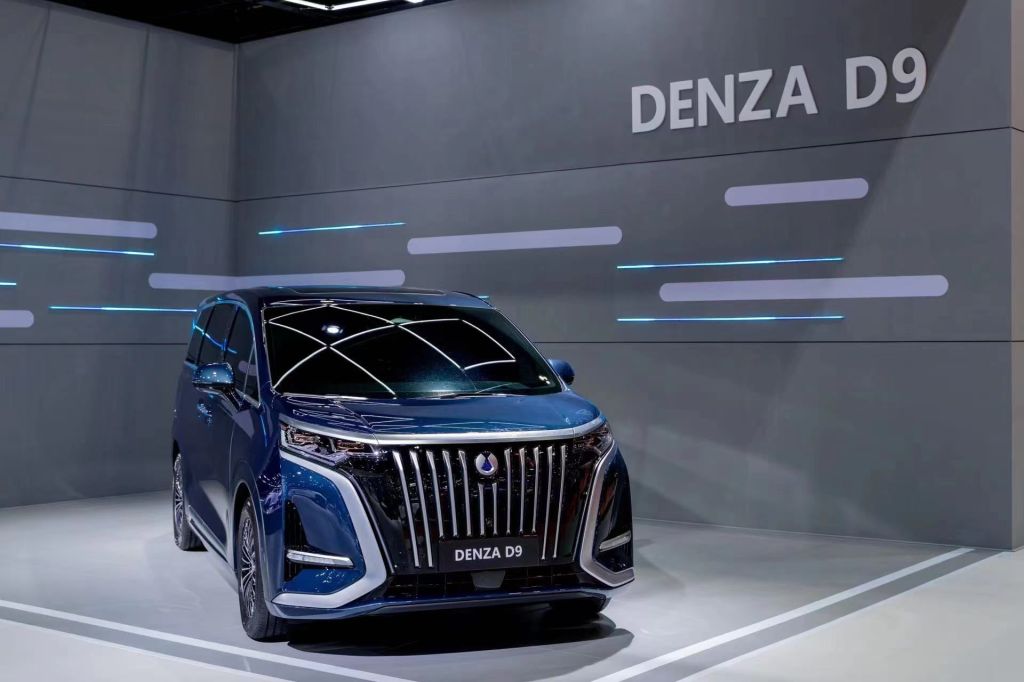
Deepening “Belt and Road” Initiatives: Remarkable Global Expansion for DENZA in 2023
DENZA is a car brand that was established in 2010 by Chinese company BYD and Mercedes-Benz. While it started out as a 50:50 joint venture, last year Mercedes sold all but 10% of its share to BYD.
(Image: DENZA/BusinessWire)
The original announcement about the company noted it would combine BYD’s capabilities in vehicle electrification (BYD is a world leader in that space) and Mercedes’ capabilities in providing luxury and quality. A sensible approach for a startup: the best of both worlds.
While DENZA has been somewhat quiet over the past several years, the company describes 2023 as its “inaugural year on the international stage.”
And then there’s this from the news release:
“With a steady and orderly international expansion, DENZA has not only won the hearts of global media and customers but has also laid a solid foundation for becoming a leading international high-end brand, poised to be the ‘business card’ of Chinese new energy luxury cars, redefining China’s automotive industry and introducing DENZA to a global audience.”
Which, going back to the Belt and Road Initiative, really sounds rather, um, ominous, given the methodical approach that is being taken, especially in contrast to the less-consistent execution by some Western OEMs (i.e., from being all-in on EVs to being sort-of-in to. . .). DENZA has a plan and they’re working it.
And seeing more business cards being passed out by several other Chinese EV companies goes to explain, in part, why the European Union launched an investigation this past Fall into whether Chinese EV OEMs, which are gaining considerable traction in the European market, are benefitting from what could be considered “unfair” government subsidies.
This could cause a considerable concern for European OEMs given the importance of the Chinese domestic market to them and the possibility that the Chinese government could retalitate to things like the imposition of tariffs on Chinese EVs coming into the EU by making it more difficult for EU-based OEMs in the China market.
For example, through Q3 2023 Mercedes-Benz Cars sold the following number of vehicles:
Germany: 172,900
U.S.: 216,700
China: 570,600
Presumably the folks in Stuttgart aren’t going to want to agitate any issues with their biggest market by volume, and they aren’t the only ones.
Somehow the auto industry is becoming as much political as it is technical.
Sometime there are survey results that seem reasonable and some that make you wonder, like a sampling of findings of “driving incidents” (including accidents, DUIs, speeding, and citations) that were codified using QuoteWizard by LendingTree insurance quote data.
For example, it determined that Ram drivers had 32.90 driving incidents per 1,000 drivers, which makes them “the worst drivers.” And Ram drivers in Massachusetts are particularly bad: 64.44 incidents per 1,000 drivers. Ram drivers have the dubious distinction of being the worst drivers in 23 states, followed by Tesla drivers, who took the lead in 11 states.
Tesla drivers overall, incidentally, were second to Ram. They had 31.13 incidents per 1,000, although they took the lead in the specific accidents category, with 23.54 accidents per 1,000 drivers, besting (?) Ram, which was at 22.76 accidents per 1,000 drivers.
But here’s something curious: The third overall worst drivers were piloting Subarus. They had 30.09 driving incidents per 1,000.
Only Ram, Tesla and Subaru were above 30.00 in the overall incidents category.
In addition, Subaru was also third in accidents per 1,000 drivers, with 20.90.
Again, those three brands are the only ones of the 30 surveyed that were above 20.00.
Subaru? Ram and Tesla are not necessarily unexpected, but Subaru drivers might seem benign—unless they live in California where Suburb drivers racked up 57.66 incidents per 1,000
What do drivers drive that had the least number of driving incidents? Mercury. It was at 15.82 incidents per 1,000 drivers. Given that Mercurys stopped being built in 2011, thereby making those that exist somewhat vintage, might mean that the drivers are exceedingly. . .careful.
Several years ago I met Derek Jenkins, who was heading up Design at Mazda North America.
Then Derek introduced me to one of his colleagues on the team, Julien Montousse.
Both of those guys were doing extraordinary work. Although Mazda sales numbers are low when you put them into context of most other marques, arguably if the vehicles lacked the superb execution of design—inside and out—that they exhibit (and have had for the past several years), then those numbers would likely be microscopic and business-wise it would be catastrophic.
Jenkins moved on to Lucid, where he is leading the design efforts. The Lucid Air is both extraordinary and exquisite from the styling perspective. Simply an amazing vehicle and would be even if it didn’t have its propulsion system.
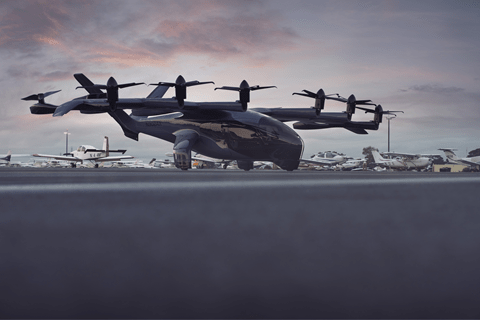
Montousse moved on, as well, but in his case to Archer Aviation, the company that is creating electric vertical takeoff and landing (eVTOL) aircraft, which Archer plans to have its aircraft in commercial service by 2025.
The Archer Midnight. No, not a car. (Image: Archer Aviation)
Montousse and colleagues just won a MUSE Design Award for the Archer Midnight eVTOL.
Montousse: “After spending most of my life designing cars, I saw from a distance that technology breakthroughs were happening in aerospace and that they would unlock new aircraft architectures. When developing a product in a completely new space like eVTOL aircraft, it’s important to instill confidence and earn the trust of consumers.”
Then, sounding much like a car guy, he went on: “When setting out to design Midnight, we focused on creating a powerful aircraft design that forged an emotional connection between passenger and aircraft. Midnight combines high function with high emotion delivering a travel experience unlike any other.”
Swap out some of those nouns with automotive terms.
Seems like there must be something in the water at Mazda for two extraordinary talents to have come from there.
When I think “fuel economy” I think of, well, fuel. Liquid fuel. Gasoline. Things measured in miles per gallon, not miles per kilowatt hour.
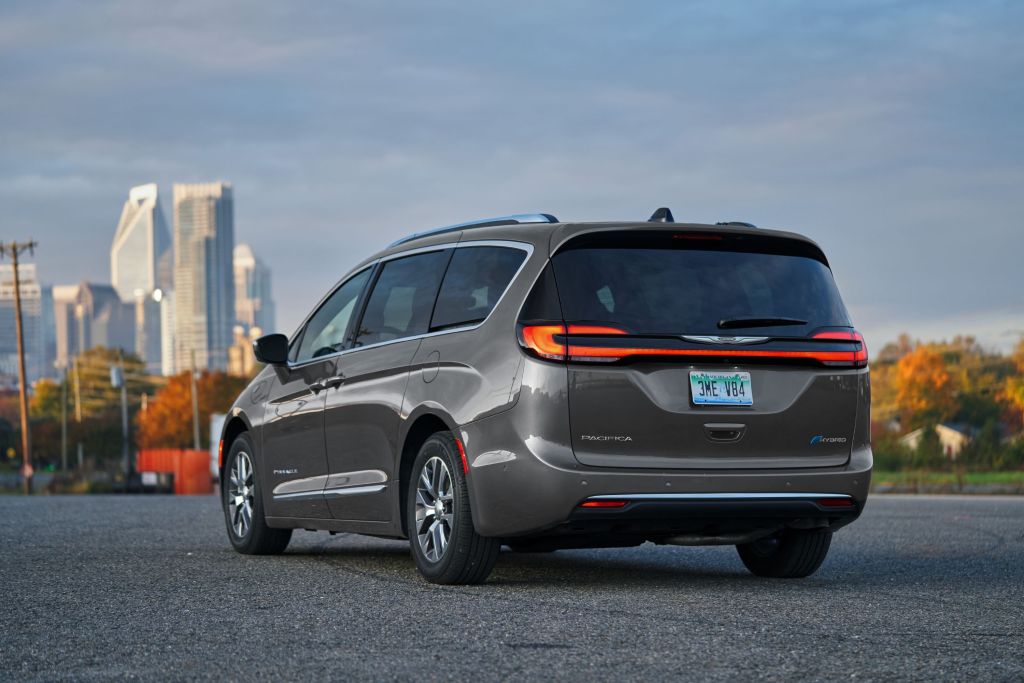
So when I looked that the just-released “Model Year 2024 Fuel Economy Guide” from the U.S. Dept. of Energy I was more interested in seeing what the fuel economy ratings are for various vehicles, ignoring the full electric vehicles*, but giving attention to the plug-in and standard hybrids because in some cases, like minivans, there really is no option when consulting the “Fuel Economy Leaders”:
MINI Cooper Hardtop (2 and 4 door): 32 mpg combined
Compact car
Toyota Corolla Hybrid: 50 mpg combined
Midsize car
Toyota Prius (hybrid): 57 mpg combined
Large car
Honda Accord Hybrid: 48 mpg combined
Small pickup truck
Ford Maverick HEV FWD (hybrid): 37 mpg
Standard pickup truck
Chevrolet Silverado 2WD (diesel): 26 mpg combined
Small SUV
Kia Nio FE (hybrid): 53 mpg combined
Standard SUV
Toyota Grand Highlander Hybrid: 36 mpg combined
Something for everyone—especially those who don’t like to pay a lot at the pump.
*The whole MPGe ranking strikes me as being almost meaningless. While one could say the same for the mpg rating, I think that there is a notion that if a car gets 25 mpg and the average size of a fuel tank is at least 10 gallons (actually it is more on the order of 12.5, but that’s trickier math-wise), then 25 mpg means 250 miles. But unless someone knows the capacity of the battery and is able to do the math, the MPGe is a cipher.



 shinymetalboxes