Beyond That First bZ

Yes, Toyota has been, continues to be, and will be all about getting things better. . . .

By Gary S. Vasilash

When the model year Toyota bZ4X was launched in the U.S. it was roundly reviled for its range and its name. The range ranged from a low of 222 miles for a Limited AWD to a high of 252 for an XLE with FWD. And those, of course, are the EPA estimated numbers, so in the real world they vary—often going in the wrong direction.

And the horsepower wasn’t any great shakes, either: 201 hp for FWD and 214 for AWD.

Guffaws Galore

People scoffed at Toyota for putting out the vehicle. They dusted off the term “compliance car” for the midsize SUV, claiming that Toyota put out what they considered a pathetic attempt at an electric vehicle.

As for the other aspect of low dudgeon: What kind of name is “bZ4X”? It sounds like the name of a ‘droid in a knock-off Star Wars movie.

The explanation was:

  • bZ: Toyota’s “Beyond Zero” initiative for zero-emissions vehicles. (Why it isn’t “BZ” isn’t clear, nor is the whole notion of “beyond zero”: given that positive integers beyond zero are things like 1, 2, 3, etc., might that not indicate positive emissions?)
  • 4: This is reportedly meant to indicate that it is approximately the same size as a RAV4 (although the bZ4X is longer (184.6 in. vs. 180.9 in.), wider (at 73.2 in., up by 0.2 in.), but lower (65 in. vs. 67 in.)).
  • X: Crossover.

When you have to explain something at several levels it is more like hermeneutical analysis than something you’re going to do at your local dealership.

This Is How They Do It

But anyone who knows approximately anything about Toyota knows that the company is all about “continuous improvement,” a philosophy and methodology that is still highly important even though people sometimes claim that Tesla’s nonlinear improvement (i.e., “great leaps forward”) is the name of the game.

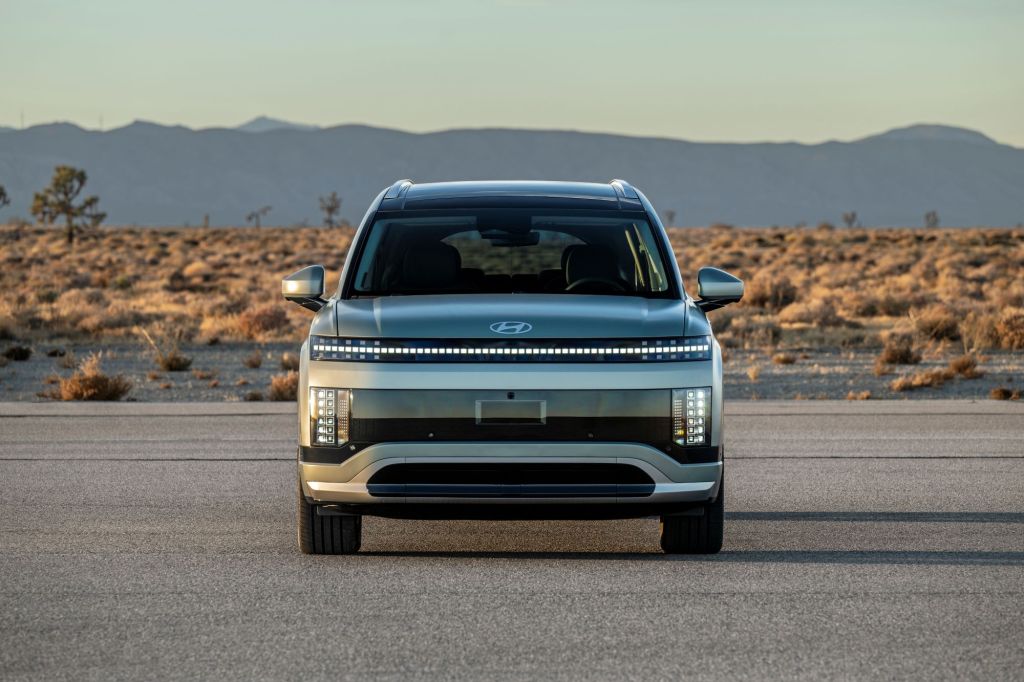
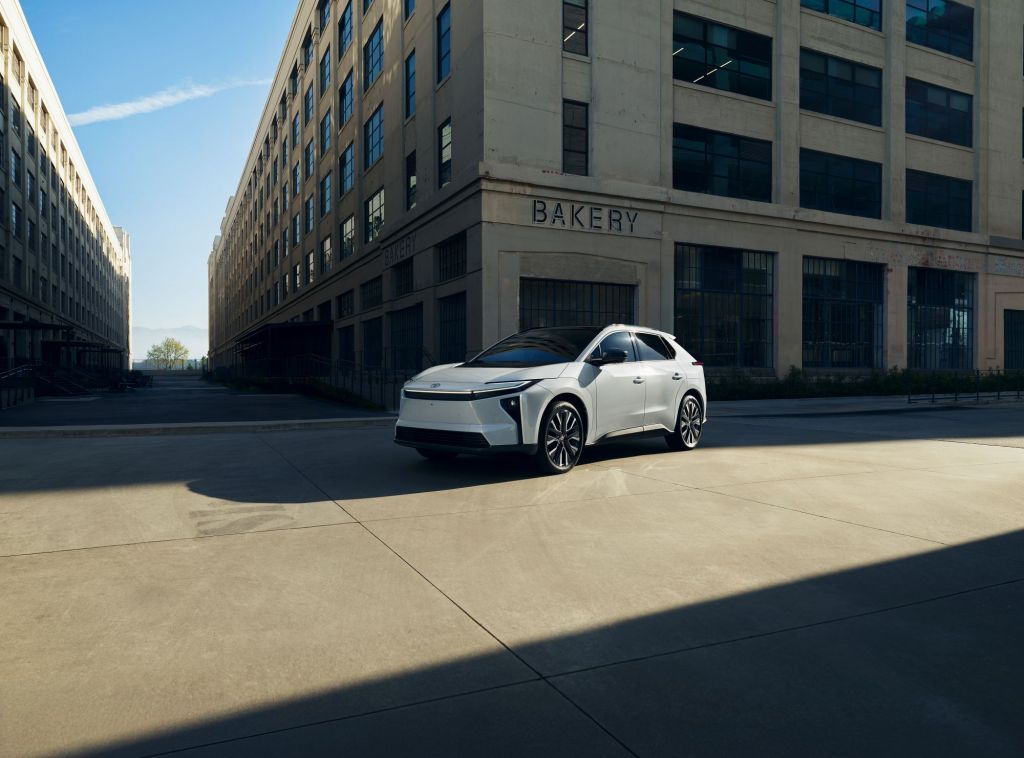
2025 Toyota bZ: second time is a charm. (Images: Toyota)

Toyota has introduced the 2026 bZ. Yes, half the nomenclature has been eliminated. Given that the Lexus side of the house has used two letters for names since its start, two is good for the name of this model.

Long(er) Run

But then there’s the ranges offered by the new model.

The least range is 235 miles for the XLE FWD. The top end is 314 miles for the XLE FWD Plus model.

There are horsepower improvements, too: the Limited AWD and XLE AWD are both at 338 miles. On the low end there’s the XLE FWD, with a curiously low 168 miles. The XLE FWD has a 57.7-kWh lithium-ion battery, while the other models have a 74.7-kWh battery, which explains the low range.

While pricing hasn’t been announced yet, I wouldn’t bet against that XLE FWD having an exceedingly economic MSRP. (The vehicle becomes available later this year.)

The Stuff

The 2026 bZ comes with a NACS charging port that allows high-speed charging (e.g., at Tesla Super Chargers). The company estimates that with DC fast charging the battery can go from 10% to 80% in about 30 minutes.

In terms of overall dimensions, there is no change.

While there are some exterior mods—mainly to the fascias—compared to the bZ4X, the major changes are found in the interior.

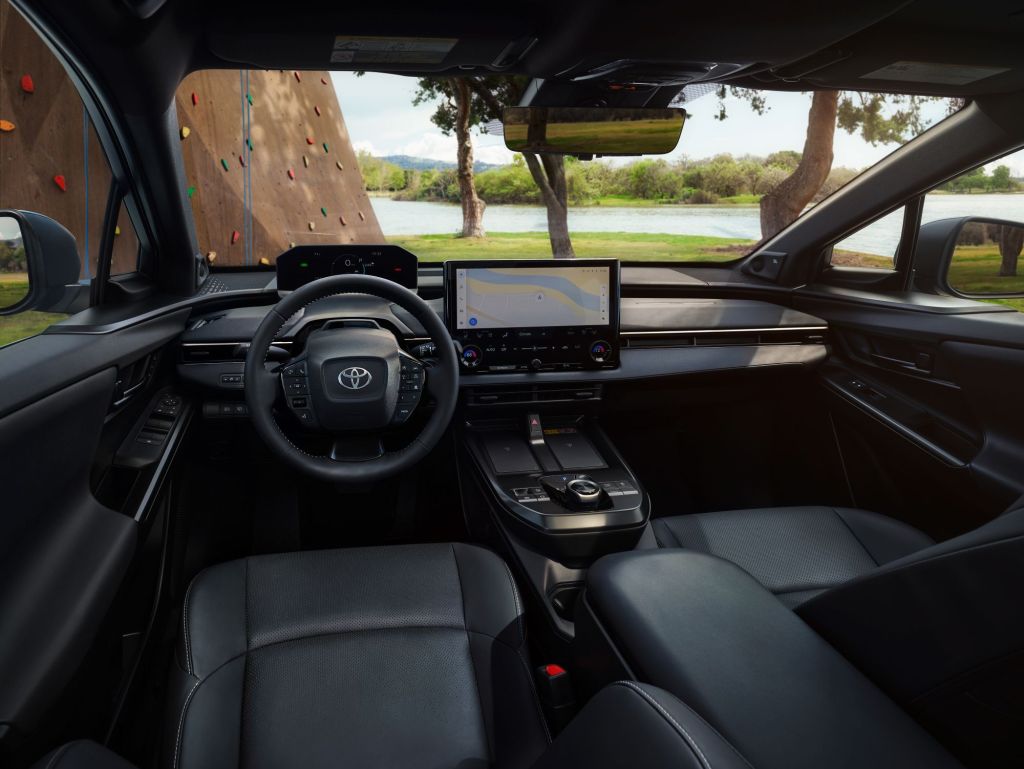
Inside amenities are improved. All models get that 14-inch screen.

The dashboard is redesigned—which is no trivial change from an engineering perspective. All trims have a 14-in. touchscreen for infotainment. It runs the Toyota Audio Multimedia system, developed by Toyota in Texas, so its functionality is what Americans have come to expect (“Hey Toyota take me home”).

Because this is an “environmental” vehicle, the seating surfaces are either cloth or Toyota’s synthetic leather, SoftTex, which is made with thermoplastic polyurethane, which is actually a good facsimile or the real thing.

Driven

As for driving the bZ: quite honestly, the bZ4X drives well. After all, this is a vehicle that is primarily meant to be appropriate transportation for those who are inclined to reduce their carbon footprint, not a hot vehicle that one is going to put one’s foot to the floor in.

And the bZ, albeit quicker, also drives well. Generally, it drives for a longer period and you’re in more comfort while doing that driving.

Bottom Line

Now the real question comes down to the price. At present the Toyota shopping site has the MSRP for an 2025 XLE $37,070. That model has an estimated range of 252 miles.  The company is going to have to meet or beat that with the 2026 models.

The 2026 HUMMER EV Gets a New Feature

And it’s shared with those already on the road. . . .

By Gary S. Vasilash

The GMC HUMMER EV—both SUV and pickup—may be big, but the vehicle is not a big seller.

In Q1 2025 there were 3,479 delivered.

While that number is comparatively low—the company delivered 6,794 Corvettes, another vehicle with a non-trivial MSRP—another way of looking at HUMMER EV sales that appear better is to compare it with the number of Silverado EV and Sierra EV models delivered during the same period of time: 2,383 and 1,249, respectively.

So the behemoth is doing OK by that measure of electric vehicle sales.

Today GMC announced the 2026 HUMMER EV.

The biggest new feature is something called “King Crab.”

This mode allows the rear wheels to turn faster—“significantly faster,” according to the company—than the front wheels.

This is said to improve maneuverability “when navigating tight spaces off-road, moving around obstacles or rock crawling.”

The 2026 HUMMER EV Carbon Fiber Edition SUV. (Image: GMC)

Given that the vehicle is 216.8 inches long and 86.7 inches wide (not including mirrors), or 18.07 feet long and 7.23 feet wide, enhanced maneuverability over the vehicle’s previous four-wheel steer capability is undoubtedly useful.

One interesting thing about King Crab: GMC is making it available to all HUMMER EV owners as an over-the-air update.

That is certainly a nice touch.

And another impressive set of stats: the HUMMER EV 3X Pickup produces 1,160 hp and 13,000 ft-lb of torque.

That’s like something out of a Marvel movie.

Survey Reveals OEMs’ Anticipation of EV Market Penetration

Well, optimism is always a good thing to have. . .

By Gary S. Vasilash

The Kerrigan Advisors 2025 OEM survey—which was conducted from December 2024 to March 2025, so it is pre-tariff—indicate that OEM execs are still bullish on the prospects for electric vehicles in the U.S. market.

Asked what their expectation is for EV market share by 2025—presumably that would be “by the end of 2025”—the largest cohort, 46%, answered 10% to 20%. While that bandwidth may have included a lot of 10%s and 11%, it still shows a certain sense of bullishness among these execs.

The second largest cohort, 40%, answered 7% to 10%.

So either way, there is a solid number of execs who see things growing, which is reasonable given the amount of new EVs that are being rolled out.

(The remaining 14% of respondents: 8% say 21% to 30% market share, 2% 31 to 40%, 3% 41% to 50%, and 1% greater than 50%. It would be interesting to know who that 1% is.)

That said, they are willing to admit that the EV transition isn’t happening as quickly as anticipated.

80% say that it is going slower than planned. 10% say faster than planned and 9% as planned.

Still, there is an evident stick-to-it-ness among the OEMs.

One question that might seem ominous—remember that in 2024 Elon Musk said that if Chinese EVs come into the U.S. market they would “pretty much demolish” U.S. OEMs—has it that 76% of OEMs “think Chinese OEMs will eventually enter the U.S. market.”

While “eventually” is possibly a long time, perhaps that recognition that it may happen will allow the U.S. OEMs to make the necessary countermeasures.

Advanced Automotive Manufacturing—in Georgia

The Hyundai Metaplant America is the kind of manufacturing facility that other OEM manufacturing execs probably dream about. . .

By Gary S. Vasilash

I have seen the future of automotive manufacturing and it is in Savannah, Georgia. More specifically, it is in Ellabell, GA, but it is proximate (20 miles) to the more well-known locale.

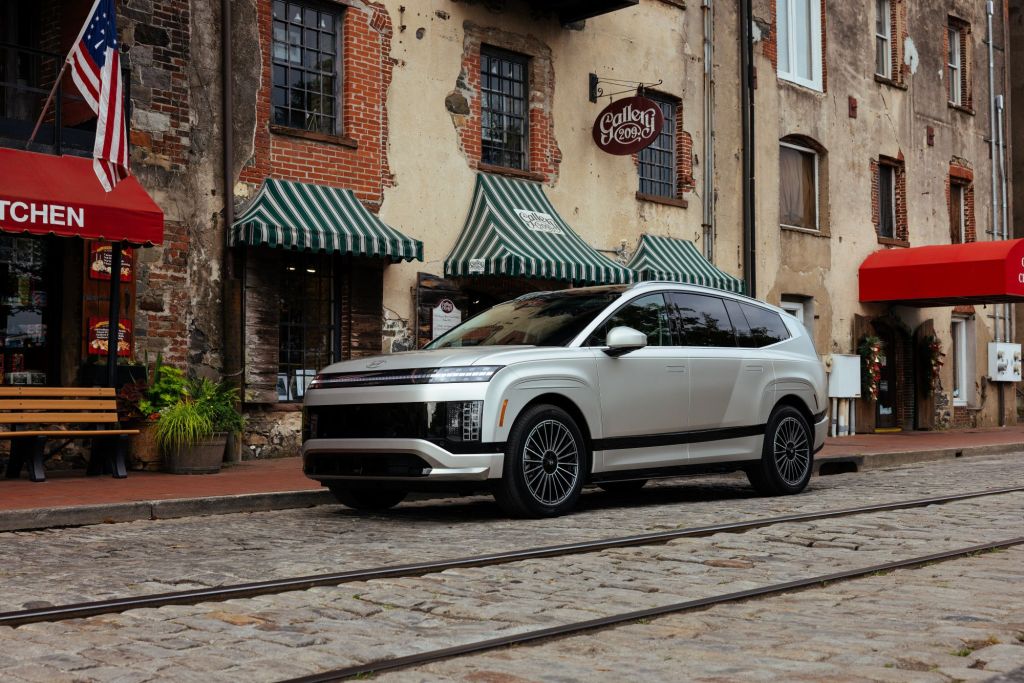
The Hyundai Motor Group Metaplant America (HMGMA), which had its grand opening in late March, has been building Hyundai EVs since early October 2024. The first product is the IONIQ 5. It has since added the IONIQ 9.

The complex consists of 11 buildings with 7.5-million square feet under roof.

Hyundai has invested $12.6 billion in HMGMA as well as two battery joint ventures, one with LG Energy Solution and one with SK On.

The initial announced capacity was 300,000 vehicles per year.

Even before the launch is fully ramped the company announced it is going to increase capacity to 500,000 units.

HMGMA will not only be producing EVs for Hyundai, but products for sibling brands Genesis and Kia. And in addition to EVs, the plant will manufacture hybrid vehicles.

Shiny & Bright

To be sure there is something to be said for a new plant the way there is for a new car. Everything is bright and clean.

But HMGMA is exceptionally bright and clean—there are even skylights in the vaulted roof of the General Assembly building.

The epoxied floors shine with nary a smudge.

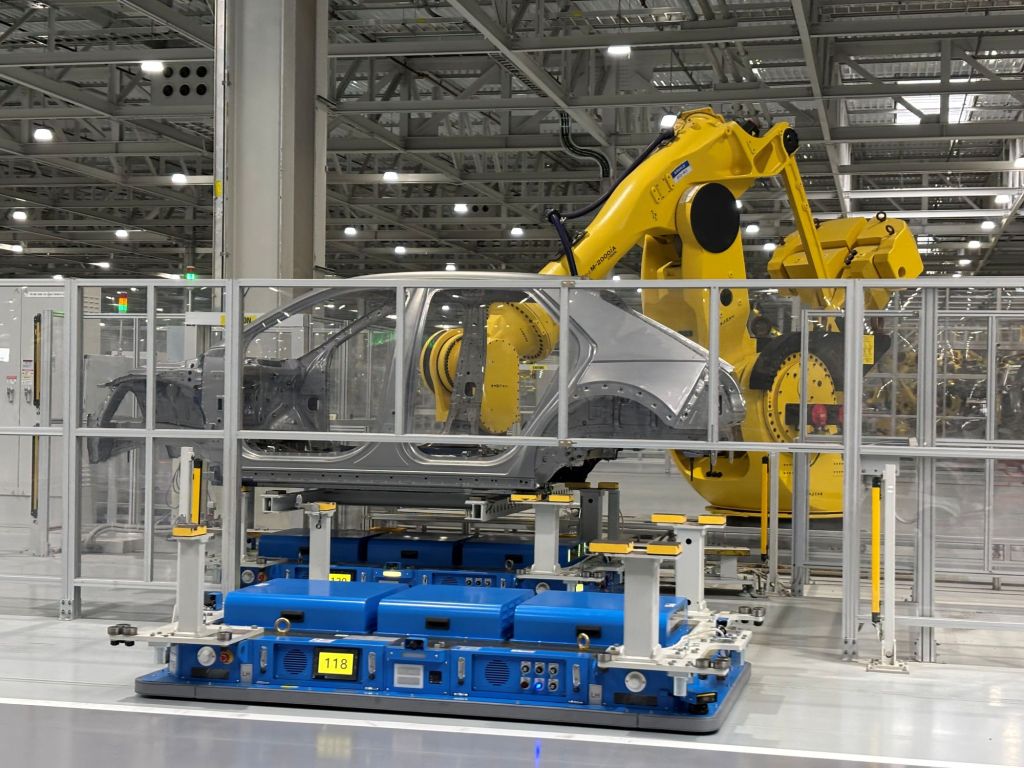
There are AGVs and robots throughout the HMGMA complex. (Images: Vasilash)

Advanced Manufacturing Tech

Hyundai operates the Hyundai Motor Group Innovation Center Singapore, where the company is developing smart manufacturing systems as well as producing vehicles with the hardware and software developed there (it has an annual capacity of 30,000 EVs).

The Singapore site is the testbed for the tech that is deployed in HMGMA.

While there is a significant number of robots working in the Weld shop—475—what is more impressive is the number of automated guided vehicles (AGVs) of various types, sizes and configurations that are autonomously running throughout the plant. These units are doing tasks ranging from parts delivery to actually lifting the finished vehicles at the end of the line and positioning them for subsequent inspection and tests.

The people working on the line—called “Meta Pros”—are not only walking on wood surfaces to make it easier on the legs during a shift, but tasks that might otherwise have them climb into a vehicle-in-process—such as installing a center console—are automated so as to relieve them of what might be ergonomically awkward conditions.

Hyundai owns Boston Dynamics, the producer of Spot, the four-legged robot shown here, performing an inspection task.

Investing Even More

Hyundai has announced that between 2025 and 2028 it will be investing $21 billion in the U.S. Part of that funding—as in $9 billion—will be to increase the total production capacity it has to 1.2 million vehicles. (It also has a plant in Montgomery, Alabama, Hyundai Motor Manufacturing Alabama, which builds the Santa Fe, Tucson, Santa Cruz, and Genesis GV70.)

When HMGMA is fully staffed there will be approximately 8,500 people working there.

The average salary for a Meta Pro is $58,105, not including benefits. Other workers in Bryan County, where the plant is sited, have an average wage of $47,000.

A good job in a modern facility for a good salary. That’s what bringing manufacturing to the U.S. is really about.

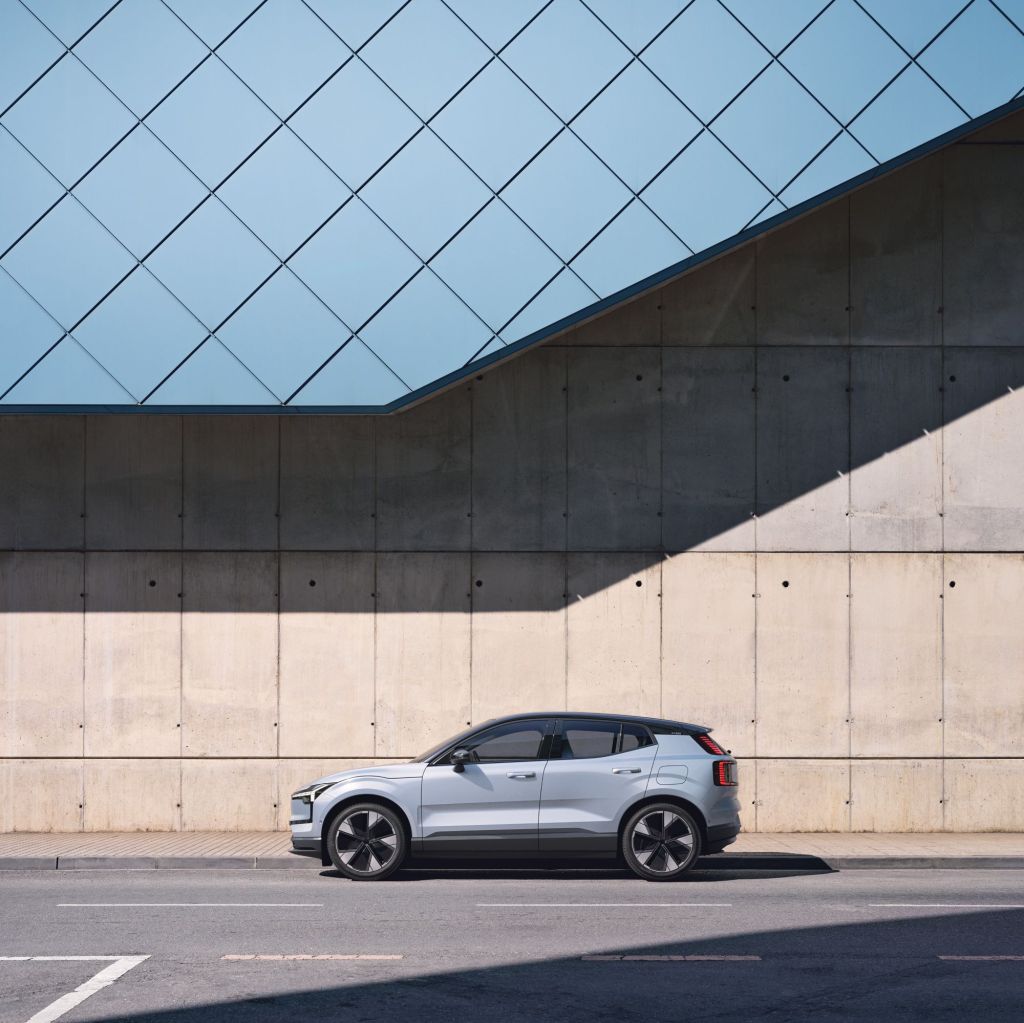
2025 Volvo EX30 Twin Motor Performance

(Images: Volvo)

Small but pricey. And probably more so soon.

By Gary S. Vasilash

The Volvo EX30, a small electric SUV, had been a strong contender for an award in the 2024 North American Car, Truck and Utility of the Year (NACTOY) awards.

But the company had to pull it from contention due to it not having vehicles in the U.S. market by the end of 2023. Logistical issues. The vehicle was being built in Zhangjiakou, China. The company added capacity by also building them in Ghent, Belgium. Know that it is a global vehicle so plenty of markets are interested in the EX30. In 2023 in the U.K., for example, it won the Sun Car of the Year Award and the Sunday Times Small SUV/Crossover of the Year. Evidently there were more of them in the U.K. than there were in the U.S.

When the car was introduced to the media in late July 2023 in New York City, the company touted that this was a vehicle that was engineered with the environment and sustainability in mind, as they used a variety of materials especially on the interior that began their existence as other things before being reprocessed to Volvo trim. (E.g., the seat cushions and lower backrests are covered in Nordico, a material made, in part, from pine oil. The seat uppers and door inserts are covered with a knitted material than is derived from PET bottles.)

Things Change

The initial plan had it that the starting MSRP for a single-motor EX30 would start at $34,950.

But things—including the aforementioned logistics—changed and the EX30 is available in the U.S. only in a dual-motor setup (which provides a maximum 422 hp).

Consequently, the starting price has gone up. It is $46,195.

Not a trivial difference, but again, the vehicle has more oomph than the original entry and it is an all-wheel-drive vehicle.

Not Long

The EX30 has a 69-kWh battery that provides an estimated range of 253 miles. Not great, but then you have to look at that 422 hp.

Also, EVs are heavy. The EX30 has a curb weight of 4,151 pounds. That may not be particularly telling in itself so know that a 2025 AWD Toyota RAV4 with a gasoline engine weighs 3,490 pounds. That’s a 16% difference.

Quite Minimal

One of the things that the EX30 is is minimalist.

There are very few conventional interfaces on the interior. Things like is a nice metallic door handle for opening. Tabs for adjusting the HVAC louvers. A wiper stalk. A gear shift stalk. And switches for window operation.

But pretty much everything—including opening the glove compartment—is done via the 12.3-inch center display. Or with capacitive buttons on the steering wheel.

And “everything” includes encompassing what a driver would typically find on the other side of the steering wheel: a gauge cluster.

If you want to know how fast you are driving you have to look to the right. Which strikes me as being ergonomically inappropriate, especially for a company that has long been synonymous with “safety.”

Maybe researchers in Gothenburg determined that it is no problem, but this driver in Detroit found it to be troublesome.

Brighter Not Always Better

Another issue I encountered was a result of the panoramic—as in the size of essentially the entire roof—sunroof. The glass panel may have been treated to deal with sun load and radiation, but I found it to let in far more light than I would like. Quibble, quibble.

It does have all manner of sensor-based tech—from pedestrian and cyclist steering avoidance to adaptive cruise control, from a blind-spot information system to a door opening.

The exterior look is clean and contemporary. There is 31.9 cubic feet of cargo capacity, which is suitable for a vehicle of this type and size (166.7 inches long; 72.4 inches wide; 61.2 inches high; 104.3 wheelbase).

But here’s a thing: the issue of tariffs have to loom large regarding this vehicle. The one Driven here was built in China. . .and while keeping track of what’s what on the tariff front, one thing is for certain: when it comes to China they’re not going away.

Toyota: Steady and Slow. . .

. . .well, maybe it won’t outright win the race, but its approach to technology sure seems like the right one. . . .

By Gary S. Vasilash

You may recall that not long ago Toyota was being chastised for being insufficiently aggressive in pursuing an electric vehicle strategy. It seemed as though Toyota would be like a vehicle abandoned by the side of the road, striped and desolate.

It isn’t that it wasn’t putting EVs on the road. Just not enough of them. And not just with the sort of capability that would be expected of Toyota. So went part of the criticism.

Akio Toyoda was considered backward for taking an approach that would have powertrains suited to varying needs, whether it is a straight ICE, a hybrid, a plug-in hybrid, a battery electric, or even—in exceedingly limited quantities at least—a hydrogen electric setup.

Turns out that this steady approach is actually one that is winning in the market.

According to Kelley Blue Book in Q1 2025 there were 296,227 EVs sold in the U.S.

That’s from 25 brands.

In Q1 2025 Toyota (including Lexus) sold 110,225 hybrids. That’s about 37% of the number of all the EVs sold by all of those other companies. And while those brands are struggling to make money from EVs, presumably Toyota isn’t putting hybrids under the hoods of a mulitude of vehicles because it isn’t making money selling them.

So doing what it is doing powertrain-wise is probably not a bad decision on Toyoda’s part.

Another area where Toyota wasn’t as visibly bullish as some other companies is in autonomous driving.

No real analogue to Cruise Automation or Argo AI.

There was (and is) the Toyota Research Institute, but they were doing other things, too.

And now there is no Cruise Automation. No Argo AI.

And this week Waymo and Toyota announced they’ve “reached a preliminary agreement to explore a collaboration focused on accelerating the development and deployment of autonomous driving technologies.”

Waymo is clearly the leader in the U.S. in autonomous driving tech, with the company offering rides in the San Francisco Bay Area, Los Angeles, Phoenix, and Austin.

Also this week May Mobility, an autonomous vehicle tech company, and Uber announced a partnership that will have autonomous vehicles available for ride-hail in Arlington, Texas, by the end of the year.

The vehicles for the Arlington program?

Toyota Sienna minivans. (They’re hybrids.)

Toyota is a strategic partner in May Mobility.

Toyota Sienna hybrid minivans will be used in the Uber/May Mobility deployment in Arlington, Texas. (Image: Uber/May Mobility)

2025 Genesis GV80 Coupe 3.5T E-SC AWD

Looks good. Drives well. And is full of high-quality materials and top-notch tech

By Gary S. Vasilash

All of that alphanumeric nomenclature isn’t particularly telling unless you happen to be a cipher expert and have the key necessary to decode it.

And one of the points that isn’t made in all of that but should probably be made clear is that, yes, the roofline, which swoops down toward the rear and resolves into a kick-up spoiler, is coupe-like.

But (1) coupes typically have two doors and this has two. And (2) coupes are generally cars and this is an SUV.

And what an SUV it is.

Genesis GV80 Coupe: presence and appropriate performance. (Image: Genesis)

Of the many vehicles I have driven of late, none has garnered the positive attention that this one has, from both strangers (I encountered a couple in a parking lot admiring the GV80) and relatives (a brother-in-law who has seen the panoply of vehicles I’ve driven and for the first time asked me to give him a ride).

Maybe it has something to do with the fact that, comparatively speaking, and especially in southeastern Michigan, Genesis vehicles overall are rare.

But likely it has more to do with the execution of exterior and interior design that is exceptional.

Outside

In the front of the vehicle there is the familiar crest-shaped grille, which is bold but not in-your-face. The headlamps are two lines (the two lines are a design theme of Genesis models) that seem to be much narrower than might be expected for the lights.

And it isn’t’ simply an issue of seeming: they’re using “Micro Lens Array” tech that allows the light to do their work yet in a form factor that is smaller than is ordinarily the case.

There is also restraint in the use of chrome trim on the body side, mainly used in the door undercut above and in the area below the rocker panels.

Inside

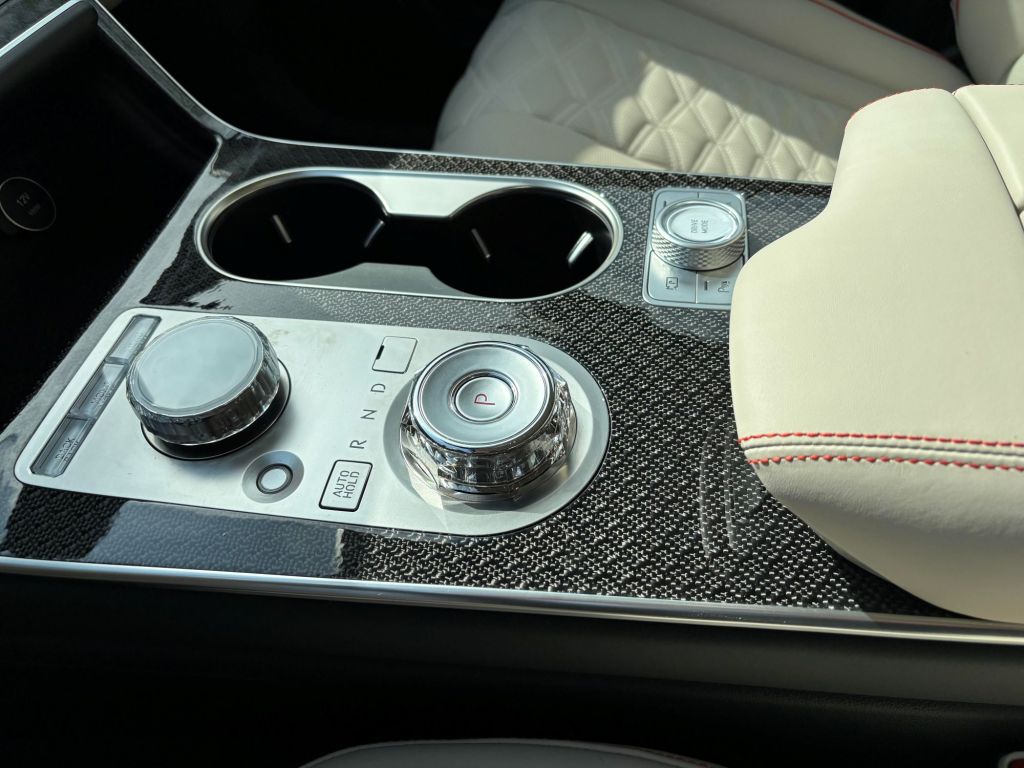
Nappa leather seating surfaces. Actual carbon fiber trim (and plenty of it). Microfiber suede headliner (no, not actual suede leather, but not only does it look like it, it also looks a heck of a lot better than tricot or other fabrics typically used).

There are power front seats. And power second row seats. The driver gets a power cushion extension, bolster, and massage function.

Note the carbon fiber and the color of the stitching—to say nothing of the knurled knobs that provide an interface to the infotainment system and gear selection. (Image: Vasilash)

Sometimes when there is a coupe design the second row suffers in terms of headroom. In the GV80 Coupe the front headroom is 40.2 inches and the rear is 37.6 inches. Two points about that: (1) I had a six-footer in the second row who was perfectly comfortable; (2) that second row measure is merely 0.8 inches less than the headroom in the non-Coupe GV80, so it is not like a lot is being given up.

Power

Here we get to the rest of the nomenclature in the name of the GV80 Coupe.

The powertrain is a 3.5-liter twin-turbo V6 with a 48-Volt e-Supercharger. (What’s that? An electric motor that compresses air and forces it into the engine intake, which improves combustion. This means it improves performance. It is more efficient than traditional mechanical superchargers or turbochargers. But, of course, it is more sophisticated.) It is mated to an eight-speed automatic. There are, not surprisingly, paddles on the steering wheel should you want to shift it yourself.

Tech

On the inside there is a 27-inch-wide OLED screen. What’s notable about this is that it is comparatively restrained compared to other vehicles in its class that have screens so big that they pretty much silently scream “Look at me! I am a giant screen!” The screen in the Genesis does everything necessary without digital ostentation.

The vehicle is “Cloud Connected,” which means everything from over-the-air (OTA) updates to dynamic routing in the navigation.

There is an 18-speaker Bang & Olufsen audio system.

Then there is the sensor-based functions ranging from cruise control with stop and go capability to parking avoidance assist (front/side/rear).

Price

One could say that this is a “total package,” and it is: the vehicle Driven, chock full of things that would otherwise be options on competitive vehicles, had a base MSRP of $85,750. It had two options: $650 for the paint and $30 for an NFC keycard (the size of a credit card, this card used Near Field Communication technology and provides a backup for the key fob or smartphone; it allows unlocking and starting the vehicle). The point is that while that may seem to be a steep(ish) price, again, there is so much in terms of high-quality materials and tech that were much of these things to be itemized, I’m sure the vehicle would be much more costly.

Tesla Tanking in the EU

It is down in Q1 by a big number. A very big number.

By Gary S. Vasilash

Although there are plenty of headlines about Tesla sales dropping 37.2% in Europe during the first quarter of 2025 compared to Q1 2024, it is actually a bit worse than that.

The European Automobile Manufacturers’ Association (ACEA), which reports the numbers, has two charts for new car registrations by manufacturer.

One is for the European Union.

One is for the European Union, the European Free Trade Association (EFTA) countries (Iceland, Liechtenstein, Norway, and Switzerland), and the United Kingdom.

The 37.2% drop is for the EU + EFTA + UK market.

While that combined market is bigger than the EU alone, the EU market alone had EV sales of 412,997 EVs in Q1 and the EFTA and the UK added only 160,503.

Obviously that EFTA + UK number can change the overall percentage.

But the trend in the EU itself is the one that is the more important.

The EU-only chart shows that Q1 2025 Tesla sales are down 45% compared with Q1 2024.

While there may be excuses about changeovers and Q1 not being great for sales, and it is true that there are negative numbers for several OEMs in the EU—for example, Stellantis -14%, Toyota -4.8%, Hyundai Group -7.2%, Mercedes -6.2%–but no OEM is off as much as Tesla.

Not All Red Ink

What’s more (truly more) is that the ACEA finds that Volkswagen Group for Q1-Q1 is +4.8%, Renault Group +9.5%, and BMW Group +0.4%.

Of all the countries in Europe—including the EFTA and the UK—the single biggest market in Germany. Where Tesla has a plant. And where Elon Musk became involved in politics.

Germany’s Robust EV Sales

During the first quarter of 2025 sales of battery electric vehicles in Germany were up 38.9% compared with Q1 2024.

There were 112,968 EVs sold in Germany in Q1. It is the dominant factor in all of the numbers.

While it is probably impossible to know precisely why Tesla sales were down 45% in the EU in a period when EV sales were up 38.9%, it isn’t hard to imagine why.

The Cadillac Optiq Going V-Series

Although you have likely not seen the vehicle in person yet, it is likely to become something that you see a lot of. And Cadillac has now announced a performance variant

By Gary S. Vasilash

In the compact luxury EV crossover segment Cadillac has an exceedingly fine entry in its Optiq. (One problem it may have, however, is the name: might some people not find its pronunciation troubling and so as not to embarrass themselves, go to the Audi store that’s next door and ask about the Q4, instead?)

2025 Cadillac Optiq: a stylish compact crossover. (Photos: Cadillac)

The vehicle has a powertrain that provides 300 hp and an EPA estimated range of 302 miles.

It has an interior with an innovative freshness that undoubtedly will help skew Cadillac’s mature ownership numbers far lower.

And with the second row up it provides 26 cubic feet of cargo capacity—57 with it down—so there is actually more than a modicum of utility provided, an important consideration for one’s daily existence with a vehicle.

Right out of the box there were 1,716 Optiqs sold in the first quarter—502 more than the Cadillac CT4, so that’s saying something (although it is a bit of an apples-to-oranges comparison, as the CT4 is a sedan with an internal combustion engine).

The interior is fashion-forward. Yes, it has a big screen (33-inches, diagonal) but the color and materials are much more impressive.

Undoubtedly planning to juice that number, today Cadillac announced there will be a 2026 Optiq-V series vehicle.

Details are, well, non-existent (beyond “Cadillac engineers delivered a unique package prioritizing precision, dynamic suspension and tight steering,” which is pretty much marketing-speak).

One thing that is likely the case is that the 2026 Optiq-V will have a non-trivial bump in its starting MSRP (according to Cadillac.com, the starting price for a 2025 Optiq is $52,895), not only because of what the Cadillac engineers have done, but because the Optiq is produced at a GM plant in Ramos Arizpe, Mexico.

EU Powertrain Picture

Seems that gasoline is still reasonably popular. . .

By Gary S. Vasilash

The good news for companies in the European Union that make things like con rods and pistons is that according to the most recent vehicle registration figures from the European Automobile Manufacturers’ Association (ACEA) people are still buying vehicles that use internal combustion engines.

Its figures for January 2025 show that 29.4% of EU new vehicle registrations in January were for “petrol” powertrains.

The number in January 2024 was 35.4% petrol power, so clearly things are moving in the wrong direction for those in the business of making engines and the components thereof.

However, looking at the numbers for hybrids, things appear in a different way.

In January 2024 hybrids represented 28.7% of the new registrations in the EU.

But in January 2025 hybrids are at 34.9%.

So while there was a 6% decline in petrol registrations between the two months, there was a 6.2% increase in hybrid registrations.

And hybrids, of course, use internal combustion engines, too.

So if we sum the figures, 64.3% of the new vehicle registrations in the EU in January have internal combustion engines.

If the plug-in hybrids are added (7.4%), that gets to 71.7% of the market.

Electric vehicles?

They’re 15% of the January 2025 new vehicle registrations, which is a move toward the upside compared to January 2024, when EVs were at 10.9%.

However, EU regulations regarding CO2 emissions are such that 20% of the vehicles sold by automakers must be zero emissions.

If the ~37% increase from January 2024 to January 2025 for EVs holds, there is not going to be a problem reaching that figure.

Still, presumably when the 20% rule was written it was a stretch goal but not one thought to be wholly unattainable.

At the end of the day, the Market will decide on what powers its vehicles.