
Higher margins matter. For now. . .
By Gary S. Vasilash
One of the issues that consumers face in the new-car market in the U.S. is the non-trivial sticker price. According to Kelley Blue Book, the average transaction price for a new vehicle was $48,397 in September.
Charlie Chesbrough, Cox Automotive Senior Economist, said of the number, “One reason transaction prices are lower in 2024 is that many buyers are choosing smaller, less expensive vehicles. The subcompact and compact SUV segments are outperforming the market this year, and by no coincidence, they’re also two of the lowest-priced product segments in the market.”
Two points about that:
- It is surprising to think that prices are “lower in 2024” when that number is above $48K.
- Subcompact and compact SUVs are growing in popularity, but it seems the likes of GM and Ford are still more interested in the other end of the spectrum, which helps with their earnings now, but perhaps not for the long run, when people simply can no longer accept high monthly payments. (Given the number of large, expensive vehicles that are still being sold, it is clear many people continue to be accepting. But at some point other bills are going to take precedence. After all, when the average monthly car payment is on the order of $750, and the Bureau of Labor Statics found that car insurance premiums increased an average 20% between June 2023 and June 2024, something’s got to give.)
This phenomenon of going for the upper end of the market is not just one in the U.S.
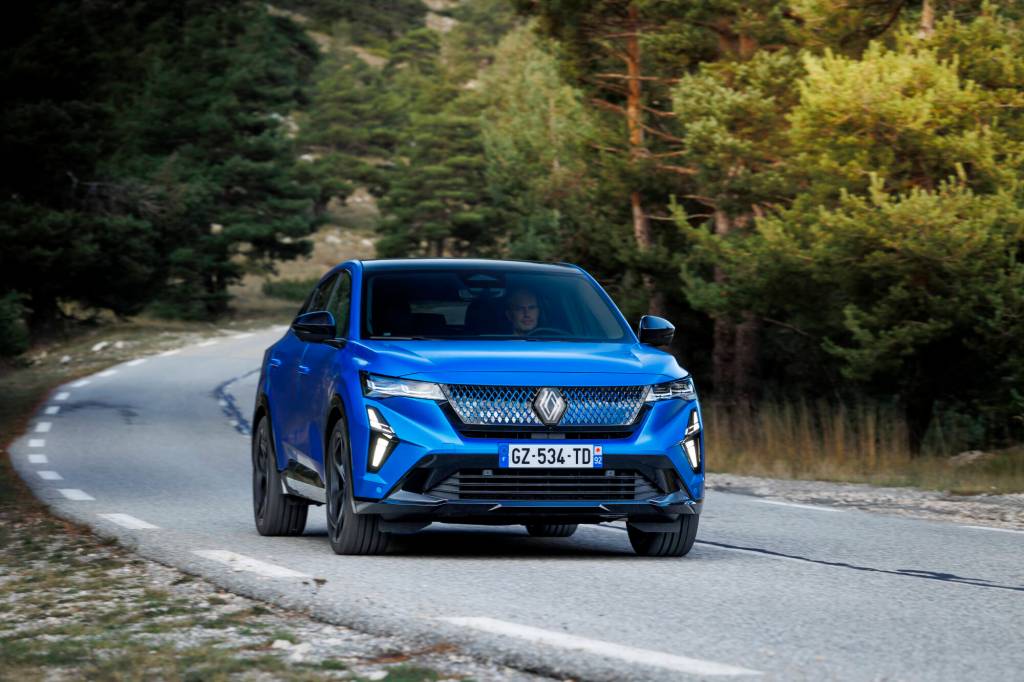
Renault just introduced a new plug-in hybrid crossover, the Rafale E-Tech 4×4. It is a 300-hp vehicle that has a 22-kWh battery that the company says can power the car some 105 km (65 miles) on the European WLTP schedule (which is different than the EPA).
What did Bruno Vanel, VP, Renault Brand, Product, Revenue & International Markets Expansion, say of the new vehicle represents? It “symbolizes our move upmarket and our legitimacy to conquer all customers with a high-performance version.”
When you think of European vehicles that are (1) upmarket and (2) high performance, odds are something from BMW comes to mind. And this is probably the case in France, as well.
But Renault wants some of those higher margins, too.

 shinymetalboxes