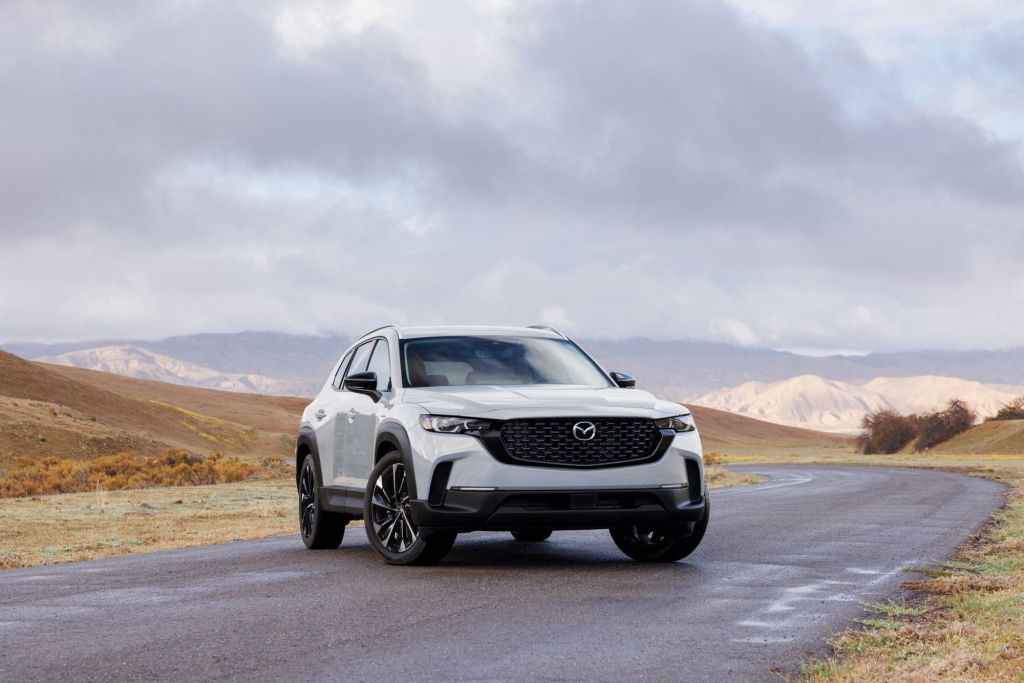
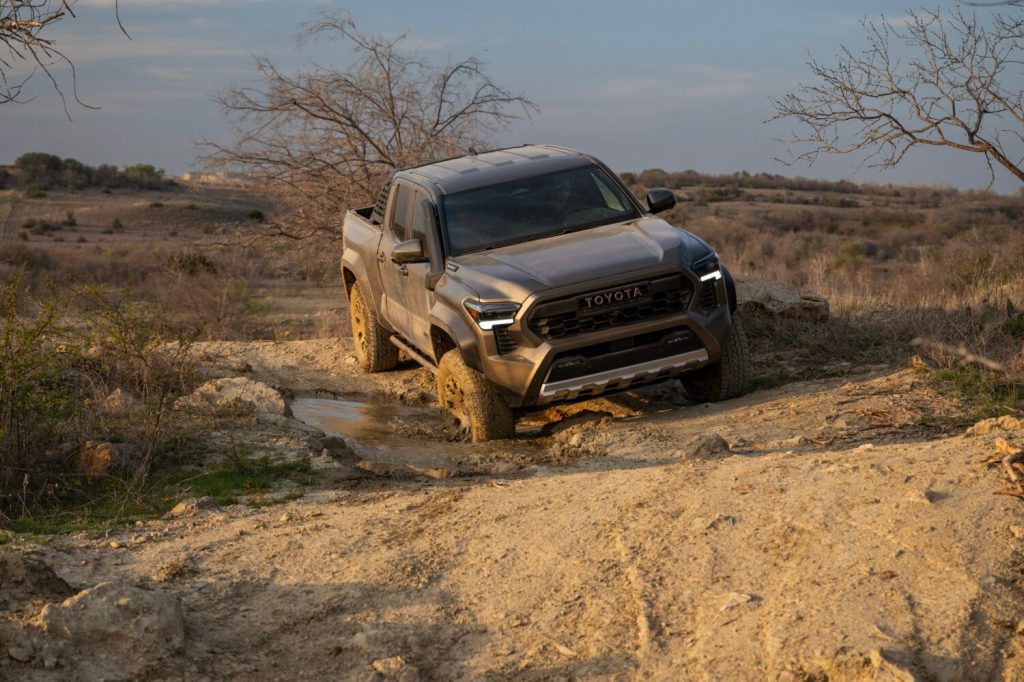
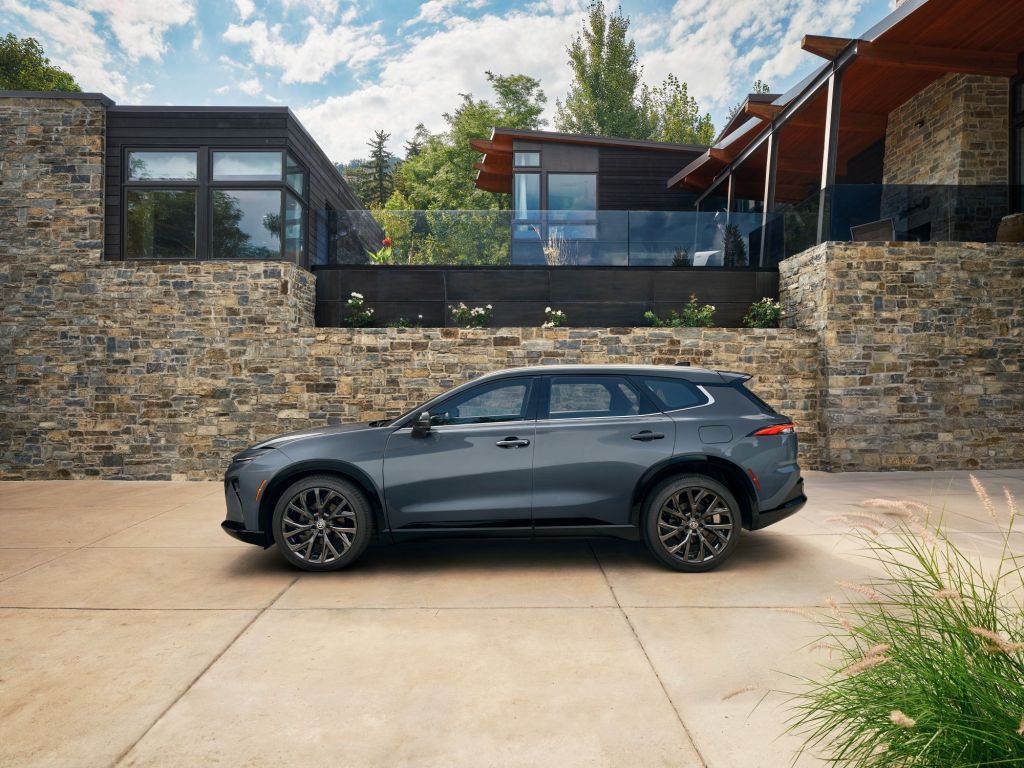
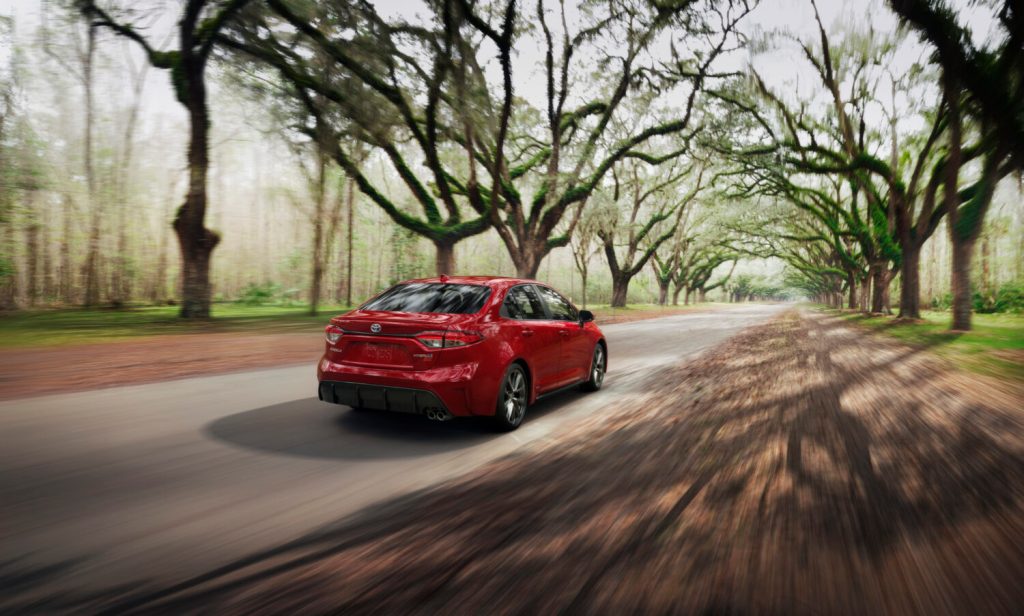
2025 Toyota Crown Signia Limited

Crown is taking the place of other Toyota nameplates and is doing a good job at doing so. . .


By Gary S. Vasilash


There are probably more people who are familiar with the Roxy Music album of the same name than the Avalon, Toyota’s former top-of-the-line sedan in the U.S. market.


Which is a shame because the Avalon, which was introduced in model year 1995 and had a five-generation run until it became unavailable in the U.S. market, was, year in and year out, generation after generation, a fine automobile.


Perhaps a problem for the flagship that it was simply eclipsed by the Toyota Camry which, year in and year out, generation after generation (it is now the ninth), simply sold in tremendous numbers.


Someone would walk into a Toyota dealership and likely drive out in a Camry because it probably took little in the way of convincing. But for another car that cost a few thousand more, nice as it was, the persuasion would have been more challenging. So if you were a commissioned salesperson, wouldn’t you take the path of least resistance? (It has been the best-selling sedan in the U.S. for 22 years running, and this year it will likely notch 23.)


The product planners at Toyota know they need to have something at the top of the line. Something that isn’t the Camry XSE AWD (the highest trim level of the eight available).


For model year 2023 Toyota introduced the Crown to the U.S. market, the top-of-the-line that was the Avalon replacement.


Initially the Crown was positioned as a sort-of hybrid crossover, with the “sort-of” predicated on what it called a “lift-up” design.


As Toyota put it: “Crown has a raised overall height that’s nearly four inches higher than Camry. The unique height of this sedan offers increased road visibility, along with easy entry and exit.”


But sort-of isn’t enough.


So for model year 2025 Toyota is adding the Crown Signia to it lineup. This vehicle is categorized as an SUV.


And just as the Crown replaced the Avalon, the Signia Crown replaces the second-generation (the all-hybrid one that had a run from model years 2021 to 2024) Venza.
Clearly the “Crown” moniker, which has been a fixture in the Toyota Japan lineup since it went into production in 1955, is taking its place in the U.S. market in a notable way.
The Crown Signia is quite an impressive vehicle.

If there is any problem that the Crown Signia may have (though not for me) it is that the roofline resembles a small wagon more than an SUV. (Image: Toyota)


No, this is not because its hybrid powertrain’s 240 combined net horsepower (188 hp from the four-cylinder engines and the balance from its 134 kW front and 40 kW rear permanent magnet synchronous electric motors) or from its standard electronic on-demand all-wheel drive (it works when it needs to; the driver need not engage buttons or knobs or tap a selection of the 12.3-inch infotainment screen).


It’s not because it has the capability of towing 2,700 pounds or, with the second row seats folded, a 6.5-foot long cargo area.


It is because it is clear that the level of attention to detail executed in both the exterior and interior designs bring to mind the style and sophistication that had been characteristic of the Avalon.


For example, the leather-trimmed seats that are in the Limited grade have double-stitching, quilting and fillet piping. While leather seats can provoke a shrug, it is the fact that there is the double-stitching, quilting and fillet piping that takes them to a level that is not characteristic of an offering from a mass-market brand.


The vehicle as-driven has an MSRP of $51,799. That’s $47,990 for the vehicle and the remainder for the options. (There is also an addition of $1,450 on top of the $51,799 for delivery and handling.)


The options include things like premium paint ($425) and mudguards ($155). The biggest one if the advanced technology package ($1,865), which includes things like various sensors and monitors and associated functions.


So it comes to $53,249, certainly a reasonable sticker for what is a premium hybrid.

The Cost of Tariffs on Auto

“By means of glasses, hotbeds, and hotwalls, very good grapes can be raised in Scotland, and very good wine too can be made of them at about thirty times the expense for which at least equally good can be brought from foreign countries. Would it be a reasonable law to prohibit the importation of all foreign wines, merely to encourage the making of claret and burgundy in Scotland?”—Adam Smith, The Wealth of Nations

Here’s something to think about regarding the possibility of tariffs and how they will affect vehicle pricing and/or availability.


David Christ, group vice president, general manager-Toyota Division, Toyota Motor North America, pointed out yesterday (the day after the election) at a meeting of the Automotive Press Association, that Toyota has 10 manufacturing plants in the U.S. It is building its 11th in North Carolina that will open in 2025 for the production of batteries for electrified vehicles. A $13.9-billion plant.

Certainly a solid U.S. footprint. It employs some 49,000 in the U.S.


Christ said an issue with tariffs is that things not necessarily visible to the end consumer—like parts—can have a big effect.


He said, for example, that the Camry is about 90% U.S. by content. But that means 10% comes from out of the country.


That’s because Toyota, like other manufacturers, has a global supply chain.


OEMs don’t make everything that goes into their vehicles. And suppliers of components not only have to find the lowest-cost places to produce their products, but they need a sufficient number of customers for a given part to be produced in a given plant, so with those two factors they are likely to be located somewhere that isn’t necessarily the U.S.


So regardless of the high level of domestic content, that 10% will drive up the cost of the car.

Who benefits from that?


For customers, this makes the vehicle less affordable.


A costlier vehicle might mean fewer of them are purchased.


Fewer cars purchased means fewer cars built.


Fewer cars being built means fewer hours are necessary for people to work.


The trail of consequences continues. Makes you want to reach for a domestic claret or burgundy.


And while it might be thought that this is something that is not an issue for the traditional domestic manufacturers like Ford and General Motors, it is worth noting that in the 2024 Cars.com American-Made Index, which takes into account assembly location, parts content, engine origin, transmission origin and U.S. manufacturing workforce, the top-10 most-American vehicles are:

  1. Tesla Model Y
  2. Honda Passport
  3. VW ID.4
  4. Tesla Model S
  5. Honda Odyssey
  6. Honda Ridgeline
  7. Toyota Camry
  8. Jeep Gladiator
  9. Telsa Model X
  10. Lexus TX

What you don’t see is either Ford or General Motors. And as Jeep is owned by Stellantis and as Stellantis is headquartered in Hoofddorp, Netherlands, it can no longer be considered a “traditional domestic.” But the folks that build the Gladiator in Toledo, Ohio, still certainly are.


(In case you are wondering: the highest-ranking vehicle from GM is the Chevy Colorado, at #23. Ford makes it at #29 with the Lincoln Corsair. Which means the cost of tariffs would be higher for them.)


“Free and fair trade is the best way to go,” Christ said.


Adam Smith wrote The Wealth of Nations in 1776. That idea has been kicking around for quite some time.

About Automotive Loyalty

Put out good products, and people will come back and buy. . .

By Gary S. Vasilash

J.D. Power has a simple way to calculate customer loyalty to a brand.

Not easy.

But simple.

That is, it gets information from some 16,000 dealers about sales.

Then it creates a subset of those sales: Those that included a customer replacing an existing vehicle with a new one.

Then it creates a subset of that: Those transactions in which the old and new are the same brand.

And so it has released its “J.D. Power 2024 U.S. Automotive Brand Loyalty Study” based on sales between September 2023 through August 2024.

The study includes some things that might be expected and some surprises.

As for the expected: Porsche is the highest-ranked Premium Car and Ford has the high-ranked Truck.

But then things get interesting.

As in the top brand for loyalty in the Premium SUV category: Lexus.

And the Mass Market SUV isn’t something from Ford or GM but Honda.

When it comes to Mass Market Car, the top two are Toyota and Honda.

Of course, when it comes to Mass Market Cars you can’t get one from Ford or GM, as they have abandoned the segment.

Here’s the thing: in the first half of 2024

  • Toyota sold 277,233 Camrys and Corollas
  • Honda sold 210,509 Accords and Civics

I suspect that both companies are making some money on those vehicles.

What’s more, as Lexus is a Toyota brand and as Honda is, well, Honda, they are doing well loyalty-wise when it comes to their SUV offerings, too.

BMW + Toyota = >H2

The hydrogen collaboration continues. . .

By Gary S. Vasilash

(Image: BMW)

You might recognize the building in the background. BMW headquarters in Munich. The four cylindrical towers (partially obscured here) that are meant to resemble the four cylinders in a combustion engine.

Then you look at the vehicles. The one on the left and the center are from Toyota, a Hilux and a Mirai; the one on the right a BMW iX5.

All of these vehicles are powered by hydrogen.

The two gents are Oliver Zipse, Chairman of the Board of Management of BMW AG (left) and Koji Sato, President and Member of the Board of Management (Representative Director) Toyota Motor Corporation.

The two are shaking on their further partnership in the development of fuel cell electric vehicle (FCEV) technology.

Toyota has had FCEVs available to consumers.

Soon—or at least by 2028—the same will be said of BMW.

Zipse:

 “This is a milestone in automotive history: the first-ever series production fuel cell vehicle to be offered by a global premium manufacturer. Powered by hydrogen and driven by the spirit of our cooperation, it will underscore how technological progress is shaping future mobility. And it will herald an era of significant demand for fuel cell electric vehicles.”

Whether that demand is going to become real remains to be seen.

Sato makes a solid point, one that other OEM execs probably wish they could make, even though they were probably feeling really good when Toyota was being criticized for not going all-in on battery electric vehicles:

“In our long history of partnership, we have confirmed that BMW and Toyota share the same passion for cars and belief in ‘technology openness’ and a ‘multi-pathway’ approach to carbon neutrality.”

For the foreseeable future, there isn’t going to be one approach to reducing carbon and those legacy OEMs that recognize that will be the market leaders.

2024 Toyota bZ4X Limited AWD

You’ve got to start somewhere. . .

By Gary S. Vasilash

This is the interior of the first-generation Toyota Prius (2000):

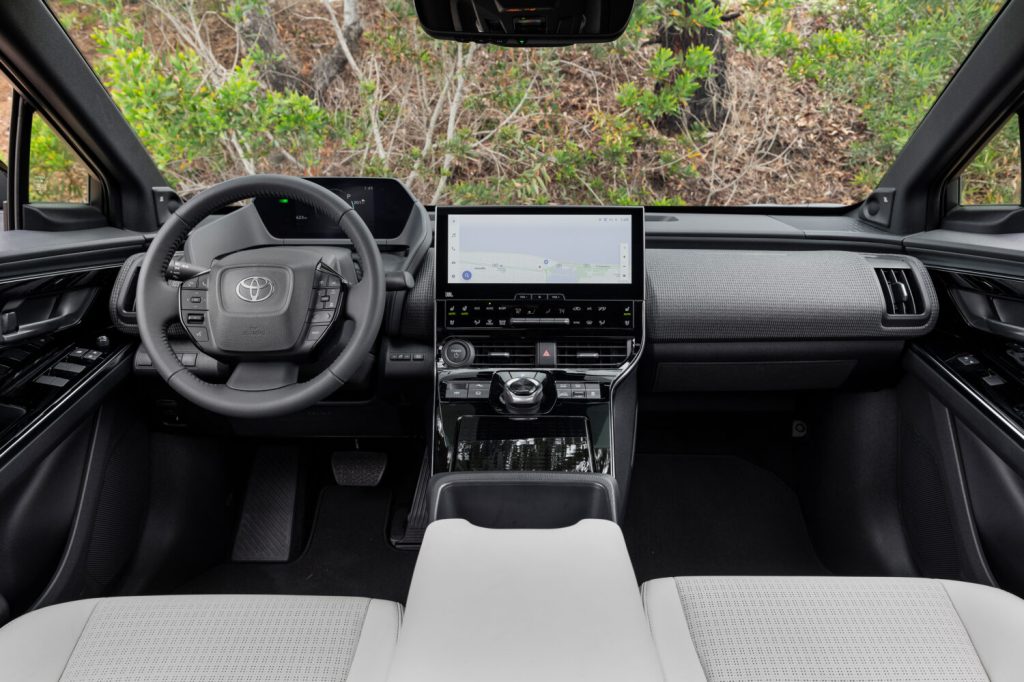
This is a similar shot of the first-gen Toyota bZ4X (2024):

Yes, there is nearly a full demographic generation separating the two.

But the bZ4X makes me think of that Prius.

If you look closely in front of the steering wheel on that early Prius you’ll note that there is no conventional gauge cluster.

That info is displayed in the horizontal slot in the middle of the instrument panel.

There is a more-conventional gauge cluster in the bZ4X in a more-conventional location.

But it is in a binnacle, set further back than is the norm for gauge clusters.

The rationale for both executions is arguably the same: the driver should keep eyes on the road.

While the Prius execution left something to be desired on that account—as in if the driver keeps eyes on the road, then there is the possibility that because there is no ready check of the speed, that could be problematic in terms of potential speeding tickets (although that risk was ameliorated by the lack of pep when you got on the throttle)—the bZ4X approach requires but a slight downward adjustment of one’s eyes to check the speed, a better approach.

The first-gen Prius instrument panel was completely different.

And while the bZ4X’s is more conventional, centered on the standard 12.3-inch touchscreen, there is something of a uniqueness to the interior, such as the use of a fabric on the interior even in places where some polymer would ordinarily be placed and the lack of a glove compartment.

Ten years after the first-gen Prius was released, in a retrospective Toyota acknowledged:

“Not all early reviews were flattering. One car magazine said, ‘With a real-world 35 mpg, this is a car that neither enthusiasts nor greenies can fully embrace.’”

And so far as the bZ4X goes, not all reviews are flattering because the electric vehicle doesn’t go particularly far vis-à-vis competitive electric crossovers:

  • XLE grade has an estimated 252-mile range in a front-drive setup; 228 miles for AWD
  • Limited grade is 236 miles FWD and 222 AWD

So here’s the thing about the bZ4X that needs to be taken into account: This one is the first Toyota EV, just as that Prius was the first back then.

People liked the first-gen Prius sufficiently well that they bought it and did so in sufficient numbers that there were the second generation and beyond.

People who buy the first-gen bZ4X will probably like it sufficiently well—and there is good reason to, mainly that it is a Toyota, and so it comes with all of the confidence that that brand brings to one’s driveway—and it will lead to future Toyota EVs.

And while they will be better, the current one isn’t bad.

(all images: Toyota)

2024 Toyota Corolla Hybrid XLE

Capability counts. . .

By Gary S. Vasilash

There are two things that someone who is buying a compact car wants, even though these two things aren’t written about a great deal.

One is size.

The second is performance.

Now admittedly, when someone is interested in a compact car, they want something, well, compact.

Not small.

Not tiny.

But not medium.

Not large.

This may be a financial consideration.

Or it simply may be that it makes sense.

A metric that I consider when behind the wheel of a compact car is whether I feel comfortable in it vis-à-vis the other vehicles on the road. And where I drive there is a high proportion of light-duty pickups and full-size SUVs.

There are few things worse that driving in congested traffic surrounded by giant vehicles—a Chevy Suburban is more than 18 feet long, 6.5 feet wide and over 6 feet high; an F-150 is 17 feet long, 8 feet wide and 6 feet high—and wondering whether you’re going to be seen.

Toyota Corolla Hybrid: competent and capable. (Image: Toyota)

The Corolla Hybrid is 182.3 inches long (about 15 feet), 70.1 inches wide (just under 6 feet) and 56.5 inches high (under 5 feet).

And it seems as though it has the size to allow one to drive with confidence.

Then there is the issue of performance.

This is something that has to be considered in the classic “horses for courses” sense.

Meaning that the Corolla Hybrid is meant to drive people in their daily activities not the Nürburgring.

The Corolla Hybrid has a system horsepower (which means what it gets from the engine and the motor) of 138. Which is pretty much a meaningless number.

The “performance” characteristic is: Can the vehicle drive on a freeway and have enough oomph to be able to deal with everything from full-size sedans and semis—and do so at speed?

And so having spent time on I-75 with it, I found the answer to that question is “yes.”

No, I didn’t blow the doors off of anything.

But I was able to maneuver with sufficient alacrity such that I was able to keep moving at a brisk pace.

And then, of course, there is the fact that this is a high fuel-efficient vehicle.

The sticker has it at 53 mpg city, 46 mpg highway and 50 mpg combined.

My combined was 49 mpg (most of the miles were accumulated on the highway).

This means that I could have driven approximately 550 miles before having to stop for a tank of gas (it has an 11.3-gallon tank).

So while that is comparatively thrifty (with the national average of a gallon of regular being $3.50, that means 550 miles for under $40), there is nothing about the way the Corolla Hybrid operates, nor about its interior execution and amenities, that makes you think “econo-box.”

A good thing.

2025 Toyota Camry XLE

Shake it up. . .

By Gary S. Vasilash

It may seem that the most controversial move made by Toyota for the 2025 Camry—the  ninth generation of the midsize sedan—was to make all of them, be it FWD or AWD, LE, SE, XLE, or XSE trim, hybrids.

2025 Camry XLE. Stylish, well-equipped, and a hybrid. (Image: Toyota)

That’s right: Every Camry is a hybrid.

Under the hood across the board is a 2.5-liter, four-cylinder engine supplemented by electric motor generators such that the FWD version produces 225 net-combined horsepower (engine + motor) and the AWD 232 hp. This is Toyota’s fifth-generation hybrid system. Yes, they’ve been at it a while.

Depending on the drive configuration the fuel efficiency goes from a low of 44/43/44 mpg, city/highway/combined, for the XSE AWD (the top of the line) to 53/50/51 mpg for the LE FWD. To call 44 mpg combined “low” is, well, ridiculous.

Lots and lots and. . .

Realize that the Camry is the perennial best-selling car in the U.S. (22 years running), with the company delivering 290,649 units in the U.S. last year, units produced by Toyota in its manufacturing complex in Georgetown, Kentucky. (During the history of the plant, which opened in 1986, there have been more than 11 million Camrys built within those ever-growing walls. Yes, the expansion there has been notable such that today there is 9-million square feet under roof, which, according to Toyota, is equivalent to the size of 157 football fields.)

One might think that Toyota would not want to rock the proverbial boat, to make changes that might seem upsetting to what is clearly a loyal base of buyers. It’s not like there haven’t been hybrid powertrains in Camrys.

There have—since model year 2008 (calendar year 2007).

But it has always been a powertrain selection until now. You could get a Camry with or without electrification.

Yet the product planners at Toyota decided that the best thing to do was to go all in on hybrids.

Yikes! one might think.

The time is right

But broader market timing seems propitious, as there is the swerve away from full electric vehicles to electrified vehicles, a.k.a., hybrids. In 2023 Toyota Motor North America overall sales—including Lexus models, its bZ4X electric and Mirai fuel cell—included 29.2% hybrid models, up from 23.9% in 2023. One can only imagine the number when 2024 is calculated.

What I found to be surprising about the Camry XLE wasn’t under the hood but on the inside: there is trim covered with Dinamica, a microfiber, that has a quilted pattern. It is light gray. Black is available, as well.

Said another way: there is fabric covering surfaces on the door panels and dash board where you otherwise would see leather or plastic. The material is produced with recycled polyester without the use of organic solvents, so it is comparatively environmentally advantageous.

Yes, that trim is actually a fabric.

It is also surprising for those of us who are more used to seeing smooth materials that are naturally or mechanically grained.

A generational difference

However, when I showed the Camry to a Gen Z niece, she thought the interior was the most wonderful she’d ever seen. And when I explained that the car in question is a hybrid, it gained significantly more points in her book.

So what might seem like a risky move by Toyota is undoubtedly a correct one.

It is often said that a given generation doesn’t want to buy the type of vehicles that they’re parents had driven them in. In my niece’s case it was a Honda Odyssey and Ford Flex.

She and her husband presently drive a pickup for no reasons of utility.

But it seems that a sedan is on the table for her. And given what Toyota has done with the ’25 Camry, it is something that is of even greater interest.

And here’s another thing to consider: at her age she has a whole lot of vehicles in her future, so if she finds appeal in the Camry, odds are good that the company will get more business from her in the future. Given the reliability of Toyotas and given that the Camry is full of tech for purposes of entertainment and safety, it seems that the edge of style makes it all the more attractive.

Certainly a clever move by Toyota.

The Ford 180

By Gary S. Vasilash

“Ford has shifted its electric vehicle strategy so it concentrates on smaller, lower priced EVs and electric work vehicles such as pickup trucks and full-size vans, Farley said. Any EV larger than a Ford Escape small SUV ‘better be really functional or a work vehicle.’”

That is from an AP story by Tom Krisher about a presentation Ford CEO Jim Farley gave to the Wolfe Research Global Auto Conference in New York on February 15.

Farley also talked about the relationship between Ford and the UAW in light of last fall’s strike.

Farley said, “Our reliance on the UAW”—it has more UAW members that either GM or Stellantis—“turned out to be we were the first truck plant to be shut down.”

He was referring to the Kentucky Truck Plant, Ford’s largest plant and where the highly profitable F-Series Super Duty, Ford Expedition and Lincoln Navigator are produced.

Ford has pretty much placed its production bets in North America on things like the F-Series.

The only car the company has on offer in the U.S. is the Mustang, not exactly what one would describe as a “family vehicle,” so arguably it is something of a niche at most. Trucks and utes are where it is at, it seems, for the Blue Oval.

In the smallish category there are the Escape and the Bronco Sport, which are both based on the same platform. And the Maverick pickup truck, which is also based on the same C2 platform. This extremely popular pickup is built at a Ford plant in Hermosillo,Mexico, so some of Farley’s USA! USA! USA! chest thumping needs to be adjusted a bit.

But his comment about where the sweet spot for EVs is going to be is somewhat puzzling.

Right now Ford has three EVs, two for consumers and one for vocational use: the F-150 Lightning, Mustang Mach-E and E-Transit.

The Ford EVs for consumers: the Mustang Mach-E and the F-150 Lightning. (Image: Ford)

The first is, of course, a full-size pickup truck. The second trades on the muscle car performance of the Mustang. And the third is a vehicle for contractors.

Ford has been championing larger vehicles for the past few years for the simple reason that it is where it makes more money, so when it went EV it went big with the Lightning (and for power with the Mach-E).

It used to have the Focus to go up against the likes of the Honda Civic and Toyota Corolla, both of which still exist and do quite well in the market. Presumably neither Honda nor Toyota build those vehicles out of charitable impulses.

Ford used to have the Fusion to go up against the likes to the Honda Accord and the Toyota Camry, both of which. . . . Yes, same thing.

Ford—and it isn’t the only company in southeastern Michigan that has done this—has been messaging consumers that Bigger Is Better.

Suddenly Farley is talking about small vehicles.

Don’t get me wrong: small EVs, assuming that they can be made so that they are actually affordable for consumers and that provide a return to the OEMs, are undoubtedly a good idea to increase the number out on the roads.

Regardless of the size of the currently available EV (with the exception of Teslas) need to be sold to a still-skeptical public.

So there is that challenge.

And now Farley is doing a 180 and planning to go to the market with things that are small.

Which means he is going to need to convince people that on roadways populated with large F-150s and Explorers small Ford EVs are a good thing.

To which I say: Good luck.

Ford: Hybrids Should Be the Story

By Gary S. Vasilash

Much of the attention given to Ford’s Q4 2023 earnings call last week has been focused on CEO Jim Farley’s comment:

“[W]e made a bet in silence two years ago. We developed a super-talented skunk works team to create a low-cost EV platform. It was a small group, small team, some of the best EV engineers in the world, and it was separate from the Ford mothership. It was a start-up.

“And they’ve developed a flexible platform that will not only deploy to several types of vehicles but will be a large installed base for software and services that we’re now seeing at Pro.”

Somehow the inherent mystery of a “skunk works” has gotten people all excited.

Would they be so excited to know that the skunkworks methodology goes back to 1943 in the aircraft industry?

Yes, an 80-year-old approach.

Well, You’ve Got to Build It. . .

The other thing about this is that it is one thing for an R&D team operating independently to develop something and a whole other thing for that development to be engineered for and launched in production.

Launches have been something that Ford has been finding a bit troubling, so there’s that.

And it should be noted that the company also announced last week that its Ford e operation—as in the electric vehicles—lost $4.7 billion last year and the company anticipates losing $5 to 5.5 billion this year on Ford e.

The excitement of the skunk works project was certainly helpful from diverting some attention to that red ink.

What About This?

But what was largely overlooked was Farley’s comments on hybrids.

As in,

“Our global hybrid sales were up 20% last year, and we expect them to be up 40% this year.”

And:

“We now have the No. 1 and No. 2 best-selling hybrid trucks in the U.S. Maverick is No. 1. And we’re the No. 3 hybrid brand in the U.S. behind Toyota and Honda. But unlike them, our hybrids really sell best on trucks for our side.”

Given that Farley said “And margins on hybrids are closer to ICE, much higher than EV margins,” you’d think hybrids would be the headline going forward if for no other reason than the company can make money on them, something that it is not going to see on the EV side of the business until. . . . Well, that remains to be seen.

Maverick hybrid: Fuel efficiency and the energy to bust out the beats. (Image: Ford)

Not Exactly a Strong Third

While it is nice that Farley is so bullish about the company’s hybrid performance, it is worth really putting that into context.

Of course its hybrids “really sell best on trucks” because with the only hybrid Ford has without a box on the back is the Escape.

And as for it being number three, know that these are the number of hybrid sales for the three companies in 2023:

  1. Toyota:         523,664
  2. Honda:         293,640
  3. Ford:            133,748

In other words, it sold less than half of what Honda did and about a quarter of what Toyota did.*

So while the claim is factually true, one should perhaps not be too chuffed about the Ford hybrid performance.

About a quarter of Toyota and Honda sales are hybrids.

About 7% of Ford’s sales are hybrids.

Did I mention the skunk works. . .?

==

*It is worth noting that until recently Toyota was treated like some technological troglodyte for its continued support of hybrids and its not all-in approach to EVs. Not only do we see that Ford is reconsidering its positioning vis-à-vis hybrids and full EVs, but General Motors, which doesn’t have much of a record in the hybrid space, has announced that it, too, is going to bring hybrids to the U.S. market. Farley pointed out on the earnings call that consumers can quickly do the math on the fuel efficiency benefits of hybrids and, perhaps the most important factor: “they don’t have to change their behaviors.” It is surprising that there seems to be so many auto execs who ignore the long public charging time required for EVs compared with pumping gas: perhaps this is a case that when they get behind the wheel of their company vehicles someone else has done the charging.

Fuel Cell Market to Expand, But. . .

Fuel cells are having their moment again for various vehicle applications, from light-duty to big rigs.

How big a moment?

Seems not trivial according to a report by MarketsandMarkets, which products the automotive fuel cell market will grow from $200 million this year to $2.1 billion by 2030. It will have a compound annual growth rate of 48%.

Where will the largest market be?

Asia Oceana.

Given that the geographies covered in the firm’s report also includes Europe, North America and Rest of the World, presumably that Asia Oceana includes China, which could explain the biggest market.

(Image: Toyota)

That said, with companies including Toyota, Honda and Hyundai continuing their hydrogen fuel cell development efforts, Japan and South Korea can’t be counted out as players, and consumers, in this field.

However. . .the global battery electric vehicle market size right now is on the order of $500 billion and it is estimated to be about $1.5 trillion by 2030, so even with the impressive growth of fuel cells, they’re still approximately the size of a dandelion in a redwood forest.