Robo Woes

As the National Highway Traffic Safety Administration (NHTSA) begins an investigation into Cruise based on a couple of incidents regarding the self-driving vehicles and their protocols (behaviors?) around pedestrians, there is more not-so-good news for the purveyor of driverless taxis rides.

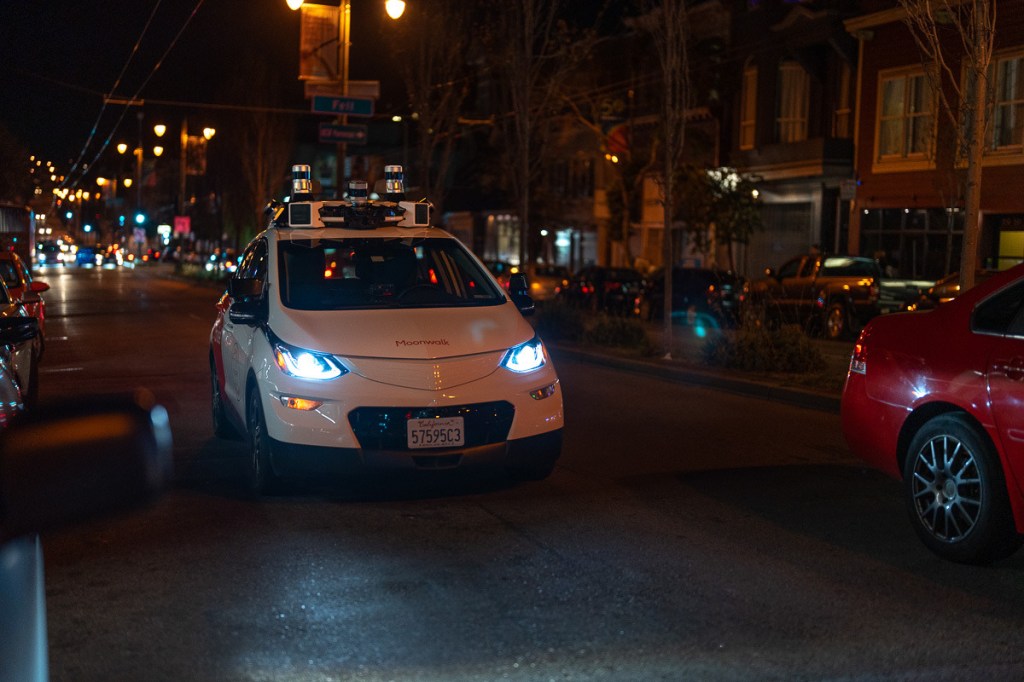
Cruise driverless vehicle at night. (Image: Cruise)

J.D. Power has released results of a survey, the J.D. Power U.S. Robotaxi Experience Study, the indicates consumers are not all that chuffed with the prospect of driverless rides and aren’t all that keen on having the vehicles rolling around in their neighborhoods.

As in:

  • Only 20% of all consumers are comfortable with automated vehicle tech being tested on the streets and highways in their locale.

What’s more, although Cruise never fails to point out that it maintains its vehicles are safer than humans, J.D. Power found that “nearly 60% of both riders and non-riders say they don’t think a robotaxi drives any better than a human.”

While those who have never taken a ride can be dismissed (e.g., would you believe someone who never ate chocolate ice cream who said it isn’t as good as vanilla?), that even riders are in that cohort isn’t good from a PR point of view.

Kathleen Rizk, senior director of user experience benchmarking and technology, J.D. Power:

“Automated vehicle technology is built on the promise of alleviating distracted driving, impaired driving and collisions attributed to human error.

“However, the benefits result from consumer acceptance, which is why it’s imperative to ensure these first deployments are flawless—not only for the riders but also especially for those who are not early adopters, including non-riders who are experiencing AVs in their community and those learning from a distance through social media and other news outlets.”

When people are learning about things like NTHSA investigations, that can’t be good for Cruise (and to be fair, Waymo).

Best Elon Musk Quote from the 2023 Q3 Earnings Call

While discussing how to reduce the cost of building vehicles. . .

Musk:

“We’re trying to be very rigorous about improving the quality and capability of the car because it’s like any fool can reduce the cost of a car by making it worse and just deleting functionality and capability and that’s how I call this sort of any fool like—if you want to like lose weight and you said, ‘Well, I need to lose over 15 pounds right away,’ well, you could chop your arm off, but then you’re sitting with one arm.

“You know, you’re still fat.

“So, sort of like, yes, you actually have to eat less food and work out. That’s the actual way. And doctor’s advice. Yeah.

“It’s not super fun because food is delicious. And personaly, I’m not–I don’t love working out. I know I say I do. I wish I did, but I don’t.

“Unless moving the mouse consists of working out. In which case, I love moving the mouse.”

Underwhelming Domestic OEM EV Sales

If you listen to the pronouncements of traditional OEMs about their EV efforts, you’d think that there is probably some sort of parity vis-à-vis their internal combustion engine business.

As in GM (remember: “All in” on EVs) selling plenty of EVs, and the Ford F-150 Lightning being in demand the same way the ICE versions of the truck are.*

So it comes as a surprise how few EVs the traditional OEMs are selling in the U.S.

According to the just-released Kelley Blue Book “Electric Vehicle Sales Report” for Q3, when it comes to General Motors, year-to-date it has sold:

  • 49,531 Chevrolet EVs
  • 5,334 Cadillacs
  • 1,216 GMCs

That’s a total of 56,081 EVs over nine months. If we include Brightdrop commercial vehicle sales, it boosts the number to 56,414.

The GMC HUMMER EV was introduced in October 2020. During the past three years, there have been 2,071 of them sold. (Image: GMC)

GM sold 65,255 Chevy Trax models, or 15,761 more units than sales of the Bolt EV/Bolt EUV sold through Q3.

Meanwhile, over at Ford:

  • 46,671

To put that in perspective: during the first three quarters of 2023 it sold 56,427 of its giant Expedition SUVs. So the Mustang Mach-E, Lightning and E-Transit commercial van summed are nearly 10,000 fewer.

And while adding things together: GM and Ford combined sold 103,085 electric vehicles.

Meanwhile, according to KBB Tesla sold 493,513 EVs.

Think about that: two of the biggest, most legendary OEMs in the U.S. together sold about a fifth of a company that was established 20 years ago.

*To be fair, Stellantis brands (Chrysler, Dodge, Jeep) sold 0 EVs.

Language and Leadership

Remember those radio commercials that included the line “People judge you by the language that you use”?

Well, an on-line tutoring firm, Preply, has taken that idea and applied it to making a determination of the “intelligence” of CEOs based on transcripts of public appearances available on YouTube.

The firm analyzed from 60 to 180 minutes of dialog and assessed the execs based on:

  • Vocabulary breadth: The extent of word diversity
  • Vocabulary sophistication: The complexity of words used
  • Textual readability: The complexity of sentence structures and ideas
  • Critical thinking: The quality of argument construction, deconstruction, and analysis
  • Contextual relevance: The speaker’s ability to interconnect the dialogue with broader contexts or other fields

That led to the scoring based on a 100-point scale.

And the auto CEOs included in the rankings don’t score in the top 10, not even Elon Musk.

Ranking first is Demis Hassabis, CEO of AI firm DeepMind, with a score of 87.33. Presumably he is exceedingly articulate (and/or has great speechwriters) because Stephen Schwarzman of investment firm Blackstone is in second place with a score of 74.33, a precipitous drop.

As for the people in auto, Musk is in 16th position with 64.33, behind Brian Chesky of Airbnb with 65.00 and ahead of Whitney Herd of Bumble, at 64.00. (Strange correlation with Airbnb and Bumble. . . .)

Mary Barra of GM isn’t far behind, in 20th position with 63.00.

There is one more U.S. auto exec on the list of the top 100: Ford CEO Jim Farley at 98, with a score of 32.00.

That just seems mean.

What Do Potential EV Pickup Buyers Think?

By Gary S. Vasilash

It is always interesting to see surveys that ask about how people perceive autonomous vehicles because most people have only seen an AV on TV.

Things are a bit better with electric vehicles. But still, if you take Tesla out of the calculations (in the first half of 2023 Kelley Blue Book calculates that there were 556,707 EVs sold in the U.S., of which 336,892, or 60% of the total were Teslas), there aren’t all that many EVs out there for people to buy.

Cox Automotive (which, incidentally, owns KBB) recently ran a study of pickup shoppers who are planning to buy a truck within the next two years.

The information related to those considering EV pickups is interesting.

For example, consideration for an EV from a brand that one already owns is solid, which perhaps help explain why the Ford F-150 Lightning has the highest level of consideration.

What’s more, Cox found Lightning is clearly the most appealing to people.

Ford F-150 Lightning frunk. (Image: Ford)

When asked about appeal before a truck was revealed and consideration after the reveal, of the Ram 1500 REV, Chevy Silverado EV, GMC Hummer EV pickup, Rivian R1T, and Tesla Cybertruck, and the Lightning, only the Lightning had a higher post-reveal consideration number.

And when looked at from the perspective of the following metrics, the Lightning got the top score in all of them:

  • Mileage range/fuel efficiency
  • Driving performance
  • Price
  • Overall look/styling
  • Technologically advanced

Which brings us back to the aforementioned survey about AVs.

Of the vehicles on the list, only the Lightning, Rivian R1T, and Hummer EV pickup are out there, and the number of Hummers is capable of being parked in a strip mall lot with spaces to spare.

How do people know about driving performance?

And how does the Lightning, with a top range of 320 miles, out score the Silverado EV, which has an estimated range of 450 miles?

When it comes to technology, it is hard to figure how the Lightning is more advanced than the R1T—unless it is that the Lightning has a 14.1-cubic foot frunk and the R1T’s is just 11.

Don’t Count Out Cars: Lesson from Honda August Sales

By Gary S. Vasilash

For those who think that cars—those lower-roofed vehicles with two or four doors that aren’t designed to be able to or pretend to be able to traverse Moon-like surfaces—have had their day, August sales results from Honda are instructive.

For the month Honda sold 17,661 Accords, which is a 52% increase over August 2022. The car sales are up 36.3% for the year compared to 2022.

(Image: Honda)

And Civic sales increased 133.1% in August over the previous year, 17,077 vehicles. For the year Civic sales are up 47.5%.

To be sure, Honda sold a lot more non-cars in August: 65,047 compared with 34,738.

However, there are five vehicles in the non-car category vs. two.

The CR-V crossover is the brand’s biggest seller, 30,991 units.

However, the closest sales number to either of the cars is achieved by the HR-V, which was at 11,404. That’s a third lower than Civic sales.

Who Gets Support in the (Potential) Strike?

By Gary S. Vasilash

In a couple weeks, September 14, the contracts between the Detroit Three and the United Auto Workers will come to their conclusions.

And it seems likely that there will be a strike. (If there isn’t, credit must go to both sides for some incredible negotiating because at this point in time it sounds like the UAW feels exceedingly undervalued by their employers and want that changed and the OEMs seem like they’re already squeezing everything they can into the workers’ paychecks.)

It might also seem that the UAW would be perceived in a negative light by other people in the country—after all, this isn’t just about Detroit physical or metaphorical, but about the entire U.S. economy because the auto industry plays a non-trivial role: the Anderson Economic Group calculates that if there is a 10-day strike against all three OEMs there would be an economic cost of $5.6-billion, so the impact would go far beyond the Motor City per se.

But there is apparently some solid support throughout the U.S. for the labor movement.

A recent Gallup study finds that 67% of American approve of labor unions.

What’s more, when specifically asked about who they would side with if there is a strike, Gallup found—and realize this survey was conducted August 1-23, so it is comparatively real-time, that 75% are pro-worker and 19% the employer.

It should be interesting to see how this gets resolved. And will it will get resolved, it is worth noting that the Writers Guild of America walked off moved away from their keyboards on May 2, and have yet to return.

Return of the Acura ZDX: Why Bring Back That Name?

By Gary S. Vasilash

One of the things that Japanese OEMs do that American OEMs tend not to is to recognize when something isn’t working and then moving on.

There isn’t a tendency to say, “Gee, maybe if we add some exterior trim and increase the amount of stitching on the seats people will buy it.”

Rather, the vehicle goes out of production.

Case in point is the Acura ZDX. It lasted from model years 2010 to 2013.

The vehicle design was something of an amalgam of a car and an SUV. It has a fast sloping roofline such that people who were trying to get into the back seat could get a nice bump on the head. And there is a sharp backward-angled cutline for the rear door which helped with the awkwardness.

Acura had made much of the vehicle prior to launch, given that it was something that it hoped would have the success of something like the MDX, which is was then and is now unmistakably an SUV.

But the so-called “Luxury Four-Door Sports Coupe” simply didn’t appeal to anyone, so it went away.

Oddly, Acura has brought back the ZDX moniker for the electric SUV that was officially debuted today at Monterey Car Week.

2024 Acura ZDX Type S. (Image: Acura)

It will be available with a standard single motor in the entry A-Spec and with a dual motor setup in the sportier Type S. The former will produce an estimated 340 hp, a 325-mile range and a starting price of around $60K. The latter will produce 500 hp, have a 288-mile range and start at some $70K.

On the subject of the “increased styling and packaging freedom EVs offer,” Dave Marek, Acura Executive Creative Director, said, “Embracing that creative liberation, our team was energized designing ZDX, Acura’s new modern expression of performance.”

To be sure, the vehicle is far more fetching than the other vehicle that carried the name.

Which makes one wonder why the previous name was brought back.

Sure, Acura reselected the name “Integra.” But unlike the original ZDX, the Integra was a success in the market.

Ex-Apple Exec Goes to Ford

By Gary S. Vasilash

“I love creating new services businesses and this is the perfect chance to do just that.

“The auto industry is undergoing an unprecedented transformation, from gas engines to electric vehicles and from human to autonomous driving.

“At the same time, the basis for differentiation is shifting from the vehicles alone to the integration of hardware, software and services. I’ll be in the middle of something truly historic and am particularly fortunate to do that at Ford, which has been democratizing automotive technology for 120 years and counting.”

That’s Peter Stern, former vice president of Services at Apple, now president of the newly formed Ford Integrated Services.

His role will be to help the automaker in its undertaking of “building sustained, always-on customer relationships and capturing new, high-margin services, subscription and other digital revenue.”

Apple’s service’s business is certainly robust.

So Ford wants to achieve the same. Thus, Stern.

(It knows how much money it can make on its hardware (e.g., F-150). There is undoubtedly a huge upside on how much it could make on connected digital products.)

It is the stuff of headlines and reportage (like this) when there are people from companies like Apple joining auto companies.

Wonder if it works going in the opposite direction?

Cadillac Escalade IQ and Places You Can Go

By Gary S. Vasilash

The most obvious thing about the forthcoming 2025 Cadillac Escalade IQ is that it is big—224.3 inches long, 94.1 inches wide (including mirrors), and 76.1 inches high—bad—here’s a vehicle rolling, out of the factory, on 24s—and in-your-face—people were enchanted with the lighting orchestration of the front fascia during the startup sequence of the Cadillac LYRIQ, which is like an iPhone screen to the Escalade IQ’s LED billboard.

2025 Cadillac ESCALADE IQ Sport: There’s no missing this. (Image: Cadillac)

This is monumental in scale. But unlike monuments that just sit there, this 750-hp, three-row vehicle can travel up to an estimated 450 miles on a single charge, which means you could possibly drive it from New York to Boston and back. This is largely predicated on the 200 kWh lithium-ion Ultium battery system.

But there’s one thing that needs to be taken into account.

For those who are using a Level 2 charger—the 240-Volt system that people are having installed in their garages—know that when the Escalade IQ is plugged in, it is getting 14.8 miles of range per hour. Which would get you from Boston to Walden Pond.

On one of those Level 2 chargers that you’ll find in the parking lot of many malls, it is 37 miles of range per hour, which means you could almost go from Boston to Gillette Stadium and back.

A DC fast charger gets up to 100 miles of range in 10 minutes, so in fairly short order you could get up to Manchester, New Hampshire, and make the return having spent 10 minutes of charging.

But here’s one thing to keep in mind.

Say you got a 682-hp, gasoline-powered Escalade-V. It has a 24-gallon tank. It gets 13 mpg combined.

So in less than 10 minutes, you could fill up the tank and drive from Boston to Woodstock (perhaps because you’re an aging Boomer who (1) can afford that vehicle and (2) often feel nostalgic for the festival you missed) and back in that similarly sumptuous vehicle.

While it isn’t the 450 miles of the fully charged Escalade IQ, there’s still something to be said for the cost of time, which plays to the Escalade-V’s favor.