The Other EV Battery

When you think about electric vehicles and batteries, you probably think of those massive lithium-ion units that are driving the electric motors. But there is more that needs electricity on board EVs beyond the motors, like, say, the audio system. And this leads to something that you’re undoubtedly familiar with–more or less—if you pop the hood on an old Chrysler or a new Chevy and damn near everything in between: a 12-Volt battery. Yes, batteries like that–more or less–are in EVs, too.

Clarios builds >150 million vehicle batteries per year. About a third of all the batteries produced in the world

It has batteries in cars old and new. Including EVs.

(Image: Clarios)

While your car likely has a typical lead-acid battery in it, if you have a start-stop system built into the powertrain system, it is has an absorbent glass mat (AGM) battery on board. It is engineered to withstand that regular starting and stopping.

Mark Wallace is the CEO of Clarios. And on this edition of “Autoline After Hours” Wallace explains the why and how of AGM batteries in EVs. Clairos has developed what it calls a “Smart AGM” battery for EV and plug-in hybrid applications that provides real-time communication with the vehicle system to assure overall performance.

And, of course, he talks about more conventional batteries, too.

While “lead-acid batteries” sound like they are an environmental nightmare, turns out that those batteries are made with 99% of materials that can be recycled or reused and 90% of the batteries produced are made from recycled materials.

Wallace talks with “Autoline’s” John McElroy, freelance writer Sebastian Blanco, and me on the show.

And you can see it here.
Does Clay Modeling Matter in the Age of the Metaverse?

By Gary S. Vasilash

The metaverse notwithstanding, when it comes to developing the designs of most vehicles—particularly when those vehicles are intended to be things that are duplicated thousands of times over several years—there is something to be said for physical objects.

To be sure, there are software design packages that designers use to create designs to a degree that are not merely photorealistic, but which can be manipulated in VR space.

These designs seem real. But those designs aren’t real.

Crossovers, cars and trucks, unlike digital models, exist in real reality, not virtual reality.

The sun shines on them. Clouds occlude the sun. Shadows form. Surfaces pop or fade.

Vehicle designs will exist in the tangible world.

So while there are vehicles that are completely designed in math (after all, that’s what software is), there are more vehicles designed with the aid of clay.

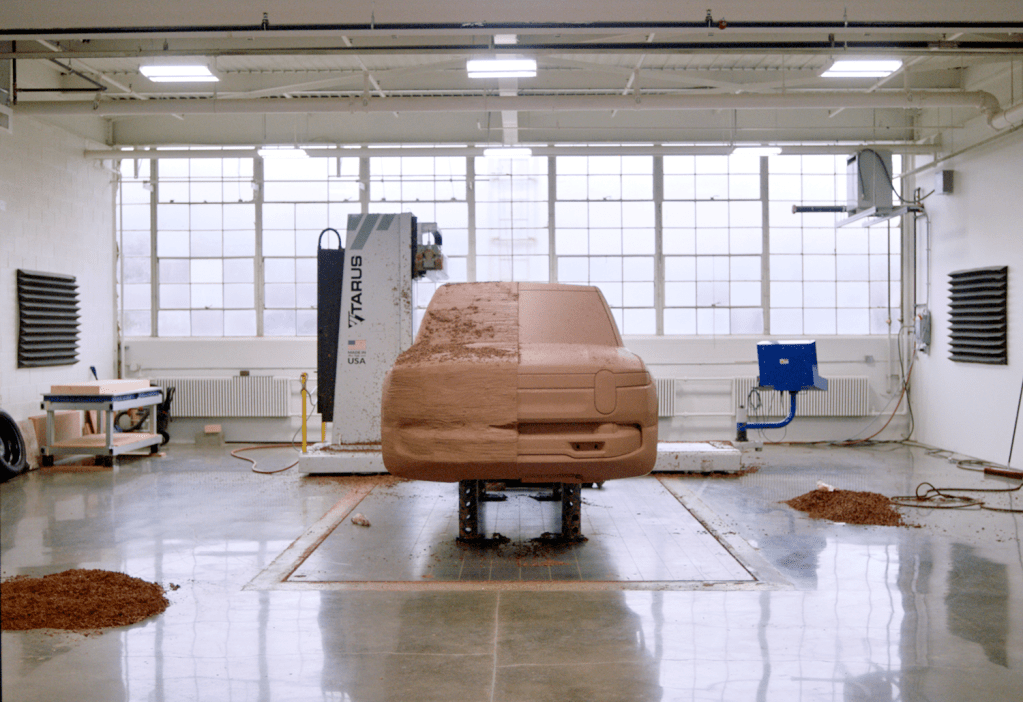
Clay milling a Rivian. (Image: Rivian)

Yes, that substance that you may remember playing with as a child.

Well, not exactly that, as there is a variant of the material that is formulated to be used in automotive design studios.

But substantially the same.

The material is used to create full-size models of vehicles.

In order to make one of these models in a reasonable amount of time the clay is milled with cutting tools.

The producer of clay milling machines (as well as a number of other machine tools that are used on metals) is TARUS. In fact, the company invented the clay mill in response to a request from General Motors.

Does the clay mill still matter?

On this edition of “Autoline After Hours” we decided to find out. So we asked Doug Grieg, Jr., co-owner of TARUS. To get some good perspective, “Autoline’s” John McElroy and I are joined by John Manoogian II, who had spent 35 years at GM Design, with his last position being director of Exterior design for Cadillac.

Anyone who wants to know the ground truth about automotive design cannot miss this show, which you can see right here.

Gas(p)

Twenty-two percent of model year 2022 vehicles require premium gasoline.

Require.

Not “Premium Recommended.”

That, according to the U.S. Dept. of Energy.

That number is actually part of a decline in number of vehicles requiring 91 (or higher) octane that started in 2019.

As in:

  • 2019: 29%
  • 2020: 28%
  • 2021: 26%

The last time it was 22% was 2016.

According to AAA, the national average for a gallon of premium fuel is $5.65.

The average price for regular is $4.95.

That’s a 70-cent difference.

So for a 20-gallon fill, that’s a difference of $14.

Of course, those who buy vehicles that require premium can probably afford premium.

Until they can’t.

Why Connecting Brakes to the Internet Is a Good Idea

By Gary S. Vasilash

Nowadays, more and more devices are being connected to the internet, from thermostats to doorbells to refrigerators to traffic signals to car brakes.

Brakes?

Yes, explains Rich Nesbitt, head of Product Management, Chassis Systems Control, Bosch, the brakes that the company is producing are ready to be connected to the ‘net. Whether they’ll be connected or not is a decision, of course, of the OEM deploying that brake capability.

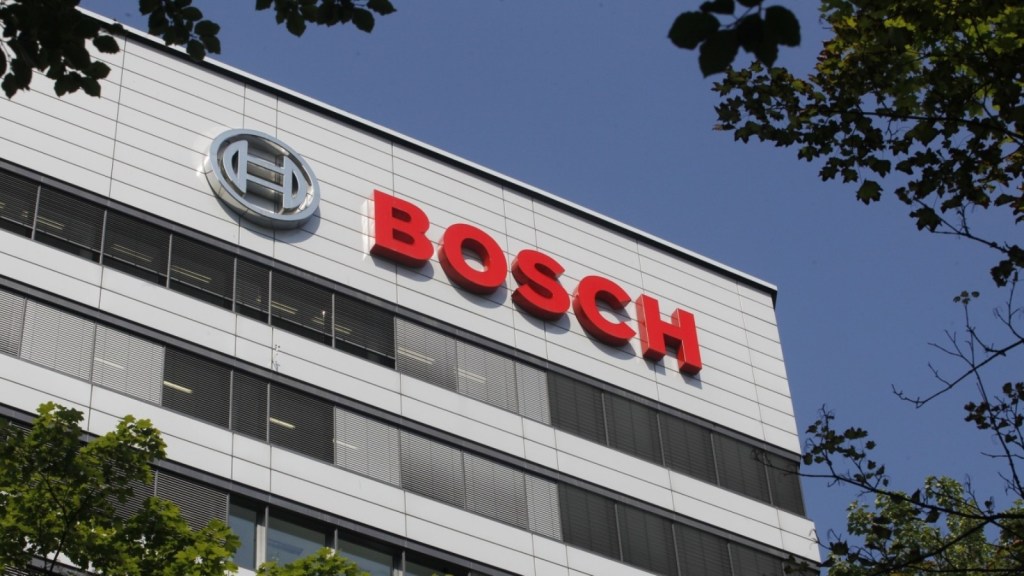
(Image: Bosch)

Nesbitt says that the connectivity provides advantages during the development of the braking system, as information can be readily collected and then deployed by the engineers.

It can also provide benefits for the driver, whether it is monitoring the brakes so as to determine when service will be required or, taking advantage of vehicle-to-infrastructure connection, providing information about the road conditions ahead.

And it can provide benefit to the OEM, as this is still more data that can be harvested from vehicles for purposes of monetization.

Nesbitt talks about the hows and why of internet-enabled brakes on this edition of “Autoline After Hours” with “Autoline’s” John McElroy, Jack Keebler, journalist and consultant, and me.

In addition to which, McElroy, Keebler and I talk about a number of other subjects, including Ford’s recent recalls, vehicle affordability (or lack thereof), the consequences of high gas prices on sales of pickups and large SUVs, and other subjects.

And you can see it all here.

Building the ID. Buzz

By Gary S. Vasilash

The Volkswagen ID. Buzz will not go on sale in the U.S. until 2024. The degree of interest in this vehicle is immense, perhaps, in part, because while there are other OEMs offering (or developing) EV pickups, Volkswagen has this “microbus” category to itself when it comes to fully battery electric vehicles (i.e., Chrysler has long had the Pacifica hybrid and Toyota offers the current-generation Sienna only as a hybrid).

And even were others to get into this space (e.g., GM brings back the Venture, Silhouette and Trans Sport—wait, while the first was a Chevy the other two were, respectively, an Olds and a Pontiac, and they don’t exist anymore—the brands; there are undoubtedly some Silhouettes and Trans Sports still out there, as S&P Mobility says that the average age of a truck on the road is 11.6 years) they would not have the same resonance as the ID. Buzz will.

VW ID. Buzz, Euro model. (Image: VW)

The ID. Buzz is being produced in Hanover, Germany, by the Volkswagen Commercial Vehicles (VWCV) operation. One reason why that’s reasonable is there is a commercial variant of the vehicle, the ID. Buzz Cargo.

The vehicles have been in production since May, as they are available in the home market.

(Also in Hanover they’re producing the Multivan with various powertrain options, including a plug-in hybrid.)

Josef Baumert, member of the VWCV Brand Management Board for Production and Logistics, said, “After 203 we will produce 130,000 units of the ID. Buzz and ID. Buzz Cargo at our Hanover plant” annually.

Given that Ford got 200,000 preorders for its F-150 Lightning before it put a pause on taking any more names lest those waiting and waiting become annoyed with Ford, odds are that the 130,000 is going to be an insufficient number for the microbuses to meet demand in Europe and the U.S.

Of course, that’s a good problem for a vehicle manufacturer to have.

Sono Has a Bright Idea

One of the types of energy for transportation that doesn’t get very much attention is solar. Certainly unless you live in Arizona or some place like that solar tech is probably not as efficient as plugging in an electric vehicle and letting the grid do the work. Yet when it comes to renewable energy for transportation, the Sun is more beneficial than the Local Electric Utility.

Sono Motors, a German company, is working to develop solar-powered transportation, as in the Sion, a solar-powered passenger car for which it has more than 18,000 reservations.

But it also sees other applications.

Delivery vehicle uses solar energy. (Image: Sono Motors)

So the company, looking to amass data on how well solar works in places including Berlin, Brandenburg and Mecklenburg-Vorpommern—which are certainly not Phoenix, Tucson or Sedona—is working with the Rhenus Group, a logistics service provider, integrating solar modules onto a 15-tonne test vehicle that will be used for last-mile logistics.

Jonas von Frieling, Head of Innovation Hub for the Rhenus Home Delivery and Rhenus High Tech, points out, “If there is a widespread switch in transport to electric drives, supply must grow accordingly. Solar cells on vehicles could relieve the grid in the process and offer respite for fleet managers by easing the burden on charging infrastructure.”

A point that would be beneficial for other logistics providers to take into account as they make their transitions to EVs. Wherever they’re located.

The Return of the Acura Integra

By Gary S. Vasilash

Acura has been around since 1986. When the luxury and performance division of Honda appeared on the American landscape it came with two vehicles, the Legend at the lux end and the Integra at the performance.

The Legend lasted for two generations. The Integra ran for four consecutively, wrapping up in model year 2006.

But now the Integra is back for its fifth.

A lot has happened in the auto industry since 1986. Heck, a lot has happened since 2006.

A big part of the change is the comparative collapse of the car and the explosive growth of the crossover.

This change is quite evident in the Acura sales.

From January 2022 through the month of May it sold 12,216 cars. That includes the ILX, NSX, TLX and Integra (which was new in May, so there were only nine sold).

During the same period Acura sold 33,460 crossovers. That includes the RDX and the MDX.

So essentially, cars account for about a third of the brand’s sales.

Here’s another set of figures that makes one scratch one’s head:

In a 2020 CarMax survey, the retailer found that while 93.6% of customers wanted Bluetooth in their vehicles, only 2.5% were interested in a manual transmission.

2023 Acura Integra: Engineered to be driven with brio. (Image: Acura)

While the 2023 Integra, which has a VTEC-enhanced 1.5 liter turbocharged engine that produces 200 hp at 6,000 rpm and 192 lb-ft of torque at from 1,800 to 5,000 rpm, has a standard continuously variable transmission (CVT), the option for the car, in the up-trim A-Spec package, is a six-speed manual. . .and the Acura folk anticipate a 65% take rate for the manual.

So to learn more about the new Integra we talk with Emile Korkor, Assistant VP, Acura National Sales, on this edition of “Autoline After Hours.”

Korkor emphasizes that Acura is about performance, and the new Integra is engineered for that cohort of buyers who are interested in performance cars.

An interesting aspect is that the car starts at $30,800 so it is certainly affordable. The A-Spec with Technology Package, adding in the six-speed, has an MSRP of $35,800. Again, affordable.

Korkor points out that this isn’t simply a car that is built to be quick, but that it has premium amenities, as well. After all, if you’re going to be driving it hard, you might as well get comfortable while you are doing it.

Korkor talks with “Autoline’s” John McElroy, Eric Weiner of Hagerty and me.

In addition, McElroy, Weiner and I discuss a variety of other subjects, including why Honda, ford, VW, BMW and Volvo filed a motion to intervene in a federal lawsuit regarding California emissions laws and other OEMs haven’t; whether pricing for electric vehicles is realistic (Sandy Munro, for example, suggests that the Rivian R1T, which starts at $67,500, should be selling for $100,000); and other topics.

Which you can see right here.

Audi 80: Not a Throwback

Audi A80 (Image: Audi)

This is the Audi 80, which came out 50 years ago. Were something like this to come out now with an electric powertrain it would probably be a massive hit, the fact that it is designed and engineered to be a family sedan notwithstanding.

The vehicle, which was internally known as the “B1,” had a run through four generations, until the mid-90s, when it was replaced by the A4.

The A4, incidentally, is in its fifth iteration.

Bosch Investing Big in Hydrogen

By Gary S. Vasilash

One of the fuels that doesn’t get a whole lot of attention—despite it being the most-abundant element in the universe (yes, universe)—is hydrogen. There are a few hydrogen cars out there—like the Toyota Mirai and the Hyundai Nexo—and a few commercial trucks running tests (e.g., Toyota with the Port of Long Beach; Nikola with Anheuser-Busch).

While electrical outlets are seemingly everywhere and access to hydrogen fueling facilities is challenging at best, the idea of electrifying the fleet has become the norm and hydrogen is something of an afterthought.

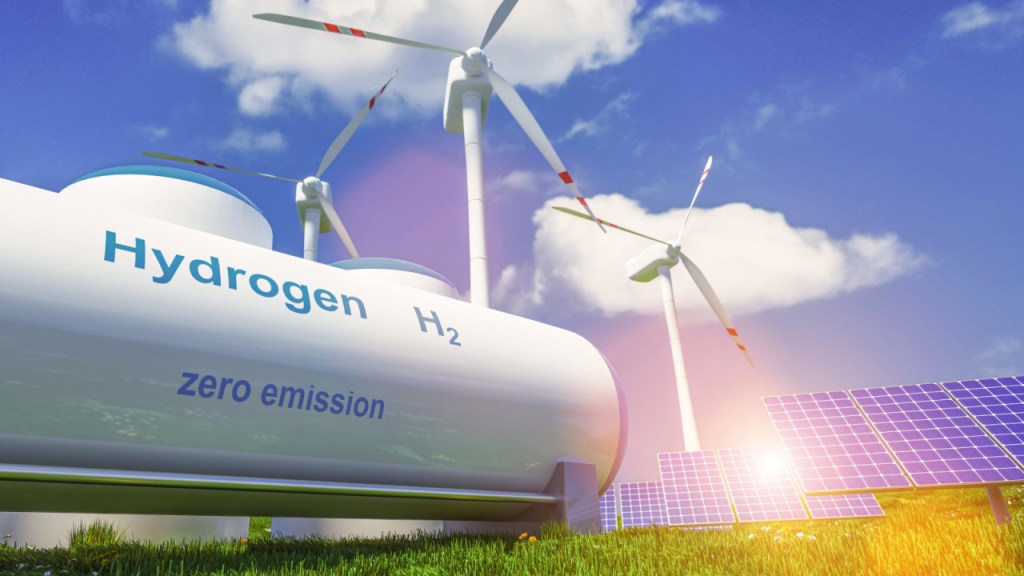
Bosch is “all in” on hydrogen. (Image: Bosch)

However, Mike Mansuetti, president of Bosch in North America, announced, “We are all in for the hydrogen economy.”

Bosch on a global basis is investing $1-billion between 2021 and 2024 on the development of mobile fuel cells.

What’s more, in order to produce hydrogen (although there’s lots of hydrogen out there, hydrogen tends to bond with other things like oxygen, as in water), Bosch is investing some $600 million by 2030 in developing hydrogen electrolysis (the means by which water can be transformed back into its constituent elements).

Will these efforts result in more crossovers and cars with fuel cell stacks within the next few years?

It’s not likely.

According to Bosch’s Paul Thomas, executive vp of Mobility Solutions, America, the commercial applications, where there is a regular, defined route, and where there can be refueling stations built and regularly used (no company is going to want to build out a hydrogen refueling facility that gets used only once in a great while), are more likely to be where hydrogen will gain traction.

That said, there’s something that Bosch is doing that is quite interesting: the company, long known for its prowess in fuel injection technology, is, Mansuetti said, experimenting with hydrogen injection in internal combustion engines.

Think of all of the engine plants that OEMs have right now.

Were it that they could use that capacity to produce engines that burn hydrogen (no emissions) rather than gasoline, that might be a really compelling reason to make hydrogen a viable alternative to electricity. After all, they’ve already paid for all of that machinery and equipment, so if hydrogen would help them reduce their carbon footprint and meet regulatory requirements, why not?

Probably not because they seem so committed to battery electric vehicles and fuel cell electric vehicles would be too much to deal with.

These Startups May Transform Auto

By Gary S. Vasilash

So what do:

  • A system that can defrost windshields on EVs 20x faster than the conventional HVAC system and use 20x less energy
  • A nanoparticle-based additive that improves electroless nickel and other plating processes for automotive part improvement
  • An EV charging station that is designed for implementation in places like underground parking garages in apartment buildings that is highly cost effective
  • A battery based on zinc that not only has potential to replace lead-acid batteries but has applicability in urban electric vehicles

Have in common?

All of these technologies were winners at the recent Global Automotive and Mobility Innovation Challenge (GAMIC).

And while the word “global” in the name of the event could be taken with a shrug because all manner of things nowadays use it even though there is nothing beyond a given country or two, know that:

  • The company with the windshield system, Betterfrost Technologies, is based in Canada
  • The nanoparticle additive company, coat-it, is in Poland
  • The EV charging station from HeyCharge hails from Germany
  • The zinc battery development comes out of Enzinc, based in the U.S.

Yes, that’s global.

On this edition of “Autoline After Hours” John McElroy and I spend the hour talking with Derrick Redding of Betterfrost Technologies, Katarzyna Zielińska and Marek Turkiewicz of coat-it, Chris Carde of HeyCharge, and Michael Burz of Enzinc—all startup companies

Not only do they discuss their various technologies, but they provide some insights into how they came to participate in this global challenge.

And you can see it all here.