2021 Buick Envision Arrives

According to Duncan Aldred, vice president, Global Buick and GMC, the Buick brand has been doing an excellent job of bringing in new customers, with 72% of those opting to buy from what is now an all-crossover lineup—Enclave, Encore, Encore GX and Envision—being new to the brand.

The 2021 Envision is the launch of the second generation of the compact crossover; it is competing in what Aldred describes as “one of the industry’s most competitive segments.”

Helen Emsley, executive director, Global Buick and GMC Design, says, “The new Envision has a more athletic presence that is full of character.”

Which is sort of the thing that one would say. After all, who wants a crossover that has a couch-potato presence with an undifferentiated persona?

All-new 2021 Buick Envision, shown here in Avenir trim. (Image: Buick)

That said, the designers took what is become a familiar shape (“most competitive segments” means that one hell of a lot of vehicles of this type are being sold) and put in some nice character lines on the bodyside as well created a highly styled but not fussy front fascia that provides differentiation.

What’s more, Emsley points out that the new Envision is lower and wider than the model it replaces, and while that, again, is the sort of thing that is often said, she really means it.

The first generation Envision is 72.4 inches wide and 66.8 inches high. The new one is 74.1 inches wide and 64.6 inches high, which is a visible, and substantial, difference, making the new vehicle look much more planted than its predecessor.

The vehicle is being offered in three trims: Preferred, Essence and Avenir, with the latter being the most luxe of the three and the preceding two being offered with a Sport Touring package.

The Avenir variant brings 20-inch wheels that have a Pearl Nickel finish. The Sport Touring versions of the other trims have darkened 20 inch wheels. That is a telegraphing cue of the approach. (There are also grille differences, but let’s face it: the wheels are a clear statement.)

The Envision comes with one powertrain choice: a 228-hp, turbocharged I4 mated to a nine-speed automatic. There are both FWD and AWD.

On the inside, there is Buick’s first 10.2-inch-diagonal color touch screen because, well, this is a new model and it would be unthinkable to go with something smaller.

One dimension is probably more notable to people who are going to take their Envision on a road trip, which is that for the cargo space. If the second row is in use, then there’s 25.2 cubic feet behind it. If the second row seatback is folded, then there’s 52.7 cubic feet. Nicely utile.

Here’s a feature that seems most timely: an air ionizer that includes an “air quality indicator.” It is standard on Essence and Avenir and available on Preferred. Here’s guessing it will be more engaging for Envision drivers than the Buick-exclusive Reese’s Book Club app. Were this, say, January 2020, it would probably be just the opposite.

But now. . . .–gsv
Lichte on e-tron GT Design

When Marc Lichte, head of Audi Design, unveiled the Audi e-tron GT concept at the 2018 LA Auto Show, he described it as “The most beautiful car I have ever drawn.”

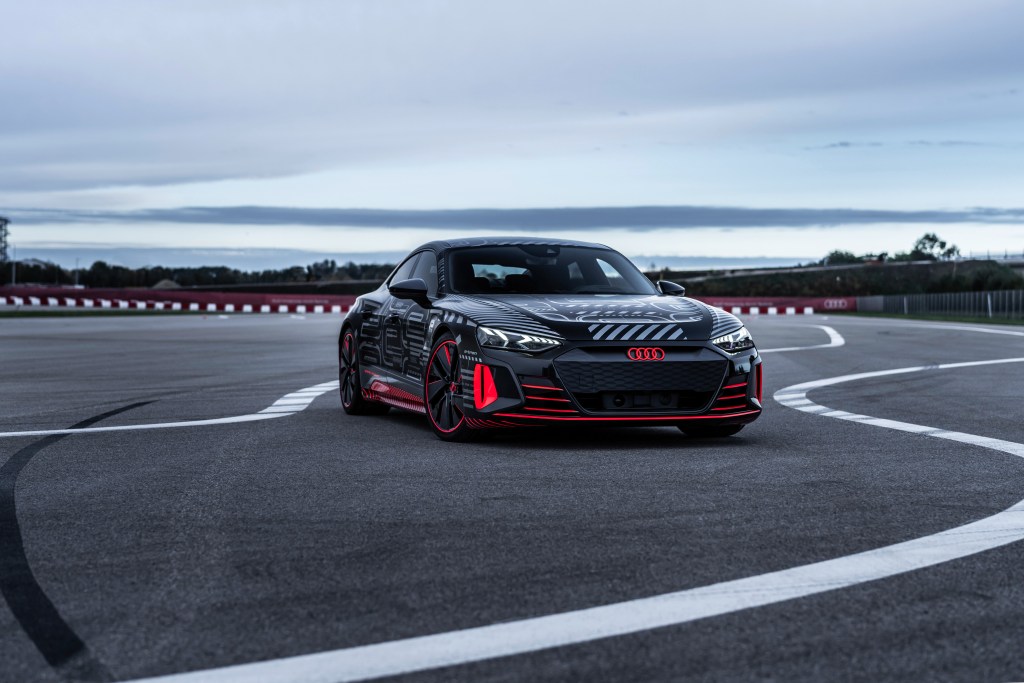
Audi RS e-tron GT prototype (Images: Audi)

Lichte even thinks that this vehicle—which will be unveiled in its production version on February 9—will become a new design icon for the brand, answering a question whether that is the case by saying, “Yes, without a doubt.” But he acknowledges, “A car must acquire this reputation on the road—in an overstimulated environment that creates the will to strive for orientation.”

Which presumably means: cars may look great in studios or on turntables at auto shows (remember auto shows?), but you’ve got to get them out in the real world where they exist in relation to other vehicles.

Lichte went on to day: “True design icons have something that is unmistakably clear: For example, it takes only three lines to characterize a VW Beetle or a Porsche 911. They stand for a clear attitude.”

Given that all of the brands are under the Volkswagen Group umbrella, Lichte is undoubtedly well aware of the vehicles like the Beetle and the 911, which are certainly good bars to work to equal or exceed.–gsv

Why Your iPhone Isn’t Like Your Car

The rumored Apple car notwithstanding, there are evident efforts being taken by OEMs to make their user interfaces large, icon-intensive and swipeable, just like a smartphone. Since Tesla rolled out with the 17-inch screen in the Model S, there has been an on-going effort to make screens big and familiar, perhaps with the most exaggerated example the 56-inch Mercedes MBUX Hyperscreen.

Whereas it was once said that a “car is a computer on wheels,” it seems to have transitioned to a “car is a smartphone on wheels.”

After all, OEMs are not only aggressively integrating apps that they can mine for data and otherwise monetize, but the ability to have over-the-air updates (OTAs) is becoming as de rigueur as standard Android Auto and Apple CarPlay.

Tamara Snow of Continental. The complexity of vehicle compute, control and communications networks shouldn’t be underestimated. (Image: Continental)

But Tamara Snow, head of Research and Advanced Engineering, North America, Continental Automotive, points out that there are some substantial differences between that high-powered processing and communications device you carry around and that high-powered processing and transportation device you have carry you around when it comes to the compute architecture and application.

Snow notes that a smartphone has:

  • 1 microprocessor
  • 1 display
  • 1 operating system
  • 7 sensors
  • 6.1-ounce mass

And the smartphone has a top speed of 0 mph.

A vehicle has:

  • 100 microcontrollers
  • 4 displays
  • 4 operating systems
  • 100s of sensors
  • 2.5-ton mass

The vehicle has a top speed of 155 mph.

Snow says that when it comes to a smartphone, a software glitch can be “annoying.”

But the same for a motor vehicle can be “fatal.”

Making cars–and the systems that go into them–is hard.–gsv

Riding on One Wheel

The one-wheel electric scooter market—yes, there is such a thing—is expected to undergo a compound annual growth rate of 5% between 2019 and 2027, according to research performed by Allied Market Research.

However, it is worth noting that the market was valued at $110.2-million in 2019 and is expected to grow to $146.7-million by ’27, so it is not like there are going to be huge numbers.

Of that 2019 number, $38.7-million was spent in North America, making it the biggest revenue contributor to the one-wheel market.

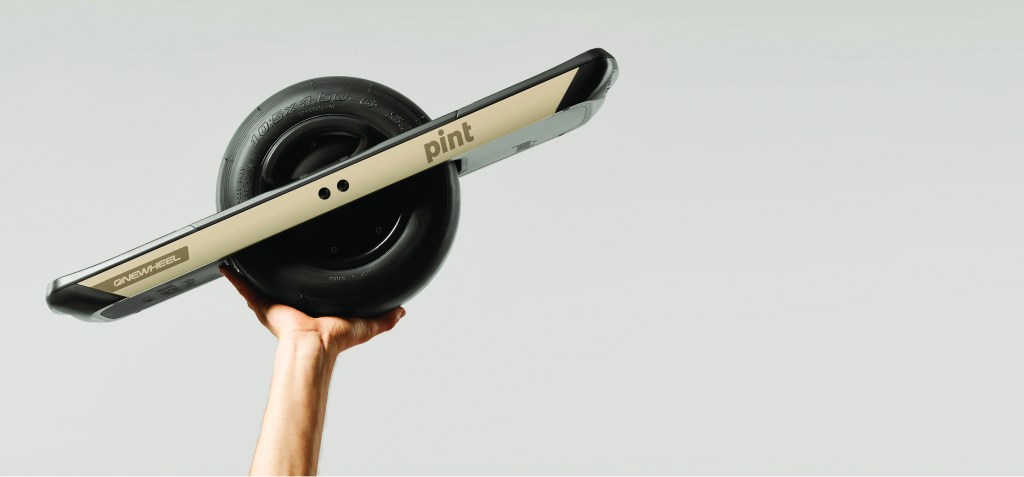
The Onewheel Pint from Future Motion. It is a one-wheel “board” rather than “unicycle.” The Pint reaches speeds up to 16 mph and has a range of 6 to 8 miles. It is being assembled in a plant in San Jose, California. (Image: Future Motion

Although the research firm says growth is being driven by urban transportation needs, it anticipates that off-road use for the devices will be a major growth area, which seems a bit odd given that it also points out that the scooters are somewhat tricky to ride, requiring “well-trained” and “skilled operators,” as there are “high chances of accidents.”

Indeed.–gsv

How Does Where a Vehicle Is Built Affect Authenticity?

There is sometimes a question of authenticity when it comes to where a vehicle is built. As in the source is considered to be better.

Once it was the case that people in the U.S. wanted a Honda Civic built in Suzuka or a Lexus RX from Kyushu.

Doesn’t it seem that Volvos ought to be built in Sweden rather than China or. . .South Carolina?

So it comes as more than a bit of surprise to learn that Rolls-Royce produced 2,946 vehicles from 1921 to 1931 in a manufacturing facility in Springfield, Massachusetts.

Made in Massachusetts: Yes, Rolls-Royce vehicles. (Image: Rolls-Royce)

Springfield. About 100 miles due west of where the Boston Tea Party was held. (Imagine.)

The hand-building operation was shuttered as a result of the Depression.

Today Rolls-Royce models are only produced at the company’s facility in Goodwood, England.

As they should be.–gsv

Sandy Munro on Tesla, Three-Wheelers and Flying Vehicles

From a functional and executional standpoint, there is probably no one who is more well versed in Tesla than Sandy Munro, who established the lean design, engineering and manufacturing consultancy, Munro & Associates in 1988. The teardowns and analyses that he and his colleagues have performed on Tesla models have become the stuff of grist for the never-stopping mill that is a phenomenon since the vehicles started rolling out of the Fremont, California factory. Has there been an auto company’s products that has garnered more attention? It seems unlikely.

Obviously, once a vehicle has been completely disassembled and assessed, it isn’t the sort of thing in which it is possible to take for a ride.

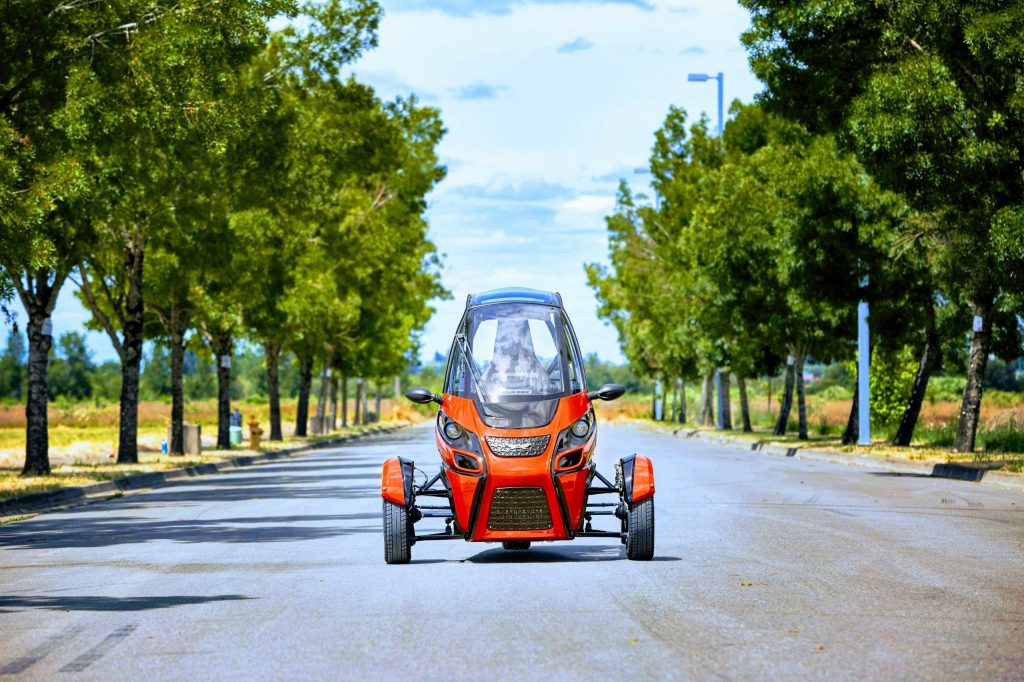
Arcimoto three-wheeler. (Image: Arcimoto)

So on this edition of “Autolline After Hours” Munro talks about how he has acquired another Model 3. . .and this time he and company president Cory Steuben are going to take it on a road trip, where they will make a determination of everything from how the battery works in the winter of the upper Midwest to the heat of the southwest to how hands-off the Tesla FSD (full-self driving computer system) actually is.

In addition to which, Munro talks to “Autoline’s” John McElroy, “Autoline’s” West Coast correspondent Chase Drum and me about what he sees as what is likely to become a growing automotive trend: three-wheel vehicles, like the products developed by Aptera Motors and Arcimoto. Munro explains that these electric vehicles are highly efficient and enjoyable to drive.

What’s more, a couple days before the show GM’s Mary Barra, in a presentation for CES, revealed a concept, the Cadillac Halo, an electric powered, four-rotor VTOL craft. Munro, who has also done extensive work on aircraft, thinks that there is likely to be a proliferation of personal aircraft for commuting.

While this might seem to be something that will be happening in the Jetson’s future, Munro anticipates such transformations in transportation in a matter of years—a few, not many.

And about that Tesla test drive: Munro says that he’ll also take the opportunity to. . .eat a lot of hamburgers.

And you can see it—the show, not the burgers—here.–gsv

Kia and the Meaning of “Motors”

Kia, up until January 15, was officially known as “Kia Motors.” At least the “Motors” part of Kia Corporation was.

Now the company is just “Kia.” Which is pretty much what everyone calls it, anyway.

According to the company, by dropping the “Motors” there is an indication that it is “breaking away from its traditional manufacturing-driven business model.” I would have thought that were the company named “Kia Manufacturing” that could be the case. Somehow I don’t figure how the elimination of “Motors” means that the company “will expand into new and emerging business areas by creating innovative mobility products and services to improve customers’ daily lives.”

For one thing, aren’t the vehicles that Kia manufactures things that “improve customers’ daily lives”? Odds are, when you need to make a Costco run you’re not going to want to call an Uber.

Second, aren’t those “innovative mobility products” things that are going to need to be. . .manufactured?

While announcing the name change Kia execs stressed that the company is “focused on popularizing battery electric vehicles (BEVs)” and that it will introduce seven BEVs by 2027, encompassing various types of configurations.

In addition, it will develop what it calls “Purpose-Built Vehicles” for corporate customers that will be based on “skateboard” platforms. That term has pretty much come to mean BEV.

In one sense, it is perhaps not a good move to remove “Motors” from the name. While a Camry or an F-150 has an “engine” under its hood, a Tesla or a Taycan has a “motor” under its hood.

So a BEV-centric company might want the word “motor” associated with it.

But then there’s the “Lincoln Motor Company,” a name that Ford brought back to its luxury division in 2012 to help bring to mind a classy Lincoln of yore, not electric vehicles as it has none at this point. “Electrified”—a.k.a., hybrids—yes, but purely motor-driven, no.

And while GM has changed its logo, it has hung on to its “Motors.”

Flying Spur V8: Fun Facts About an Engine You’ll Never Drive

While it is true that the 2021 Bentley Flying Spur is available with a W12 engine—that’s right, a 12-cylinder engine, which requires a “W” configuration in order to fit under the hood, or perhaps that is better put “bonnet”—there is also the V8 version. While the former has a price tag on the order of $220K and the latter closer to $200K, the V8 is probably more realistic—but let’s face it, what is the likelihood of that ever making its way to your driveway?

Bentley Flying Spur V8 (Image: Bentley)

That said, here are some things of interest about the 4.0-liter V8:

  • It produces 542 bhp
  • That means it develops more than 135 bhp per liter
  • It propels the vehicle to a top speed of 198 mph
  • It has twin scroll turbochargers that are located inside the V of the block that can operate at 176,000 rpm and produce up to 1.6 bar of boost pressure. The turbines operate at up to 950°C, or hotter than a burning log in a fireplace
  • The 0 to 60 mph time is 4.0 seconds
  • There are two high-pressure fuel pumps to feed eight solenoid-driven injectors. The pressure is delivered at up to 250 bar, which, according to Bentley, is 14x the pressure “required to move a 60 tonne steam locomotive.” Huh?
  • The cylinder bores are coated with a iron-alloy coating that is 150 microns thick (or about 2x the diameter of a human hair)
  • The pistons move at up to 20 meters per second
  • Depending on demand, four cylinders can be shut down in approximately 20 milliseconds, or a tenth of the time it takes to blink

Odds are you’ll never use this information. Odds are you’ll never drive a Flying Spur either.

But there are chances.

Baidu, Geely and a Sensible Approach

Baidu is somewhat like Google, inasmuch as it operates a search engine, by far the leading search engine in China. But there are other services as well, including maps (Google), an encyclopedia (Wikipedia) and cloud storage (AWS).

So it is fair to simply describe it as a significant tech company.

Like other tech companies, it is expanding its operations. And so it should come as no surprise that it is moving into automotive.

But it isn’t like the company just discovered the space. It has been operating Baidu USA since 2011 and has been conducting autonomous driving operations in Silicon Valley for more than five years.

In 2017 Baidu announced Apollo, the autonomous driving platform that it garnered an array of partners to participate with in on the development, partners ranging from Intel to Toyota.

It is running an autonomous taxi service in a few cities in China.

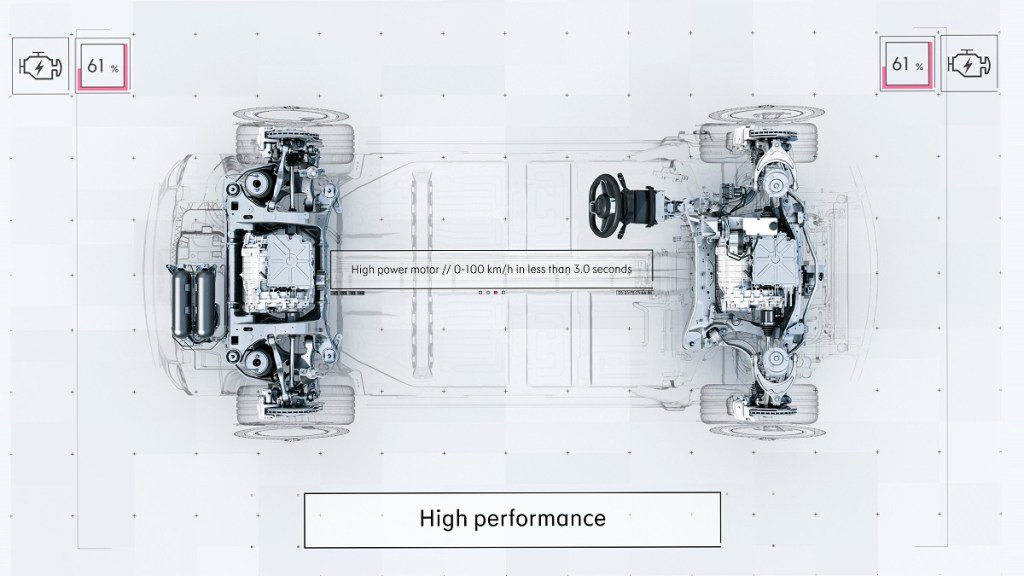
Geely SEA electric vehicle platform: EVs for everyone! (Image: Geely)

Geely Holding–parent company of brands including Volvo Cars, Lynk & Co and LEVC, and lead shareholder in Geely Auto, Proton and Lotus—and Baidu have announced the creation of a partnership for the development of highly automated electric vehicles.

Geely is going to be providing the platform—the Sustainable Experience Architecture, which it announced in September 2020 as an “open source” electric vehicle platform that it would offer to other global OEMs—and Baidu the digital horsepower.

Manufacturing vehicles is a different kind of hard than the challenges associated with developing AI systems.

It makes absolute sense that a digital company would partner with a hardware manufacturer—in this case, the hardware being a vehicle, not a smartphone.

In a market where there are some 21-million passenger vehicles sold per year, where there is a comparatively low penetration rate of vehicle ownership (on the order of 173 vehicles per 1,000 people, compared with 837 in the U.S.), even a small slice of the market is still damned large.

And neither Geely nor Baidu seems to be focused on the small.–gsv

General Motors Embraces E-Commerce

The Cadillac LYRIQ, which is to become available in the first half of 2022, certainly looks promising as an electric, luxury SUV, one that may help the brand, which, let’s face it, has been struggling in the market for the past few years—here’s something that is not well known: although Acura is generally considered to be having a tough time of it in the U.S. market, in 2020 it outsold Cadillac, 136,983 vehicles to 129,495 vehicles; Acura also outsold Cadillac in 2019.

The Cadillac CELESTIQ, an electric sedan that takes luxury to levels that Cadillac hasn’t had on offer for, arguably, ever, combining hand-crafted materials with technology, such as a four-quadrant glass roof that allows individual selection of the level of transparency, is another arrow in the quiver of a transforming brand. Although it is still a concept vehicle, it is unlikely that General Motors would draw as much attention to it as it has (it was part of Mary Barra’s CES 2021 keynote) were it—or something damn close to it—not going into production.

That said, even though General Motors is investing $27-billion in vehicle electrification and automation, the most important launch, revealed during Barra’s presentation, is of a vehicle that none of us will individually own:

The EV600, an all-electric, purpose-built light commercial vehicle.

The LYRIQ and the CELESTIQ may be sexy, but logistics is where it is at and will drive the proliferation of electric vehicles in a way that it will take the consumer market a long time to catch up to.

The GM EV600, a purpose-built electric delivery van. The company has even started a logistics support business, BrightDrop. (Image: GM)

The owners of fleets of commercial vehicles—like FedEx, which GM worked with on the development of the EV600 (and the EP1, an electric rectangle on wheels that has a capacity of 200 pounds and a top speed of 3 mph)—do the math when it comes to vehicle acquisition. If it is going to be to their financial advantage to get EVs, then they’re not going to worry about things like available infrastructure, because they’ll build their own. They’re not going to have range anxiety, because they know precisely where their trucks are going and when.

(And it probably doesn’t hurt that it provides a green sheen to their brands by going EV.)

Consider:

–Amazon, which owns a piece of it, is having Rivian build electric delivery vans that are to be on the road next year at a number of about 10,000, perhaps going to 100,000 by 2030.

–Ford has announced the 2022 E-Transit delivery van that is going to be available later this year, and emphasized the benefits of the electric propulsion system vs. its own internal combustion offerings (with the scheduled maintenance of the E-Transit being an estimated 40% less over eight years/100,000 miles).

–And there are start-ups like Arrival, which companies including Hyundai and UPS have invested in.

Sure, we pay attention to LYRIQs and CELESTIQs.

But consider this: in an industry that seems to be shedding operations, General Motors has established a new business, BrightDrop, that is dedicated to delivery, not only vehicles like the EV600 and EP1, but even logistical software services.

This is a non-trivial commitment—and likely to be a prosperous one, as Mary Barra and her colleagues know that commercial companies do the math and need a whole lot less persuading to go electric.–gsv