The Return of the Acura Integra

By Gary S. Vasilash

Acura has been around since 1986. When the luxury and performance division of Honda appeared on the American landscape it came with two vehicles, the Legend at the lux end and the Integra at the performance.

The Legend lasted for two generations. The Integra ran for four consecutively, wrapping up in model year 2006.

But now the Integra is back for its fifth.

A lot has happened in the auto industry since 1986. Heck, a lot has happened since 2006.

A big part of the change is the comparative collapse of the car and the explosive growth of the crossover.

This change is quite evident in the Acura sales.

From January 2022 through the month of May it sold 12,216 cars. That includes the ILX, NSX, TLX and Integra (which was new in May, so there were only nine sold).

During the same period Acura sold 33,460 crossovers. That includes the RDX and the MDX.

So essentially, cars account for about a third of the brand’s sales.

Here’s another set of figures that makes one scratch one’s head:

In a 2020 CarMax survey, the retailer found that while 93.6% of customers wanted Bluetooth in their vehicles, only 2.5% were interested in a manual transmission.

2023 Acura Integra: Engineered to be driven with brio. (Image: Acura)

While the 2023 Integra, which has a VTEC-enhanced 1.5 liter turbocharged engine that produces 200 hp at 6,000 rpm and 192 lb-ft of torque at from 1,800 to 5,000 rpm, has a standard continuously variable transmission (CVT), the option for the car, in the up-trim A-Spec package, is a six-speed manual. . .and the Acura folk anticipate a 65% take rate for the manual.

So to learn more about the new Integra we talk with Emile Korkor, Assistant VP, Acura National Sales, on this edition of “Autoline After Hours.”

Korkor emphasizes that Acura is about performance, and the new Integra is engineered for that cohort of buyers who are interested in performance cars.

An interesting aspect is that the car starts at $30,800 so it is certainly affordable. The A-Spec with Technology Package, adding in the six-speed, has an MSRP of $35,800. Again, affordable.

Korkor points out that this isn’t simply a car that is built to be quick, but that it has premium amenities, as well. After all, if you’re going to be driving it hard, you might as well get comfortable while you are doing it.

Korkor talks with “Autoline’s” John McElroy, Eric Weiner of Hagerty and me.

In addition, McElroy, Weiner and I discuss a variety of other subjects, including why Honda, ford, VW, BMW and Volvo filed a motion to intervene in a federal lawsuit regarding California emissions laws and other OEMs haven’t; whether pricing for electric vehicles is realistic (Sandy Munro, for example, suggests that the Rivian R1T, which starts at $67,500, should be selling for $100,000); and other topics.

Which you can see right here.

Audi 80: Not a Throwback

Audi A80 (Image: Audi)

This is the Audi 80, which came out 50 years ago. Were something like this to come out now with an electric powertrain it would probably be a massive hit, the fact that it is designed and engineered to be a family sedan notwithstanding.

The vehicle, which was internally known as the “B1,” had a run through four generations, until the mid-90s, when it was replaced by the A4.

The A4, incidentally, is in its fifth iteration.

Bosch Investing Big in Hydrogen

By Gary S. Vasilash

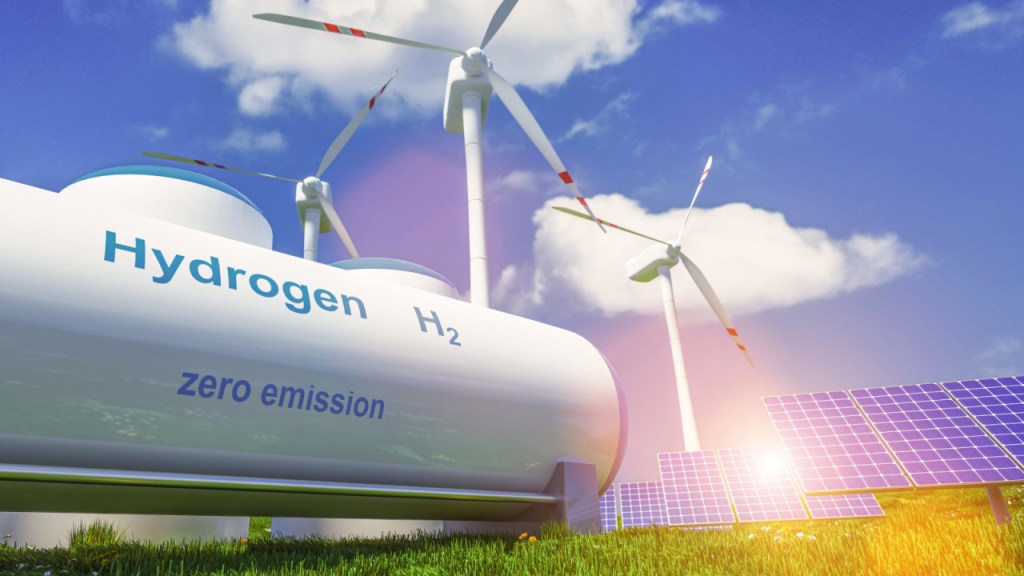
One of the fuels that doesn’t get a whole lot of attention—despite it being the most-abundant element in the universe (yes, universe)—is hydrogen. There are a few hydrogen cars out there—like the Toyota Mirai and the Hyundai Nexo—and a few commercial trucks running tests (e.g., Toyota with the Port of Long Beach; Nikola with Anheuser-Busch).

While electrical outlets are seemingly everywhere and access to hydrogen fueling facilities is challenging at best, the idea of electrifying the fleet has become the norm and hydrogen is something of an afterthought.

Bosch is “all in” on hydrogen. (Image: Bosch)

However, Mike Mansuetti, president of Bosch in North America, announced, “We are all in for the hydrogen economy.”

Bosch on a global basis is investing $1-billion between 2021 and 2024 on the development of mobile fuel cells.

What’s more, in order to produce hydrogen (although there’s lots of hydrogen out there, hydrogen tends to bond with other things like oxygen, as in water), Bosch is investing some $600 million by 2030 in developing hydrogen electrolysis (the means by which water can be transformed back into its constituent elements).

Will these efforts result in more crossovers and cars with fuel cell stacks within the next few years?

It’s not likely.

According to Bosch’s Paul Thomas, executive vp of Mobility Solutions, America, the commercial applications, where there is a regular, defined route, and where there can be refueling stations built and regularly used (no company is going to want to build out a hydrogen refueling facility that gets used only once in a great while), are more likely to be where hydrogen will gain traction.

That said, there’s something that Bosch is doing that is quite interesting: the company, long known for its prowess in fuel injection technology, is, Mansuetti said, experimenting with hydrogen injection in internal combustion engines.

Think of all of the engine plants that OEMs have right now.

Were it that they could use that capacity to produce engines that burn hydrogen (no emissions) rather than gasoline, that might be a really compelling reason to make hydrogen a viable alternative to electricity. After all, they’ve already paid for all of that machinery and equipment, so if hydrogen would help them reduce their carbon footprint and meet regulatory requirements, why not?

Probably not because they seem so committed to battery electric vehicles and fuel cell electric vehicles would be too much to deal with.

These Startups May Transform Auto

By Gary S. Vasilash

So what do:

  • A system that can defrost windshields on EVs 20x faster than the conventional HVAC system and use 20x less energy
  • A nanoparticle-based additive that improves electroless nickel and other plating processes for automotive part improvement
  • An EV charging station that is designed for implementation in places like underground parking garages in apartment buildings that is highly cost effective
  • A battery based on zinc that not only has potential to replace lead-acid batteries but has applicability in urban electric vehicles

Have in common?

All of these technologies were winners at the recent Global Automotive and Mobility Innovation Challenge (GAMIC).

And while the word “global” in the name of the event could be taken with a shrug because all manner of things nowadays use it even though there is nothing beyond a given country or two, know that:

  • The company with the windshield system, Betterfrost Technologies, is based in Canada
  • The nanoparticle additive company, coat-it, is in Poland
  • The EV charging station from HeyCharge hails from Germany
  • The zinc battery development comes out of Enzinc, based in the U.S.

Yes, that’s global.

On this edition of “Autoline After Hours” John McElroy and I spend the hour talking with Derrick Redding of Betterfrost Technologies, Katarzyna Zielińska and Marek Turkiewicz of coat-it, Chris Carde of HeyCharge, and Michael Burz of Enzinc—all startup companies

Not only do they discuss their various technologies, but they provide some insights into how they came to participate in this global challenge.

And you can see it all here.

How to Report on Tesla: The Sycophantic Approach

By Todd Lassa

Memorial Day weekend, Los Angeles Times reporter Russ Mitchell opened up on Twitter about covering Tesla and its larger-than-life CEO, Elon Musk, who, not entirely coincidentally, is embroiled in controversy over his pending $44-billion takeover of Twitter.

“It took several months to realize it, but Tesla’s media approach was to find reporters who would in effect serve as public relations contractors, and then suck up to them with access to Musk and other access,” Mitchell writes in tweet two of 23 he posted on the topic. “Tesla PR,” item 3/23 says, “would drop ‘exclusive’ stories on compliant reporters’ laps that could be reported as news.”

It is smug for an auto journalist to say  “I told you so,” and point out that generally writers for buff books  were always more dubious about Tesla, especially as the company’s market cap surged toward $1 trillion, even when the bulk of its profits came from California Zero Emissions tax credits paid by the “dinosaur”-fed industry.

Mitchell was an auto reporter for the paper, covering, “the future of mobility and the strengthening relationship between Silicon Valley and the auto industry.”  he had been a tech reporter for the Times until January 2016, when he left for a “brief stint” at Kaiser Health News’ California Healthline.

Shortly after his return, Mitchell covered the fallout from a May 2016 decapitation of a Tesla driver whose car Autopiloted itself under a semi-trailer in Florida. One result of this incident was that Tesla “broke up” with Mobileye, an Israeli sensor and software company whose products Tesla was using, in September 2016. Telsa blamed the split on what it said was Mobileye’s plans to compete with Tesla.

When Mitchell reported both sides of the story, with a Mobileye source telling him it was because of Tesla’s “lax” safety culture, a Tesla spokesperson told him the PR department “felt betrayed,” according to tweet 16/23. From that moment on, Mitchell says, “I was set aside as a potential propagandist. …”

In other words, he did Tesla PR’s bidding for just a quarter-year.

Mainstream automotive reporters were sufficiently impressed by the battery cell technology powering the Lotus-bodied 2005-09 Roadster, and when the Model S made its debut in June 2012, virtually universally we found the performance, range and promise of a carbon-emissions free automotive future impressive. (I was one of the Motor Trend editors to unanimously vote it 2013 Car of the Year.)

But the Wall Street investment community and Silicon Valley hubris – it was still a time when big tech could do no wrong– certainly did not sit well with those of us waiting for broken-down, past-its-20th-century-glory Detroit to collapse in the face of automotive startups like Tesla.

Still, we gave credit when and where Tesla was at the top of its game while, at the same time, trying to hold Musk accountable for his antics, including his promotion of “full self-driving” cars and SUVs which always seemed to be “coming soon” but never really arriving.

Musk has blamed his customers, on more than one occasion, of being clueless about what Autopilot “full self-driving” is, even as he claims the latest software update makes his vehicles “full self-driving.”

They are not. They are Level 2 at best.

But any criticism of Tesla’s models, major or minor, will almost certainly be met with vitriolic, even trolling counter-criticism from Musk’s acolytes. Everything Musk does must be perfect. Much of the objective reviewing of Tesla’s products come from independent EV auto websites, though there are plenty of Tesla-specific fanboy sites.

It may have taken Mitchell just three months to figure out that Tesla PR had appropriated him, but the company’s communication system apparently remains, and that’s not good for Tesla’s customers, Tesla’s competitors, nor highway safety.

Todd Lassa is a long-time automotive journalist and editor of thehustings.news

Toyota Rolls Out Plenty of Products

By Gary S. Vasilash

Let’s face it: As much as people would like to think that the pandemic is something that is talked about in the past tense, the direction of those arrows showing cases and hospitalizations and deaths related to Covid are going in the wrong direction.

This means that OEMs have to consider the ways and means that they announce product to the press, and in turn, the public, because this ain’t 2019 anymore.

Toyota has announced a tranche of products and developments that would usually be metered out drip by drip.

Instead, it has essentially said, “Get ready, here we come!”

GR Corolla MORIZO Edition. Yes, you could go to Costco in it. But you’d probably have a whole lot more fun at a track. (Image: Toyota)

As in:

  • 2023 Corolla Hybrid with optional AWD–What makes this different is that there is a separate electric motor mounted on the rear axle to switch from what is ordinarily a FWD vehicle to AWD.
  • Corolla Cross Hybrid—The SUV-ish vehicle now (1) is available as an AWD vehicle and (2) uses Toyotas Fifth Generation Hybrid system. Oddly, Toyota touts that the vehicle has a 0 to 60 time of 8 seconds. No one—probably not even a rogue valet—is going to pin the accelerator on a Corolla Cross, hybrid or otherwise.
  • GR Corolla MORIZO Edition—“GR” stands for “Gazoo Racing.” It was established as something of a skunkworks for running at the 2007 Nürburgring—but as it was established by Akio Toyoda. . .  . Anyway, GR is both a racing team as well as an operation that provides performance to production vehicles. This vehicle, limited to 200 cars, is designed for the track (but is street-legal), as the engineers worked at taking out weight (they removed some 100 pounds from the GR Corolla Circuit Edition), added a close-ratio manual transmission, and increased overall rigidity. Here’s something you don’t necessarily associate with a turbocharged three-cylinder engine: 300 hp and 295 lb-ft of torque.
  • 2023 GR86 Special Edition—Last year Toyota introduced the GR86 sports car, and the vehicle has been doing well. In Q1 ’22 there were 3,257 GR86s sold, which may not seem like a big number, but is an increase over Q1 2021 of 326.3%. The Special Edition will be limited to 860 vehicles. The vehicle features a cat-back performance exhaust to make the 228-hp 2.4-liter engine sound, well, more bad-ass. There are forged matte black 18-inch alloys. And there are various trim mods inside and out.

Meanwhile, over at Lexus:

  • 2023 RX—The fifth generation of the vehicle that, arguably, made Lexus. Were it not for the luxury crossover, a segment that the RX pioneered, odds are that Lexus might have been like those other two brands that launched around the same time that are now pretty much footnotes. The new RX is on a new platform (GA-K), which is important because it allows a weight reduction (always good for performance) and increased rigidity (ditto). The RX has been available as a hybrid since 2005 (!). That continues with the new model. But there is a second hybrid, the RX 450h+ that will be coming, which is a plug-in hybrid.

And there’s this:

  • Cabin Awareness concept—This is a development from Toyota Connected North America, an operation that focuses on things of a digital nature. This concept is based on a 4D imaging radar sensor—and it has absolutely nothing to do with autonomous driving. Rather, the sensor, mounted in the headliner of a vehicle, determines whether there are life forms in the vehicle (adults, kids, infants, pets). This is useful to make sure that no one is left inside a vehicle. And because this will be important in the autonomous world (e.g., say someone books a ride for himself and pet and upon arrival at the destination, gets out but leaves the pet behind), Toyota is working with autonomous vehicle company May Mobility on testing it out in autonomous Toyota Siennas (back to that parenthetical scenario: the Cabin Awareness sensor finds the pet is still there and a signal is sent to the vehicle system such that it won’t move on until the situation is resolved).

Yes, lots of things from Toyota in a compact amount of time.

How the 2023 Nissan Z Came to Be

By Gary S. Vasilash

The new 2023 Nissan Z—just “Z,” no more numerics—is powered by a 3.0-liter twin-turbo V6 that produces 400 hp. Just the sort of thing to make the two-seater perform quickly. Compared with the last-generation model—the 370Z (obviously with the numerics)—there are increases in both torsional stiffness and body rigidity. That means that the vehicle has the sort of substance required to make it capable of being tossed through turns without a sensation that it is as sound as a plate of overcooked pasta.

2023 Nissan Z: A 400-hp sports car starting at <$40 K (Image: Nissan)

On the inside the car has an interior that is fresh and not at all fussy. As is the case of the exterior, there is a slight sense of throw-back, although it is difficult to put your finger on what makes it so. There is a six-speed manual transmission, which is something that was more common in cars of days gone by, but that’s not it. And given that there is a standard 8-inch infotainment display (there is a 9.0-inch unit with navigation available), that’s certainly not what gives this slight sense of days of retro. There is also a nine-speed automatic, which is certainly au courant.

Before the $1,025 destination charge, the Sport trim (there is the Performance trim above that) has a base MSRP of $39,990, which is a nice thing for Nissan to be able to boast about: A bona-fide sports car for under $40,000.

To get insights on how this vehicle was developed, on this edition of “Autoline After Hours” we talk with Melissa Lacko, an engineer with Nissan Research & Development in Stanfield, Arizona, who worked on the development of the vehicle.

She talks about various aspects of how the Z came to be, ranging from the interactions with the team in Japan to the time she and her colleagues drove to Bemidji, Minnesota for cold-weather testing—and the temp was below -20º, which is really something for an Arizona native to experience.

Lacko talks with “Autoline’s” John McElroy, freelance writer and NACTOY president Gary Witzenburg, and me.

If you want to get a sense of what enthusiasm is for one’s profession, watch this show because Lacko is clearly engaged in what is a car that can be enjoyed by automotive enthusiasts.

And you can see it here.

Kemal Curic Talks Lincoln Star Concept

By Gary S. Vasilash

Lincoln, like other brands, is working to redefine itself by developing electrified vehicles. One of the advantages that Lincoln has in this regard is that (1) it is the luxury brand of the Ford Motor Company, which is devoting serious resources to creating vehicles of this type so it gets a big lift from its parent company and (2) as it is a luxury brand, there is more headroom vis-à-vis pricing because let’s face it: electric vehicle technology is still expensive, so putting it in vehicles that appeal to customers (or “clients” as Lincoln people may refer to them) that can afford more is the right move.

Lincoln plans to have three electric vehicles in its showrooms by 2025. Odds are all or some will be variants on what exist there right now (which makes sense: the Nautilus actually had a 7.5% sales increase in 2021, a year that otherwise was rife with minus signs).

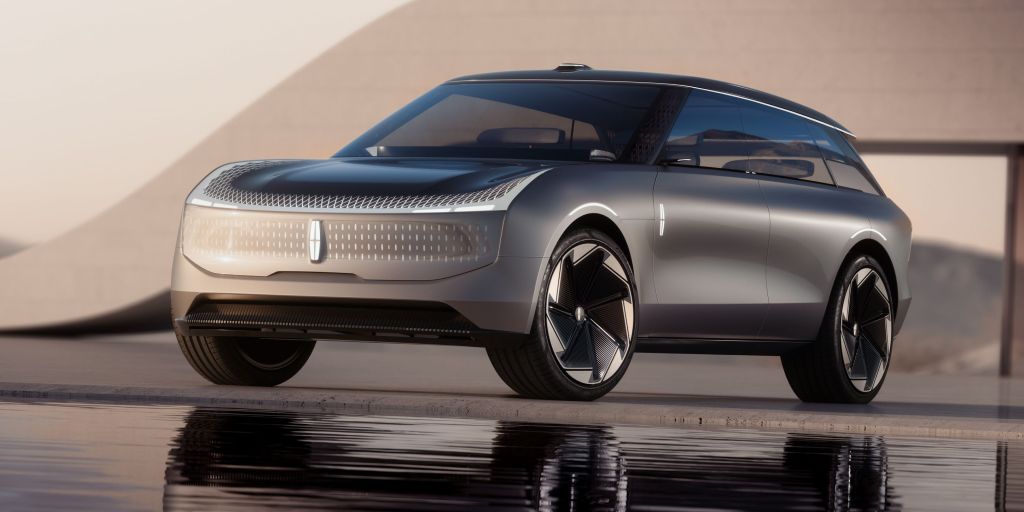
But Lincoln has unveiled what Kemal Curic, global design director, Lincoln, refers to as a “moonshot,” the Lincoln Star Concept.

The Lincoln Star Concept: the essence of electric luxury. (Image: Lincoln)

The “star” refers to the graphic logo that Lincoln uses. Picture the basically rectangular badge with the cross in its center more square-like and extend the arms of the cross out beyond the square with pointed ends: It then becomes something that is like a North Star image. The North Star (a.k.a., Polaris) is the brightest star in the night sky and as such has long been used as a point of navigation: the Lincoln Star Concept is the direction that Lincoln is heading toward.

What’s more, a star is about light, and if there is something striking about the Lincoln Star Concept is that whether it is on the front fascia or in the cosseting cabin, animated light is an absolute key feature.

In this edition of “Autoline After Hours” Curic talks to John McElroy and me about the Lincoln Star Concept: the whys, the hows and the wherefores, about how they are using advanced technology (e.g., using 3D metal printing to create the A- and D-pillars that have an organic form that allows the driver to have less-obstructed views), to imagine what could be in Lincoln’s future.

An interesting point that Curic makes about developing the vehicle, which is certainly applicable to other things, not just vehicles, is that they worked to subtract things, to create something more essential in the context of revealing the essence of luxury rather than obscuring it with what are superfluous features.

You can learn about this and other aspects of the Lincoln Star Concept from Kemal Curic by going here.

What Vehicles Are People Considering and Why?

By Gary S. Vasilash

Kelley Blue Book puts together an interesting study on what people are interested in by examining what they are searching for automotive-wise both on desktops and mobile.

For Q1 22 in the non-luxury space the number-one brand is Toyota, with 34% brand consideration. In Q4 21 it was Ford on top. They’ve switched places. Ford is at 32%. Chevy is on the rise because in Q4 it was at 25% but has risen by five percentage points.

What is somewhat sad is Fiat, which was at 0% in Q4 and is at 0% in Q1.

And just above it are Mitsubishi and MINI, both at 1%, which is where they were last quarter, too.

Perhaps people just know all they need to about those brands.

Ram Laramie 1500: Imposing and comfortable. (Image: Ram)

KBB slices, dices and rices data in various ways. Like looking at four categories: SUVs, Cars, Pickups, and Minivans.

The top SUV is the Honda CR-V (besting the Tahoe, Durango, RAV4 and Highlander).

The #1 car is the Honda Accord, edging out the Civic (sibling rivalry). The Camry, Charger and Challenger follow.

In Pickups it is the Silverado 1500, followed by the F-150, F-250/F-350/F-450, the Silverado 2500/3500 HD, and the Tacoma.

In Minivans it is the Sienna followed by the Odyssey, Pacifica, Pacifica Hybrid and Voyager.

Of those categories, 66% looked at SUVs, 37% Cars, 35% Pickups, and 5% Minivans.

Perhaps there is some life in Cars, although the considerations were down 31% in the last quarter and 33% in the last year, so clearly things aren’t moving in the right direction.

Another potentially encouraging sign for Cars is that in the top 10 models considered, there are three Cars on the list (Accord, Civic and Camry), which is the number of SUVs on the list (CR-V, Tahoe, Durango).

What are the top three factors driving consideration?

Durability/reliability is in the top spot, which is not a surprise, nor is the fact that Toyota is the one that takes it.

Second is safety, and while you might imagine that would be Volvo, Subaru is actually in that position.

And third is driving comfort. This is taken by Ram. Who would have thought that a pickup truck would win the comfort honors?

Cadillac Supercharges the Escalade: Seems Strange for the Company Going EV

By Gary S. Vasilash

Although Cadillac is purportedly going to be an all-EV brand by 2030, between now and then it will continue to offer things like this: the Cadillac Escalade-V.

Rory Harvey, global Cadillac vice president, says, “Customers and enthusiasts have asked for an Escalade-V, and we’re thrilled to bring this high-performance SUV to market in the year of Cadillac’s 120th anniversary.”

Supercharged, 682-hp V* is hardly the stuff of environmental awareness, is it? (Image: Cadillac)

The vehicle is powered by a supercharged 6.2-liter V8 that puts out 682 hp and 653 lb-ft of torque.

The Escalade-V, which has a starting MSRP of $149,990 (including destination), will go on sale later this summer.

As of now there are no EPA-estimated fuel economy numbers. However, the numbers for a more-typical 6.2-liter in a non-V Escalade are 14 mpg city, 19 mpg highway.

Somehow this makes any green cred that Cadillac may be interested in gaining for itself all that more difficult.

Still, they have to somehow pay for the development costs of the EVs. . . .

It is worth noting (although those paying +$150K may not care) that premium is required for the V engine. According to AAA, the current national average for a gallon of premium is $5.03.

So if you’re filling the tank of the Escalade-V it would set you back $120.72.