CES: Yes, People Are Still Getting COVID

By Gary S. Vasilash

Auto shows, for purposes of publicity, have become passe. In terms of allowing consumers to get a chance to see a vast array of brand-new vehicles, they are great. But when it comes to getting attention from reportorial outlets, vehicle manufacturers have increasingly run the numbers and concluded that the input (the money they spend) is far in excess of the output (the amount of coverage) at auto shows.

During the past few years, OEMs have glommed on to the fact that there is a big technology show held in Las Vegas at the start of January each year, CES.

This used to be the “Consumer Electronics Show.” But the show organizers have presumably decided that it is better to be as inclusive as possible, so by using three letters rather than descriptive words, they can get more exhibitors.

As the fortunes of traditional auto shows have waned, those of CES have waxed.

So more and more automotive OEMs and suppliers have decided that CES is a place they need to be.

It doesn’t hurt that they want to be perceived, for purposes of stock valuation, as being “tech companies,” something that is a bit more difficult to pull off at a traditional auto show.

So a number of OEMs have signed up for CES.

Last January CES was entirely virtual. That was when COVID-19 was raging.

This January CES is being held in person. This will be when COVID-19 is raging.

Some tech companies came to the realization that a jammed trade show with people from all around the world (159 countries) in attendance—even though attendees must show proof of vaccination, wear masks, and get test kits along with their badges—is not a good venue while hospitals are at the breaking point with COVID cases.

Twitter, T-Mobile, Amazon, Intel, Lenovo, Google, Microsoft and Meta dropped out. Tech media outlets including TechCrunch and The Verge said they wouldn’t put their people in harm’s way.

In the automotive space General Motors and Waymo have announced they’re not going to physically participate.

The CES organizers maintain that the show must go on.

Here’s something to know: as of December 26, according to the U.S. Dept. of Health and Human Services (HHS), 84.36% of the ICU beds in Nevada are in use, of which 21.85% are for COVID patients.

Of course, were someone to attend CES and become infected they would probably back in their home locale before they became really sick.

So it should be known that HHS stats have it that in the U.S., as of December 26, 75.34% of all ICU beds are in use, of which 21.28% are in use for COVID patients.

Wonder how the ventilator supply is holding up. . . .

To say nothing of the nurses, doctors, orderlies, technicians, cleaning personnel, and all the other people who keep our medical facilities running, people who have been going through unmitigated hell because there are people and organizations that evidently are self-centered.

Yes, yes, we’re all tired of the pandemic. Yes, yes, we all want to get back to things in person. Yes, yes, plenty of people have been vaccinated.

Yes, yes, these are not normal times. Some companies clearly understand that. They clearly understand the health and safety of their people (and by extension, people who would come in contact with them) are critically important.

When companies ranging from Amazon to GM to Waymo figure CES isn’t the place to be, (1) how can other companies not come to that conclusion and (2) how can the CES organizers not understand that fact?

Electric Vehicles Need Batteries. Battery Plants Need (Cheap) Electricity

By Gary S. Vasilash

One of the key things needed for an electric vehicle is—surprise, surprise—batteries.

One of the things that OEMs are doing is not simply depending on suppliers to build the battery plants, but, in efforts to better control their supply chains, participating in the build of the factories with suppliers, such as GM and LG in Ohio and Ford and SK Innovation in Tennessee.

Ford’s $5.6 billion mega campus, BlueOval City, is not being built in Michigan. It will go up in Tennessee. One reason: electricity is cheaper there. (Image: Ford)

While GM and Ford are both headquartered in Michigan, they’ve not picked Michigan as a place to build a battery plant.

So, reports Bridge Michigan, on Wednesday the Michigan Public Service Commission voted to do something that could help make the state more appealing, and not just to the home-state OEMs:

Allow utility companies to offer industrial customers a reduced rate for electricity.

Presently industrial customers in Michigan pay 7.85 cents per kilowatt hour. Just across the border in Ohio the rate is 6.85 cents.

And for companies operating battery plants or semiconductor fabs, those pennies add up. Fast.

Polestar 2 Gets a Full-Blown Browser

By Gary S. Vasilash

According to statcounter, as of November, when it comes to browsers, Chrome has 66.35% of the global market. Then there is a drop WAY DOWN to 9.82%, Safari. So as you can imagine, the rest are below that.

One browser I’d not heard of is Vivaldi. According to the company, “Vivaldi launched in 2015 to make up for the loss of features in other browsers.” And it acknowledges that it is based on the Chromium engine.

Presumably, that makes it part of those Chrome stats.

Be that as it may, the browser is of interest because Polestar has released it for the Polestar 2. The deployment is described as a “full-scale web browser” that allows users “to browse the web as they might on their mobile devices.”

Said Jon Stephenson von Tetzchner, CEO at Vivaldi, “We are really proud to introduce our browser to a car for the first time, and specifically with a brand like Polestar. Our technological and sustainability ambitions are well aligned. We value transparency, privacy and responsible innovation – including the fact that we have our servers in Iceland, one of Polestar’s newest markets. Like Polestar, we are a challenger brand, and we take a Scandinavian approach to design, that is based on trust and listening to our users.” Vivaldi is based in Norway.

The browser can be accessed through the vehicle’s 11-inch screen. It features a built-in ad blocker, privacy-friendly translation tool, notes function, tracking protection and encrypted sync functionality.

It is worth noting that the browser can only be used when parked. Files can be downloaded when parked. And if there is streaming and driving commences, it will be audio only.

In addition to sustainability, safety is another important item on the Polestar agenda.

Hispano Suiza?

By Gary S. Vasilash

The headline of the news release reads: “10 things you didn’t know about Hispano Suiza.”

And 10 is a profound minimization as I must confess to not even knowing that the company (founded in 1904, I learned) continued to exist.

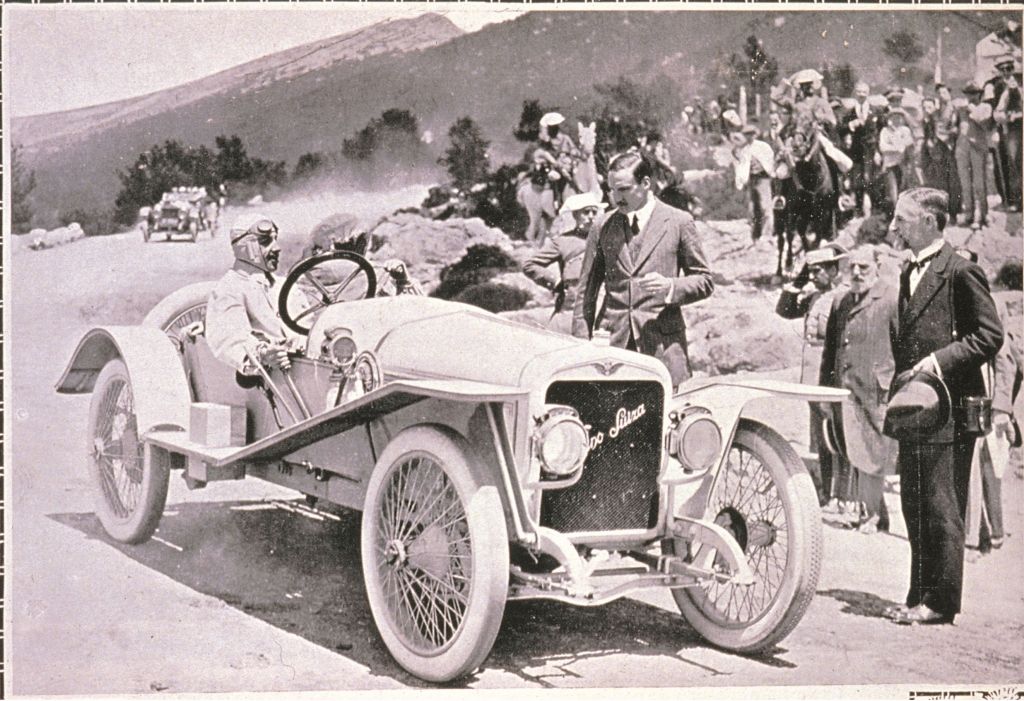
King Alfonso XIII of Spain and his ride. (Image: Hispano Suiza)

Other items of interest:

  • It is a Spanish company
  • Its first vehicle is something called the Armored Type Birkigt System (1905)
  • It built airplane engines starting during World War I
  • King Alfonso XIII of Spain liked his 20CV so much that in 1910 he bought 8% of the company
  • The company announced it will be building two electric supercars, the Carmen and the Carmen Boulogne. “Carmen” comes from Carmen Mateu, granddaughter of the founder of the company and mother of the current head of Hispano Suiza. The company will build 24 cars.
  • Hispano Suiza is part of the Peralada Group, “which represents the pinnacle of luxury in gastronomy and entertainment through its global portfolio of casinos, restaurants, hotels, golf courses, vineyards, music festivals and marinas.”

That last item sounds more intriguing than the cars.

Fisker Goes NFT

The first auction starts December 22 @ 5 pm PST and runs for 24 hours. It may be over by now

By Gary S. Vasilash

“I’m a car designer by heart. I still draw my designs with a pen on paper, where I’m able to create a unique motion that leads to emotional lies, so the design ultimately feels like it’s created by a human, not a robot.”

That’s Henrik Fisker, founder and chief designer of the company that bears his name.

So oddly enough, the company is going to raise money—50% of which will go to nonprofits supporting corporate ESG principles—by auctioning off not Fisker drawing on paper but those drawings in the form of non-fungible tokens (NFTs).

Fisker by Hand: OCEAN Concept Collection will be available in four tiers:

  • Ocean One: One copy
  • Extreme: 10 copies
  • Ultra: 25 copies
  • Sport: 64 copies

Ocean, of course, is the name of the company’s electric crossover, which is expected to go into production November 2022.

Those buying in the top three tiers will also get “redeemable benefits.” Things like. . .signed prints and even (for the person or, perhaps, organization who wins the bidding for Ocean One) an original work of art.

Why the NFT route? “I’m always looking for ways to strengthen our relationship with our customers, fans and stakeholders.”

The company, which is working hard to minimize the carbon footprint associated with its vehicles, points out that it is using Solana cryptocurrency on the Solana blockchain because it is “a proof-of-stake blockchain with far less environmental impact that proof-of-work blockchain.” Cryptocurrency tends to require a whole lot of electricity.

But here’s the thing: If he is going to put ink on paper, why not just auction that?

Arguably, by making a digital representation of his work Fisker is going more toward something that is, in effect, created by a robot.

Remarkable Rotary Engine and Agreeable NACTOY Jurors

Power in a small package. Jurors before casting their ballots

By Gary S. Vasilash

The Omega 1 is a highly efficient engine, one that can produce 160 hp and 170 lb-ft of torque. Yet it weighs just 35 pounds.

While it is a combustion engine, it doesn’t have pistons. Doesn’t have crankshafts.

Rather, the output from the engine comes from a single rotating power shaft.

Yes, the configuration of the engine is predicated on rotary motion. In fact there are no moving parts besides the rotational elements.

It can be fueled with gasoline or hydrogen.

On this edition of “Autoline After Hours” we are joined by Matthew Riley, the founder, CEO of Astron Aerospace and inventor of the Omega 1 and Chris Theodore of Theodore & Associates and technical advisor to Astron.

They explain the way this engine works.

Astron Omega 1. Looks complicated. But simpler and lighter than a reciprocating engine. (Image: Astron Aerospace)

Given the name of the company, there is a focus on use in aircraft applications. For example, drone use would be certainly something that this lightweight engine would lend itself to.

But it also is conceivably applicable to automotive applications: Think of how it could be used to power a vehicle using hydrogen as fuel—there would be no need for a fuel cell to transform the hydrogen.

Then on the second half of the show “Autoline’s” John McElroy and I are joined by Matt DeLorenzo of Kelley Blue Book and Jack Nerad of “America on the Road Radio.” All four of us are jurors for the North American Car, Truck and Utility Vehicle of the Year (NACTOY) awards and will soon be voting on the winners for the 2022 awards.

The finalists are:

CAR

  • Honda Civic
  • Lucid Air
  • Volkswagen GTI/Golf R

TRUCK

  • Ford Maverick
  • Hyundai Santa Cruz
  • Rivian R1T

UTILITY

  • Ford Bronco
  • Genesis GV 70
  • Hyundai IONIQ 5

The four of us discuss which vehicles are likely to win.

The surprising part of the discussion is how much agreement there is, with little in the way of dispute.

But you be the judge by watching it here.

Ford Using Waste Plastics from Oceans

But the amount is, well. . .

Citing a figure from the Pew Charitable Trust, Ford Motor says that there are up to 13 million metric tons of plastic deposited in the world’s oceans each year.

Part of that waste consists of plastic fishing nets.

So working with DSM Engineering Materials, Ford is taking the discarded nylon fishing nets, transforming them into pellets, that are then injection molded by HellermannTyton into wiring harness clips.

Clip made with recycled plastic from the ocean. (Image: Ford)

The clips are used to guide the wires that power side-curtain airbags in the Bronco Sport.

While this is certainly laudable, there’s one thing to take into account.

Each of the wiring harness clips weighs about five grams.

One ounce is equal to 28 grams.

There are 35,274 ounces in a metric ton. Or 987,672 grams.

A lot of clips are going to be necessary to put a dent in the ocean.

EVs Can Be More Green

Assuming you’re concerned with your carbon footprint

By Gary S. Vasilash

Polestar, the growing EV brand, is running life cycle assessments of putting its vehicles on the road, from start to finish.

One of the areas of focus is on the materials and manufacturing. They can deal with the carbon footprint there.

But then the vehicle goes into the hands of consumers.

And then they reach the end of their usefulness and are recycled (good) or scrapped (bad).

Polestar has expanded its focus to the vehicle-in-use stage. To that end it is working with a Dutch solar designer, Marjan van Aubel, working on increasing the amount of vehicle charging that is being performed via renewable sources.

Van Aubel: “There still needs to be significant integration. Solar energy only accounts for a small percentage of the electricity in the European grid, and just 34% of the energy we use comes from renewable resources. But together, we’re expanding the possibilities of generating energy from wind, water and solar sources. Designers are coming up with completely new ideas, too. They are proof that we are well on our way to creating a fully renewable energy grid and truly sustainable electric mobility.”

Here’s something to consider: In the U.S. solar adds 3.3% to the grid.

The importance of renewables in charging an EV: Polestar has determined that by using renewable electricity the carbon footprint of an in-use EV can be cut in half.

Non-trivial.

BMW Motorrad Releases New Clothing Catalog

Some for those who ride. And other things for those who only want to look like they do

By Gary S. Vasilash

One of the aspects of the personal transportation industry that is often overlooked (but shouldn’t be) is the stuff that people buy associated with their vehicles. Everything from decals to lift kits.

This is absolutely big business. You may not be able to own a BMW 3 Series, but you can probably afford a hat.

BMW Motorrad, the motorcycle part of the Bavarian business, has just released its “BMW Motorrad Rider Equipment Collection 2022.”

It is some 40 pages long, starting with Suits and ending with Accessories.

And in between there are jackets, pants, boots/sneakers, gloves, functional wear and casual wear.

Winter is coming. (Image: BMW Motorrad)

Page upon page of some technical riding gear as well things that can be worn just because.

For example, there is the Functional T-shirt GS for Women and men, described as “Practical, functional and pleasant on the skin. The functional loose-fit GS T-shirt for women and men is made of 80% pure merino wool and 20% recycled PES. The ‘Make Life a Ride’ statement print on the back and the BMW propeller on the left sleeve support the high-quality sports look.”

Not exactly J. Peterman, but. . . .

Elon Musk: Rocket Man

And then there’s that car business. . .

By Gary S. Vasilash

Time has named Elon Musk 2021 Person of the Year.

Presumably if nothing else it will help the publication move some issues as Tesla fanfolk snap up copies with their hero on the cover.

A double win.

One of the interesting things about the extensive story about the selection in the magazine—positive but not hagiography—is that it is primarily a story about Musk and SpaceX.

This is not to say that the terrestrial transportation products are completely overlooked, but in the context of a classic ink-on-paper newspaper it could be said that the coverage of the cars is below the fold. Well below the fold.

And an exchange quoted in the piece puts this in context:

“Musk’s toddler, X Æ A-Xii (pronounced ‘X’), has recently started saying car, to which his father responds, ‘Rocket!’”