Prologue to Honda’s Prologue

When American Honda sent out a news release early this month reporting on its Q2 sales, the headline affixed is:

“American Honda Sales Challenged by Supply Issues”

“Challenged” is, if nothing else, a euphemism for, oh, crushed.

In Q2 the sales of its cars were down 56.5% and trucks off by 47%, for a combined drop of 50.7%.

And realize that this is in the context of Q2 2021, which still wasn’t exactly a banner period in the U.S. auto industry.

Honda faces some issues going forward because it is a company with superb expertise in internal combustion, and it appears as though while gasoline-burning engines aren’t going to suddenly disappear, there will be a decided decrease in the numbers sold, a consistent drop-drop-drop in the near future.

Honda will have an electric SUV in 2024, the Prologue.

It is based on the General Motors Ultium platform.

Which goes to the point of its expertise in engines, but not so much EVs.

Honda is trying to drum up interest in the vehicle by doing things like announcing that it is “the first Honda model designed primarily through virtual reality visualization technology.”

  1. Honda isn’t the only OEM to use VR
  2. So what?

According to Marco Tan, VR and CG designer at Honda Design, “By simulating and evaluating colors, materials and even lighting in a virtual 3D environment we were able to explore possibilities that took styling to a higher level.”

Undoubtedly it was an aid, but eventually the Prologue needs to exist IRL.

Did you ever buy a vehicle because you knew how it was designed?

Honda plans to have its own EV architecture underpinning its models in 2026.

Then, in 2027 a series of “affordable” EVs co-developed with GM.

If the future is EVs, one might conclude that the future of Honda might have more than a working relationship with GM.

The Other EV Battery

When you think about electric vehicles and batteries, you probably think of those massive lithium-ion units that are driving the electric motors. But there is more that needs electricity on board EVs beyond the motors, like, say, the audio system. And this leads to something that you’re undoubtedly familiar with–more or less—if you pop the hood on an old Chrysler or a new Chevy and damn near everything in between: a 12-Volt battery. Yes, batteries like that–more or less–are in EVs, too.

Clarios builds >150 million vehicle batteries per year. About a third of all the batteries produced in the world

It has batteries in cars old and new. Including EVs.

(Image: Clarios)

While your car likely has a typical lead-acid battery in it, if you have a start-stop system built into the powertrain system, it is has an absorbent glass mat (AGM) battery on board. It is engineered to withstand that regular starting and stopping.

Mark Wallace is the CEO of Clarios. And on this edition of “Autoline After Hours” Wallace explains the why and how of AGM batteries in EVs. Clairos has developed what it calls a “Smart AGM” battery for EV and plug-in hybrid applications that provides real-time communication with the vehicle system to assure overall performance.

And, of course, he talks about more conventional batteries, too.

While “lead-acid batteries” sound like they are an environmental nightmare, turns out that those batteries are made with 99% of materials that can be recycled or reused and 90% of the batteries produced are made from recycled materials.

Wallace talks with “Autoline’s” John McElroy, freelance writer Sebastian Blanco, and me on the show.

And you can see it here.

Sono Has a Bright Idea

One of the types of energy for transportation that doesn’t get very much attention is solar. Certainly unless you live in Arizona or some place like that solar tech is probably not as efficient as plugging in an electric vehicle and letting the grid do the work. Yet when it comes to renewable energy for transportation, the Sun is more beneficial than the Local Electric Utility.

Sono Motors, a German company, is working to develop solar-powered transportation, as in the Sion, a solar-powered passenger car for which it has more than 18,000 reservations.

But it also sees other applications.

Delivery vehicle uses solar energy. (Image: Sono Motors)

So the company, looking to amass data on how well solar works in places including Berlin, Brandenburg and Mecklenburg-Vorpommern—which are certainly not Phoenix, Tucson or Sedona—is working with the Rhenus Group, a logistics service provider, integrating solar modules onto a 15-tonne test vehicle that will be used for last-mile logistics.

Jonas von Frieling, Head of Innovation Hub for the Rhenus Home Delivery and Rhenus High Tech, points out, “If there is a widespread switch in transport to electric drives, supply must grow accordingly. Solar cells on vehicles could relieve the grid in the process and offer respite for fleet managers by easing the burden on charging infrastructure.”

A point that would be beneficial for other logistics providers to take into account as they make their transitions to EVs. Wherever they’re located.

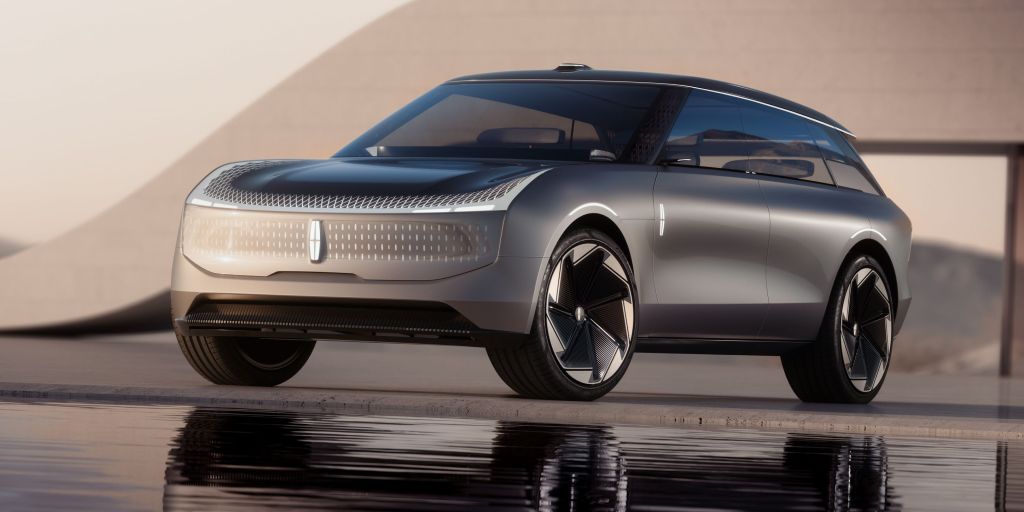
Kemal Curic Talks Lincoln Star Concept

By Gary S. Vasilash

Lincoln, like other brands, is working to redefine itself by developing electrified vehicles. One of the advantages that Lincoln has in this regard is that (1) it is the luxury brand of the Ford Motor Company, which is devoting serious resources to creating vehicles of this type so it gets a big lift from its parent company and (2) as it is a luxury brand, there is more headroom vis-à-vis pricing because let’s face it: electric vehicle technology is still expensive, so putting it in vehicles that appeal to customers (or “clients” as Lincoln people may refer to them) that can afford more is the right move.

Lincoln plans to have three electric vehicles in its showrooms by 2025. Odds are all or some will be variants on what exist there right now (which makes sense: the Nautilus actually had a 7.5% sales increase in 2021, a year that otherwise was rife with minus signs).

But Lincoln has unveiled what Kemal Curic, global design director, Lincoln, refers to as a “moonshot,” the Lincoln Star Concept.

The Lincoln Star Concept: the essence of electric luxury. (Image: Lincoln)

The “star” refers to the graphic logo that Lincoln uses. Picture the basically rectangular badge with the cross in its center more square-like and extend the arms of the cross out beyond the square with pointed ends: It then becomes something that is like a North Star image. The North Star (a.k.a., Polaris) is the brightest star in the night sky and as such has long been used as a point of navigation: the Lincoln Star Concept is the direction that Lincoln is heading toward.

What’s more, a star is about light, and if there is something striking about the Lincoln Star Concept is that whether it is on the front fascia or in the cosseting cabin, animated light is an absolute key feature.

In this edition of “Autoline After Hours” Curic talks to John McElroy and me about the Lincoln Star Concept: the whys, the hows and the wherefores, about how they are using advanced technology (e.g., using 3D metal printing to create the A- and D-pillars that have an organic form that allows the driver to have less-obstructed views), to imagine what could be in Lincoln’s future.

An interesting point that Curic makes about developing the vehicle, which is certainly applicable to other things, not just vehicles, is that they worked to subtract things, to create something more essential in the context of revealing the essence of luxury rather than obscuring it with what are superfluous features.

You can learn about this and other aspects of the Lincoln Star Concept from Kemal Curic by going here.

Cadillac Supercharges the Escalade: Seems Strange for the Company Going EV

By Gary S. Vasilash

Although Cadillac is purportedly going to be an all-EV brand by 2030, between now and then it will continue to offer things like this: the Cadillac Escalade-V.

Rory Harvey, global Cadillac vice president, says, “Customers and enthusiasts have asked for an Escalade-V, and we’re thrilled to bring this high-performance SUV to market in the year of Cadillac’s 120th anniversary.”

Supercharged, 682-hp V* is hardly the stuff of environmental awareness, is it? (Image: Cadillac)

The vehicle is powered by a supercharged 6.2-liter V8 that puts out 682 hp and 653 lb-ft of torque.

The Escalade-V, which has a starting MSRP of $149,990 (including destination), will go on sale later this summer.

As of now there are no EPA-estimated fuel economy numbers. However, the numbers for a more-typical 6.2-liter in a non-V Escalade are 14 mpg city, 19 mpg highway.

Somehow this makes any green cred that Cadillac may be interested in gaining for itself all that more difficult.

Still, they have to somehow pay for the development costs of the EVs. . . .

It is worth noting (although those paying +$150K may not care) that premium is required for the V engine. According to AAA, the current national average for a gallon of premium is $5.03.

So if you’re filling the tank of the Escalade-V it would set you back $120.72.

Electric Vehicle Market in the U.S.: EVs Gaining Traction

By Gary S. Vasilash

Last week Stellantis announced a $2.8-billion investment in Canada. Investment will be made in the Windsor Assembly Plant to set it up to produce a new multi-energy vehicle architecture. . .with one of the energies being electricity.

There will be spending at the Brampton Assembly Plant—currently the home of the Dodge Charger and Challenger (and Chrysler 300)—where a vehicles based on a new architecture will be produced starting in 2025. An electrified architecture.

And there will be some spent on expanding a battery lab.

In ordinary times, $2.8 billion would be the stuff of amazement.

But now it is basically table stakes as automakers build new factories or transform old ones for electric vehicle production. As well as making investments related to battery development and production.

GM has announced it is investing $35-billion by 2025 for electric vehicles.

Ford has announced that it will be spending $50-bilion through 2026 for the same.

S&P Global Mobility, according to principal automotive analyst Stephanie Brinley, anticipates that sales of electric vehicles in the U.S. will be on the order of 35.7% of the market by 2030.

In 2021 that number was about 4%. So within the next eight years there will need to be a rise of about nine times where they are now.

But according to Brinley and Mike Jackson, executive director of strategy and research for the Original Equipment Suppliers Association (OESA), it seems highly likely that this will be the case.

The how and why this will occur are discussed on this edition of “Autoline After Hour,” where Brinley and Jackson talk to “Autoline’s” John McElroy and me.

And you can see it all here.

Racing & Electricity

By Gary S. Vasilash

In 1901, a year after the Detroit Automobile Company failed, Henry Ford looked for a way to attract investors for his next corporate endeavor for car manufacture.

Ford said, “I never thought anything of racing, but the public refused to consider the automobile in any light other than a fast toy.”

So he went racing.

On October 10, 1901 Henry won the race held at the Grosse Pointe Race Track.

Ford won the race.

And retired from racing.

In 1903 he obtained the financial backing he needed to establish the Ford Motor Company.

And you know the rest.

Motor sports has been part and parcel of the development of automotive technologies. Things are tested on the track that then—assuming that (1) they work and (2) are applicable—make their way to consumer products.

Vehicle manufacturers sometimes embed engineers on race teams not only for the technology part of the undertaking but in order to get them to understand the mindset of doing things quickly.

Nowadays it seems that there isn’t any weekend during the year where there isn’t a car race going on somewhere in the world.

The noise. The smell of petroleum products and burnt rubber. The crowds.

It is really quite a phenomenon, and while The Indianapolis 500 calls itself “The Greatest Spectacle in Racing,” that is clearly nothing more than a matter of degree because even races at a dirt track in the middle of nowhere is in itself something of a spectacle.

But now the industry is undergoing a change to electric vehicles. And while there is a sanctioned series—Formula E—there is nothing like the expanse of gasoline-powered racing.

A question is will there ever be? And if there is, will those who are enthusiastic fans of motorsports that have come to be known over the past 120 years be at all interested.

So on this edition of “Autoline After Hours” we talk about it with car racer and automotive critic for the Detroit News, Henry Payne, and muscle car enthusiast Mike Musto of Hemmings.

And it seems as though the answer is. . .probably not.

You can judge for yourself by watching it here.

Ford & Tesla: Go Figure

By Gary S. Vasilash

Jim Farley, Ford CEO, said to the assembled audience on hand for the production launch of the all-electric F-150 Lightning on April 26, “We plan to challenge Tesla and all comers to become the top EV maker in the world.

“That’s something that no one would have believed just two years ago from us. They’re going to look at this truck and believe it.”

That’s something I have a hard time believing right now.

Not that Ford doesn’t have a shot at becoming the lead EV builder at some unspecified time in the future. It probably will. Electric pickups and full-size crossovers will undoubtedly roll out of its dealerships in huge numbers one Ford has them.

But that a company that has pretty much been synonymous with “auto industry”–as it was established in 1903 and has had factories churning out cars, trucks and crossovers the world over for more than a century–uses Tesla as the point of comparison.

This is not to diminish the accomplishments of Tesla in any way. In 2021 it delivered more than 936,000 the world over.

While Tesla doesn’t break out its numbers by country, Cox Automotive estimates that the U.S. sales of its vehicles were 352,471 in 2021.

Ford had one EV in 2021, the Mustang Mach-E. It sold 27,140.

It’s not like Tesla just started selling cars last year. It has been on the market for more than 10.

Yes, it started out small.

And so was ignored by the traditional OEMs like Ford.

But Team Tesla kept at it and the traditional OEMs kept doing what they were doing by and large their efforts toward producing EVs were simply to meet regulations, not customers.

Now these companies (and know that it isn’t just Ford and GM, but even other stalwarts like Mercedes and BMW) have recognized that not only is Tesla selling a lot of vehicles, but that customers really want them, which is a good characteristic for products to have in a market.

It is sad that Farley (yes, he gets something of a pass as he didn’t become Ford CEO until October 2020) has to compare what the Ford Motor Company will do with Tesla.

One would like to think that the company founded by a guy who was certainly more advanced than many of his contemporaries would be the one other companies would be comparing themselves to, not Tesla.

Buying Electric Pickups

People buy a lot of trucks. According to NADA, in 2021 U.S. light truck sales (admittedly not all vehicles with cargo boxes on the back, as SUVs make it into this space) accounted for 77.6% of all light-duty vehicles moved off of dealer lots.

With the transition toward electrification, OEMs have undoubtedly taken this into account. So whether it is a traditional OEM like Ford and the now-in-volume-production F-150 Lightning or a startup like Rivian and its R1T, electric pickups are rolling out and there are more to come.

Cox Automotive has done some interesting research on potential purchasers of electric pickups.

Looking at those who currently own gas-powered trucks, they found that when it comes to what they are likely to buy next, 50% said they’d stick with gas-powered trucks. 37% said electrified (hybrids or full battery electric). And 14% will consider both.

What’s good news for the OEMs is that only 36% of buyers under age 35 would consider just gas-power, so the future looks better because the OEMs are putting a big bet on the future. 53% of those older than 35 say they’ll be sticking with gasoline. The first group will be buying more vehicles than the latter.

One finding puts the why-buy into perspective for pickups.

While some might imagine that the trucks are mainly for vocational use, turns out that only 12% of those who are considering an electrified for truck say they are doing so because they need it for work.

And 45% say they need it for their hobbies/interests.

What Comes After RX?

By Gary S. Vasilash

Lexus has revealed the 2023 RZ 450e, the brand’s first electric vehicle. Like the RX—which it undoubtedly hopes the RZ will follow in the tire treads of—it is a crossover.

(The RX isn’t going anywhere, of course. It continues to be the linchpin of Lexus. In Q1 in the U.S. Lexus sold 64,365 vehicles, of which 26,795 were RXes.)

Lexus plans to have an electric version of all types of its vehicles by 2030 and to have full EV sales on a global basis by 2035.

So the RZ is the start of what promises to be an unfurling ribbon of new products powered by electricity.

Driven

One of the things that Lexus is touting for the vehicle is the DIRECT4 all-wheel drive system that basically distributes torque based on factors including speed, acceleration and steering angle. The distribution ranges from 100% to the front to 100% to the rear depending on conditions.

This is what the steering wheel of the future (as in late 2022) will look like: Inside the Lexus RZ 450 e. (Image: Lexus)

The vehicle has motors on both the front (201 hp) and rear (107 hp) axles (for a total of 308 hp). Cleverly, so as to keep things going smoothly even should someone mash the accelerator, there is a front-to-rear drive force ratio distribution between 60:40 and 40:60– there is said to be a linear feel as a result.

Also in this smoothness realm is the use of Frequency Reactive Dampers that work to adjust the force on the extension stroke so as to provide handling and comfort. (The objective is to create a drivable vehicle for those who like to imagine that they’re piloting the vehicle [which could go to the point of the available rectangular steering wheel, which looks like it could be in a flight deck] as well as for those who buy a luxury vehicle because they want to feel cossetted.)

And while on the subject of steering, know that there is a steer-by-wire system deployed and the steering control is setup so that the need for hand-over-hand steering movements is minimized. (One thing the shape of the geometric steering device does: maximizes visibility of the control panel.)

As an EV, there is the key question regarding range. The vehicle has a 71.4-kWh battery and it will provide an estimated range of 225 miles.

The RZ 450e will be available late this year.