HORSE and EREVs

Extended range electric vehicles are just the thing for engine manufacturers. . .

By Gary S. Vasilash

Not only is there an array of electric vehicles of all sizes and price points rolling out of Chinese factories, another type of “New Energy Vehicle,” the Chinese government’s term for things that are electrified, that is also proliferating is the extended range electric vehicle (EREV).

Essentially an EREV is like a plug-in hybrid. It uses an internal combustion engine, electric motor and battery. The engine doesn’t turn the wheels, the electric motor does. The engine performs as a generator, adding power to the battery.

If you’re in a company that produces internal combustion engines then hybrids—including EREVs—are ideal because they require what you’re producing, unlike a full battery electric vehicle that sees engines as nothing more than tech that has passed its sell-by date.

HORSE is a company that makes engines. It used to be the powertrain operations of Renault Group. A decision was made to hew it off from the company.

And Geely, the Chinese OEM that is making EVs, EREVs, and other electrified vehicle variants, invested in HORSE.

Renault owns 45%. Geely owns 45%.

The remaining 10%

Aramco. Yes, the petroleum company.

EVs don’t need liquid fuels. Things with engines do.

HORSE is working with Marcopolo, the largest bus manufacturer in South America, and WEG, a Brazilian manufacturer of electronics.
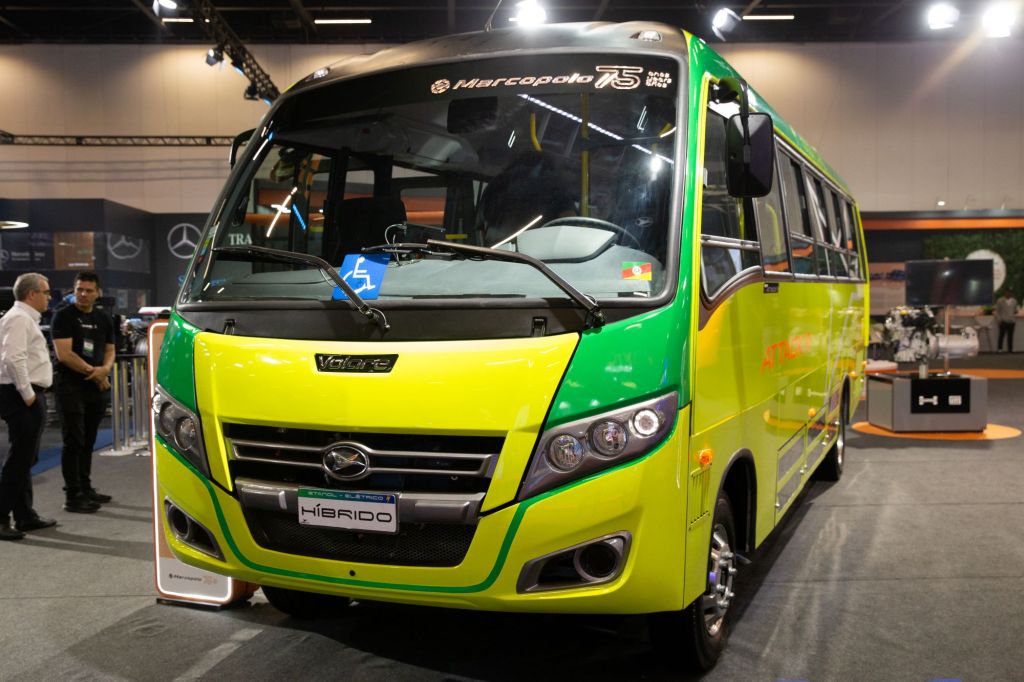
The Volare Attack 9 microbus for the South American market is powered by a range extender (a.k.a., internal combustion engine that operates like a generator). (Image: HORSE)

They’ve developed the Volare Attack 9 microbus.

It is an EREV. And its engine will be powered by bioethanol. It’s a 85-kW turbo 1.0-litre, three-cylinder.

The bus, which is to become available in 2026, will have a range of 280 miles.

Certainly a good thing for a microbus.

Patrice Haettel, Chief Executive Officer at HORSE, said: “We hope this will be the start of what will be a range of sustainable solutions using this technology to debut in the region and beyond.”

Yes, more range extenders.

Presumably Geely’s EREV expertise has more than a little to do with the powertrain in the Volare Attack 9.

And the propulsion system makes a lot of sense for those who are not ready to fully embrace electric vehicles or for whom EVs simply don’t make sense.

EREVs in the U.S.?

Wait until next year. Ram will bring out the Ram 1500 Ramcharger to kick things off.

Seems curious how traditional OEMs are lagging in what is likely to become an ever-more important space.

Isn’t smart Small?

Once small. Not anymore.

By Gary S. Vasilash

When it was first launched in October 1998 the smart Fortwo was small. 2,540 mm (yes, millimeters) long and with a 1,810-mm wheelbase. The name of the car explained the number of people who could fit.

But with time there has been significant inflation.

Speaking of the vehicles offered by the company that is a joint venture between Geely and Mercedes, that is.

(Mercedes designs what are now EV-only models from the marque; Geely does all of the development and engineering.)

And now this. . .

smart has introduced a new model, the #5, a mid-size SUV.

The smart #5. The once innovative purveyor of small city cars is now producing mid-size SUVs like every other company. (Image: smart)

It is 4,705 mm long and has a 2,900-mm wheelbase.

Or nearly twice as long as the original smart.

That increased size is handy in one regard—if you plan to sleep in the #5.

According to smart, the seats can be folded so that there is the ability to create a “king-size, queen-size or single mode sleeping space.”

The #5, which has a range of 740 km (460 miles)—on the China Light Duty Vehicle Test Cycle—could be the ideal choice for Uber drivers who essentially live in their cars.

Given that with the exception of things that have undergone shrinkflation increased size seems to be desirable, perhaps a larger smart is a smart idea. (The necessity of another midsize SUV, however. . .)

Volvo, Polestar & Geely: Adjustments Being Made

By Gary S. Vasilash

Volvo Cars CEO Jim Rowan said on CNBC this morning about Polestar, the EV brand that it has some 44% of the shares of:

“They’ve have got a very exciting future ahead of them, they’ve moved from being a one-car company to a three-car company, they’ve got two brand-new cars coming out very shortly, in fact in the first half of this year, and that’s going to take them to a new growth trajectory.”

Sounds good, right?

But then there’s the fact that the reason Rowan was interviewed on CNBC is because Volvo Cars has announced it is going to reduce its holdings in Polestar.

Volvo Cars and Geely Holding essentially own Polestar.

In a press release from Polestar it says, in part,

“Volvo Cars is evaluating a potential adjustment to its shareholding in Polestar including a distribution of shares to its shareholders, with Geely Sweden Holding being the primary recipient. Volvo Cars will remain a strategic partner in areas across R&D, manufacturing, after sales and commercial.”

Which one could read as:

Geely China and Geely Sweden are going to own the majority of Polestar. So it is Geely, pure and straightforward.

Given that Geely owns Volvo Cars, there are probably just some bookkeeping adjustments being performed in Hangzhou. In Gothenburg the books are getting some line items removed so there can be an increased focus on its vehicles.

One wonders: Is this a further sign that the EV slowdown is having some consequences, especially on new OEMs trying to grow up?

The Return of the Minivan?

By Gary S. Vasilash

Since the start of the contemporary minivan with the Chrysler Voyager, Dodge Caravan and the Plymouth Voyager in November 1983, that type of vehicle has had its ups and downs in the market. Mainly downs after the notion that it was a vehicle for “soccer moms.” One can imagine that when that meme was established Landon Donovan’s or Mia Hamm’s mothers probably didn’t want to be seen in one.

But from a packaging point of view, it is hard to think of anything better than the configuration of the minivan.

Perhaps the forthcoming VW ID.Buzz electric minivan will change the perceptions of what a minivan is.

In other parts of the world, there is nothing diminutive (i.e., “mini”) about the boxy vehicles (no matter what aero effects are deployed, let’s admit it: these are shaped more like shoeboxes than Stingrays).

Elsewhere they are called “MPVs,” or “multi-purpose vehicles.”

The purposes seem to be carrying people and stuff, so there isn’t a whole lot of multi about them.

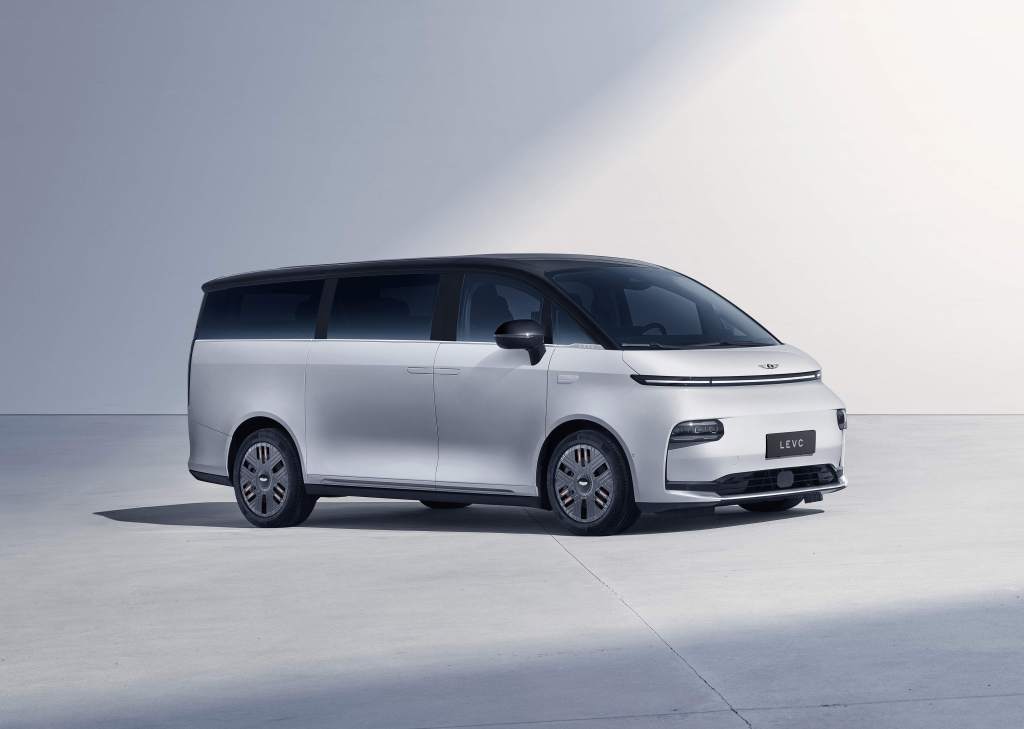
The L380, electric MPV. (Image: LEVC)

LEVC—the London Electric Vehicle Company, the firm that produces the TX, the hybrid-electric (it has a range extender) black cab that is rolling through the streets of London and elsewhere—is extending its transport offerings by putting into pilot production in a plant in Yiwu, China, the L380, a fully electric MPV.

Alex Nan, LEVC CEO, described the vehicle as “the next step forward in the company’s globalization strategy, as we rapidly accelerate our transition from manufacturing the world’s most advanced and iconic taxi, to becoming a leading e-mobility technology company.”

LEVC is a Geely Holding Group company. Which means it is related to Volvo and Polestar, Lotus and Lynk & Co., and others.

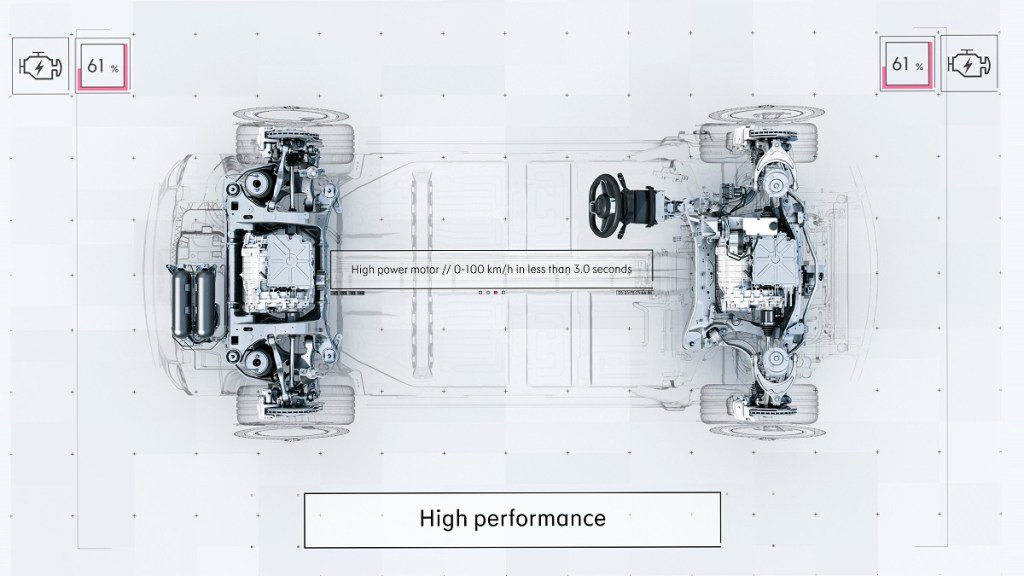
The L380 is based on the Geely Space Oriented Architecture (SOA), which is an underpinning that can be deployed for lots of vehicles, including those that aren’t vans.

The L380 will initially launch in China and then is expected to be delivered into the U.K. in about two years.

After that. . . ?

Another Volvo Move Toward EVs

It is shifting the structure of its traditional powertrain business to achieve more resources for EVs

By Gary S. Vasilash

Admittedly this is sort of confusing. Volvo Cars is owned by Geely Holding. The two companies have announced that they are creating a joint venture, Aurobay, which will be dedicated to powertrain operations.

Volvo Cars will wrap in the assets from Powertrain Engineering Sweden, which includes an engine plant in Skövde, Sweden, another engine plant in China, a R&D team, and other powertrain items.

The purpose of the creation of Aurobay is said to be to allow Volvo Cars to focus on developing electric vehicles. Volvo has announced it plans for 50% of its global vehicle sales to be full EVs by 2025, with the remaining half hybrids. And by 2030, all of its vehicles are to be fully powered by electricity.

The slightly confusing part about all this is if Geely owns Volvo, presumably that means it owns Volvo’s assets.

So this creation of the joint venture seems as though it is something that could have been executed by a memo from HQ.

One more thing about Aurobay: there is the potential to serve customers that aren’t Volvo or Geely.

Geely Taking to the Air in China

Let’s face it: there are plenty of traffic jams on the ground. Meanwhile, in the sky. . . .

By Gary S. Vasilash

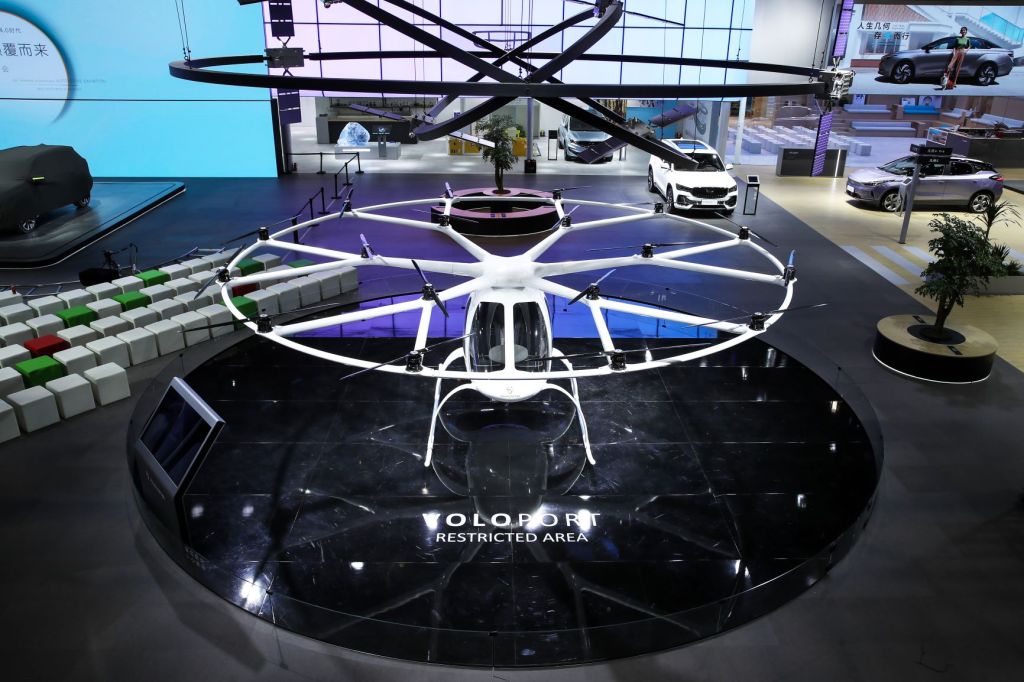
While plenty of companies, including Geely, are showing off electric vehicles at the Shanghai Auto Show, there is one vehicle that is particularly intriguing in the Geely Technology Group exhibit: the Volocopter 2X.

The Volocopter 2X in the Geely booth at the Shanghai Auto Show. (Image: Geely)

It is an electric air taxi.

The category is called “urban air mobility” (UAM).

The objective is to provide transport services, like a cab, but in the air.

Geely, which invested in Volocopter in 2019, and Volocopter have agreed to a joint venture through which they’ll be offering UAM services in China.

Said Florian Reuter, CEO of Velocopter, “Geely’s market leadership in China and forward-thinking approach to expanding mobility options make them a great strategic investor. They are an invaluable partner for bringing urban air mobility to China—one of the most promising markets for the UAM industry globally.”

The 2X is a two seater.

It has flown test flights in China, and is the model that they’ll be starting service with.

It has 18 rotors and nine exchangeable batteries, which is said to provide redundancy in case of failure during service.

Volocopter is presently working on a fifth-generation model, the VoloCity, which has a speed of 110 km/h and a flight duration of 35 minutes.

Polestar: The Green Car Company You’ve Probably Not Heard of (Yet)

Polestar is a brand that you may not be familiar with at the moment. But that is likely to change, as it is dedicated to producing electric vehicles (EVs) that combine Swedish style with performance.

Polestar was established in 2017 as an independent brand by Volvo Cars and Geely Holding. (This is a little complicated because Volvo Cars in under the Geely umbrella, so the way to think about it is that it is a company that Volvo developed and that Geely is underwriting.)

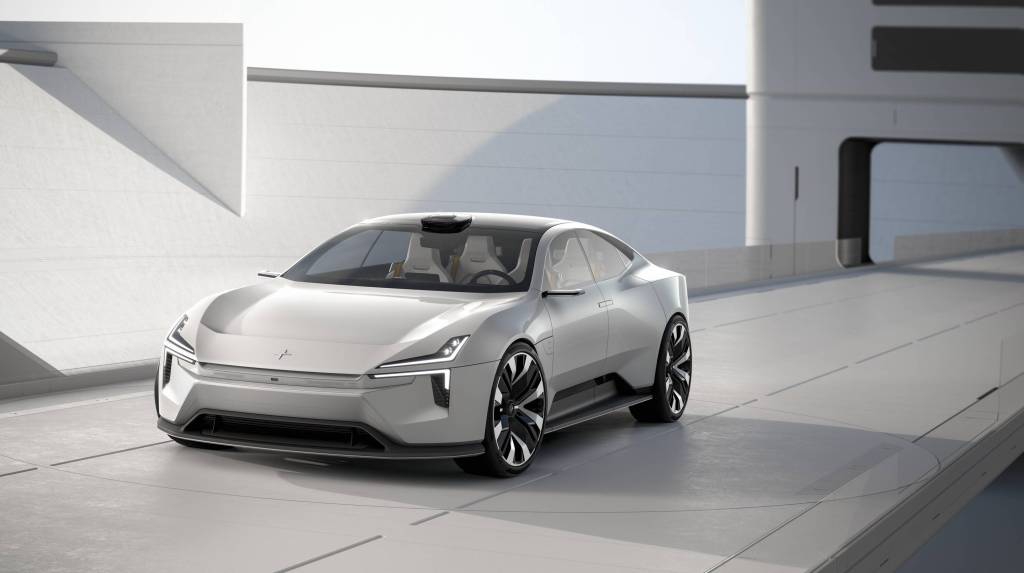
The forthcoming Polestar Precept. Stylish. Electric. (Images: Polestar)

There are presently two models, that the company has on offer, the Polestar 1, a hybrid that is exceedingly limited in production, and the Polestar 2, a 2020 model that is a high-volume sedan that offers AWD and 300 kW from the motor. There will then be the Polestar 3, an SUV, and then the Precept, a car that emphasizes three definitional aspects of the brand: sustainability, digital technology and design.

Polestar has a factory in Chengdu, China. It calls it the “Polestar Production Centre.”

Inside the Polestar factory. Yes, factory.

But there’s something interesting about what they’re doing there: operating the plant on 100% renewable electricity. Some 65% of all of the electricity powering the factory comes from hydroelectric with the balance from solar, wind and other renewables.

What’s more, there is no industrial water discharge from the plant and they are establishing a circular approach to waste handling (including carbon fiber) so as to reduce landfill demands.

The factory, designed by Norwegian architecture firm Snøhetta, has earned Gold status in the Leadership in Energy and Environmental Design (LEED) rating system, the only automobile plant in China to do so.

Said Fredrika Klarén, Head of Sustainability at Polestar, “For Polestar, sustainability is not just about the electric powertrain. It impacts everything we do. We want to promote sustainable manufacturing in China. This objective entails a relentless pursuit of circular and climate-neutral solutions, and also being a responsible employer and presence in the area.”–gsv

Baidu, Geely and a Sensible Approach

Baidu is somewhat like Google, inasmuch as it operates a search engine, by far the leading search engine in China. But there are other services as well, including maps (Google), an encyclopedia (Wikipedia) and cloud storage (AWS).

So it is fair to simply describe it as a significant tech company.

Like other tech companies, it is expanding its operations. And so it should come as no surprise that it is moving into automotive.

But it isn’t like the company just discovered the space. It has been operating Baidu USA since 2011 and has been conducting autonomous driving operations in Silicon Valley for more than five years.

In 2017 Baidu announced Apollo, the autonomous driving platform that it garnered an array of partners to participate with in on the development, partners ranging from Intel to Toyota.

It is running an autonomous taxi service in a few cities in China.

Geely SEA electric vehicle platform: EVs for everyone! (Image: Geely)

Geely Holding–parent company of brands including Volvo Cars, Lynk & Co and LEVC, and lead shareholder in Geely Auto, Proton and Lotus—and Baidu have announced the creation of a partnership for the development of highly automated electric vehicles.

Geely is going to be providing the platform—the Sustainable Experience Architecture, which it announced in September 2020 as an “open source” electric vehicle platform that it would offer to other global OEMs—and Baidu the digital horsepower.

Manufacturing vehicles is a different kind of hard than the challenges associated with developing AI systems.

It makes absolute sense that a digital company would partner with a hardware manufacturer—in this case, the hardware being a vehicle, not a smartphone.

In a market where there are some 21-million passenger vehicles sold per year, where there is a comparatively low penetration rate of vehicle ownership (on the order of 173 vehicles per 1,000 people, compared with 837 in the U.S.), even a small slice of the market is still damned large.

And neither Geely nor Baidu seems to be focused on the small.–gsv