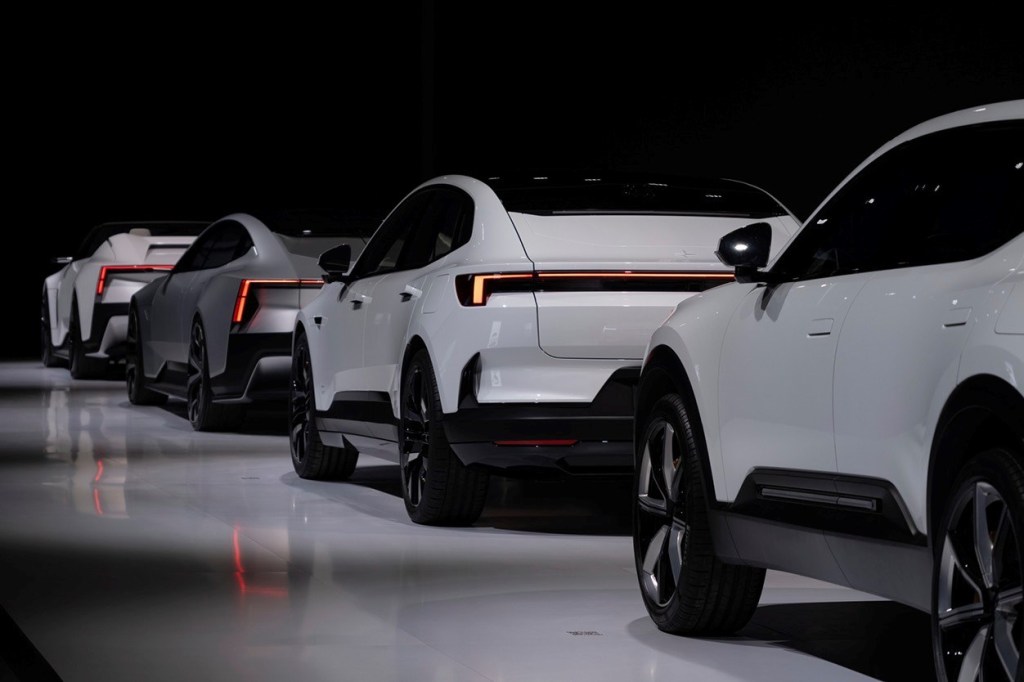
Polestar 3: Dual Motor, Pilot, Plus, Performance

(That’s a lot of Ps in that name. . )

By Gary S. Vasilash

One of the things that interests me when I am in a vehicle is the extent to which people notice it.

You may be surprised at how few vehicles garner some comment from people. The last vehicle I had that drew lots of attention was the VW ID.Buzz. And as I think about that vehicle, I realize that I’ve not seen a lot of them since.

And while that van drew attention largely because of the nostalgia factor, the Polestar 3 has no such fond memories for anyone, as it has been available in the US market only since late summer 2024.

A friend I was meeting at a restaurant came in and pointed out a window to the Polestar 3 in the lot: “Are you driving that? What is it?” The waiter stopped and looked at it, too, while listening to my explanation of how it is a brand from a company headquartered in Gothenburg, Sweden, once a sub-brand of Volvo. (This gets into organizational complexity with the bottom line essentially being that there is Volvo, owned by Geely, and there is Polestar, owned by Geely. So while the two companies are separate, they have the same parent and there is a non-trivial amount of sharing between the two siblings.)

They were both unaware of the brand.

Which is not entirely surprising. Through the third quarter 2025 Polestar has delivered 44,482 vehicles. Globally.

To put that into context, Cadillac delivered 46,525 vehicles. Domestically. In the third quarter alone.

Polestar is still a stealth brand.
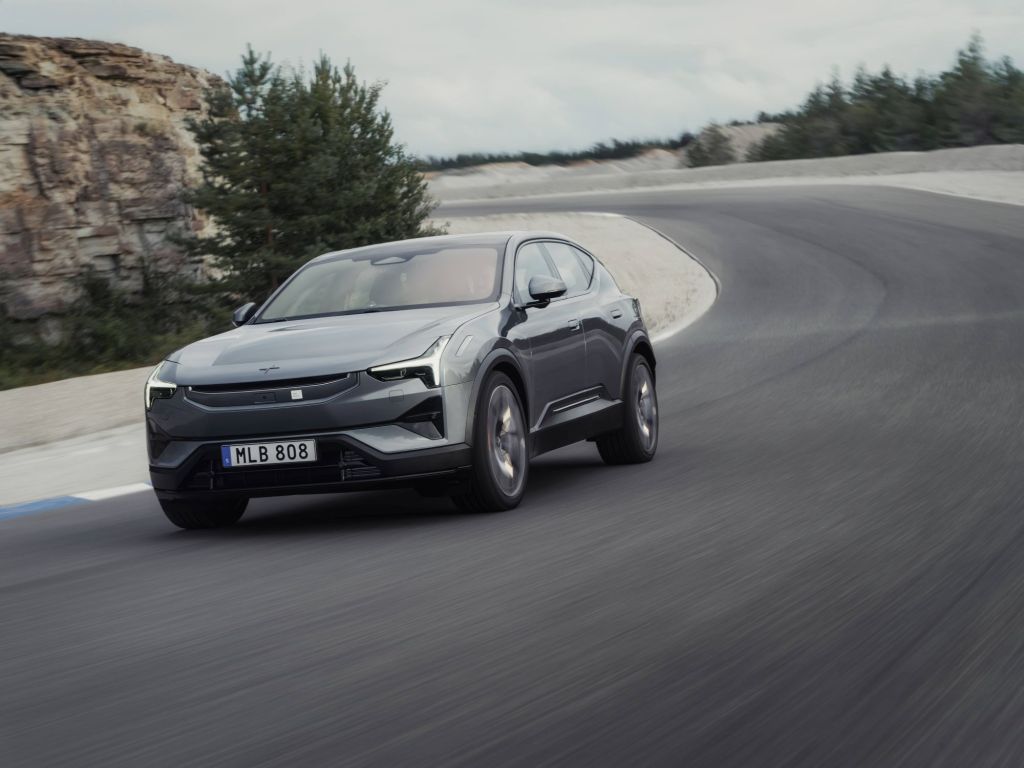
This is not particularly pricy when you realize this is a performance vehicle. (Images: Polestar)

A neighbor who was walking her dog past my house while I pulled into my driveway literally turned around and came back to talk to me about the Polestar 3, wondering what it was, saying that she liked the way it looks, both in terms of size and styling. (She is right about that.)

The not-so-good news for the folks at Polestar: She is in the market for a vehicle and is likely going to buy a Chevy Equinox. “EV?” I asked. “No. Gasoline.”

That is not-so-good on two levels.

First of all, the top trim level AWD Equinox has an MSRP, including destination, of $37,395.

The MSRP, including destination, for this AWD Polestar, which is at the top of the line, is $86,300.

Clearly, my neighbor has a good eye, even though she has a different kind of budget.

And second, of course, the Polestar 3 is an electric vehicle, not fueled with gas, which accounts for part of the difference.

And it is interesting to note that whereas that 2025 Equinox she is considering is built in the GM San Luis Potosí plant in Mexico, the Polestar 3 is assembled in Ridgeville, South Carolina (that is nominally a Volvo plant, which goes back to the previous comment about the sibs).

Without going too Volvo about this, it is worth noting that the Polestar 3 is based on the Scalable Product Architecture 2 platform, which underpins the Volvo EX90, that brand’s flagship electric vehicle.

And because it has Volvo DNA it is engineered with safety in mind, ranging from having a boron steel safety cage to an extensive list of sensor-based safety tech that facilitates accident-free driving (note: it helps; it is up to the driver and others to prevent accidents).

One interesting thing is that while model year 2025 vehicles have to have a rear seat reminder system to advise the driver to check the back seat to make sure that a child or pet is not being left behind, many of these systems are simply based on the vehicle being put in park and the alert showing up.

In the Polestar 3 there is actually interior radar that monitors the situation.

So what does one get for the not-minor amount of money.

Well, there are two electric motors that provide a combined output of 517-hp, which means this can be quick. They also provide AWD. But this power also means that the range is somewhat limited: an EPA estimate of 279 miles.

There is active air suspension. 22-inch wheels. A panoramic glass roof. Over-the-air-updates for life.

An example of the interior details that show considerable consideration was paid to the execution of the inside.

The infotainment is based on the Android Automotive OS, with Google built in. (There is wireless Apple CarPlay, too).

The interior is both comfortable and well designed, with details on things like the door trim that subtly make you know that someone spent time considering what they were doing.
Financial Experience Should Help Polestar

New CEO has CFO experience on his CV. . .

By Gary S. Vasilash

Earlier this year Polestar Automotive had a bit of difficulty with getting its annual report put together. That nearly had the EV company delisted from Nasdaq.

But it resolved that issue.

Then in July the company announced it “received notice from the Nasdaq Stock Market LLC that the Company is not currently in compliance with the $1.00 minimum bid price requirement, as set forth in Nasdaq Listing Rule 5450(a)(1).”

This means that it needs to have a closing price of at least $1 for 10 consecutive business days. (It has until January 2 to meet that requirement. Then it has the opportunity to get 180 days beyond that.)

Which is to say that it still isn’t out of the proverbial woods yet vis-a-vis Nasdaq.

Today the company announced that its original CEO, Thomas Ingeniath, has resigned, effective October 1.

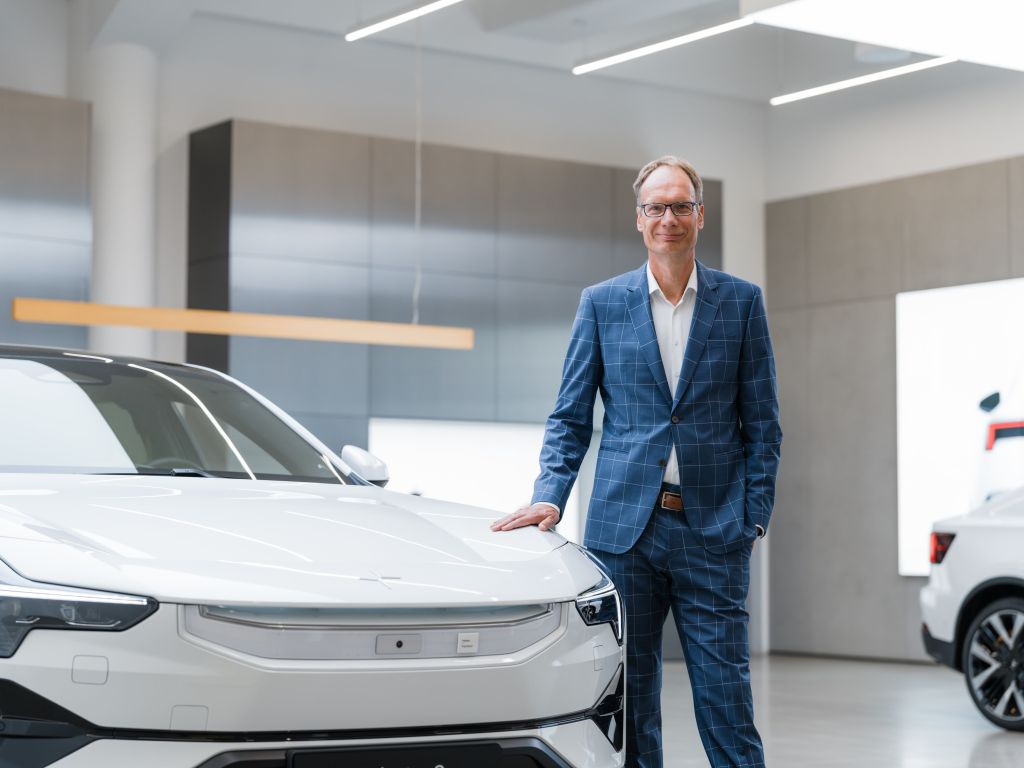
He is to be replaced by Michael Lohscheller.

Lohscheller has an extensive career in the auto industry.

Forthcoming CEO of Polestar, Michael Lohscheller. (Image: Polestar)

His resume includes being chief financial officer of Mitsubishi Motors and CFO at Volkswagen Group of America. (CFOs aren’t as flashy as CEOs or chief technology officers, but their guidance is essential to the operation of a company because at the end of the day, black ink

He was CEO of Opel.

In July 2021 he was named president of Vinfast. That lasted until late December 2021.

Next up, he went to Nikola Motor in February 2022 as president. That lasted until August 2023.

And now Polestar.

Presumably Lohscheller’s financial acumen will serve him well at Polestar.

He’ll need it.

The trying situations of his last two employers in the U.S. market should be good experience for Lohscheller.

New Design Head at Polestar

Römers understands the importance of first impressions. . .

By Gary S. Vasilash

“Polestar is the role model of a design-driven automotive company and it’s a great honor to take on the responsibility for the Design department. I’m looking forward to working with the creative team to design the next generation of Polestar cars,” said Philipp Römers, who is taking the Head of Design position at the electric vehicle company, succeeding Maximilian Missoni.

Römers is moving to the company from AUDI AG. He has been with the Volkswagen Group for the better part of his career. (He had had a stint at Ford.)

Born in Cologne in 1979, Römers studied transportation design at Pforzheim University.

He started at Volkswagen in 2005, where he designed exteriors for models including the Golf 7 and the Passat B8.

Philipp Römers, new head of Design at Polestar. (Image: Audi).

Then he moved from Wolfsburg to Ingolstadt in 2014, where he led teams developing the Audi A3, A6 and Q8.

And undoubtedly his work in the Audi e-tron and the e-tron GT, both electric, will serve him well in his position at Polestar.

While at Audi Römers  said:

“The very first thing that people who are interested come into contact with is still the exterior. It has to arise desire. Ultimately, the first impression is decisive with respect to whether someone stays or just walks away, zooms in on their screen or quickly keeps browsing. Ideally, aesthetic form and function are combined.”

That approach should serve him well at Polestar.

Volvo, Polestar & Geely: Adjustments Being Made

By Gary S. Vasilash

Volvo Cars CEO Jim Rowan said on CNBC this morning about Polestar, the EV brand that it has some 44% of the shares of:

“They’ve have got a very exciting future ahead of them, they’ve moved from being a one-car company to a three-car company, they’ve got two brand-new cars coming out very shortly, in fact in the first half of this year, and that’s going to take them to a new growth trajectory.”

Sounds good, right?

But then there’s the fact that the reason Rowan was interviewed on CNBC is because Volvo Cars has announced it is going to reduce its holdings in Polestar.

Volvo Cars and Geely Holding essentially own Polestar.

In a press release from Polestar it says, in part,

“Volvo Cars is evaluating a potential adjustment to its shareholding in Polestar including a distribution of shares to its shareholders, with Geely Sweden Holding being the primary recipient. Volvo Cars will remain a strategic partner in areas across R&D, manufacturing, after sales and commercial.”

Which one could read as:

Geely China and Geely Sweden are going to own the majority of Polestar. So it is Geely, pure and straightforward.

Given that Geely owns Volvo Cars, there are probably just some bookkeeping adjustments being performed in Hangzhou. In Gothenburg the books are getting some line items removed so there can be an increased focus on its vehicles.

One wonders: Is this a further sign that the EV slowdown is having some consequences, especially on new OEMs trying to grow up?

Polestar Says It Out Loud

By Gary S. Vasilash

Polestar is an electric vehicle company that, in effect, spun out of Volvo, but Volvo is owned by Geely, but is traded on NASDAQ (as PSNY), so let’s not even try to sort out where the Gothenburg, Sweden-headquartered company exists. (It has announced it will build the forthcoming Polestar 3 in a plant in South Carolina next year. . .the Volvo plant in South Carolina.)

Anyway, yesterday as part of its Q3 earnings presentation it announced a “strengthened business plan.”

Which is notable because the company has stated it is going to put margins ahead of volume.

(Image: Polestar)

Thomas Ingenlath, Polestar CEO, stated, “Margin over volume is our way forward, supported by a gorgeous line-up of four exclusive performance cars.”

Meaning that Polestar is going to focus on the premium end of the EV market.

It figures that as of 2025, when it has four models in production, it will have an annual volume of 155,000 to 165,000 cars, which in and of itself is a rather small number and is smaller when you take into account it is selling globally.

Consider This

According to Kelley Blue Book, in September the average transaction price of a luxury vehicle in the U.S. was $62,342, down 6.2% from September 2022.

Here’s the key to that: “Luxury price declines in 2023 are primarily driven by aggressive price cuts at Tesla, the luxury market leader.” The Model 3 price was down 26% compared to the previous year.

And in the EV space, the average transaction price in September was $50,683, or down about 22% from the previous year “led again by market leader Tesla.”

(Tesla, because of its margins, is really the only OEM that can build mass volumes of EVs and afford to cut its prices.)

The point is, the EV market in the U.S. is pretty much a premium market.

And in the U.S., EVs are pretty much a premium proposition.

When Chevy announced the Equinox EV it made much of the fact that it was going to be a $30,000 vehicle, but it covered itself with “about” and announced a starting price of $34,995. While that is below the average price of an EV, what are the odds there will be many $35,000 Equinox EVs available?

When Chevy announced the Silverado EV work truck earlier this year, pricing was to be just below $40,000, but as reality set in, the price is now above $70,000.

EVs are an expensive proposition.

Let’s face it: until there is some massive change in battery technology (batteries are where most of the cost of an EV is found), the EV market is going to be characterized by prices higher than the ICE market—KBB found that the average transaction price for compact cars in September was below $30,000.

Credit to Polestar for saying it is going to put its profit ahead of volume, something other OEM execs don’t seem to want to say out loud.

Your Polestar 3 Is Watching You

By Gary S. Vasilash

Polestar essentially spun out of Volvo, and if there is one thing that Volvo is associated with is safety. And that came along for the proverbial ride to Polestar.

To that end, Polestar has announced the Polestar 3 EV SUV will be equipped with “two closed-loop premium driver monitoring cameras” and associated software.

The gear is coming from a company named “SmartEye,” which characterizes itself as “the global leader in Human Insight AI, technology that supports and predicts human behaviour in complex environments.”

Or in this case, the Polestar 3.

Polestar 3 (Image: Polestar)

The cameras will track the driver’s head, eye and eyelid movements. Should it appear that the driver is distracted or becoming sleepy, the system detects the situation and then sounds an alert or possibly actives an emergency stop function.

The Polestar 3 has an NVIDIA-based centralized computer that performs the processing for that as well as other driver-assistance systems. Which basically means it is smart.

Thomas Ingenlath, Polestar CEO, says, “This technology addresses some of the main reasons behind fatal accidents and can help save lives by prompting the driver to refocus attention on the road – and can initiate preventive action when they don’t, or can’t.”

While this is undoubtedly laudable technology, it does seem somewhat strange to think that your car is keeping an eye on you.

A Microsmile from Polestar

By Gary S. Vasilash

One of the things that start-up companies have the opportunity to do–if they’re simply not hell-bent on doing whatever it is that they think they are supposed to be doing and so suck all of the enjoyment out of their endeavors–is to be a bit whimsical, to do things that are related to their business but not simply the same thing with a dab of red paint to somehow make it seem more “creative.”

EV startup Polestar held a design contest last year.*

Kristian Talvitie, a Finnish designer, received an honorable mention.

KOJA by Polestar. No wheels. No motor. A tree house. (Image: Polestar)

That said, Talvitie’s design for a microspace tree house was built full scale by Polestar designers, Talvitie and personnel from Finnish design agency Ultra.

The KOJA has been installed at the Fiskars Village Art & Design Biennale in southwestern Finland.

Polestar builds vehicles, not tree houses that are positioned just below the tree canopy for high visibility of the wilderness.

Maximilian Missoni, head of Design at Polestar, said, “We were fascinated by the idea and how it translates our brand values [e.g., accessibility, sustainability] into a different environment.”

Yes, that. And probably because they wanted to have a little fun.

*It is also holding one this year. Designers love designs even of things that they’re not paid to design.

Hertz Getting More EVs: Good for Them. Tricky for Renters.

The Polestar 2, when plugged into a DC fast charger, can go from 10 to 80% of charge in 33 minutes. If using a Level 2 charger, it is about eight hours to get to 100%.

Imagine the clock running. . . .

Rental car company Hertz and Polestar have announced that during the next five years the vehicle manufacturer will be selling Hertz some 65,000 vehicles, starting with the Polestar 2.

Hertz announced in October 2021 that it would be sourcing 100,000 Model 3s from Tesla.

Clearly the company is making a commitment to electric vehicles.

The company reported that in Q4 2021 it had a total of 470,900 vehicles, of which 384,492 are in the Americas.

Here’s the thing: Whether it is someone who has rented a vehicle for making business calls or who has one for a family vacation, isn’t is almost always the case that in order to avoid paying exceedingly high refueling rates there is a last-minute run to a gas station before dropping the vehicle off, even if that station is one of those that is on the edge of the airport and so has comparatively high per-gallon prices?

Further, isn’t it almost always the situation—vocational or avocational—that people are running to the edge of the time schedule for the flight departure? (Let’s not even go to the baggage check and the TSA process.)

Imagine the clock running. . . .

How are EVs going to work out for those people?

Probably not very well.

Polestar 2 Gets a Full-Blown Browser

By Gary S. Vasilash

According to statcounter, as of November, when it comes to browsers, Chrome has 66.35% of the global market. Then there is a drop WAY DOWN to 9.82%, Safari. So as you can imagine, the rest are below that.

One browser I’d not heard of is Vivaldi. According to the company, “Vivaldi launched in 2015 to make up for the loss of features in other browsers.” And it acknowledges that it is based on the Chromium engine.

Presumably, that makes it part of those Chrome stats.

Be that as it may, the browser is of interest because Polestar has released it for the Polestar 2. The deployment is described as a “full-scale web browser” that allows users “to browse the web as they might on their mobile devices.”

Said Jon Stephenson von Tetzchner, CEO at Vivaldi, “We are really proud to introduce our browser to a car for the first time, and specifically with a brand like Polestar. Our technological and sustainability ambitions are well aligned. We value transparency, privacy and responsible innovation – including the fact that we have our servers in Iceland, one of Polestar’s newest markets. Like Polestar, we are a challenger brand, and we take a Scandinavian approach to design, that is based on trust and listening to our users.” Vivaldi is based in Norway.

The browser can be accessed through the vehicle’s 11-inch screen. It features a built-in ad blocker, privacy-friendly translation tool, notes function, tracking protection and encrypted sync functionality.

It is worth noting that the browser can only be used when parked. Files can be downloaded when parked. And if there is streaming and driving commences, it will be audio only.

In addition to sustainability, safety is another important item on the Polestar agenda.

EVs Can Be More Green

Assuming you’re concerned with your carbon footprint

By Gary S. Vasilash

Polestar, the growing EV brand, is running life cycle assessments of putting its vehicles on the road, from start to finish.

One of the areas of focus is on the materials and manufacturing. They can deal with the carbon footprint there.

But then the vehicle goes into the hands of consumers.

And then they reach the end of their usefulness and are recycled (good) or scrapped (bad).

Polestar has expanded its focus to the vehicle-in-use stage. To that end it is working with a Dutch solar designer, Marjan van Aubel, working on increasing the amount of vehicle charging that is being performed via renewable sources.

Van Aubel: “There still needs to be significant integration. Solar energy only accounts for a small percentage of the electricity in the European grid, and just 34% of the energy we use comes from renewable resources. But together, we’re expanding the possibilities of generating energy from wind, water and solar sources. Designers are coming up with completely new ideas, too. They are proof that we are well on our way to creating a fully renewable energy grid and truly sustainable electric mobility.”

Here’s something to consider: In the U.S. solar adds 3.3% to the grid.

The importance of renewables in charging an EV: Polestar has determined that by using renewable electricity the carbon footprint of an in-use EV can be cut in half.

Non-trivial.