Lidar Explained

You’ve probably heard reference to “lidar.” Here’s where you can get a quick tutorial

By Gary S. Vasilash

Elon Musk once famously said, “Lidar is a fool’s errand.”

And it went downhill from there.

What was he talking about?

A sensor that uses laser beams.

The sensor sends out pulsed light waves from as many as 128 individual lasers (at an eye-safe frequency, so you need not worry about being blinded by a vehicle coming at you with lidar engaged). The waves hit something and bounce back. The time is calculated (send, hit, return). And the information is used to generate a 3D map of the environment. Realize that there is a lot going on here: this beam bouncing is taking place at a rate of millions of times per second.

Using lasers for sensing. (Image: Velodyne Lidar)

The whole purpose of this is to enhance a vehicle’s ability to be able to provide safer driving—for the people within the vehicle as well as others, be they in other vehicles or on foot. And it can also contribute to self-driving vehicles, with the sensor or sensors (there are some lidar devices that have a 360° view so conceivably only one would be needed on the roof of a vehicle to “see” what’s going on; there are some devices that have more limited view, say 120°, so there would be multiples installed) providing input so that the vehicle can perform accordingly.

3D lidar was invented by David Hall in 2005. He had established a company in 1983 to produce audio subwoofers. What was then Velodyne Acoustics has become Velodyne Lidar.

And on this edition of “Autoline After Hours” Mircea Gradu, Velodyne senior vice president of Product and Quality, provides an explanation of lidar—the how, why, where and when of the technology.

One of the things that he really emphasizes in his comments is the importance of lidar when it comes to safety.

He points out, for example, that most vehicle-pedestrian accidents occur after dark. In 2018 76% of pedestrian crash fatalities in the U.S. occurred at night.

Lidar can “see” in the dark. Camera-radar based system don’t have the same level of capabilities. So so far as Velodyne is concerned, any advanced driver assistance system (ADAS) really needs to have lidar sensors as part of its sensing suite. Assuming that the vehicles are going to travel at night.

While Gradu is, not surprisingly, a bit proponent of lidar, he also acknowledges that there needs to be sensor fusion–the use more than just one or two types of sensors. After all, the subject is safety, and who wants to stint?

Gradu talks with Alexa St. John of Automotive News, “Autoline’s” John McElroy and me.

Then during the second half of the show the three of us discuss a number of topics, including the semiconductor shortage and potential solutions, whether companies like GM are putting billions of dollars at risk when they invest heavily in electric vehicles and more.

And you can watch the show right here.

Toronto Nixes E-Scooters

Isn’t it a requirement for a major metropolis to have piles of two wheelers on the main shopping streets?

By Gary S. Vasilash

One of the characteristics of major cities is, in addition to pigeons, e-scooters.

Both are seemingly everywhere. One has a use case that isn’t associated with pecking at breadcrumbs.

So it is somewhat interesting to note that the City of Toronto is opting out of a e-scooter pilot program that is running in the province of Ontario and was established in January 2020.

According to a story by CTV News Toronto, the Accessibility for Ontarians with Disabilities Act Alliance (AODA) had spoken out against scooters, maintaining they presented safety hazards, “especially for people living with disabilities and seniors, when encountering them illegally operating on sidewalks.”

Which leads one to question whether it is the means of transportation or the fact that they are sometimes being operated in an unsafe and possibly illegal manner.

Two e-scooter operators, Lime and Bird, engaged a research firm, Nanos, to check into how Torontonians feel about e-scooters. The survey was conducted between April 14 and 16.

The results show that overall, when asked “Do you support, somewhat support, somewhat oppose or oppose Toronto creating a shared micro mobility pilot with shared e-scooters this year in Toronto,” 35% support, 35% somewhat support, 9% oppose, 9% somewhat oppose, and 12% are unsure.

Even if the 12% goes to the naysayers, that combined number is 30%, which is less than either of the supportive groups alone.

No word on the pigeons’ position.

BMW Virtual Art Car

No word on whether an NFT is involved

By Gary S. Vasilash

BMW has long been a leader in supporting artists through providing them with a highly visible canvas: a BMW vehicle. So there have been “BMW Art Cars” painted by John Baldessari, Alexander Calder, Jeff Koons, Andy Warhol, etc.

BMW has been doing this for 50 years.

The OEM has contracted with Nathan Shipley, director of creative technology at Goodby, Silverstein & Partners, and Gary Yeh, founder of artDrunk, to create “The Ultimate AI Masterpiece.”

The BMW “Ultimate AI Masterpiece,” based on an 8 Series. (Image: BMW)

On a simple level, they used a system based on an NVIDIA StyleGAN AI model to scan over 50,000 artworks over a 900-year period. They added in not only the artists who had done Art Cars, but also works from emerging artists.

And the result was projection mapped onto a BMW 8 Series Gran Coupe. Or at least a virtual rendition of one.

Said Shipley: “AI is an emerging medium of creative expression. It’s a fascinating space where art meets algorithm. Combining the historical works with the curated modern works and projecting the evolving images onto the 8 Series Gran Coupe serves a direct nod to BMW’s history of uniting automobiles, art, and technology.”

That said, somehow the actual artists doing work on actual cars seems like more of an execution of creative expression than running an algorithm.

Playing Pool Bugatti Style

Who doesn’t need a carbon-fiber pool table?

By Gary S. Vasilash

Let’s face it: Sometimes driving that Bugatti Chiron becomes something of a bore, so it is time to, say, climb on board the yacht for a bit.

But at some point gazing at the Amalfi Coastline becomes tedious.

So it is time to go below to partake in a bit of pool.

Pool, anyone? (Image: Bugatti)

And the Bugatti Lifestyle collection has you covered with the “Bugatti Pool Table.”

It isn’t produced by Bugatti but a firm named IXO.

According to Pedro Sanchez, general manager of the firm, “When we started developing the Bugatti Pool Table project, we knew we had to be different and excel in all arears in order to be extraordinary. At IXO, good is never enough.”

He goes on, but you get it.

There will be a total of 30 tables—all with a carbon fiber finish and a machined aluminum and titanium frame—will be produced. Five this year.

This brings us back to the ship: There is an available servo-driven system that will adjust the legs of the table predicated on a gyroscopic sensor so if there is a bit of a swell, within five milliseconds the table is flat.

All in a day’s recreation.

How Many EV Chargers in the U.S.?

If you live in California, there is a reasonably large number. Of course, there is also a reasonably large number of electric vehicles. Chicken or egg?

By Gary S. Vasilash

According to the U.S. Department of Energy, there are now 25 states that have at least 1,000 non-residential electric vehicle charging units. This means that if you had an electrician come over to your garage and wired it up for a Level 2 charger, it doesn’t count.

Yet for some reason, public and private chargers are counted.

No surprise that California has the most. 36,913 chargers.

Alaska has the least: 69.

Large yet comparatively out-of-the-way states have low numbers, too: 116 in North Dakota and 134 in South Dakota.

Even a small out-of-the-way state, Hawaii, has more than those two continental states combined: It has 784 chargers.

While the number of chargers is on the increase, the whole charging infrastructure is still a challenge for the acceptance of electric vehicles.

And this isn’t even taking the amount of time it takes to charge the average EV in relation to how long it takes to fuel a vehicle that runs on gasoline.

Arrival: The Cleverest EV Company on the Planet?

Making electric commercial vehicles seems to be what several companies are doing. But the approach of this U.K.-based company is unlike what those other companies are doing.

By Gary S. Vasilash

One of the more interesting companies in the electric vehicle space is Arrival, a firm that was founded in London in 2015, where it has its HQ, and which has also established a North American HQ in Charlotte, North Carolina.

Arrival is in the business of developing electric vehicles.

Arrival Automotive CEO Mike Ableson. (Image: Arrival)

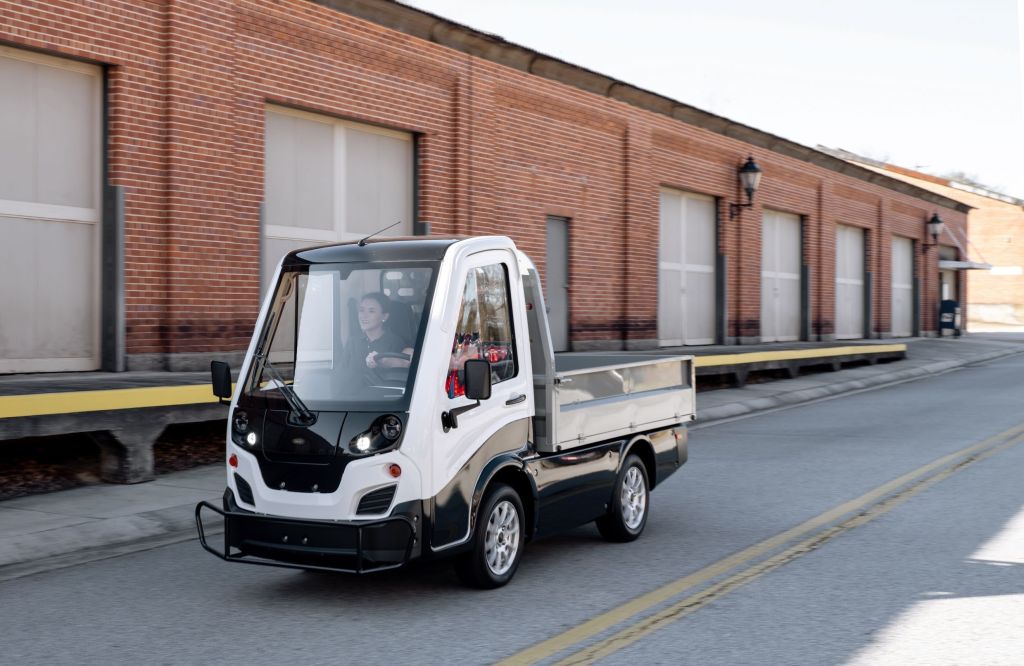
Initially a bus (start of production: Q4, 2021). Then a commercial van with a payload up to 4,400 pounds (start of production: Q3, 2022). Then a larger van with a payload up to 8,800 pounds (start of production: Q3, 2022). And eventually a small consumer vehicle (start of production: Q3, 2023).

Here’s one thing that makes these vehicles notable: There is a modular structure so the vehicles can be tailored to the specific user and application. While “special builds” generally drive costs, starting with this design approach helps minimize that.

Here’s one thing that makes the Arrival approach notable: Rather than building these vehicles in conventional automotive assembly facilities that have a stamping plant and paint shop, as Mike Ableson, CEO of Arrival Automotive (and 35-year vet of GM, where his last position was vice president of EV Infrastructure, with a variety of advanced technology, strategy and engineering positions before that), points out on this edition of “Autoline After Hours,” the Arrival approach, known as “microfactories,” is predicated on establishing a manufacturing facility within what would ordinarily be considered a warehouse.

This is low-volume, regional manufacturing.

It will put its first U.S. microfactory, which will start producing buses later this year, in York County, South Carolina. There will be a second in West Charlotte, North Carolina, where as many as 10,000 electric delivery vans will be built, with production starting in the third quarter of 2022. It has another microfactory in Bicester, UK.

The vehicles have proprietary composite body panels so there is no stamping plant needed. The colors are molded in the material so there is no paint shop. The factory utilizes robotic transport vehicles that move from cell to cell so there are no traditional assembly lines. The assembly is done with mechanical fasteners and adhesives so welding equipment isn’t required.

Ableson points out that batteries are a big cost component of all electric vehicles. He also notes that essentially all OEMs are faced with the same type of battery costs. So, he explains, that the way to keep costs down is not only in establishing production capabilities, but also in designing and engineering the vehicles is such a way that they can minimize overall cost.

The company uses the term “radical impact” in relation to what it is doing.

Arguably, if they pull off what they are undertaking, that won’t just be corporate rhetoric but a true statement.

Ableson talks on the show with Joe White of Reuters, Mike Austin of Hemmings and me.

Then White, Austin and I discuss a variety of other subjects, most of which have to do with vehicle electrification claims and efforts being undertaken by companies including Honda, Volkswagen, Ford and General Motors.

And you can see it all here.

A Driver-Oriented Space in the ’22 Honda Civic

While not full-on stark minimalism, Honda is recognizing the need for a more human-oriented interior in its 11th-generation Civic

By Gary S. Vasilash

One of the things that has been going on in interior design is that as the vehicles have become more tech-centric, there is a near feeling of driver claustrophobia.

The term typically used to describe the space is “cockpit,” as though the driver is actually trained as a pilot in an F-18 when, in fact, all that person really wants is to be able to go to the store to pick up a few groceries.

With its minimalist interior design Tesla has started a trend in this direction.

Inside the ’22 Honda Civic. (Image: Honda)

The interior of the 2022 Honda Civic is the latest example of a driver-not-pilot approach.

On a macro level, that there are pulled back A-pillars, a low hood and a flat dash, as well as a low, flat beltline, means there is a more spacious view to the outside (a good thing when behind the wheel).

Honda is calling approach “Man-Maximum, Machine-Minimum,” which is something that they followed year ago, but seem to have forgotten over the years, as they tried to stay of the moment.

There is an available 9-inch color touchscreen—the largest screen in any Honda (you would imagine this would be in something like the Odyssey or Pilot)—that runs “a simplified navigation structure with fewer embedded menus.”

What’s more, there is a physical volume knob and hard buttons for Home and Back.

It is understandable that OEMs would chase consumer electronics in terms of interfaces, but it is also clear that in some cases things have gone to far. While you look at your phone when making a selection; if you’re driving a vehicle you should be looking at the road ahead. Thus something like a knob to crank up the sound is an ergonomic solution for a car, while it would be inappropriate for a phone.

And they’ve put a 0.8-inch finger rest on the bottom of the touchscreen, something that is car-appropriate.

Environmental Stats

Sure, U.S. voters don’t like greenhouse gases. But others ought to dislike them more and do something about it

By Gary S. Vasilash

While cars and trucks are certainly not the only contributors to noxious emissions, they provide more than a minimal amount, to understate the case. Wildly.

So with that in mind, it is interesting to look at some of the stats from a survey conducted by the Yale Program on Climate Change Communication and the George Mason University Center for Climate Change Communication.

The survey was conducted among registered voters in the U.S. from March 18 to 29, 2021.

Among the findings:

  • 61% think the U.S. should reduce its greenhouse gas emissions regardless of whether other countries do or not
  • 65% think the U.S. should be doing more to address global warming
  • 71% think other industrialized countries—as in England, Germany and Japan—should be doing more to address global warming.

And there you have it: Someone else should do more to take care of the problem.

Ford Making a Big Bet on a Sure Thing

Let’s face it: the future of personal transportation isn’t gasoline or diesel fuel

By Gary S. Vasilash

Hau Thai-Tang, Ford chief product platform and operations officer (think of him as the guy who is in charge of product development) points out that the company has announced that it is in the process of investing $22-billion in electrified vehicles through 2025.

And because making a transformation from a dependence on engines that run on liquids to motors that run on electricity is no mean feat, Thai-Tang says that the company is kicking in an additional $185-million, this for developing and equipping a 200,00-square-foot facility that will be known as “Ford Ion Park.”

That’s ion as in a net electrical charge.

The learning lab, which is going to be located somewhere in southeastern Michigan (let’s see: Ford HQ is in Dearborn; it has a Battery Benchmarking and Test Laboratory in Allen Park; it is restoring the Michigan Central train station in Detroit where it will be creating an innovation hub), will be a place where they will be able to not only determine the best ways and means to develop batteries—lithium-ion and solid-state types—but also how to pilot the production of them.

Don’t try this at home! Mary Fredrick, Ford battery validation engineer, and Dane Hardware, Ford design and release engineer, measuring the voltage of a battery at the Ford Battery Benchmarking and Test Lab. (Image: Ford)

There will be some 150 employees (manufacturing, engineering, product development, purchasing, quality, planning) at the site.

Given the success of things like the Mustang Mach-E, which Thai-Tang says is on dealer lots for about a week before it is snapped up by a customer, an inventory turn time that is nothing short of astonishing in an industry that typically has vehicles on dealer lots for a few months, not a few days (although this has been changed by the global microchip shortage that came right on the proverbial heels of the factory shutdowns last year caused by COVID-19), Ford sees that there is a need to get the wherewithal to produce more EVs (an electric Transit is coming later this year; the electric F-150 by mid-22), and so it is creating the capacity that will allow it to ramp batteries faster.

Thai-Tang notes, of the overall drive toward electrification: “We will no longer take an approach of hedging our bets.”

With the billions it is spending, seems like it is pretty much pushing in a lot of chips.

Another Surprise from Porsche

An exercise in cognitive dissonance?

By Gary S. Vasilash

If nothing else, the people at Porsche are imaginative when it comes to promoting its brand.

The latest effort is even more surprising than the hiring of the Science Guy:

A 212-page book titled. . .Hip-Hop Culture—A Road Trip through Europe.

The book is based on a pre-COVID trip that Niko Hüls, publisher of a hip-hop magazine, Backspin, took with people from Porsche.


Hüls and a Cayenne. (Image: Porsche)

The travels gave rise to profiles of hip-hop artists including Kool Savas (Berlin), Lord Esperanza (Paris), Edson Sabajo (Amsterdam), Falsalarma (Barcelona), Lars Pedersen (Copenhagen) and the Flying Steps (Berlin).

In what may be the understatement of the year, Sebastian Rudolph, Vice President Public Relations, Press, Sustainability and Politics at Porsche AG, said, “Hip-hop and Porsche – at first glance, this may seem a surprising combination.”

He added, however, “But this pairing stands for diversity and cultural values.”

The book is available from Back to Tape.

All proceeds from the book are being donated to Viva Con Agua.