Fiat’s Fortunes

Although 2020 sales will be reported next week—numbers that will probably down 10%-ish—a look at Fiat brand sales in the U.S. for the first three quarters of 2020 are such that it would take a proverbial Christmas miracle to have any effect on what is truly a dismal year for the Italian marque.

For the first nine months of the year, there were 3,569 Fiat vehicles sold in the U.S.

That is the total. For nine months. 3,569.

And that number is shared by four vehicles, the 500, 500L, 500X and Spider.

Compared to the same period in 2019, 3,569 is a decrease of 52%.

That’s right: more than half the sales of the brand: poof!

The vehicle that brought the brand back to the U.S. market when the 2012 model year was launched, the 500, is down 74% for the first three quarters. 662 were sold.

That decline is greater than any of the other three, though there wasn’t good news for any of them:

  • 500L:            -35%
  • 500X:           -46%
  • Spider:         -37%

So let’s say you’re in Fiat planning. Which vehicle(s) do you keep?

(Image: FCA)

Based on the fact that the company has released pricing for just one of the four, odds are there is one that will remain.

Because you are clever, you’ve seen the picture and know the answer: the 500X.

Presumably the logic is:

  • The decline in 500 sales is absolutely unrecoverable
  • The 500L is essentially a compact sedan that isn’t at all class competitive
  • The Spider is a sports car that doesn’t tend to move the needle for mainstream brands (although it is interesting to note that the Spider shares a platform with the Mazda MX-5 Miata and for the first three quarters of 2020 there were 7,503 Miatas sold—more than double the number of all Fiats sold in the same period)
  • The 500X is considered a crossover

Yes, that’s what matters.

Crossovers, presumably, have a future. Too bad there isn’t a 500 pickup.

In bocca al lupo. (Good luck)
Car Gigs Chuck Palahniuk Didn’t Take

Chuck Palahniuk, earlier this year, published Consider This: Moments in My Writing Life After Which Everything Was Different. In some ways, it is a book that writers who hope to be as successful as Palahniuk is can read so as to get some insights into the way Palahniuk went about getting to where he is.

Arguably, Palahniuk’s star went nova with the release of Fight Club in 1999, directed by David Fincher and starring Brad Pitt and some other guys.

And as everybody—particularly those who have perhaps not (a) read the book or (b) seen the movie knows—the first rule of Fight Club is “You don’t talk about fight club.” (What these people may not realize is that they also know the second rule of Fight Club, which is essentially see Rule 1.)

Anyway, in the world of freelance writing, one could imagine a rule that says, “You don’t tell people about jobs you didn’t get/take.”

However, Palahniuk reveals in Consider This a number of OEMs who wanted to take advantage of his celebrity to do advertising:

  • “First there was Volvo.” He relates that they’d wanted him to write a series of stories “about an obscure hamlet in Sweden where an enormous number of Volvos were being sold.” (Fun fact: the population density of Sweden is 64 people per square mile. The population in Germany is 623 people per square mile. “Obscure hamlet” is relative.) Palahniuk: “They were offering. . .tens of thousands of dollars.” He didn’t take it.
  • “After Volvo came BMW.” The Bavarian builder wanted him to write a series of short stories that would be turned into an audiobook, loaded onto a CD and provided to those who bought Bimmers. Given BMW’s approach toward audio entertainment, such as CarPlay, one imagines had he taken them up on the idea there would have been a line item on the Monroney for the disc. Fortunately for consumers, he didn’t accept the offer.
  • Here is a case of (1) the tentativeness of memory of (2) an indication that some people don’t quite care as much about cars than others. “In the year 2000 or 2001, Chevrolet offered me five thousand dollars for the right to mention Fight Club in a television commercial for the Ram pickup truck.” Ah, right.
  • And an example of artistic purity or insanity: Jaguar Land Rover “offered me a half million dollars to write a story that could be made into a film that would feature a Land Rover in some crucial, high-profile way.” Palahniuk notes, “And maybe I was stupid, but I still said no.” What can be said about that?
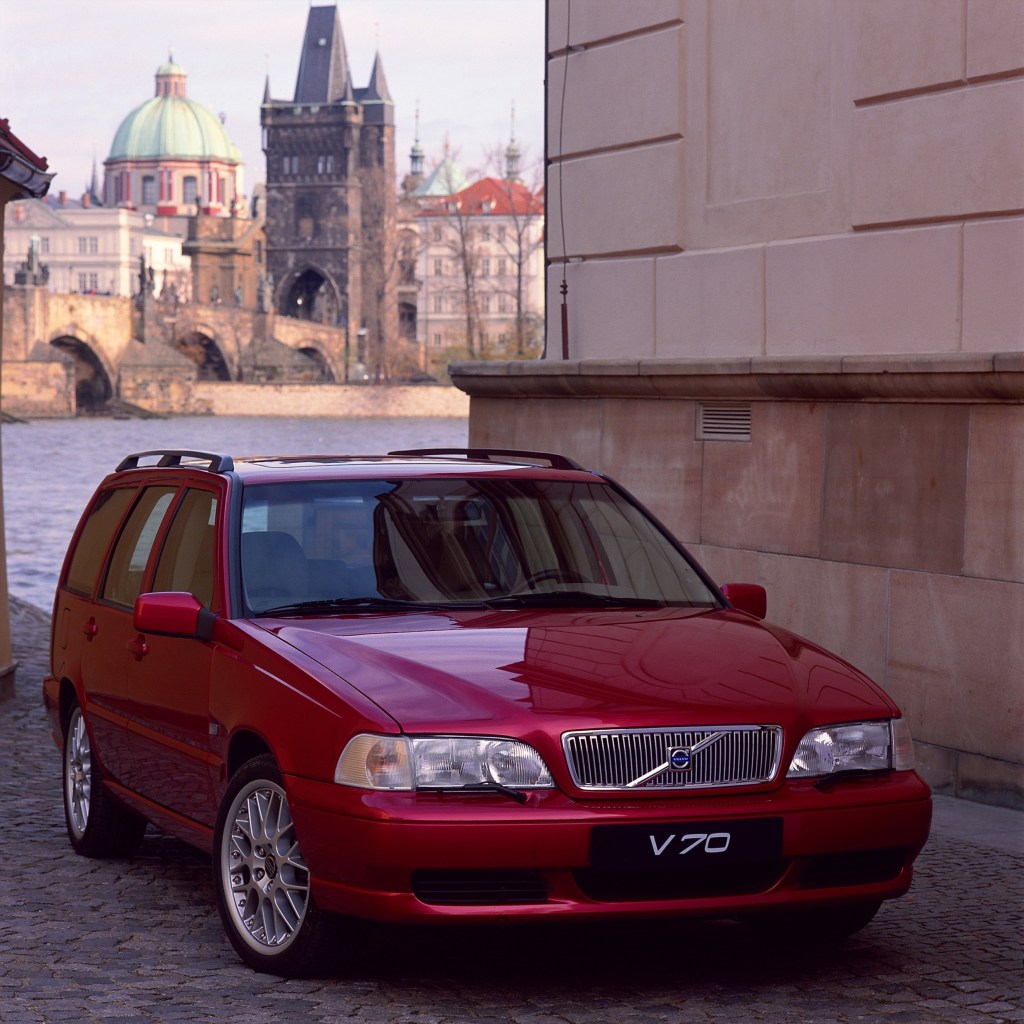
The Volvo 70 Series had a run from 1996 to 2016, so possibly this would have been featured in the stories about the obscure Swedish hamlet. (Image: Volvo)

2020 Sales Expectations: Not Bad. But Not Good.

12,386,000. That’s the number of new vehicles that J.D. Power and LMC Automotive estimate will be sold in the U.S. in 2020.

All in, this is a decline of 9.5% compared with 2019 sales.

Given COVID-19, surprisingly good.

What’s more, the average transaction price—that is, the price that people actually pay, taking cash back, incentives and other means to persuade people to buy—is expected to be $38,077, up 9% from 2019.

According to the researchers, because of the higher transaction prices, the vehicle manufacturers are not going to take quite as big a hit as the 9.5% decline in sales might lead one to expect: It is estimated that the total value of new vehicles purchased will be off just 4%.

December sales provide a bit of a boost because this is when luxury sales tend to make an upswing.

And for this particular December, J.D. Power and LMC calculate that trucks and SUVs—which generally have a higher sticker price than sedans—will account for 79% of all retail sales, up 4% from December 2019.

But here’s a question: is this a sustainable situation given the number of people in the U.S. who are currently unemployed?

According to the most recent figures from the Bureau of Labor Statistics:

“Among the unemployed, the number of persons on temporary layoff decreased by 441,000 in November to 2.8 million. This measure is down considerably from the high of 18.1 million in April”—good—“but is 2.0 million higher than its February level.” Not good.

“The number of permanent job losers, at 3.7 million, was about unchanged in November but is 2.5 million higher than in February.” Think of this: those people aren’t getting their jobs back.

“In November, the number of persons who usually work full time rose by 752,000 to 124.3 million”—good—“while the number of persons who usually work part time decreased by 779,000 to 25.4 million.” Not good.

Given the number of unemployed people, is it not likely that there were some people who, after the lockdowns were lifted, went out and bought a new pickup because they figured that they might as well?

While sales in 2021 will undoubtedly be better than 2020 (yes, a not particularly high bar), one wonders: How many people are going to find that their vehicle payments and their income just aren’t getting along very well?

Will Apple Get into the Automobile Business?

Although it is no secret that Apple had been operating a secret “Project Titan,” which was imagined to be its electric—and probably (at least semi-) autonomous—vehicle program, although it was said to have been disbanded, although it was said to be restarted after Doug Field was rehired, a Reuters’ report has gotten legions of Apple fanboys—to say nothing of the investment community—giddier than they already are when it comes to all things Apple.

The vehicle is back, it seems. Launch date: 2024.

Could this happen?

Apple CEO Tim Cook. (Image: Apple)

If so, they’d better start rethinking the Genius Bar and figure out how to install hydraulic lifts in the back of the stores.

As Elon Musk discovered—and it should be pointed out that he has Tweeted that he once wanted to sell out to Apple but couldn’t get a meeting with Apple CEO Tim Cook—building cars is hard.

And this is a challenge whether you’re a long-time manufacturer or someone who has just started within the past few years, trying to take advantage of the “simpler” production requirements of an electric vehicle, compared to one that has an internal combustion engine.

However, as Darren Palmer, global director, Battery Electric Vehicles, a Ford recently told me, “80% of a car is not the drivetrain.” Meaning that it is a challenge to make sures the doors fit, the plastic materials on the inside have consistent coloring, the fascias don’t fall off. And on and on.

Yes, hard.

Apple doesn’t manufacture its products. That is done for it by companies including Hon Hai Precision Industry (a.k.a., Foxconn), Wistron, Pegatron and so on.

So the likelihood of it building its own vehicles is non-existent.

It would have to work with a company that knows how to make things.

In the auto industry there are companies like Magna, which produces vehicles for companies including BMW, Mercedes, Toyota and Jaguar—and for Jaguar it manufacturers the electric i-Pace. Magna has recently entered into an agreement with Fisker. It is working on the engineering of the Fisker Ocean right now and will be performing the manufacturing when it is ready to go.

What’s interesting about Magna is that most people have no idea that it has manufactured so many vehicles.

That is the kind of company that Apple would need to work with.

It knows that building cars is hard (you can see an interview with Magna’s just-retired CEO Don Walker here, where he talks about how tough the task is). It knows how to build them with the highest levels of quality. And it does so while remaining discrete.

Let’s face it: It is one thing if someone has a problem with an iPhone that bends as it shouldn’t or a battery that doesn’t have the life it should and it would be something else entirely were that to be a full-size car or SUV.

Will Project Titan come to fruition?

If it does, Tim Cook will have his hands full. Just ask Elon.

Is the Volkswagen Beetle British?

On December 27, 1945, the vehicle known as the Volkswagen Limousine went into production at the VW plant in Wolfsburg, Germany. The vehicle was internally known—and better known—as the “Type 1.”

(Images: Volkswagen)

But here’s an interesting aspect about the production of the vehicle that had been originally developed for the National Socialists (a.k.a., Nazis). The car, then known as the “KdF-Wagen,” wasn’t exactly built in quantity: By the end of World War II, only 630 had been manufactured. The Wolfsburg factory was used to build bombs, not Beetles.

While there had been plans to demolish the Volkwagenwerk GmbH following the end of hostilities, a factory that had been badly damaged but not destroyed, the British, which had trusteeship, decided that they could put the plant to work.

Under the direction of Senior Resident Officer Major Ivan Hirst, the factory was retooled to build the car. The British Military Government put in an order for 20,000 vehicles in August 1945.

Building Beetles (Type 1) in Wolfsburg

By the end of the year, 55 cars were built.

Starting in 1946 the production rate was approximately 1,000 per month. By 1947 the vehicles were being exported.

By the time the VW Beetle went out of production in 2003, 21,529,464 vehicles had been produced (15.8-million in Germany).

Were it not for British major Ivan Hirst, it could have been an entirely different story.

Abarth Sets World Record (Not What You’d Think)

Abarth, the performance brand of FCA (which is not to say Alfa Romeo isn’t, but it is somewhat more refined), established a Guinness World Record on December 19.

No, this wasn’t some feat of driving like an agitated bat-out-of-hell (or this would more appropriately be a poked scorpion-out-of-same).

Rather, on “Abarth Day,” the Abarthisiti, who would otherwise show up at a venue where they would show off their shiny metal, met virtually.

(Image: Abarth)

And the record they set was this: the Abarth enthusiasts uploaded 868 photos of their cars to a specially created Facebook page in one hour.

While it would seem that 868 photos per hour isn’t exactly head-snapping (one assumes, for example, that were the fans of K-Pop’s BTS do the same they would accomplish that in a matter of microseconds), it evidently is a record.

Congratulazioni.

2021 NACTOY Finalists Announced: The Top 9 Vehicles Introduced This Year

The 50 jurors* of the North American Car, Truck and Utility of the Year (NACTOY ) awards—50 people who work for a variety of outlets, so these are manifold perspectives, not that of just one brand—have announced their list of finalists for the 2021 awards, which will be presented in Detroit on January 11. (Actually, they will be presented virtually, given the prevailing pandemic conditions. And while on that sad subject—the pandemic, not the presentation—it is worth noting that this year was a particularly challenging ones for the jurors and OEMs alike, as in (1) getting into a variety of vehicles and (2) launching vehicles.)

So here are the vehicles that have made the short list (in alphabetical order, lest someone read something into the order).

Car of the Year

Genesis G80: the still-young luxury brand brings tech and comfort to its middle-of-the-pack offering (i.e., there are the G70 and the G90 sedans, too)

Hyundai Elantra: they didn’t just launch one version with some trims, but a “regular” one, a hybrid and a performance variant, all at once

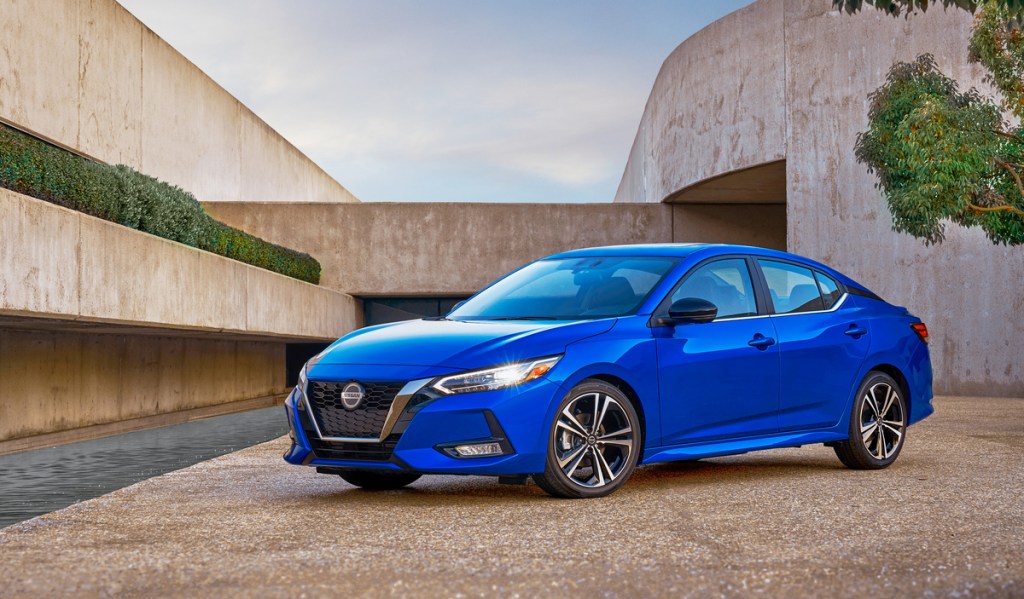
Nissan Sentra: compact cars have always had stand-out models, but this one is several dozen levels above of what you might expect

Truck of the Year

Ford F-150: given that the F-150 has been breaking sales records for decades, let’s face it—when they do a new one, they’re not going to risk the crown

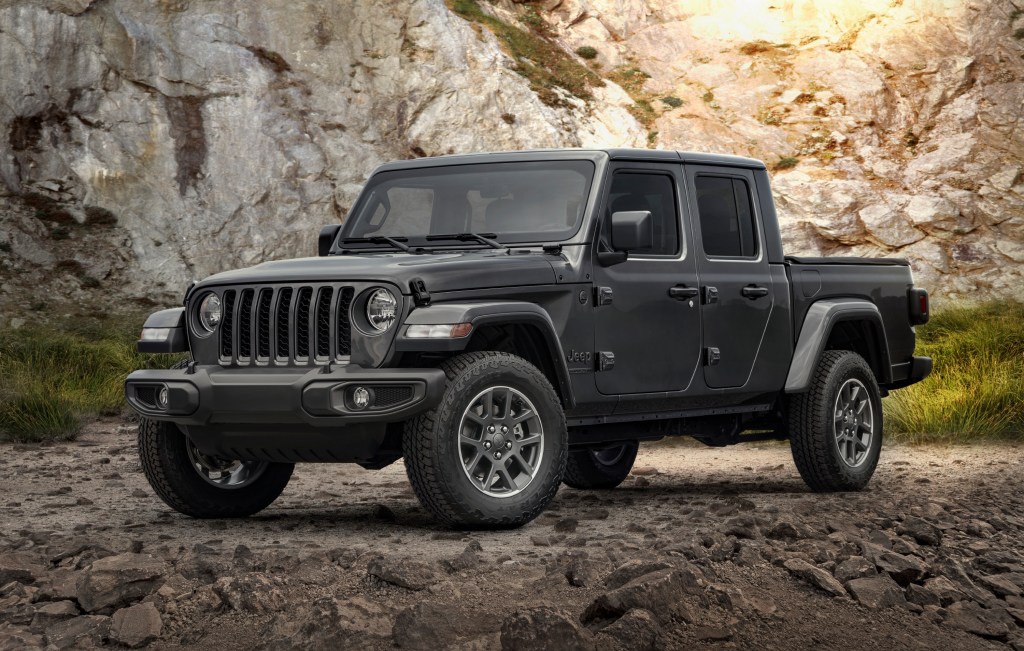
Jeep Gladiator Mojave: that name as in the desert, and while other variants of the Gladiator eat rocks, this one can handle the runs across sandy terrain

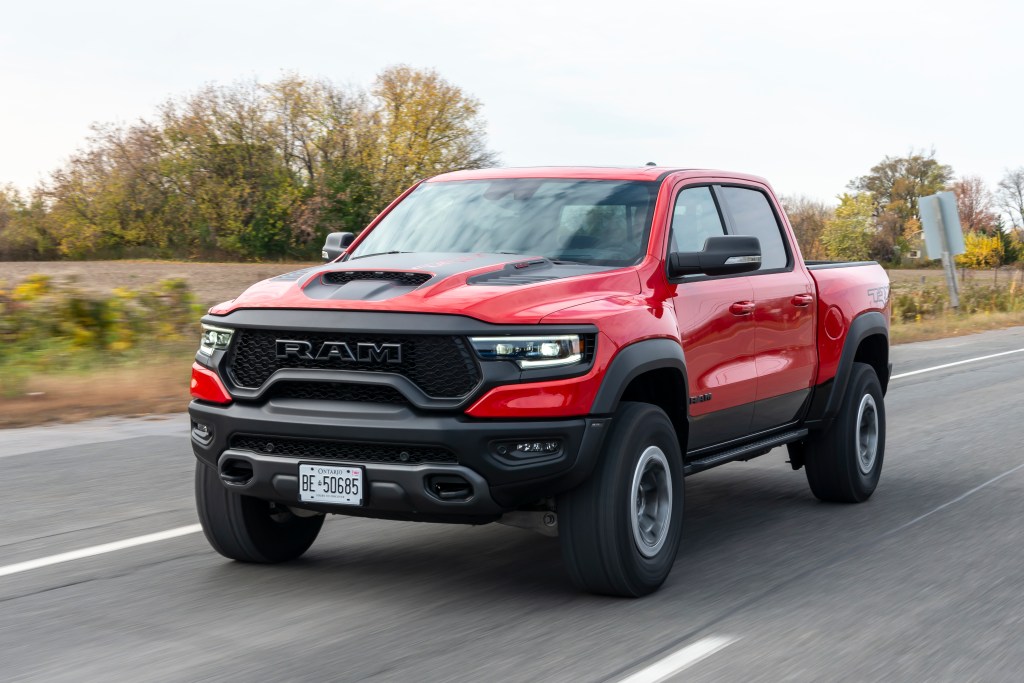
Ram 1500 TRX: take a Ram 1500, stuff in a HEMI and add a suspension system that can take on conditions that other pickup trucks wouldn’t dare get close to

Utility Vehicle of the Year

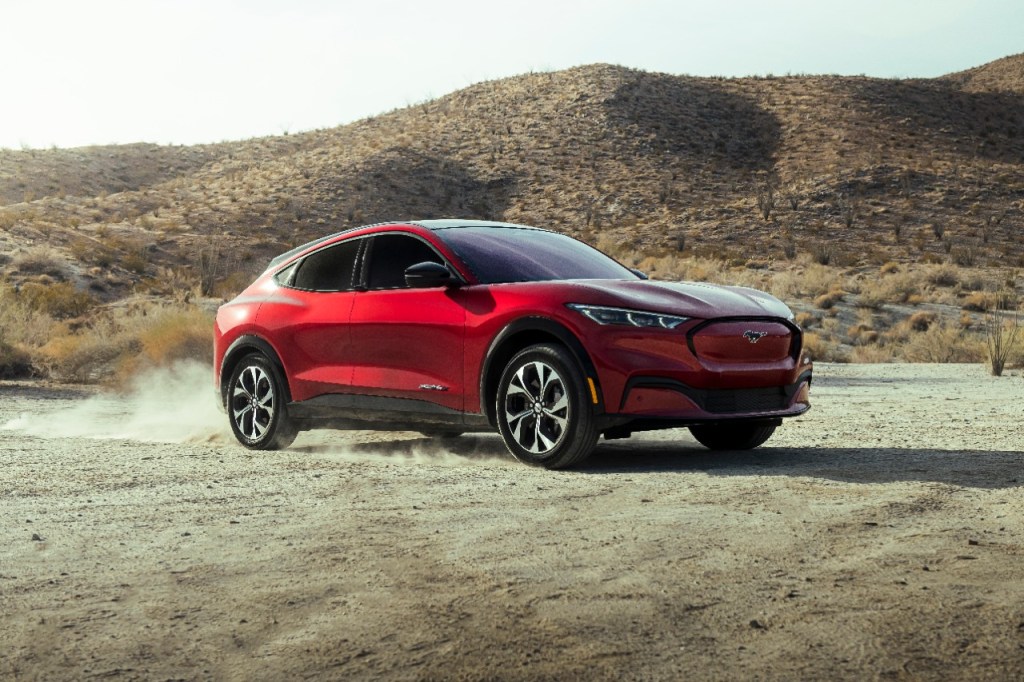
Ford Mustang Mach-E: this is arguably the first real EV to come from the North American domestic automakers—there have been others, but this one has the stuff

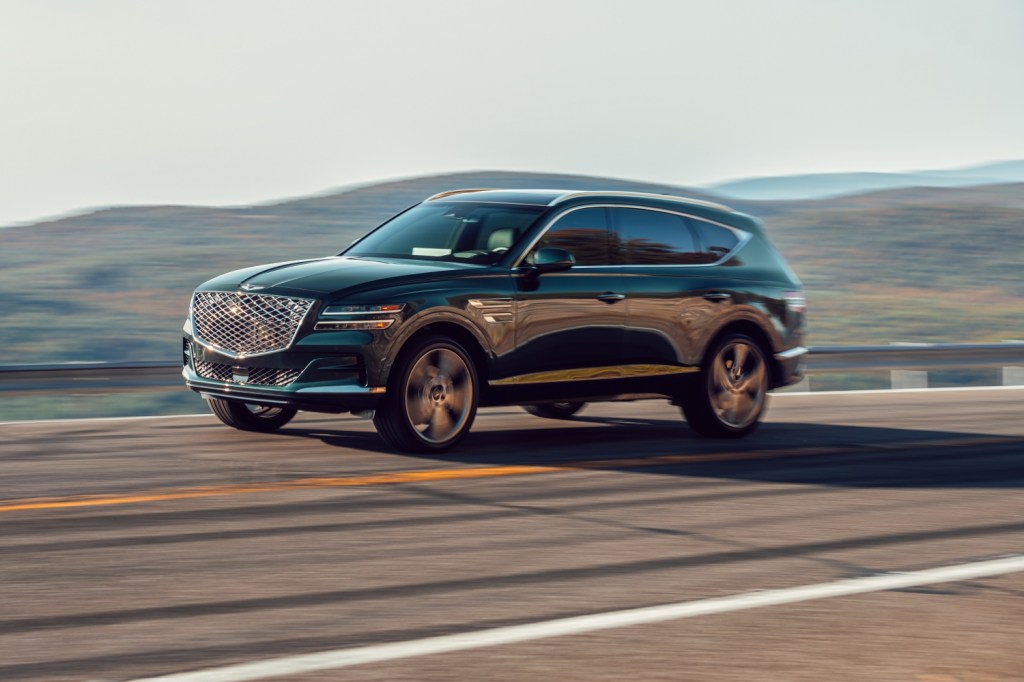
Genesis GV80: yes, that nomenclature is similar to the car previously mentioned, but this time it is the crossover that John Legend and Chrissy Teigen appropriately introduced in a Super Bowl ad

Land Rover Defender: not only is this a venerable marque, not only does this vehicle have the wherewithal to handle demanding conditions, but it has a design that can’t help but make you smile

*FYI: I am a juror.

GM Defense Makes Clever Sourcing Decisions

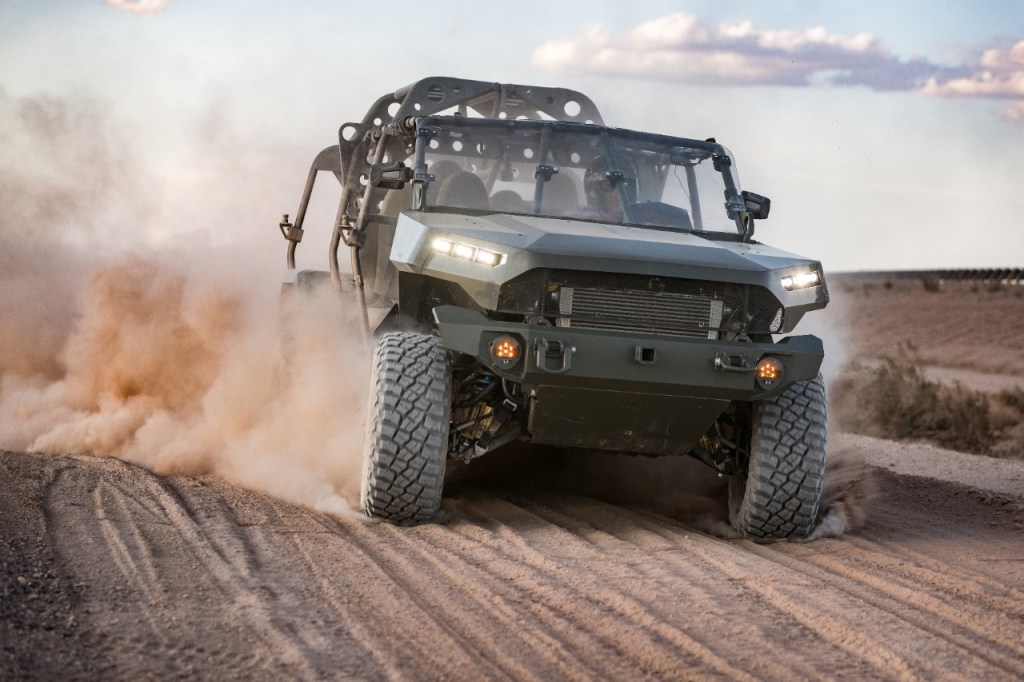
One of the interesting aspects of the Infantry Squad Vehicle (ISV), a nine-soldier all-terrain troop carrier that GM Defense will be providing to the U.S. Army as part of a $214.3-million contract received in June 2020, is that it is based on the 2020 Chevrolet Colorado ZR2.

Rather than engineering something from the ground up, GM decided that it would work to further capacitize the Colorado ZR2—which has outstanding off-road capabilities straight off the showroom floor–for military operations.

GM Defense ISV: based on the 2020 Chevy Colorado, which you can get in your local Chevy dealer. The Colorado ZR2, not the ISV. The U.S. Army is getting that. (Image: GM)

For example, even the most enthusiast off-road driver isn’t likely to have their Colorado sling loaded from a UH-60 Blackhawk helicopter or fitted inside a CH-47 Chinook helicopter.

Similarly, when looking for a place to build the ISV—the initial order calls for 649 trucks—rather than going completely greenfield, GM consulted its real estate holdings and identified a building it has in Concord, North Carolina.

Initially the building was to be a tech center, but then COVID-19 hit and GM put the idea on hold.

It has selected the building to house the 75,000-square-foot manufacturing operation to produce ISVs.

Another advantage of this site is that it is close to Hendrick Motorsports—yes, the one you may associate with NASCAR—which is providing the chrome-moly steel exoskeleton of the vehicle frame.

Again, using an existing supplier—albeit a somewhat non-conventional one when it comes to non-racing applications.

What’s more, the ISV makes use of 90% of commercial off-the-shelf parts, such as a 186-horsepower, 2.8L Duramax turbo-diesel engine, and six-speed automatic transmission.

This overall approach is commendable for its development speed, execution and, let’s face it, undoubted savings to the U.S. taxpayers.

2019 Sales Estimates and Surprises

The Cox Automotive sales forecast for 2019—yes, the full numbers will be in in a few days, but that isn’t the point here—includes some interesting information in the charts. No surprise that cars—compact and midsize—are projected to be down by double digits, though it is surprising that only the midsize SUV/Crossover is in positive territory compared with December 2018.

No, the thing that is unexpected is that once you get beyond the top four OEMs—which would be GM, Ford, Toyota, and FCA (which brings up the point that even were there such a moniker as “The Big Three,” FCA wouldn’t make the cut)—things get somewhat interesting. As in the distance between #4 and #5, Honda. FCA is projected to deliver 2.2 million and Honda 1.6 million.

Here’s the interesting bit: Nissan is projected to have sales of 1,365,900 units in 2019. Hyundai Kia (yes, the two are combined the same way that Lincoln sales go with Ford’s) is estimated to be at 1,328,788.

37,112 units separating the two.

The last two companies on the list are Subaru and Volkswagen. The former seems to rack up sales records like clockwork. Yet Subaru sales, Cox Automotive predicts, will be 703,755. Which is only about half of Nissan sales.

And while Volkswagen is getting all manner of attention because of its recovery from Dieselgate, its total sales are estimated to be 650,541 for the year. Or just 22% of GM’s sales—and while VW’s sales are projected to be up 2.5%, GM’s will be down 2.5%

UK Engine Production Suffers Because of Trade Uncertainty

The thing about trade agreements—or lack thereof—which isn’t always taken into account is that there can be huge ramifications, particularly as trade between countries is nowadays extensively linked.

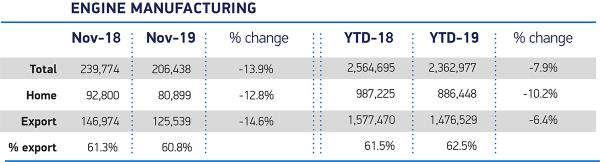
Case in point is what is going on in the UK auto engine manufacturing sector. According to the Society of Motor Manufacturers and Traders (SMMT), a trade association representing the auto industry, there was a 13.9% decline in engine manufacturing in November 2019.

SMMT

(Image: SMMT)

This is particularly notable because about 60% of the engines built in the UK are exported. And because of the “no deal” Brexit that has been in the offing these past several months, the companies on the receiving end of those engines have worked to find alternative sources.

According to Mike Hawes, SMMT chief executive,” As with UK cars and vans, UK engine production is export-led, so it is vital that certainty is provided on the nature of our future overseas trading relationships. We look forward to working with the new government to secure an ambitious fture trade deal with the EU that ensures the future competitiveness of UK Automotive.”

Good luck with that.

Year to date, incidentally, UK automotive engine production is down 7.9% compared with 2018.