
The question is: why wouldn’t you if you transport people and their stuff?
By Gary S. Vasilash
I once owned a Toyota Tercel. A subcompact. A vehicle that was as stylish as a pair of orthopedic shoes.
There were three reasons why I had the Tercel:
- I needed a car to get to work
- I could afford it
- It was available
All of those reasons are fairly pragmatic, more about needs than desires.
On Maslow’s Hierarchy of Needs, the Tercel was at the base level. It was far from the Self-Actualization that many people imagine they achieve when buying a vehicle.
But is that the case? Really?
Sure, we all like to have something that reflects who we think we are, which explains why we buy particular shoes (ideally not orthopedic) or phone. Those objects send a message to those we encounter. But arguably, unless those objects are rather egregious—like wearing clown shoes or using a Jitterbug phone years before AARP membership kicks in—odds are there is less of a message being sent than we would like to imagine.
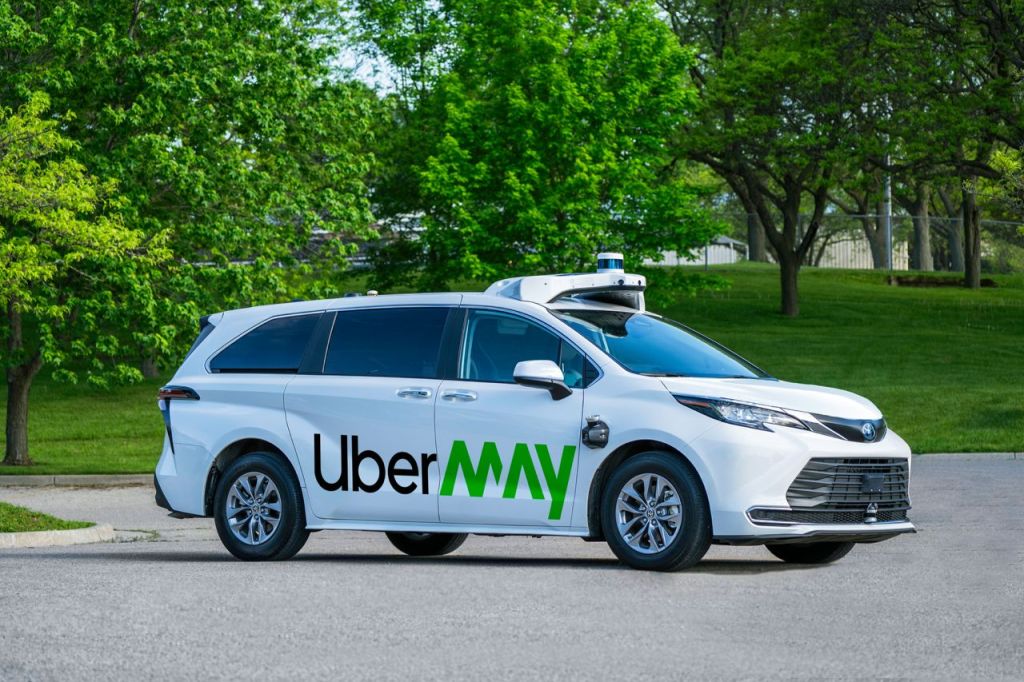
Which brings me to the Toyota Sienna XLE AWD minivan.
Suddenly the word “minivan” causes in some people a reflexive reaction like what happens when a doctor taps your knee with a little hammer: you can’t stop it.
But unlike that reflex, which physiologically occurs without involving the brain (the reaction goes straight through the spinal cord), the reaction to “minivan” is a social construct.
“I’m not a minivan person” or “I just wouldn’t feel right driving a minivan” or “What would it say about my sexuality if I was behind the wheel of a minivan?”
OK. No one says the last one out loud. But that’s what plenty of people are thinking.
For some reason, when people are buying a crossover or SUV, none of those things arise.
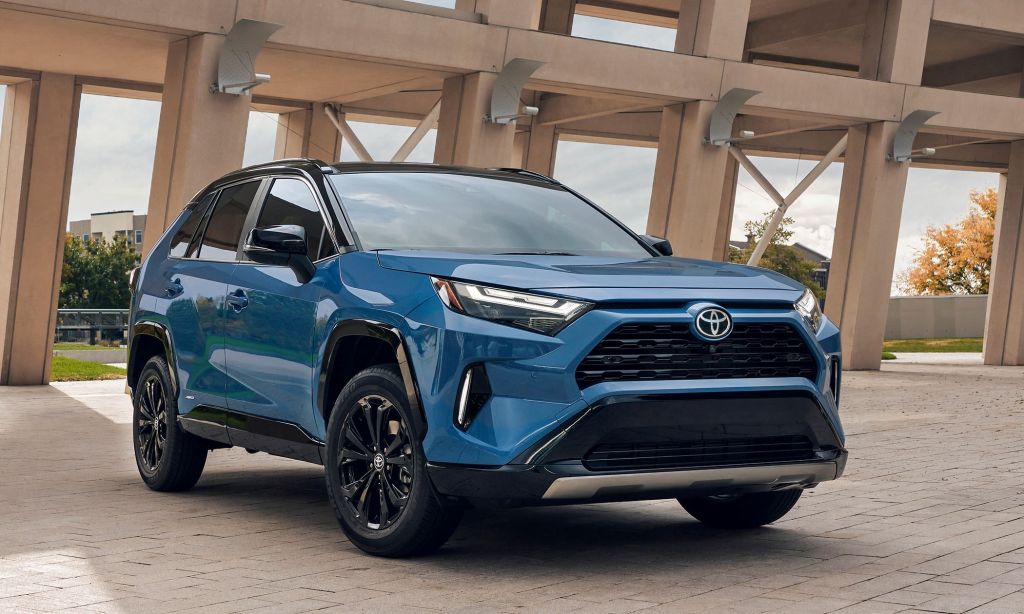
They do have to run some quick calculations like why I needed that Tercel. What’s more, they have to determine whether there is the sort of functionality that they will need. Toyota, for example, has 11 crossovers and SUVs to choose from, each with its own suite of specs. If you have multiple family members a Sequoia will work in a way that a RAV4 doesn’t. If there are just a few of you, the RAV4 works in a way that the Sequoia would be just overkill.
So there are at least a couple of proverbial back-of-the-envelope decisions that need to be made in terms of what the vehicle can do to meet your needs: how many people might you want to bring along with you; how much stuff do you generally carry of a nature that a pickup truck wouldn’t be right for?
So let’s take the stuff part of the equation.
The Toyota Sienna minivan offers 33.5 cubic feet of cargo space behind the third row, 75.2 cubic feet with the third folded, and 101 cubic feet with the second and third rows folded.
While those numbers may not mean a whole lot, know that they translate into Big, Bigger, Biggest.
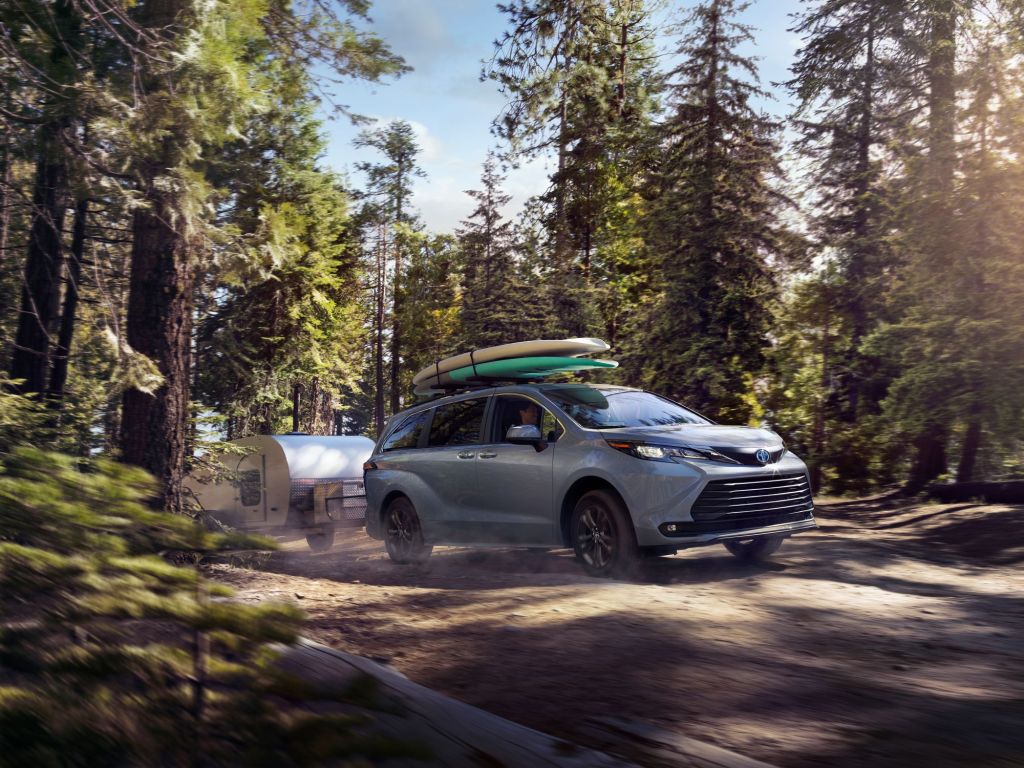
And if that isn’t enough and you need to pack a U-Haul trailer, the Sienna offers 3,500 pounds of towing capacity.
Or what about people?
Depending on the seating configuration selected, it is either seven or eight people.
And the thing to know about that is that these people are all going to feel comfortable, not as though they are occupants of the proverbial sardine can.
The functionality of the configuration of the minivan’s architecture is simply more package-efficient than an SUV (or sedan, for that matter).
“Oh, but a minivan isn’t stylish,” comes the knee-jerk reaction.
It’s not like the people at Toyota’s Calty design studio in Newport Beach aren’t aware of that objection, so they’ve added style to the substance of the vehicle.
One of the notable characteristics of the Sienna is that it is now, in all trim levels and packages, a hybrid. There is a 189-hp four-cylinder engine. There is an electric motor up front. And in the AWD version (yes, AWD—just like in some SUVs!), another in the rear.
All told the propulsion system provides 245 hp.
But the impressive part of this is that on the AWD model, like the one driven here, the combined city/highway fuel economy is 35 mpg.
And the beauty of that is that with the 18-gallon tank you can achieve a theoretical 630 miles before you need a fill up, but even if you use 17 gallons to be on the safe side, it is still 595 miles.
If the average American drives 37 miles per day, then the Sienna can be driven for more than two weeks without visiting a gas station. And once there, only regular gas is required.
I drove the Sienna from Detroit to Traverse City (255 miles) and back, putting on freeway miles as well as slow city miles (Traverse City is increasingly popular). And I got the 35 mpg without a problem and it was in the Normal mode throughout (there are also Eco, Sport and EV modes, with the first eking out all the energy it can, so this is a bit on the slow side; Sport amps things up, but let’s face it: this is a minivan; EV is a short spurt of low-speed all-electric driving: this isn’t a plug-in hybrid).
The Woodland trim driven here includes a smidge more ground clearance (it is 6.9 inches rather than the 6.3 inches of other trims). There are 18-inch six-spoke dark wheels and black roof rails on the outside. There are themed floor mats and things like a 12-speaker JBL audio system on the inside.
And there is an abundance of the types of things one would expect on a vehicle that you’re going to be spending plenty of time in (from the 12.3-inch screen to wireless Apple CarPlay and Android Auto; four-zone climate control), as well as things that add to the overall utility (e.g., being able to open the sliding doors by putting your foot beneath it is a nice function). Of course, there is an array of safety tech bundled into Toyota Safety Sense 2.0 (pre-collision system with pedestrian detection, lane departure alert with steering assist, lane tracing assist, etc.).
If there is any stigma associated with the Sienna minivan it is one of simply being smart. Which isn’t a bad thing.
The Tercel did the job for me. The Sienna could certainly do it for those who are looking for efficiency, capability, capacity, and, yes, soupçon of style.






 shinymetalboxes