What to Know About Hydrogen Vehicles

Unless you drive a big rig or a locomotive, there probably isn’t a whole lot you need to know

By Gary S. Vasilash

According to the Alternative Fuels Data Center of the U.S. Department of Energy, “In mid-2020, there were about 43 retail stations available nationwide.” Those are retail stations where there is hydrogen refueling. The sentence went on, “mostly concentrated in California.”

The good news is that the AFDC accumulated more data on the retail hydrogen fueling infrastructure in the U.S. And what’s more, there is actually an increase in the number of stations.

But there is still that concentration in California.

The total is 49 retail stations.

Forty-eight of those are in California.

There is one in Hawaii.

Meanwhile, over in the European Union there are more stations, although the numbers from the ACEA don’t indicate whether these are retail-only or whether the number also includes private refueling stations.

When it comes to the EU Germany is almost like California.

That is, there are 83 hydrogen refueling stations there, which accounts for 66.9% of the total 124 stations in all of the EU.

All of this goes to the point that you are not likely to be rolling around in a hydrogen-powered vehicle any time soon—even if you live in California.

The infrastructure for refueling simply isn’t there.

Notes Charlie Freese, “It is a difficult infrastructure play if you have a station and are refueling one vehicle per week.”

In a record published earlier this year for the Department of Energy about plans for 111 new hydrogen refueling stations in California, “Hydrogen Fueling Stations Cost,” “Capital equipment cost estimates for 111 new fueling stations. . .varied between approximately $1,200 and $3,000 per kilogram hydrogen dispensed per day.”

According to Freese, you can think of a kilogram of hydrogen as a gallon of gasoline.

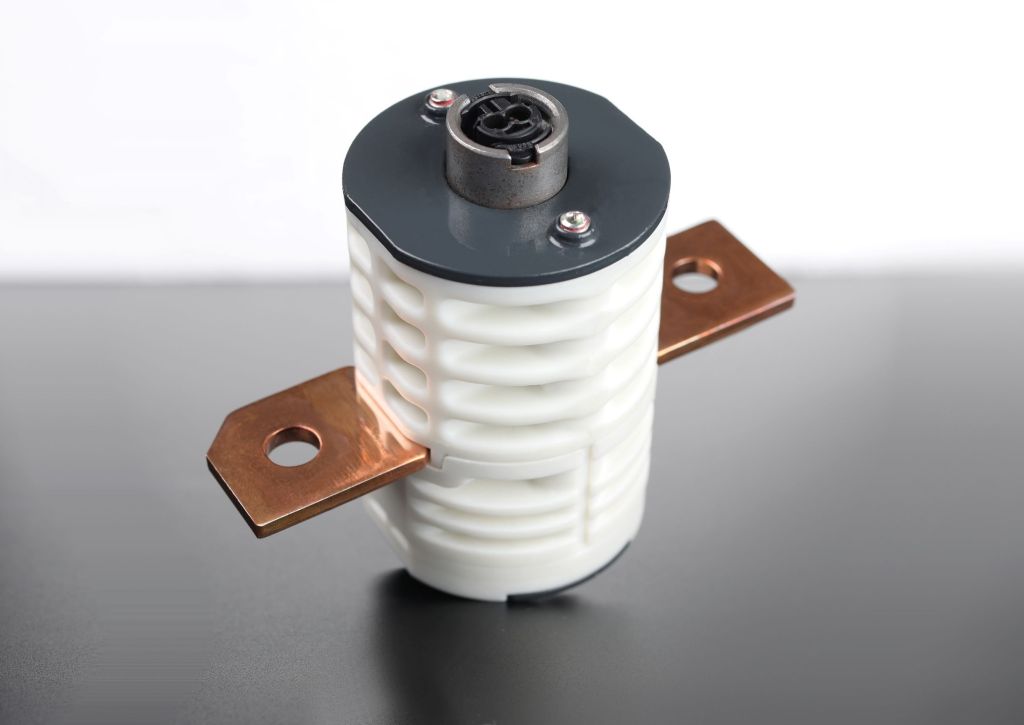
This is a fuel cell. Actually a HYDROTEC fuel cell module that contains fuel cells. (Image: Steve Fecht for General Motors)

Yes, a very difficult infrastructure play.

But Freese is a proponent of hydrogen. He is the executive director of General Motors’ global fuel cell business which uses the name HYDROTEC.

HYDROTEC fuel cell modules have a variety of applications in transportation—applications that you might not expect.

That is, it has announced activities with:

  • Liebherr-Aerospace: Yes, fuel cells for aircraft
  • Wabtec: A producer of locomotives
  • Navistar: Two HYDROTEC fuel cell cubes will be used to power Navistar’s International RH Series

Freese points out that there are extensive opportunities in applications like these because there is a lot that is “known”:

Planes fly on specific routes and land at airports. Locomotive routes are literally on rails. And trucking goes from the depot to the point of delivery—and at the point of delivery (e.g., a warehouse or factory) there are likely to be pieces of material handling equipment—powered by hydrogen.

For individual drivers where one might go is not known. So there can be refueling stations that accumulate proverbial—if not actual—cobwebs.

But for commercial transport, there is the opportunity to have a calculated number of fuel users, which is an absolute advantage.

On this edition of “Autoline After Hours” Freese talks with “Autoline’s” John McElroy, Lindsay Brooke of SAE’s Automotive Engineering and me on a variety of hydrogen-related subjects.

In addition to which, John, Lindsay and I talk about a variety of other subjects, including VW’s commitment to EVs, the European Commission’s tentative plan to stop sale of new vehicles powered with internal combustion engines in the region by 2035, the right to repair, and more.

Which you can see right here.

What Does a LiDAR System “See”?

“LiDAR” is “light detection and ranging.” It is a key element to advanced driver assistance systems (ADAS) as well as autonomous driving systems

By Gary S. Vasilash

In case you ever wondered about what a LiDAR system might “see,” here is a picture of a LiDAR point cloud that includes HD resolution and long-distance range.

AEye LiDAR image. (Image: Continental)

It is worth noting that this image, from LiDAR developer AEye, isn’t necessarily the output of all systems.

Each LiDAR system developer essentially has its own approach to how the laser beams are sent out and returned and for how far and how often etc., etc., etc.

Supplier Continental has been working with AEye for the past 10 months and has now announced that it will be using the LiDAR system in its suite of hardware and software for autonomous driving systems (Level 2+ to Level 4).

In industry parlance this is known as a “stack.”

So the AEye LiDAR hardware and software will be part of the Continental stack, which will also include cameras and radar.

The rule in developing autonomous driving capability is that the more sensors the better.

Or, as Frank Petznick, head of Continental’s ADAS Business Unit, put it, “Reliable and safe automated and autonomous driving functions will not be feasible without bringing the strengths of all sensor technologies together.”

Let’s face it: If you’re in a vehicle that is driving itself, you want as many sensors and computers as possible to keep you safe when going from A to B.

Continental anticipates that it will start producing the AEye long-range LiDAR systems in production volumes by 2024.

One more interesting thing about this. While the AEye system is long range (1,000 meters), Continental has a solid-state short-range high resolution 3D flash LiDAR that it will be bringing to the market later this year.

When you hear a certain individual talking about how autonomous driving can be done with a single type of sensor and a smart processor, realize that companies like Continental aren’t creating stacks because they just like complexity.

They don’t.

They do like to assure safety.

Delta Gets Some New Jets

Well, new-ish

By Gary S. Vasilash

As the availability of some new car models have driven an increased number of people to the used market, which has had the consequence of increasing the price and decreasing the availability of used vehicles, it is interesting to note that Delta has announced it will be adding 29 used Boeing 737-900ERs and seven used Airbus A350-900s to its fleet.

Delta A350 (Image: Delta)

Said Delta CEO Ed Bastian, “These aircraft are an investment in Delta’s future. As we look past the pandemic, Delta’s disciplined, innovative approach to fleet renewal positions us for growth as travel demand returns, while enhancing the customer experience and supporting our sustainability.”

Delta is in the process of retiring its widebody fleet, as the narrow body planes are said to be more fuel-efficient.

According to Delta this shift “is paramount to Delta’s ongoing efforts to reduce its carbon emissions and its Flight to Net Zero.”

Here’s hoping that these jets have are part of a certified pre-owned program like you can get at that car dealer near you.

Hyundai Launching RoboShuttle Pilot Program

Level 4 capability is rolling in the streets of Sejong Smart City. . .

By Gary S. Vasilash

Hyundai Motor Company—the parent organization of the firm that brings us Elantras and Tucsons and so on—announced it is launching a “RoboShuttle,” which is a Hyundai H350, light commercial, four-door van that is loaded with autonomous driving and artificial intelligence such that it will be able to transport people “with minimal intervention from a safety driver.”

Almost-autonomous vehicle. (Image: Hyundai)

More simply: this is going to be the basis of a ride-hailing service (there is the Shucle app developed by AIRS Company, which happens to be an AI research lab owned and operated by Hyundai). The system will determine the most-optimal routes based on demand.

The RoboShuttle will operate along a 6.1-km route—in Sejong Smart City, South Korea.

Think about that: “Sejong Smart City.”

It sounds exactly like the sort of place where there should be autonomous shuttles hailed by the Shucle app.

In the U.S. it is difficult to get the potholes filled in in many cities, and the South Koreans have established a city that is described as being smart.

BMW Brings an Electric Scooter

And if you want one, make sure your digital account if full of digits

By Gary S. Vasilash

“The new BMW CE 04 is the link between the user’s analogue and digital worlds. It is both a means of transport and a means of communication for the big city commuter. With its forward-looking design thanks based on an innovative package, it sets out to redefine the scooter segment.”

That’s Edgar Heinrich, head of Design, BMW Motorrad.

The CE 04 is a scooter. An electric scooter.

Heinrich and the BMW CE 04 electric scooter. (Image: BMW)

How it is a means of communication is curious. And while its design has a shard aesthetic to it, which is about as far from the smooth lines characteristic of a Vespa, it isn’t entirely clear whether this is “forward-looking” or just “Blade Runner.”

It produces 42 hp. It has a maximum speed of 75 miles. It has a maximum range of an estimated 80 miles. It can carry two people (which would probably have an effect on the speed and range).

Its 147.6-volt lithium-ion battery pack recharges fairly quickly: from 0 to 100% in 4 hours and 20 minutes when plugged into a normal household outlet (Level 1). For a Level 2 charger (one of those units you’ve seen in parking lots, say, at Whole Foods) it is 1 hour and 40 minutes. If you charge the battery from 20% to 80% (which would presumably provide a range of 64 miles) on a Level 2 charger, it is just 45 minutes. Or the time to do a good shop at Whole Foods and a quick cappuccino.

But there is one number that is somewhat brake-applying for most people: It has an MSRP of $11,795.

For a scooter.

Good Thing They’re in Government, Not the Auto Industry

Your tax dollars at work?

By Gary S. Vasilash

Although the report produced by the U.S. Dept. of Commerce in February 2019 about the importance of imposing tariffs on imported motor vehicles and components, “The Effect of Imports of Automobiles and Automobile Parts on the National Security,” had been kept under wraps by the Trump Administration and was released in redacted form last week, the rationale for keeping this report, which could have resulted in tariffs on the 25 to 35% level (remember: the consumer pays the additional costs, not the manufacturer), on a shelf somewhere probably had a little something to do with its level of stupidity.

Consider just this line:

“While the U.S. defense industrial base is dependent on the American-owned automotive sector for the development of high-tech products and capabilities, the U.S. commercial automotive industry is unable to survive solely by supplying the DOD.”

Who knew?

(Probably everyone.)

Another Volvo Move Toward EVs

It is shifting the structure of its traditional powertrain business to achieve more resources for EVs

By Gary S. Vasilash

Admittedly this is sort of confusing. Volvo Cars is owned by Geely Holding. The two companies have announced that they are creating a joint venture, Aurobay, which will be dedicated to powertrain operations.

Volvo Cars will wrap in the assets from Powertrain Engineering Sweden, which includes an engine plant in Skövde, Sweden, another engine plant in China, a R&D team, and other powertrain items.

The purpose of the creation of Aurobay is said to be to allow Volvo Cars to focus on developing electric vehicles. Volvo has announced it plans for 50% of its global vehicle sales to be full EVs by 2025, with the remaining half hybrids. And by 2030, all of its vehicles are to be fully powered by electricity.

The slightly confusing part about all this is if Geely owns Volvo, presumably that means it owns Volvo’s assets.

So this creation of the joint venture seems as though it is something that could have been executed by a memo from HQ.

One more thing about Aurobay: there is the potential to serve customers that aren’t Volvo or Geely.

Rimac in London

Of course you’re going to find a super car in London

By Gary S. Vasilash

There will be 150 Rimac Automobili Neveras produced. The car is all electric. The car is rated at 1,914 hp.

The Rimac Nevera in London. (Where are the other cars?) Because it is an electric vehicle, it can travel through the Ultra Low Emissions Zone without a problem. (Image: Master Krishan)

In this photo, the Nevera is in London. This outing is the first time the car has been outside of where it was designed, engineered and built, Croatia. It will be going to the Goodwood Festival of Speed later this week. Which is reasonable. It will be part of the hillclimb in the Supercar Run.

Given that its four electric motors power it to 60 mph in 1.85 seconds and up to 100 mph in 4.3 seconds and will hit 186 mph after 9.3 seconds, odds are it will do well.

The Nevera was in London because its official retailer in the country, H.R. Owen, is there.

The vehicle has a sticker of two-million Euro, which is 1,712,730.00 British pounds.

The Nevera will go on something of a world tour, making some 20 stops in Europe, Asia and the U.S.

Odds are the vehicle will be sold out before it gets much further.

The Flying Spur Hybrid Launched

Not exactly what you might think vis-à-vis a fuel-efficient vehicle

By Gary S. Vasilash

The Bentley Flying Spur is an imposing, stately sedan that is meant to go fast, thus its name.

The car is 209 inches long, 87 inches wide (mirror to mirror), 58 inches high, and when equipped with a V8 weighs 5,137 pounds. Large, solid and powerful.

It has a top speed of 198 mph.

The car has also been offered with a W12 engine (think of two V’s).

And now there is another variant, the Flying Spur Hybrid.

Yes, you can plug it in to charge the 14.1 kWh lithium-ion battery. (Image: Bentley)

It is part of Bentley’s “journey to electrification.”

The hybrid powertrain is based on a 2.9-liter V6 gasoline engine with an electric motor fitted between the engine and the transmission.

The turbocharged V6 engine produces 416 hp. The electric motor produces 134 hp. The system output is 543 hp.

While the V8 has more horsepower overall—549.5 hp—when looked at from a per liter metric, the Hybrid generates 152 hp per liter, more than the V8.

However, the V8’s 198 mph top speed bests the Hybrid, which is poking along at 177 mph.

What’s more, the V8 can go from 0 to 60 more quickly—in 4.0 seconds. 0.1 faster than the Hybrid.

When you get back to the point that these vehicles weigh more than two tons, even 4.1 seconds seems nearly impossible—especially for what the company describes as “the most efficient Bentley ever.”

How the Ford Maverick Was Developed

An up-close look at bringing the clever small truck to the market

By Gary S. Vasilash

The Ford Maverick is what is being called a “white space” vehicle, a small—199.7-inch long—pickup truck with four doors and seating for five. As a point of reference, a Ford Ranger is 210.8 inches long and an F-150 is 231.7 inches long.

It will come standard with a hybrid powertrain that will provide an estimated combined fuel efficiency rating of 37 mpg. And the standard model has a payload capacity of 1,500 pounds and is capable of towing 2,000 pounds.

(Image: Ford)

The starting MSRP for the Maverick is $19,995.

And when asked whether this is some sort of artificially low price, both Chris Mazur, Maverick chief program engineer, and Trevor Scott, marketing manager for the Maverick (and Ranger), unambiguously maintain that this truck is the real deal.

It is, they say “Built Ford Tough.”

That claim is fairly bedrock for the Ford truck lineup so you can be confident that they’re not going to be using it unless there is confidence that they’re going to deliver with this pickup the same way that’s done for the other Ford trucks.

The interesting thing about the Maverick is how it was developed—done in a way unlike has been the case at Ford (as well as other companies that develop, well, anything). And this approach has not only led to the various innovations that are part of the Maverick, but also contributes to the cost-efficiency that the MSRP underscores.

One of the things about the truck is that the team, observing the way that real people use their trucks (not that the people on the team aren’t real people, too) is that many of them hack solutions, whether it is drilling holes in the sidewalls of the box to access electricity or jury-rigging the means to secure a mountain bike in the back. So Mazur says that they thought about that and have made power access simply available will provide CAD files that will allow owners to 3D print tooling for things like attachments.

It is almost that DIY ethos that is characteristic of the product development.

When the development started—pre-COVID—it was decided that there would be a cross-functional team consisting of representatives and participants from all functions that would be necessary to get the job done.

All of the participants wouldn’t just be in the same email group—they would be in the same room. Finance. Manufacturing engineering. Everyone was there. If there was a question to be answered, there was the person—right over there—who probably had the answer.

And they worked to be fast. Their “audacious goal” was to cut 25 months out of the development program.

They made quick models. They plastered the wall with documents and Post-It notes.

When it was time for the upper management reviews, it was there in the room, with the working documents and models and whatnot. Binders and PowerPoints were not on the schedule.

And when COVID hit and the people left the room for their own houses, they were still a team that knew one another, knew who to talk to to get answers, knew who was involved in what aspect of the development.

They were able to get things done.

They didn’t hit the 25-month goal, Mazur admits.

But they took 20 months out of the process.

Remarkable by any measure. And they had a pandemic to contend with.

Realize that as Ford has decided that things like trucks are important to its offering in a way that cars no longer are, the Maverick is a key vehicle in its product lineup.

Mazur and Scott are our special guests on this edition of “Autoline After Hours.”

John McElroy and I are joined by Mike Martinez of Automotive News, who covers Ford.

It is a full hour devoted to the Maverick.

If you have any interest in the truck or in an innovative approach to development, you’ve got to watch this show because you’re not likely to ever get a better sense of how the Maverick has been created.

You can see it all here.