
Toyota, GM, Ford; EVs, AVs and ADAS

By Gary S. Vasilash

Last week Norihiko Shirouzu of Reuters reported “Toyota is considering a reboot of its electric-car strategy to better compete in a booming market it has been slow to enter.”

Toyota’s Prius is synonymous with “hybrid.” The company has pretty much hybridized everything. It argues—or maybe that would be “argued”—that it is better to build a whole bunch of affordable hybrids than a comparatively few electric vehicles that are comparatively more expensive: according to Kelley Blue Book, the average price of an electric vehicle in the U.S. in September was $65,291. The average transaction price for vehicles overall, KBB calculated, was $48,094. Which is roughly a 27% delta, which is certainly non-trivial.
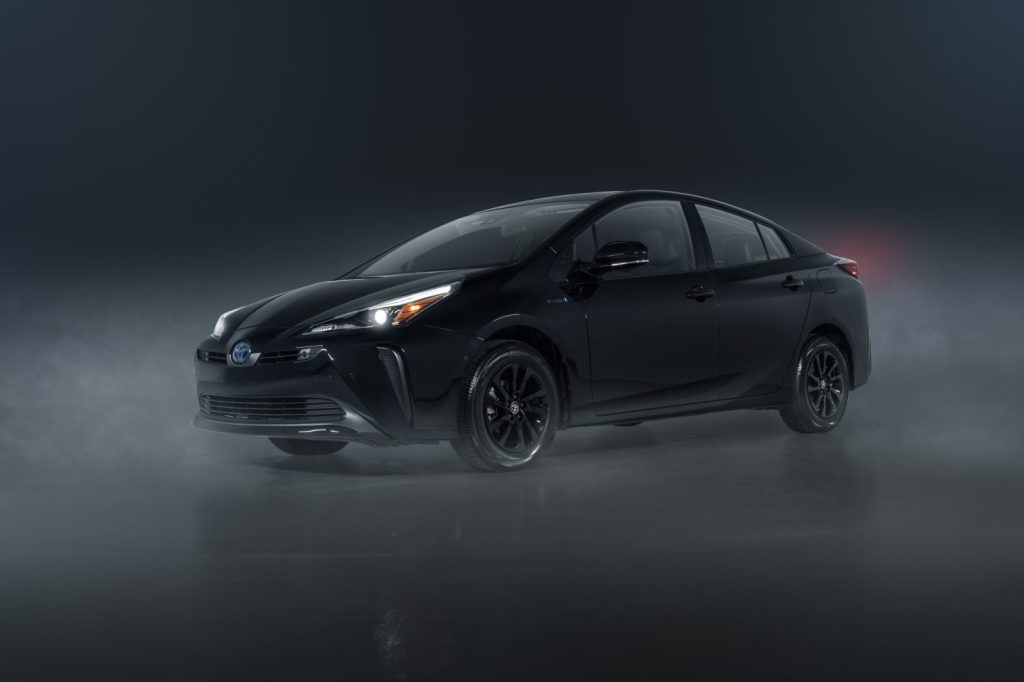
Yes, this is a Prius. (Image: Toyota)

Be that as it may, Shirouzu’s sources indicated that “Toyota’s planning had assumed demand for EVs would not take off for several decades.” Which is decidedly not the case.

So is Toyota making a pivot? That is one of the subjects discussed on this edition of “Autoline After Hours.” Joining “Autoline’s” John McElroy and me are automotive consultant/analyst Jack Keebler and long-time auto journalist, currently freelancing at Autoweek, Todd Lassa.

Other topics discussed are the Q3 earnings of both General Motors and Ford, as well as those companies positions on autonomous driving: GM continues to be bullish on the prospects for Cruise, still anticipating revenue of $1-billion from the operation by 2025; Ford is far more conservative, as it announced that Argo AI, the AV company that was owned primarily by it and Volkswagen (each had 39%), was closing. Ford going forward would focus more on Level 2+ and Level 3 ADAS. (Ford CEO Jim Farley: “It’s mission-critical for Ford to develop great and differentiated L2+ and L3 applications that at the same time make transportation even safer.”)

The conversation is wide ranging and lively. And you can see it here.

Interesting EV Numbers

The good news for EV enthusiasts (as in those who enthusiastically support the proliferation of EVs not necessarily because of any environmental considerations but simply because (a) they have one and figure that others should, too, or (b) they simply think it is cool tech, and while they can’t afford it—according to KBB.com, EVs had an average retail price of $65,291 in September—they still think it is cool for those who can):

According to Elizabeth Krear, vice president, electric vehicle practice, J.D. Power: “October breaks a three-consecutive month decline in EV consideration.” More people are thinking about getting an EV.

J.D. Power data have it that 27.4% of people who are going to be in the market for a new vehicle in the next 12 months are “very likely” to consider an EV.

While that is a move in the right direction for EV sales, Krear has some other figures that are less propitious:

“Adoption has been flat for the past six months with the retail monthly share for BEVs hovering at 5.6%. The top two reasons for EV rejection are lack of public charging and price.”

As for that all-important price component, she points out that affordability has decreased by 15 points during the past 12 months and the recent rise in interest rates is having an effect, as well.

But the federal EV support money for EV purchases as well as an increase in the number of models (J.D. Power has 51 in its data set; two years ago it contained 27) are at least helping people consider EVs, even though they still might opt for that ICE model.

Porsche: China and North America Are Important. But So Are Europe and Germany

This seems unlikely.

In reporting its global sales for the first three quarters of 2022 Porsche noted that its ales in China—its largest single market—were down. Only down by one percent, but down.

Still, overall the company is up two percent compared to the same period in 2021.

Sales in North America were also down. By four percent.

So that means the #1 and #2 markets for the sports car manufacturer were down.

The case in China, Porsche said, was largely caused by the COVID-related lockdowns imposed there various times this year.

As for the North America, the company cited logistical challenges.

Turns out that Europe, including the home market in Germany, made the difference.

In Europe minus Germany sales were up 11%, to 42,204.

Germany had a rise of nine percent, to 20,850 vehicles.

China sales were 68,766 units and in North America the number was 56,357.

In total, the company sold 221,512 units.

The electric Taycan deliveries were down by 12%, to 25,452, which Porsche attributes to “supply chain-related bottlenecks and declining parts availability.”

Doesn’t seem all that long ago that the Taycan was really going to take it to Tesla. Even though the Model S, refreshing notwithstanding, is long in the proverbial tooth, doesn’t seem that much of a bite has been taken out of it.

Lucid Through Q3

Back in May, Lucid Group, which produces the magnificent Lucid Air line of electric vehicles, thought that it would produce from 12,000 to 14,000 of those vehicles in 2022.

But, as they say, stuff happens.

After delivering 679 vehicles in Q2 it adjusted its guidance to be at 6,000 to 7,000 for the year.

Lucid Air Sapphire. Starts at $249,000. (Image: Lucid)

It just announced its Q3 production figures, which had 2,292 vehicles built at its plant in Casa Grande, Arizona.

So far this year it has built 3,697 vehicles.

To reach 6,000 units it would need 2,303 more.

That seems eminently do-able.

While the numbers are small, the Airs start at $87,400 and go north of $249,000.

Bigger numbers would be better. But in that context, small isn’t bad.

Dodge CEO Tim Kuniskis on the Transition to Electric

By Gary S. Vasilash

Perhaps more controversial than Dylan going electric in 1965. . .

If you think about “Dodge,” you have a pretty good idea of what it is: A lineup of muscle cars. It is a brand that has pared itself down to an essence, as things like the Journey and Caravan have gone away, leaving the bulk of the brand on the shoulders of two vehicles, the Charger and the Challenger. (The Durango is still in the showroom.)

The positioning of the brand is unapologetically the “Brotherhood of Muscle,” although all genders are encompassed within the club.

Dodge Charger Daytona SRT Concept: Dodge goes electric. (Image: Dodge)

One might think that this whole muscle car thing is an anachronism. HEMI engines don’t seem to a thing that would resonate in the age of Greta Thunberg.

However, in the first half of 2022, Dodge outsold Chrysler, Fiat and Alfa Romeo combined: 84,761 to 73,010.

There is a defined niche of buyers for whom muscle cars matter. And they buy them.

Although the platform underpinning the Charger and Challenger is, by contemporary standards, vintage, the people at Dodge have kept things going by introducing special editions and packages for the cars (e.g., the SCAT Pack Swinger, a tribute to the late ‘60s and early ‘70s).

Tim Kuniskis is the CEO of Dodge. And on this edition of “Autoline After Hours” he explains how Dodge will keep being propelled forward with cars even though he admits “cars are dead”—albeit dead for those who don’t necessarily consider their vehicles to be a representative of who they are. The Brotherhood of Muscle knows what matters to them and prove it every day.

Still, Kuniskis and his team are fully aware that the market is changing, moving away from HEMIs to electric propulsion.

So rather than pretending that it is otherwise, they have rolled out with “Last Call” editions of the Charger and Challenger and revealed the bad-ass battery electric Charger Daytona SRT Concept.

They are putting the proverbial pedal to the metal as they drive toward an electric future.

As Kuniskis points out in the show, people who drive muscle cars think somewhat differently than ordinary car consumers.

For example, do you think someone with a supercharged 6.2-liter HEMI Hellcat high-output V8 under the hood—a 797 hp or 807-hp engine, depending on package—is at all concerned with the fact that they may get a combined mpg of 15? Given that, what is the likelihood that someone getting an electric muscle car is going to be concerned whether the range is 300+ miles or a fraction of that—as long as the car moves like a bat-out-of-hell (which explains why the propulsion system in the concept is named “Banshee”)?

Ordinary EV buyers are largely concerned about range. Dodge EV buyers will focus on performance. (OK: some of them will be concerned with range, but they’re going to want to make sure that their cars seem to be hellacious performers.)

Kuniskis talks about the present and the future of Dodge with “Autoline’s” John McElroy, Chris Paukert of Edmunds, Mike Musto of Hemmings and me.

Even if you aren’t particularly interested in muscle cars per se it is a fascinating look at how a brand that is as intensely focused on one segment as Dodge can make a transition to a different technology model without disaffecting its customer base.

One can imagine that the Dodge switch to an electric future will become a business school case study, which you can learn about now, for free, here.

About Those (Absent) Auto Ads

By Gary S. Vasilash

Some 41% less was spent by automakers on national TV advertising in July 2022 compared with July 2021 according to iSpot.tv information cited by MediaPost.

The MediaPost article points out, “Without the Olympics, NBA Finals and Stanley Cup (which all took place during at least part of July last year), TV ad spending was down for automakers. . . .”

Fair point, because ads for OEMs during sporting events are absolutely ubiquitous.

However, there is another factor that probably plays a bigger role I the absence of ads:

The lack of product to sell.

According to Cox Automotive, the U.S. auto industry’s days’ supply of vehicles is in the mid-30s, a fraction what is ordinarily the norm.

Honda had just 21 days’ supply on dealer lots.

The point is, it makes very little sense to advertise products that people can’t buy.

Sure, there is something to be said to maintain brand awareness, but if there are ads that are extolling all of the wonderful features of a vehicle that is unicorn-like in its available existence, then the potential consumer is going to be highly annoyed (especially when that person tries to be sold something completely inappropriate by a dealer: guess who certainly won’t go back to that store and who is likely not to shop that brand?).

So sporting notwithstanding, the issue of sparsely available vehicles on dealer lots is a massive roadblock to commerce.

Some Notable Numbers

Let’s face it: vehicle sales in the first half of 2022 were not great in terms of volume.

What’s more, they weren’t great for customers who were looking for something affordable—according to Kelley Blue Book, the average transaction price for a new vehicle was a record $48,043.

They were great for OEMs and dealers, because higher prices mean bigger profits.

Be that as it may, it is interesting to look at how the leading OEMs made out in terms of one another when it came to sales.

In first place there is General Motors, which sold 1,087,761 vehicles. Based on that, here is the sales delta between pairs of subsequent companies (i.e., how many more the first named company sold than the company that follows it in sales ranking):

  • GM to Toyota:                  42,064
  • Toyota to Ford:                135,965
  • Ford to Stellantis:            95,900
  • Stellantis to Hyundai:       110,867
  • Hyundai to Honda:           196,668
  • Honda to Nissan:             73,683
  • Nissan to Volkswagen:      173,162

The gap between Toyota and Ford is surprising. And the gap between Ford and GM is even more surprising: 178,029.

Hyundai (as in the Group, meaning Kia, too) is certainly coming on strong. And Honda seems to be fizzling.

Realize that all of these companies are dealing with supply chain snafus and chip shortages, so it is a matter of (1) those who did a better job of managing their way through adversity and (2) a range of products (generally large SUVs and light-duty pickups) that consumers were interesting in acquiring.

Buying Electric Pickups

People buy a lot of trucks. According to NADA, in 2021 U.S. light truck sales (admittedly not all vehicles with cargo boxes on the back, as SUVs make it into this space) accounted for 77.6% of all light-duty vehicles moved off of dealer lots.

With the transition toward electrification, OEMs have undoubtedly taken this into account. So whether it is a traditional OEM like Ford and the now-in-volume-production F-150 Lightning or a startup like Rivian and its R1T, electric pickups are rolling out and there are more to come.

Cox Automotive has done some interesting research on potential purchasers of electric pickups.

Looking at those who currently own gas-powered trucks, they found that when it comes to what they are likely to buy next, 50% said they’d stick with gas-powered trucks. 37% said electrified (hybrids or full battery electric). And 14% will consider both.

What’s good news for the OEMs is that only 36% of buyers under age 35 would consider just gas-power, so the future looks better because the OEMs are putting a big bet on the future. 53% of those older than 35 say they’ll be sticking with gasoline. The first group will be buying more vehicles than the latter.

One finding puts the why-buy into perspective for pickups.

While some might imagine that the trucks are mainly for vocational use, turns out that only 12% of those who are considering an electrified for truck say they are doing so because they need it for work.

And 45% say they need it for their hobbies/interests.

A Bright Aspect of the U.K.’s Dour March Sales

Although passenger vehicle sales in the U.K. were down 14.3% in March compared to March 2021 at a total 243,479 units.

The U.S. sales were, according to LMC Automotive, on the order of 1.25 million units in March, the automotive consulting firm notes that compared to March 2021 that is a decrease of 22%, so the Brits are better on that score.

What is most notable about the U.K. vehicle registration numbers, as reported by SMMT: Battery electric vehicle sales were 39,315 units, or 16.1% of all vehicles sold. That is a 78.7% increase over the number of EVs sold there in March ’21.

Other categories:

Diesel:                    13,736 units           -55.2% (from March ’21)

Petrol:                     102,349                  -25.6%

MHEV diesel:          11,569                    -50.3%

MHEV petrol:          32,716                    4.0%

PHEV:                     16,037                    -7.5%

HEV:                       27,737                    28.4%

In other words, only EVs, mild gasoline hybrids and hybrids saw an increase. Those three categories of vehicles represent 40.9% of the total market in March ’22.

Things are certainly changing in the U.K.

The best-selling vehicle in the U.K. in March? The Tesla Model Y. And that’s of all powertrains. Number 2? The Tesla Model 3.

Enough said.

Why You May Not Be Getting That New Vehicle Anytime Soon

“The preliminary assessment from S&P Global Mobility for global auto production and sales levels continues to develop, but the current geopolitical events put pressure on an already delicate auto industry situation. Given additional uncertainty surrounding some important raw materials used in the production of semiconductors out of Ukraine and Russia, an initial assessment results in an assumption that several semiconductor plants will be forced to run intermittently at suboptimal speeds between the third quarter of 2022 and the second quarter of 2023, which in turn results in a further downgrade of global light vehicle production levels.  Lower production levels will create an even more untenable new vehicle inventory situation resulting in a downgrade to US light vehicle sales expectations.  As reflected in the S&P Global Mobility March 2022 forecast release, our initial impact removes approximately 250,000 units from our CY2022 US sales expectation and just over 300,000 units from our CY2023 projection, resulting in expected annual volume totals of 15.2M and 16.6M respectively.”– Chris Hopson, manager, North American light vehicle forecast, S&P Global Mobility

Maybe next year. . .