Fuel Cell Market to Expand, But. . .

Fuel cells are having their moment again for various vehicle applications, from light-duty to big rigs.

How big a moment?

Seems not trivial according to a report by MarketsandMarkets, which products the automotive fuel cell market will grow from $200 million this year to $2.1 billion by 2030. It will have a compound annual growth rate of 48%.

Where will the largest market be?

Asia Oceana.

Given that the geographies covered in the firm’s report also includes Europe, North America and Rest of the World, presumably that Asia Oceana includes China, which could explain the biggest market.

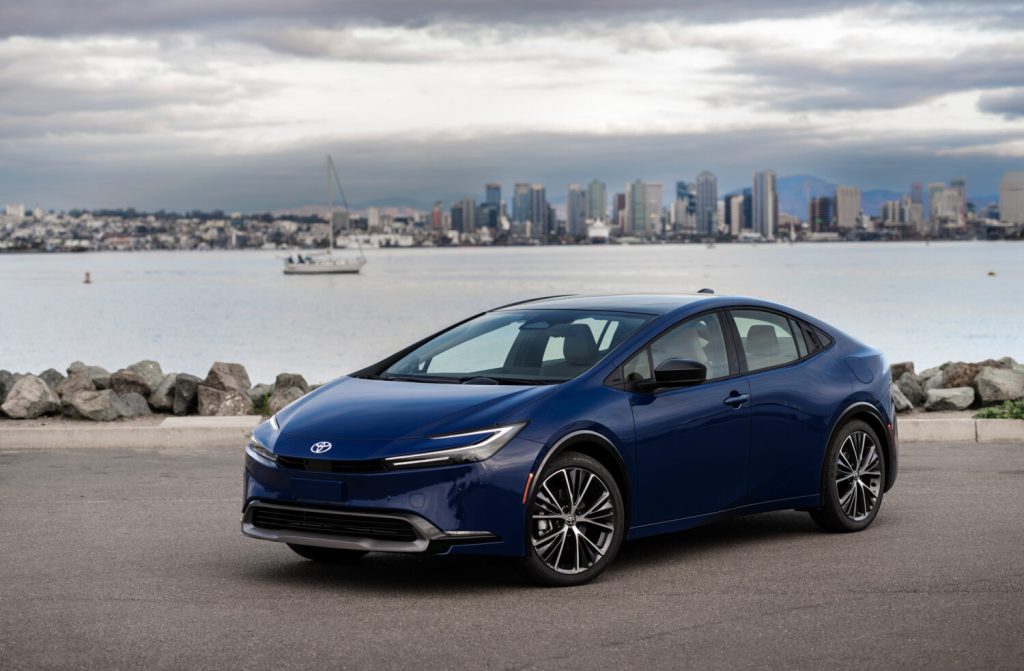
(Image: Toyota)

That said, with companies including Toyota, Honda and Hyundai continuing their hydrogen fuel cell development efforts, Japan and South Korea can’t be counted out as players, and consumers, in this field.

However. . .the global battery electric vehicle market size right now is on the order of $500 billion and it is estimated to be about $1.5 trillion by 2030, so even with the impressive growth of fuel cells, they’re still approximately the size of a dandelion in a redwood forest.

Lots and Lots of Tacomas

By Gary S. Vasilash

As John McElroy points out at the top of this edition of “Autoline After Hours,” in 2023 Chevy sold 71,081 Colorados, GMC 22,458 Canyons, Ford 32,334 Rangers, and Nissan 58,135 Frontiers.*

That is a total of 184,008 midsize trucks.

And another number: 234,768.

That’s the number of Toyota Tacomas sold in 2023.

There were 50,760 more Tacomas sold than all of the others on the market combined.

Clearly a popular truck.

Now there is a new generation Tacoma, one designed, engineered and manufactured in the North American market because that’s where the preponderance—and it is clearly quite a preponderance—of vehicles sold.

2024 Tacoma. Badass. (Image: Toyota)

During the development of the ’24 Tacoma an objective was to create a “Badass adventure machine.”

It was configured to be capable.

It was configured with several trims—SR, SR5, TRD Off-Road, TRD PreRunner, TRD Sport, Limited—so there would be a bandwidth available for buyers.

Because Toyota is committed to providing electrified variants of all of its vehicles, the Tacoma was fitted with an optional hybrid powertrain, a propulsion system that provides 326 hp and 465 lb-ft of torque.

Because Toyota is still interested in providing something for those off-road enthusiasts (and to the economy buyers) who are interested in a third pedal, there is a six-speed manual available.

Sheldon Brown, chief engineer for the new Tacoma, talks with McElroy, Richard Truett of Automotive News, and me on this show for an entire hour.

If you’re interested in Tacomas specifically or trucks in general, it is worth your time.

==

*Who would have thought that Nissan outsold Ford in trucks?

Hybridized CUVs Matter

By Gary S. Vasilash

Here’s a fun fact: the Honda CR-V hybrid was the best-selling hybrid vehicle, bar none, in the U.S. market in 2023.

197,317 were delivered.

Honda CR-V Hybrid under its skin. (Image: Honda)

Meanwhile, over at Toyota, 161,125 RAV4 Hybrids were sold and an additional 26,073 RAV4 Primes, the plug-in hybrid, for a total of 187,198 hybrids.

GM has zero hybrids.

Ford has hybrid versions of the Escape, Maverick, Explorer, and F-150.

Combined, it delivered 133,743 hybrids.*

Ford sold 140,986 Escapes in 2023. That’s with all powertrain options.

Fewer than the Honda and Toyota hybrids.

Chevy sold 212,701 Equinoxes—none of which are electrified, and not all that many more than the CR-V hybrid (15,384, non-trivial, but when you take into account that Honda sold 361,457 CR-Vs in 2023, well. . . ).

Clearly, compact CUV hybrids are appealing.

Surprising GM is ignoring the market and Ford probably needs to ramp up its output.

Dodge has a hybrid version of the Hornet available, a crossover that launched last Spring, so its efforts are still nacent in this space. It sold a total 9,314 Hornets in 2023, of which 3,591 were the hybrid version, so there’s evidently some traction.

(Jeep has the Wrangler 4xe plug-in and the Grand Cherokee 4xe plug-in, of which it sold 67,429 and 45,684, respectively. Neither, of course, is likely cross-shopped with a CR-V or RAV4, but still nice numbers.)

*Here’s a big number–the electrified Toyotas sold in 2023: 565,800. With the exceptions of 2,737 Mirai fuel cell electric vehicles and 9,329 bZ4X BEVs, all hybrids.

2024 NACTOY Winners Examined

By Gary S. Vasilash

This morning the 2024 North American Car, Truck and Utility Vehicle of the Year (NACTOY) awards were announced.

And with no further ado. . .

  • North American Car of the Year: Toyota Prius & Prius Prime
  • North American Truck of the Year: Ford Super Duty
  • North American Utility Vehicle of the Year: Kia EV9
Kia EV9: 2024 NACTOY Utility of the Year. In 2023 Kia also took that NACTOY category with the EV6. Seems that company really has it going on with electric utes. (Image: Kia)

To look at this a more closely:

The Car category also included the Hyundai IONIQ 6 EV and the Honda Accord. Several people whom I’ve talked with (full disclosure: I am one of the 50 jurors for the awards) thought it would more likely be the Accord than the Prius.

While all three are excellent cars, the transformation of the Prius from something that was somewhat awkward to an object of desire (with really good gas mileage) undoubtedly pushed it over the top.

In trucks, the Ford Super Duty was up against the Chevrolet Colorado midsize pickup and the Chevrolet Silverado EV. The NACTOY awards are consumer-centric, not commercial-centric. Which led me to wonder about the Super Duty being a finalist. Then two things happened:

  1. I talked with Detroit Free Press car reviewer Mark Phelan (also a juror) who pointed out that plenty of people buy Super Duty trucks as daily drivers
  2. I spent time behind the wheel of a Super Duty and discovered that in terms of the tech and the amenities it gave nothing up compared with cars or utilities

That the Silverado EV didn’t take the trophy probably surprised some people at GM HQ because this is their Ultium-based offering in the full-size truck segment and it betters the specs of the Ford F-150 Lightning, the EV pickup that won the NACTOY award in 2023. Perhaps the $74,800 price for a work truck kept Chevy from winning.

And in utilities, the finalists that the Kia EV9 faced were the Genesis Electrified GV70 and the Hyundai Kona/Kona EV. In mid-November when the finalists were announced the Kona wasn’t on the list and the Volvo EX30, a small electric crossover, was. But Volvo had to pull the vehicle from consideration because it wasn’t going to have vehicles in-market before the end of 2023.

Two things about the utility situation:

  1. Kia also won the category last year with the EV6
  2. As Genesis is a sibling company with Hyundai and Kia, it is clear that the three companies have remarkable capabilities in the utility space—including the electric utility space

And that second point raises another consideration:

The traditional domestics had the Truck category. But nothing in the other two categories.

Is that a model for long-term success?

Another List With Some Missing Names

By Gary S. Vasilash

Kelley Blue Book, an outfit with plenty of folks who know a whole lot about vehicles, their value and what consumers like or don’t about those vehicles, has come up with its list of “Best Buy Awards.”

In other words, the vehicles that were launched last year (or which underwent a redesign) that, based on a variety of criteria, KBB thinks people will be happier to acquire than competitive vehicles not on the list.

2024 Toyota Prius (Image: Toyota)

So without further ado, here are the winners of the 2024 Kelley Blue Book Best Buy Awards (all model year 2024 vehicles):

  • Best New Model: Toyota Prius
  • Best Compact Car: Honda Civic
  • Best Midsize Car: Honda Accord
  • Best Subcompact SUV: Hyundai Kona
  • Best Compact SUV: Honda CR-V
  • Best Midsize SUV: Kia Telluride
  • Best Full-Size SUV: Ford Expedition
  • Best Compact Truck: Ford Maverick
  • Best Midsize Truck: Toyota Tacoma
  • Best Full-Size Truck: Ford F-150
  • Best Minivan: Toyota Sienna
  • Best Electric Vehicle: Hyundai Ioniq 5
  • Best 3-Row Electric Vehicle: EV9
  • Best Electric Truck: Ford F-150 Lightning

One of the things that is evident from this list is that Ford is a superlative truck company.

Which leads to a question: Where’s anything from General Motors? No Cadillac? Chevy? Buick? GMC? Not one?

Or the company formerly known as Chrysler? Nothing from the Stellantis cadre (Chrysler, Jeep, Dodge, Ram, Alfa Romeo, Fiat)? The company that invented the minivan doesn’t make the Best Buy minivan?

And there is also the noticeable lack of anything with a European pedigree.

Looking into the Ford wins, in the Compact Truck category, there is really only the Maverick, so Ford gets a bonus there because it competes with nothing.

And the only other electric full-size truck that would qualify would be the Chevrolet Silverado EV, though it probably came out too late in the year to be assessed by KBB, so Ford Lightning by default (although it is a bit odd, given that the Lightning was launched in April 2022, not 2023).

But credit where credit is due.

Some Surprising Toyota Numbers

By Gary S. Vasilash

One thing that is occurring is that OEMs are decreasing the number of types of vehicles that they have on offer.

Consider, for example, Ford.

If you want a “car,” then you’d better be happy with a Mustang because that’s all that’s available.

It has gone from arguably a “full-line” manufacturer to a SUV/truck manufacturer.

And it is doing well in that truck category, as the company announced that the F-Series is the best-selling truck in the U.S. for 46 years running, and that it sold more than 640,000 trucks in 2022 (this isn’t just the F-150 but the F-550 chassis cab, so it is a mix of personal and commercial vehicles).

Toyota RAV4 (Image: Toyota)

Toyota is a full-line manufacturer, as it builds cars, trucks and utes.

And while it might seem as though this spreading might cause some dilution of vehicle sales (i.e., with a range to chose from, a consumer might pick a car rather than a ute or a truck rather than a car, thereby diminishing the overall sales for a given vehicle), when it added up its 2022 U.S. sales it had some impressive numbers:

  • The Camry is the best-selling passenger car for 21 years running
  • The Tacoma is the number-one small pickup and has been for the past 18 years
  • The RAV4 is now the best-selling SUV for seven years in a row

While some might think that the car segment isn’t all that interesting, know that it sold 295,201 Camrys in 2022.

It also sold 222,216 Corollas (the number-one selling compact in the U.S.)

And there are other cars on offer: Supra, GR86, Mirai, Avalon, and Prius.

The Tacoma clearly is a truck with legs. There were 237,323 sold in 2022. A point of comparison would be the combined number of the Chevy Colorado and GMC Canyon: 117,016.

The RAV4 run is perhaps the most impressive of all. While Ford and GM can legitimately argue—as can the Stellantis Jeep brand—that they have deep, deep SUV know-how and capability, the RAV4, of which 399,941 were sold in 2022, just keeps leading the list.

Seems that offering a full line can have some advantages for the OEMs’ sales and the customers’ choice.

Toyota’s Approach to Environmentally Appropriate Vehicles

By Gary S. Vasilash

There is an on-going criticism of Toyota that it is behind other OEMs when it comes to electric vehicles.

Which is true if the companies in comparison are Ford and GM.

At present, Toyota has one full battery electric vehicle, the bZ4X. It also has one hydrogen-powered electric vehicle—generally referred to as a “fuel cell electric vehicle” or “FCEV”—the Mirai.

At present there are no Lexus electric vehicles, battery or otherwise.

The EPA has recently published “The 2022 EPA Automotive Trends Report.” It examines greenhouse gas emissions and fuel economy.

In the report it shows that from 2016 to 2021, the miles per gallon for the aggregate of vehicles produced by the following companies are:

  • Ford:                      22.8 to 22.9 mpg
  • GM:                       22.4 to 21.6 mpg
  • Stellantis:               21.5 to 21.3 mpg

In other words, Ford improved by 0.1 mpg while GM and Stellantis both went in the wrong direction.

Similarly, the CO2 measures are:

  • Ford:                       389 to 385 grams per mile
  • GM:                        397 to 414 grams per mile
  • Stellantis:               413 to 417 grams per mile

In the case of CO2 measures, less is better. Ford got a bit better. The other two didn’t.

Stellantis presently has no full battery electric vehicles. It does have plug-in hybrid (PHEV) versions of the Pacifica, Wrangler and Grand Cherokee.

Ford has battery electrics. The F-150 Lightning, the Mustang Mach-E and the E-Transit. It also has hybrid versions of the Escape, Maverick, F-150, and Explorer. Lincoln offers hybrid versions of the Aviator and the Corsair but no battery electrics.

GM has the Chevrolet Bolt EV and Bolt EUV, Cadillac LYRIQ and HUMMER EV battery electric vehicles at present and no hybrids.

So how does Toyota measure on the EPA metrics?

  • Toyota:                    25.0 to 27.1 mpg

and

  • Toyota:                    355 to 327 grams per mile

Or simply put, in the aggregate, the vehicles that the company put out in the market between 2016 and 2021 are, from an environmental standpoint, better than the vehicles from the other three manufacturers.

And it is worth noting that in 2021 Toyota, with sales of 2.3-million vehicles, was the top manufacturer in the U.S. GM sold 2.2 million, Ford 1.9 million and Stellantis 1.8 million.

It didn’t have the bZ4X last year, so that doesn’t count in its numbers. It did have the Mirai, but the number of those it sells could pretty much fit in the parking lot of a large stadium.

But what it does have are the Prius and Venza and hybrid versions of the Corolla, Camry, Avalon, Sienna, Highlander, Sequoia, RAV4, Tundra, and Lexus ES, UX, NX, RX, LS, and LC.

It could be argued that those vehicles contributed a lot to the “greener” performance of Toyota compared with Ford, GM and Stellantis.

It could also be argued that especially compared with Ford and GM Toyota is some sort of Luddite when it comes to green powertrain technology. . .yet the EPA figures don’t indicate that what it is putting on the road is in any way behind the curve.

On this edition of “Autoline After Hours” we are joined by Jordan Choby, vice president of Powertrain Control at Toyota Motor North America R&D. He joins us from the Toyota Gardena, California campus where fuel cell development is occurring.

Choby explains that, yes, Toyota is working on battery electric vehicles and it plans to have 30% of its global volume be electric vehicles by 2030, but that the company is operating on model that is providing consumer choice regarding the type of engine or motor that is under the hood of their vehicle.

Choby talks with “Autoline’s” John McElory, Tom Murphy of Autoweek, and me.

And you can see the show here.

Toyota, GM, Ford; EVs, AVs and ADAS

By Gary S. Vasilash

Last week Norihiko Shirouzu of Reuters reported “Toyota is considering a reboot of its electric-car strategy to better compete in a booming market it has been slow to enter.”

Toyota’s Prius is synonymous with “hybrid.” The company has pretty much hybridized everything. It argues—or maybe that would be “argued”—that it is better to build a whole bunch of affordable hybrids than a comparatively few electric vehicles that are comparatively more expensive: according to Kelley Blue Book, the average price of an electric vehicle in the U.S. in September was $65,291. The average transaction price for vehicles overall, KBB calculated, was $48,094. Which is roughly a 27% delta, which is certainly non-trivial.

Yes, this is a Prius. (Image: Toyota)

Be that as it may, Shirouzu’s sources indicated that “Toyota’s planning had assumed demand for EVs would not take off for several decades.” Which is decidedly not the case.

So is Toyota making a pivot? That is one of the subjects discussed on this edition of “Autoline After Hours.” Joining “Autoline’s” John McElroy and me are automotive consultant/analyst Jack Keebler and long-time auto journalist, currently freelancing at Autoweek, Todd Lassa.

Other topics discussed are the Q3 earnings of both General Motors and Ford, as well as those companies positions on autonomous driving: GM continues to be bullish on the prospects for Cruise, still anticipating revenue of $1-billion from the operation by 2025; Ford is far more conservative, as it announced that Argo AI, the AV company that was owned primarily by it and Volkswagen (each had 39%), was closing. Ford going forward would focus more on Level 2+ and Level 3 ADAS. (Ford CEO Jim Farley: “It’s mission-critical for Ford to develop great and differentiated L2+ and L3 applications that at the same time make transportation even safer.”)

The conversation is wide ranging and lively. And you can see it here.

How Innovative Is Auto?

In the Boston Consulting Group list of the top 50 most innovative companies in the world there are few surprises.

The top three are Apple, Microsoft and Amazon. Alphabet comes in at 4.

Not much of a surprise there. You could mix up the names and it would probably be about right.

The first automotive company, at number 5, is Tesla.

Again, not much of a surprise there, either.

But there isn’t another automotive company on the list until position 21. Toyota.

Bosch is down a few spots at 26, although one might argue that its innovation profile undoubtedly has something to do with its Industrial Technology, Consumer Goods, and Energy and Building Technology, too—not just Mobility Solutions.

Next is Hyundai, at position 33. It wasn’t that many years ago when Hyundai was considered to be not much more than a car company for people who wished they could buy a better car but couldn’t; now it is a highly innovative provider of some of the most remarkable vehicles on the road.

General Motors makes the list at 42, and crosstown rival Ford is just behind it at 43.

Mitsubishi is at 48, but odds are it is not for its motor vehicles (the company has a multiplicity of companies under its umbrella).

So if we subtract Mitsubishi but keep Bosch, there are 6 automotive companies on the list. Or 12%.

Still, it seems that there could be, should be, more.

To be sure, it is a whole lot more difficult to make significant developments in vehicles than in consumer electronics.

But one might imagine that with all of the ways that auto OEM execs are describing their companies the positioning on the list would have more than one company in the top 10 and more than two in the top 25.

Toyota Rolls Out Plenty of Products

By Gary S. Vasilash

Let’s face it: As much as people would like to think that the pandemic is something that is talked about in the past tense, the direction of those arrows showing cases and hospitalizations and deaths related to Covid are going in the wrong direction.

This means that OEMs have to consider the ways and means that they announce product to the press, and in turn, the public, because this ain’t 2019 anymore.

Toyota has announced a tranche of products and developments that would usually be metered out drip by drip.

Instead, it has essentially said, “Get ready, here we come!”

GR Corolla MORIZO Edition. Yes, you could go to Costco in it. But you’d probably have a whole lot more fun at a track. (Image: Toyota)

As in:

  • 2023 Corolla Hybrid with optional AWD–What makes this different is that there is a separate electric motor mounted on the rear axle to switch from what is ordinarily a FWD vehicle to AWD.
  • Corolla Cross Hybrid—The SUV-ish vehicle now (1) is available as an AWD vehicle and (2) uses Toyotas Fifth Generation Hybrid system. Oddly, Toyota touts that the vehicle has a 0 to 60 time of 8 seconds. No one—probably not even a rogue valet—is going to pin the accelerator on a Corolla Cross, hybrid or otherwise.
  • GR Corolla MORIZO Edition—“GR” stands for “Gazoo Racing.” It was established as something of a skunkworks for running at the 2007 Nürburgring—but as it was established by Akio Toyoda. . .  . Anyway, GR is both a racing team as well as an operation that provides performance to production vehicles. This vehicle, limited to 200 cars, is designed for the track (but is street-legal), as the engineers worked at taking out weight (they removed some 100 pounds from the GR Corolla Circuit Edition), added a close-ratio manual transmission, and increased overall rigidity. Here’s something you don’t necessarily associate with a turbocharged three-cylinder engine: 300 hp and 295 lb-ft of torque.
  • 2023 GR86 Special Edition—Last year Toyota introduced the GR86 sports car, and the vehicle has been doing well. In Q1 ’22 there were 3,257 GR86s sold, which may not seem like a big number, but is an increase over Q1 2021 of 326.3%. The Special Edition will be limited to 860 vehicles. The vehicle features a cat-back performance exhaust to make the 228-hp 2.4-liter engine sound, well, more bad-ass. There are forged matte black 18-inch alloys. And there are various trim mods inside and out.

Meanwhile, over at Lexus:

  • 2023 RX—The fifth generation of the vehicle that, arguably, made Lexus. Were it not for the luxury crossover, a segment that the RX pioneered, odds are that Lexus might have been like those other two brands that launched around the same time that are now pretty much footnotes. The new RX is on a new platform (GA-K), which is important because it allows a weight reduction (always good for performance) and increased rigidity (ditto). The RX has been available as a hybrid since 2005 (!). That continues with the new model. But there is a second hybrid, the RX 450h+ that will be coming, which is a plug-in hybrid.

And there’s this:

  • Cabin Awareness concept—This is a development from Toyota Connected North America, an operation that focuses on things of a digital nature. This concept is based on a 4D imaging radar sensor—and it has absolutely nothing to do with autonomous driving. Rather, the sensor, mounted in the headliner of a vehicle, determines whether there are life forms in the vehicle (adults, kids, infants, pets). This is useful to make sure that no one is left inside a vehicle. And because this will be important in the autonomous world (e.g., say someone books a ride for himself and pet and upon arrival at the destination, gets out but leaves the pet behind), Toyota is working with autonomous vehicle company May Mobility on testing it out in autonomous Toyota Siennas (back to that parenthetical scenario: the Cabin Awareness sensor finds the pet is still there and a signal is sent to the vehicle system such that it won’t move on until the situation is resolved).

Yes, lots of things from Toyota in a compact amount of time.