Audi’s Identity Issue

By Gary S. Vasilash

2018 saw the launch of the Audi e-tron, the German’s first production EV. Even then knowing where the interest was developing (things like the Tesla Model S notwithstanding), the folks in Ingolstadt determined that an SUV was the body style to launch.

Since then, Audi has sold about 150,000 of the vehicles.

Audi Q8 e-tron. (Image: Audi)

Maybe they figured that what the heck an “e-tron” was was something that kept it from gaining significantly more traction in the market.

So for the new model the name has been changed to “Q8 e-tron.”

The company had some equity in the Q8 name for its SUV. So it has appended it to the electric variants (there is also the Q8 Sportback e-tron).

Audi puts it: “By renaming this model the Q8, Audi is making a clear statement that the Audi Q8 e-tron is the flagship model among its electric SUVs and Coupe SUVs.”

Perhaps that will resolve what is arguably an identity crisis in the market.

However, the company goes on to maintain, “The Audi Q8 e-tron and Q8 Sportback e-tron are immediately identifiable as fully electric models, marked out by the new front and rear designs that carry Audi’s electric design language forward.”

There it may be a bit misled. The whole “immediately identifiable as fully electric models” is more than a slight exaggeration.

It was probably that sort of thinking that led Audi marketers to think back in 2018 that prospective customers would immediately know that the e-tron was an electric Q8 by another name.

Seems that that didn’t work out particularly well sales-wise.

Bob Purcell: from the EV1 to the VIA Skateboard Chassis

By Gary S. Vasilash

Bob Purcell has been in the EV space for a number of years. In the early 1990s when General Motors was developing the EV1 Purcell was involved. He was to become the head of the then-newly formed Advanced Technology Vehicles Division at the company. After nearly 17 years at GM Purcell left the corporation and worked at companies involved in batteries and electric propulsion systems.

Purcell is now the CEO of VIA Motors, which is a producer of an electric skateboard chassis for application in Class 2 through Class 5 cargo vans, trucks and buses.

The skateboard chassis allows an array of upfitting opportunities. (Image: VIA Motors)

Although he had his start with a passenger car (the EV1), Purcell is convinced that commercial vehicles are the ideal place for electric propulsion.

As he explains on this edition of “Autoline After Hours” this is because the total cost of ownership of an electric truck is less than that of one with a thermal engine, thanks to things like reduced maintenance requirements. In addition to which, he says there is a 4:1 per mile cost benefit (electricity vs. liquid fuel). All things that add up to improvements to the bottom line of commercial carriers.

(While personal vehicle owners can also experience the same advantages, it isn’t often—if ever—that you hear the buyer of a new EV say, “I got this because the life-cycle costs are a distinct advantage.”)

Purcell talks with “Autoline’s” John McElroy, Sam Abuelsamid of Guidehouse Insights, and me on the show.

Beyond his discussion of what they’re doing at VIA, Purcell shares plenty of insights on both his career as well as the overall EV landscape. The man is clearly an EV proponent, but unlike many boosters of the tech, Purcell has a deep base of knowledge in the space, which makes him far more credible than the average EV enthusiast.

And you can see the show here.

Will Twitter Doom Tesla?

“Future Paths of Electric Vehicle Adoption in the United States: Predictable Determinants, Obstacles and Opportunities,” a National Bureau of Economic Research working paper by James E. Archsmith, Erich Muehlegger and David S. Rapson that was published in June 2021, includes a point that may have some serious implications for Elon Musk and his exceedingly expensive Twitter purchase and his remarkably successful Tesla business.

They write:

“EV demand is strongly correlated with higher levels of income and education, and EV adoption is highest among car buyers 35 to 45 years old. More liberal and coastal states tend to have higher demand for sedans and EVs. . . .”

Yes, there is a political bias vis-à-vis a large percentage of those people who buy EVs.

Should Musk tilt Twitter to the extreme Right, isn’t it likely that the liberal EV intenders are likely to no longer think of Tesla as an aspirational brand and opt for something else? Isn’t it possible that there would be a whole lot of Tesla blowback?

Somehow this doesn’t seem at all unimaginable.

Add in the issues related to the Saudi investment in Twitter and the Chinese influence on Tesla’s fortunes in China, and the self-proclaimed Chief Twit may find himself wishing that he would have not bought the bird when he could have continued to get bird shit for free.

What Is the Ram 1500 Revolution EV Concept?

By Gary S. Vasilash

The Ram Truck brand has announced it will unveil its Ram 1500 Revolution battery electric pickup concept at CES 2023 in Las Vegas on January 5.

“CES” used to stand for “Consumer Electronics Show.”

Now it is bigger than that.

One of the reasons it is expanded in scope in due to the auto industry which, for the past few years, has realized that attending an industry trade show full of people who are tech heat seekers is good for word of mouth, which is good for business.

Consider this: the Chevy Bolt EV was introduced on January 6, 2017 at CES. GM CEO Mary Barra made a keynote address at the event that day.

The following week in Detroit the North American International Auto Show, the venue where vehicles are ordinary unveiled, got to see the Bolt EV, too. Not a debut, of course.

What’s more, coincident with the unveiling of the Bolt EV Mary Barra and the car appeared on the cover of Wired magazine.

Vehicle OEM PR people know that writers for Car and Driver and MotorTrend have to cover vehicles like the Bolt and the Ram 1500 Revolution.

If they can get publications like Wired to cover them—that’s saying something.

A question about the Ram 1500 Revolution and CES:

Is Ram Truck positioning the vehicle as tech or a truck?

This is not to say that modern trucks don’t have a lot of tech. But it does seem that by launching it there the company is saying to the world that the truck is a marvel of advanced engineering more than this is something that someone is going to use to haul aggregate or boards or whatever.

It will most certainly have the capability to hauling that whatever and then some.

But if it can convince people who are never going to haul that this is a technically trick truck, then they may get even more market traction than they would if they introduced it at the Chicago Auto Show, an event in February where OEMs have tended to launch their trucks.

Toyota, GM, Ford; EVs, AVs and ADAS

By Gary S. Vasilash

Last week Norihiko Shirouzu of Reuters reported “Toyota is considering a reboot of its electric-car strategy to better compete in a booming market it has been slow to enter.”

Toyota’s Prius is synonymous with “hybrid.” The company has pretty much hybridized everything. It argues—or maybe that would be “argued”—that it is better to build a whole bunch of affordable hybrids than a comparatively few electric vehicles that are comparatively more expensive: according to Kelley Blue Book, the average price of an electric vehicle in the U.S. in September was $65,291. The average transaction price for vehicles overall, KBB calculated, was $48,094. Which is roughly a 27% delta, which is certainly non-trivial.

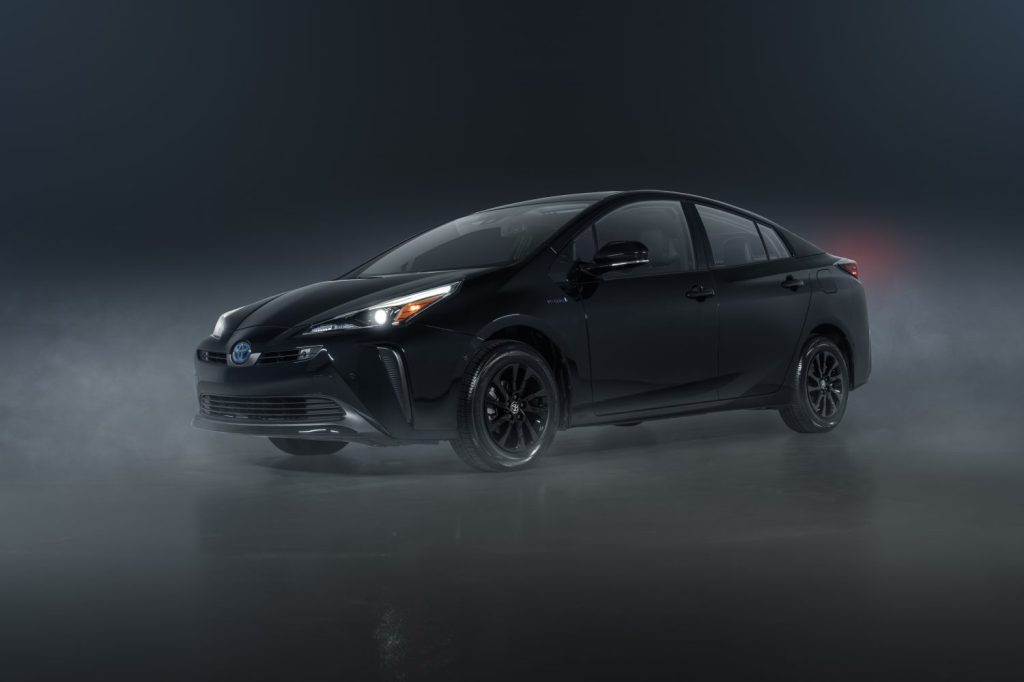
Yes, this is a Prius. (Image: Toyota)

Be that as it may, Shirouzu’s sources indicated that “Toyota’s planning had assumed demand for EVs would not take off for several decades.” Which is decidedly not the case.

So is Toyota making a pivot? That is one of the subjects discussed on this edition of “Autoline After Hours.” Joining “Autoline’s” John McElroy and me are automotive consultant/analyst Jack Keebler and long-time auto journalist, currently freelancing at Autoweek, Todd Lassa.

Other topics discussed are the Q3 earnings of both General Motors and Ford, as well as those companies positions on autonomous driving: GM continues to be bullish on the prospects for Cruise, still anticipating revenue of $1-billion from the operation by 2025; Ford is far more conservative, as it announced that Argo AI, the AV company that was owned primarily by it and Volkswagen (each had 39%), was closing. Ford going forward would focus more on Level 2+ and Level 3 ADAS. (Ford CEO Jim Farley: “It’s mission-critical for Ford to develop great and differentiated L2+ and L3 applications that at the same time make transportation even safer.”)

The conversation is wide ranging and lively. And you can see it here.

Interesting EV Numbers

The good news for EV enthusiasts (as in those who enthusiastically support the proliferation of EVs not necessarily because of any environmental considerations but simply because (a) they have one and figure that others should, too, or (b) they simply think it is cool tech, and while they can’t afford it—according to KBB.com, EVs had an average retail price of $65,291 in September—they still think it is cool for those who can):

According to Elizabeth Krear, vice president, electric vehicle practice, J.D. Power: “October breaks a three-consecutive month decline in EV consideration.” More people are thinking about getting an EV.

J.D. Power data have it that 27.4% of people who are going to be in the market for a new vehicle in the next 12 months are “very likely” to consider an EV.

While that is a move in the right direction for EV sales, Krear has some other figures that are less propitious:

“Adoption has been flat for the past six months with the retail monthly share for BEVs hovering at 5.6%. The top two reasons for EV rejection are lack of public charging and price.”

As for that all-important price component, she points out that affordability has decreased by 15 points during the past 12 months and the recent rise in interest rates is having an effect, as well.

But the federal EV support money for EV purchases as well as an increase in the number of models (J.D. Power has 51 in its data set; two years ago it contained 27) are at least helping people consider EVs, even though they still might opt for that ICE model.

Saving Cadillac

By Gary S. Vasilash

John F. Smith worked at General Motors at the same time that John F. Smith worked at General Motors.* The latter was to become GM CEO. The former was appointed by the latter to a number of executive positions within GM.

Perhaps the most notable was in 1997, when he was named head of Cadillac.

Things weren’t great at that brand back then. Hard to believe, but there was something that is now intrinsic to Cadillac that was absent: the Escalade, the massive truck-cum-SUV that has had visual presence on the road for a little more than two decades now.

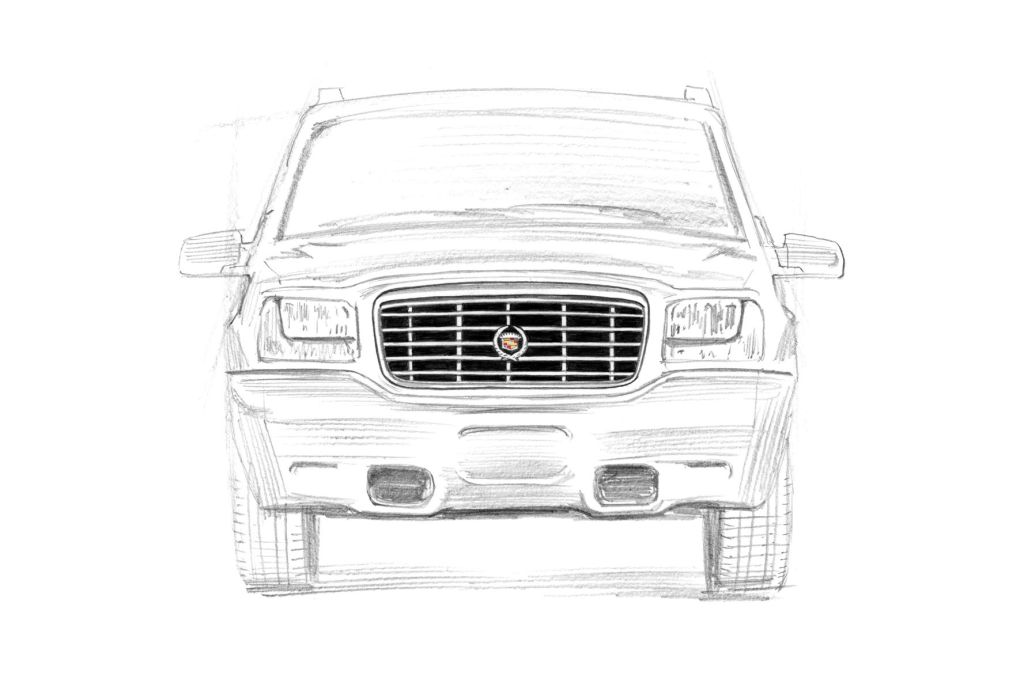
The original Escalade. (Image: GM)

The Escalade was to come to be under John Smith’s period at Cadillac, helped into existence by the other John Smith, who was known as Jack.

John Smith talks about his career at Cadillac in this edition of “Autoline After Hours,” as well as a book he has recently had published about some of his adventures in the auto industry, Fin Tails: Saving Cadillac, America’s Luxury Icon (see how important Escalade was/is?).

Also on Smith’s resume are positions including vice president of Planning at General Motors International Operations in Zurich as well as president of Allison Transmission. Which is to say that he has a broad perspective on the auto industry, one broader than just Cadillac.

On this edition of “Autoline After Hours” Smith spends the hour talking with “Autoline’s” John McElroy, Doron Levin, who, among other things, writes about the auto industry at Saving Alpha and me.

And you can see it here.

*Given that “Smith” is the most common surname in the U.S., and “John” has been in the top 10 until 1987, this isn’t exactly surprising.

Gen Z Drives Transport Use

Gen Z adults, of all the generational cohorts, are the most on the move.

In the past month 35% rode a subway, 44% a bus, 31% a local commuter train, and 52% used a ride-hailing app. That according to Morning Consult.

To put those numbers into perspective, the averages for all U.S. adults are, respectively, 15%, 21%, 15% and 25%.

Or in all cases Gen Z is double the average.

What’s more, 57% of Gen Z adults said they’d taken a road trip during the past month, which puts that group at the top. . .although Millennials are at 56%, so it isn’t like they’re comparative stay-at-homes. That description would apply to the Boomers, as only 26% of them reported a road trip.

There is, evidently something to the notion of youthful wanderlust—although it is worth noting that 82% of all U.S. adults reported using their household vehicle during the past month to. . .drive to work.

Bob Boniface on Automotive Design

By Gary S. Vasilash

Here’s something that you probably don’t know about Bob Boniface, director of Global Buick Design, even if you know Bob Boniface.

He began his career. . .working at a mutual fund in Boston after receiving his undergraduate degree. . .in psychology and economics.

Boniface did go to the College of Creative Studies in Detroit and while there was hired as an intern to work at Chrysler which led to a job offer from then-head of Chrysler Design, Tom Gale.

Buick Wildcat EV concept. If Buicks look like this, then the brand has a bright, electric future. (Image: Buick)

Boniface was to work at Chrysler for 12 years, during which time he worked on a variety of projects including the second-generation Dodge Intrepid, the Dodge Intrepid ESX (a diesel hybrid with wheel motors), the Stow ‘n Go seating for the minivans, the 300C, and the Jeep Liberty.

In 2004 Boniface moved across town to General Motors. The first thing he worked on was the GM Sequel—a fuel cell-powered vehicle. Then the gen-five Camaro.

Boniface says, on this edition of “Autoline After Hours,” that he was, in effect, employee #1 on the Chevrolet Volt.

Then he moved to Cadillac for six years. He worked on XT4, XT5, CTS, CT6 and. . .he says the best part was working on the V-Series, the CTS-V and the ATS-V. (He says one of the engaging parts of the V programs was the level of commitment across all the functions involved: by having everyone working toward making something special, the results is–something special.)

Boniface moved to Buick in 2016 and has worked on vehicles including the Enclave and the Envision.

He points out that a lot of his work involves overseeing the studios in Korea and China. The China market is huge for Buick—roughly four times that of the U.S. market, so that part of the world is important. He notes that a lot of developments in the interior space are occurring in that part of the world, and interiors are part of his portfolio.

But then there’s the Wildcat EV Concept.

Realize that Buick arguably gave rise to the whole notion of the concept vehicle with the 1938 Buick Y-Job. The brand has had a number of vehicles with striking designs since then, such as the Wildcat I and II of the 1950s to the Velite in 2004 to the Avenir in 2016.

Back in 2018 Boniface says that they went to work on developing not so much a new vehicle as a new design language. But that exercise gave rise to the Wildcat EV Concept, a 2+2 coupe that is an expression of the electric future of Buick and that expression includes a new face—although being new, it also includes a nod to the brand’s design paste (e.g., high lamps, body-mounted badge).

Again: it is the language that they created and the vehicles to come will be spelled with those words.

If you have any interest in automotive design over the past 30 years, then this edition of “Autoline After Hours” is must viewing.

Joining the discussion are Greg Migliore of Autoblog and Joe DeMatio of Hagerty Media.

And you can see it here.

Porsche: China and North America Are Important. But So Are Europe and Germany

This seems unlikely.

In reporting its global sales for the first three quarters of 2022 Porsche noted that its ales in China—its largest single market—were down. Only down by one percent, but down.

Still, overall the company is up two percent compared to the same period in 2021.

Sales in North America were also down. By four percent.

So that means the #1 and #2 markets for the sports car manufacturer were down.

The case in China, Porsche said, was largely caused by the COVID-related lockdowns imposed there various times this year.

As for the North America, the company cited logistical challenges.

Turns out that Europe, including the home market in Germany, made the difference.

In Europe minus Germany sales were up 11%, to 42,204.

Germany had a rise of nine percent, to 20,850 vehicles.

China sales were 68,766 units and in North America the number was 56,357.

In total, the company sold 221,512 units.

The electric Taycan deliveries were down by 12%, to 25,452, which Porsche attributes to “supply chain-related bottlenecks and declining parts availability.”

Doesn’t seem all that long ago that the Taycan was really going to take it to Tesla. Even though the Model S, refreshing notwithstanding, is long in the proverbial tooth, doesn’t seem that much of a bite has been taken out of it.