Yes, they are selling in the U.S. and Canada in great numbers, but the Mexican market still likes cars, LMC finds
By Gary S. Vasilash
Although SUVs (yes, including crossovers under that omnibus name) continue to proliferate in the U.S. and Canadian markets, turns out that things aren’t quite the same in the other USMCA country, Mexico.
According to LMC Automotive, while SUV sales surpassed those of cars in Canada in 2015 and in the U.S. in 2016, in 2020 cars outsold SUVs in Mexico. And not just by a little.
Nissan still sells cars in Mexico. (Image: Nissan)
The LMC data show that cars outsold SUVs by more than 2:1.
That said, there is growth in SUV sales in Mexico notes LMC Americas Vehicle Sales Forecasts analyst David Oakley, but there is an issue: “The overarching obstacle is cost, with SUVs still carrying a larger price tag than many high volume cars.”
Complicating matters for Mexican consumers is the fact that Ford and Chevrolet have pretty much given up on cars, about which Oakley says, “these brands seem to have jumped the gun with regard to Mexico’s readiness for such a shift.”
Although it is estimated that cars and SUVs will reach parity in sales by 2030 in Mexico, there are still several years of sales between now and then, sales that will probably go to brands like Hyundai and Nissan.
Seems like vehicle buyers are buying—costs be damned
By Gary S. Vasilash
“Importantly, consumer spending will still advance despite higher prices due to pent-up demand and record savings balances.” That’s Richard Curtin, chief economist for the Surveys of Consumers, University of Michigan.
In the survey for May it was discovered that consumer confidence fell compared to the data for April. A concern is with inflation.
According to the U.S. Bureau of Labor Statistics (BLS), the Consumer Price Index was up by 4.2% for the 12-month period ending in the cruelest month. That was the highest rise since September 2008, when it hit 4.9%.
What was a big contributing factor to both the fall in consumer confidence and the increase in consumer prices? Vehicle prices.
In the case of used cars and trucks, the BLS measured a 10% increase in prices—the largest one-month increase since they started measuring back in 1953.
But it seems that shoppers aren’t all that concerned.
“Four out of ten consumers are willing to pay above the manufacturer’s suggested retail price (MSRP), and those willing to pay over MSRP are willing to accept a 12% premium.”
Cox calculates that based on the average MSRP for new vehicles in April being $41,950, according to Kelley Blue Book, “many consumers are willing to pay $5,000 over sticker price.”
Somehow politicians are blamed for inflation.
Seems like consumers might have more than a cameo role in this scenario.
There are lots of new vehicles that have been or will be introduced this year. So on this edition of “Autoline After Hours” we dedicate the show to talking about some of them.
Acura MDX: Fourth generation of the utility. Three rows. Edgier styling. Solid suspension. What’s not to like? Apparently the True Touchpad Interface.
Buick Envision: A crossover with meticulous attention to detail, inside and out. Does the fact that it is made in China have anything to do with that?
Cadillac CT5-V Blackwing and CT4-V Blackwing: A lesser bat-out-of-hell (the 4 has a 472-hp engine) and a full-blown one (the 5 has a 668-hp engine).
Chevy Bolt EUV: The second electric vehicle (EV) in the lineup that looks more like an SUV, presumably to appeal to those who can’t get enough of that body style.
Ford Bronco: A hard-core off-road vehicle, coming soon to a driveway near you. Get the Sasquatch Package and get extra ground clearance and the approach and departure angles that make climbing rocks not an issue. Get the optional Honda
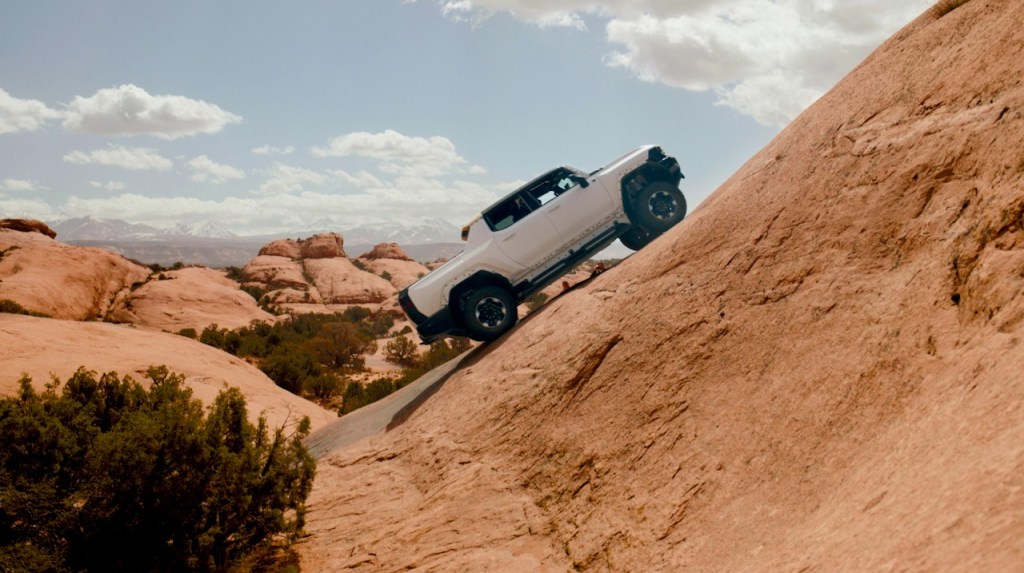
GMC HUMMER EV Pickup. 1,000 hp 11,500 lb-ft of torque. 0 to 60 mph in 3 seconds. 350+ miles of driving range. Fast charge up to 100 miles in 10 minutes. You can’t get a reservation for Edition 1, which is coming out this fall and has an MSRP of $112,595. In the fall of 22 there will be more available with a reduced price: $99,995.
Honda Civic Sedan: The 11th generation appears to be what will bring Honda back to being Honda. Which should make sedan enthusiasts every enthusiastic.
Hyundai Santa Cruz and Tucson and IONIQ 5: whether it is a little truck-like vehicle, a compact sport ute that comes with two flavors of hybrid as well as a conventional ICE powertrain, or a fully electric crossover, seems that Hyundai is the Overachiever of the Year.
Kia Carnival: Don’t call this a “minivan.” Don’t.
Nissan Frontier: It has been a while since Nissan has brought out a new version of its pickup (e.g., the one that is out now appeared in. . . 1998), so they’ve clearly had time to get this one right.
Rivian R1T: Will this electric pickup from a startup be a success in the market?
Nearly a quarter of this year’s field consists of previous winners
By Gary S. Vasilash
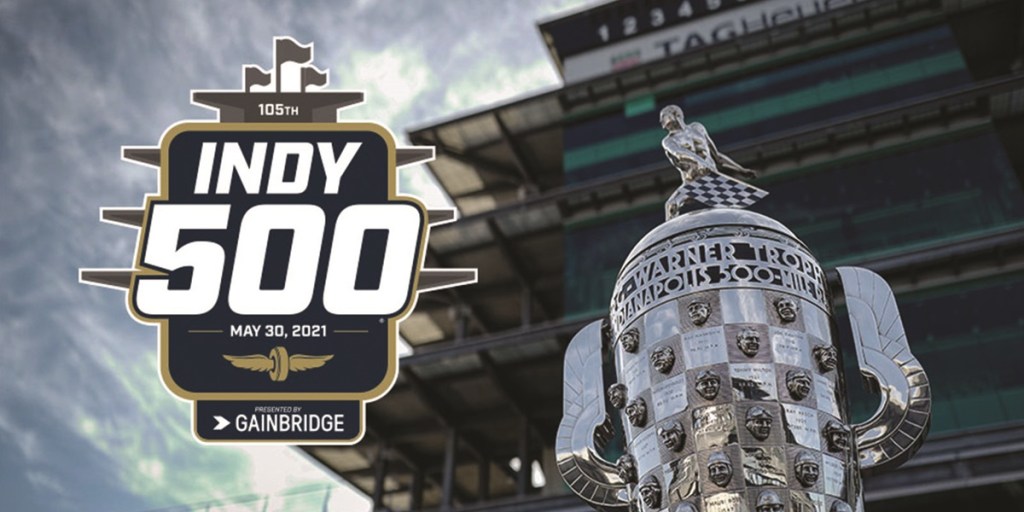
(Image: IMS)
On May 30 the 105th running of the Indianapolis 500 is scheduled to be held.
While things can change between now and then, here’s something of at least moderate interest:
In the field of 35 cars (18 will have Chevy engines, 17 Hondas; all are Dallara chassis (a.k.a., cars) running on Firestone tires), there will be nine people who have won “The Greatest Spectacle in Racing.”*
They are:
Helio Castroneves (2001, 2002, 2009)
Juan Pablo Montoya (2000, 2015)
Takuma Sato (2017, 2020)
Scott Dixon (2008)
Tony Kanaan (2013)
Ryan Hunter-Reay (2014)
Alexander Rossi (2016)
Will Power (2018)
Simon Pagenaud (2019)
If Castroneves manages to win, he will be the fourth driver to have won the race four times, with the current three being A.J. Foyt, Al Unser Sr., and Rick Mears.
*The phrase “The Greatest Spectacle in Racing” was written by Alice Greene, a copywriter working for WIBC radio. Some sources have it in 1954 and others in 1955.
Mobility as a Service from AARP to help seniors—although younger people can ride
By Gary S. Vasilash
Although Boomers don’t like to admit it, many of them are, well, old.
And a high percentage of them probably ought not drive.
And given that there are still ads that play on terrestrial TV in off hours for phones with GIANT NUMBERS, presumably some of those people are not particularly technically sophisticated.
Which is to say that credit should go to Toyota for its support of the AARP Ride@50+ program that is available in the Dallas area, a ride-hailing service that can be accessed on line or by phone (“Talk to a rear person to schedule your ride.”)
Think of it as Lyft or Uber for the AARP set (although, according to the FAQs, you don’t have to be an AARP member to use, and riders don’t have to be AARP aged, although it is meant for them, not for those who are looking for a ride after too many craft cocktails).
One of the purposes is to help get people to COVID-19 vaccination sites. Those people who book a ride to get a jab will get it for free, with Toyota picking up the tab.
Although it is easy to be smug about this (“Seriously, they can’t use Uber?”), as Sean Suggs, group vice president, Toyota Social Innovation, put it, “This program makes it easier to access critical services and help people get to where they want to go, and that is what mobility is all about.”
“GM’s zero-waste initiative aims to divert more than 90 percent of its manufacturing waste from landfills and incineration globally by 2025,” said Ken Morris, GM vice president of Electric and Autonomous Vehicles. This is one effort toward that end.
By Gary S. Vasilash
No one can say that General Motors and its partner LG Energy Solution aren’t being proactive.
The two companies operate a joint venture, Ultium Cells LLC. Ultium Cells will build the Ultium batteries that GM will use in its forthcoming electric vehicles (EVs).
Ultium battery for the GMC HUMMER EV Pickup. Those white slats slot into that container. (Image: GM)
GM’s current EVs—the Chevrolet Bolt EV and Bolt EUV—have lithium-ion batteries, but not Ultium batteries. That’s because the vehicles were developed pre-Ultium.
However, vehicles like the forthcoming Cadillac LYRIQ, which is to become available the first half of 2022, will have Ultium batteries on board.
Ultium Cells announced that it will be working with L-Cycle, a battery recycling company, to, well, recycle the material scrap from battery cell manufacturing.
According to GM, 95% of the reclaimed materials can go into things like new batteries.
Li-Cycle says that the hydrometallurgical process it uses to recycle the materials is more energy efficient than other methods, like high-temperature “smelting” processes.
Which is fitting to what Ultium Cells is up to, as Thomas Gallagher, the company’s COO, said, “We strive to make more with less waste and energy expended.”
And at the very least, it undoubtedly beats the heck out of mining those materials.
The recycling process is scheduled to go on line later this year.
After all, they need to develop batteries so they can develop scrap.
Voisin–1934. Aluminum body. Note the shape of the side window. (Image: The Concours of Elegance)
This is the Voisin C-27 Aérosport, created by Gabriel Voisin, who, at the start of the age of aircraft was a pioneer: he had the first plane to fly more than 1 km, with the accomplishment being under “official observation.”
Post-World War I he became involved in automobiles. Because of his aeronautical experience he made vehicles with aluminum bodies. . .which had the downside of being a required material for World War II construction, so many Voisins were scrapped for material.
“Many” needs to be taken with a bit of salt: there were only about 11,000 vehicles built.
Today there are about 150.
This vehicle will be on display at the The Concours of Elegance that will be held at Hampton Court Place September 3 to 5. (Or, in the UK, 3 to 5 September.)
Of course, there will be plenty of UK cars on the green.
You’ve probably heard reference to “lidar.” Here’s where you can get a quick tutorial
By Gary S. Vasilash
Elon Musk once famously said, “Lidar is a fool’s errand.”
And it went downhill from there.
What was he talking about?
A sensor that uses laser beams.
The sensor sends out pulsed light waves from as many as 128 individual lasers (at an eye-safe frequency, so you need not worry about being blinded by a vehicle coming at you with lidar engaged). The waves hit something and bounce back. The time is calculated (send, hit, return). And the information is used to generate a 3D map of the environment. Realize that there is a lot going on here: this beam bouncing is taking place at a rate of millions of times per second.
Using lasers for sensing. (Image: Velodyne Lidar)
The whole purpose of this is to enhance a vehicle’s ability to be able to provide safer driving—for the people within the vehicle as well as others, be they in other vehicles or on foot. And it can also contribute to self-driving vehicles, with the sensor or sensors (there are some lidar devices that have a 360° view so conceivably only one would be needed on the roof of a vehicle to “see” what’s going on; there are some devices that have more limited view, say 120°, so there would be multiples installed) providing input so that the vehicle can perform accordingly.
3D lidar was invented by David Hall in 2005. He had established a company in 1983 to produce audio subwoofers. What was then Velodyne Acoustics has become Velodyne Lidar.
And on this edition of “Autoline After Hours” Mircea Gradu, Velodyne senior vice president of Product and Quality, provides an explanation of lidar—the how, why, where and when of the technology.
One of the things that he really emphasizes in his comments is the importance of lidar when it comes to safety.
He points out, for example, that most vehicle-pedestrian accidents occur after dark. In 2018 76% of pedestrian crash fatalities in the U.S. occurred at night.
Lidar can “see” in the dark. Camera-radar based system don’t have the same level of capabilities. So so far as Velodyne is concerned, any advanced driver assistance system (ADAS) really needs to have lidar sensors as part of its sensing suite. Assuming that the vehicles are going to travel at night.
While Gradu is, not surprisingly, a bit proponent of lidar, he also acknowledges that there needs to be sensor fusion–the use more than just one or two types of sensors. After all, the subject is safety, and who wants to stint?
Gradu talks with Alexa St. John of Automotive News, “Autoline’s” John McElroy and me.
Then during the second half of the show the three of us discuss a number of topics, including the semiconductor shortage and potential solutions, whether companies like GM are putting billions of dollars at risk when they invest heavily in electric vehicles and more.
Isn’t it a requirement for a major metropolis to have piles of two wheelers on the main shopping streets?
By Gary S. Vasilash
One of the characteristics of major cities is, in addition to pigeons, e-scooters.
Both are seemingly everywhere. One has a use case that isn’t associated with pecking at breadcrumbs.
So it is somewhat interesting to note that the City of Toronto is opting out of a e-scooter pilot program that is running in the province of Ontario and was established in January 2020.
According to a story by CTV News Toronto, the Accessibility for Ontarians with Disabilities Act Alliance (AODA) had spoken out against scooters, maintaining they presented safety hazards, “especially for people living with disabilities and seniors, when encountering them illegally operating on sidewalks.”
Which leads one to question whether it is the means of transportation or the fact that they are sometimes being operated in an unsafe and possibly illegal manner.
Two e-scooter operators, Lime and Bird, engaged a research firm, Nanos, to check into how Torontonians feel about e-scooters. The survey was conducted between April 14 and 16.
The results show that overall, when asked “Do you support, somewhat support, somewhat oppose or oppose Toronto creating a shared micro mobility pilot with shared e-scooters this year in Toronto,” 35% support, 35% somewhat support, 9% oppose, 9% somewhat oppose, and 12% are unsure.
Even if the 12% goes to the naysayers, that combined number is 30%, which is less than either of the supportive groups alone.
BMW has long been a leader in supporting artists through providing them with a highly visible canvas: a BMW vehicle. So there have been “BMW Art Cars” painted by John Baldessari, Alexander Calder, Jeff Koons, Andy Warhol, etc.
BMW has been doing this for 50 years.
The OEM has contracted with Nathan Shipley, director of creative technology at Goodby, Silverstein & Partners, and Gary Yeh, founder of artDrunk, to create “The Ultimate AI Masterpiece.”
The BMW “Ultimate AI Masterpiece,” based on an 8 Series. (Image: BMW)
On a simple level, they used a system based on an NVIDIA StyleGAN AI model to scan over 50,000 artworks over a 900-year period. They added in not only the artists who had done Art Cars, but also works from emerging artists.
And the result was projection mapped onto a BMW 8 Series Gran Coupe. Or at least a virtual rendition of one.
Said Shipley: “AI is an emerging medium of creative expression. It’s a fascinating space where art meets algorithm. Combining the historical works with the curated modern works and projecting the evolving images onto the 8 Series Gran Coupe serves a direct nod to BMW’s history of uniting automobiles, art, and technology.”
That said, somehow the actual artists doing work on actual cars seems like more of an execution of creative expression than running an algorithm.






 shinymetalboxes