Kia and the Meaning of “Motors”

Kia, up until January 15, was officially known as “Kia Motors.” At least the “Motors” part of Kia Corporation was.

Now the company is just “Kia.” Which is pretty much what everyone calls it, anyway.

According to the company, by dropping the “Motors” there is an indication that it is “breaking away from its traditional manufacturing-driven business model.” I would have thought that were the company named “Kia Manufacturing” that could be the case. Somehow I don’t figure how the elimination of “Motors” means that the company “will expand into new and emerging business areas by creating innovative mobility products and services to improve customers’ daily lives.”

For one thing, aren’t the vehicles that Kia manufactures things that “improve customers’ daily lives”? Odds are, when you need to make a Costco run you’re not going to want to call an Uber.

Second, aren’t those “innovative mobility products” things that are going to need to be. . .manufactured?

While announcing the name change Kia execs stressed that the company is “focused on popularizing battery electric vehicles (BEVs)” and that it will introduce seven BEVs by 2027, encompassing various types of configurations.

In addition, it will develop what it calls “Purpose-Built Vehicles” for corporate customers that will be based on “skateboard” platforms. That term has pretty much come to mean BEV.

In one sense, it is perhaps not a good move to remove “Motors” from the name. While a Camry or an F-150 has an “engine” under its hood, a Tesla or a Taycan has a “motor” under its hood.

So a BEV-centric company might want the word “motor” associated with it.

But then there’s the “Lincoln Motor Company,” a name that Ford brought back to its luxury division in 2012 to help bring to mind a classy Lincoln of yore, not electric vehicles as it has none at this point. “Electrified”—a.k.a., hybrids—yes, but purely motor-driven, no.

And while GM has changed its logo, it has hung on to its “Motors.”

Flying Spur V8: Fun Facts About an Engine You’ll Never Drive

While it is true that the 2021 Bentley Flying Spur is available with a W12 engine—that’s right, a 12-cylinder engine, which requires a “W” configuration in order to fit under the hood, or perhaps that is better put “bonnet”—there is also the V8 version. While the former has a price tag on the order of $220K and the latter closer to $200K, the V8 is probably more realistic—but let’s face it, what is the likelihood of that ever making its way to your driveway?

Bentley Flying Spur V8 (Image: Bentley)

That said, here are some things of interest about the 4.0-liter V8:

  • It produces 542 bhp
  • That means it develops more than 135 bhp per liter
  • It propels the vehicle to a top speed of 198 mph
  • It has twin scroll turbochargers that are located inside the V of the block that can operate at 176,000 rpm and produce up to 1.6 bar of boost pressure. The turbines operate at up to 950°C, or hotter than a burning log in a fireplace
  • The 0 to 60 mph time is 4.0 seconds
  • There are two high-pressure fuel pumps to feed eight solenoid-driven injectors. The pressure is delivered at up to 250 bar, which, according to Bentley, is 14x the pressure “required to move a 60 tonne steam locomotive.” Huh?
  • The cylinder bores are coated with a iron-alloy coating that is 150 microns thick (or about 2x the diameter of a human hair)
  • The pistons move at up to 20 meters per second
  • Depending on demand, four cylinders can be shut down in approximately 20 milliseconds, or a tenth of the time it takes to blink

Odds are you’ll never use this information. Odds are you’ll never drive a Flying Spur either.

But there are chances.

Baidu, Geely and a Sensible Approach

Baidu is somewhat like Google, inasmuch as it operates a search engine, by far the leading search engine in China. But there are other services as well, including maps (Google), an encyclopedia (Wikipedia) and cloud storage (AWS).

So it is fair to simply describe it as a significant tech company.

Like other tech companies, it is expanding its operations. And so it should come as no surprise that it is moving into automotive.

But it isn’t like the company just discovered the space. It has been operating Baidu USA since 2011 and has been conducting autonomous driving operations in Silicon Valley for more than five years.

In 2017 Baidu announced Apollo, the autonomous driving platform that it garnered an array of partners to participate with in on the development, partners ranging from Intel to Toyota.

It is running an autonomous taxi service in a few cities in China.

Geely SEA electric vehicle platform: EVs for everyone! (Image: Geely)

Geely Holding–parent company of brands including Volvo Cars, Lynk & Co and LEVC, and lead shareholder in Geely Auto, Proton and Lotus—and Baidu have announced the creation of a partnership for the development of highly automated electric vehicles.

Geely is going to be providing the platform—the Sustainable Experience Architecture, which it announced in September 2020 as an “open source” electric vehicle platform that it would offer to other global OEMs—and Baidu the digital horsepower.

Manufacturing vehicles is a different kind of hard than the challenges associated with developing AI systems.

It makes absolute sense that a digital company would partner with a hardware manufacturer—in this case, the hardware being a vehicle, not a smartphone.

In a market where there are some 21-million passenger vehicles sold per year, where there is a comparatively low penetration rate of vehicle ownership (on the order of 173 vehicles per 1,000 people, compared with 837 in the U.S.), even a small slice of the market is still damned large.

And neither Geely nor Baidu seems to be focused on the small.–gsv

General Motors Embraces E-Commerce

The Cadillac LYRIQ, which is to become available in the first half of 2022, certainly looks promising as an electric, luxury SUV, one that may help the brand, which, let’s face it, has been struggling in the market for the past few years—here’s something that is not well known: although Acura is generally considered to be having a tough time of it in the U.S. market, in 2020 it outsold Cadillac, 136,983 vehicles to 129,495 vehicles; Acura also outsold Cadillac in 2019.

The Cadillac CELESTIQ, an electric sedan that takes luxury to levels that Cadillac hasn’t had on offer for, arguably, ever, combining hand-crafted materials with technology, such as a four-quadrant glass roof that allows individual selection of the level of transparency, is another arrow in the quiver of a transforming brand. Although it is still a concept vehicle, it is unlikely that General Motors would draw as much attention to it as it has (it was part of Mary Barra’s CES 2021 keynote) were it—or something damn close to it—not going into production.

That said, even though General Motors is investing $27-billion in vehicle electrification and automation, the most important launch, revealed during Barra’s presentation, is of a vehicle that none of us will individually own:

The EV600, an all-electric, purpose-built light commercial vehicle.

The LYRIQ and the CELESTIQ may be sexy, but logistics is where it is at and will drive the proliferation of electric vehicles in a way that it will take the consumer market a long time to catch up to.

The GM EV600, a purpose-built electric delivery van. The company has even started a logistics support business, BrightDrop. (Image: GM)

The owners of fleets of commercial vehicles—like FedEx, which GM worked with on the development of the EV600 (and the EP1, an electric rectangle on wheels that has a capacity of 200 pounds and a top speed of 3 mph)—do the math when it comes to vehicle acquisition. If it is going to be to their financial advantage to get EVs, then they’re not going to worry about things like available infrastructure, because they’ll build their own. They’re not going to have range anxiety, because they know precisely where their trucks are going and when.

(And it probably doesn’t hurt that it provides a green sheen to their brands by going EV.)

Consider:

–Amazon, which owns a piece of it, is having Rivian build electric delivery vans that are to be on the road next year at a number of about 10,000, perhaps going to 100,000 by 2030.

–Ford has announced the 2022 E-Transit delivery van that is going to be available later this year, and emphasized the benefits of the electric propulsion system vs. its own internal combustion offerings (with the scheduled maintenance of the E-Transit being an estimated 40% less over eight years/100,000 miles).

–And there are start-ups like Arrival, which companies including Hyundai and UPS have invested in.

Sure, we pay attention to LYRIQs and CELESTIQs.

But consider this: in an industry that seems to be shedding operations, General Motors has established a new business, BrightDrop, that is dedicated to delivery, not only vehicles like the EV600 and EP1, but even logistical software services.

This is a non-trivial commitment—and likely to be a prosperous one, as Mary Barra and her colleagues know that commercial companies do the math and need a whole lot less persuading to go electric.–gsv

Post-Auto Show

The North American International Auto Show (NAIAS) is sponsored by the Detroit Auto Dealers Association (DADA). Which makes a whole lot of sense. Dealers want to sell vehicles, and what better venue than an expo hall full of shiny sheet metal and a wide array of interactive displays that can draw people in to spend hours looking at things ranging from the bread-and-butter to the exotic, from the gotta-have to the if-only.

NAIAS has historically been held during January, as the timing provided a variety of benefits. For one thing, it was always the first major auto show of the year. That was beneficial to the OEMs who wanted to get their newest of the new—and even what could be coming in the years to come—in front of the public, sooner rather than later.

There isn’t exactly a whole lot going on in Detroit in January, which is when winter really starts in earnest, so this meant that those consumers who were looking for something to do had it.

But then there were some issues that arose, one of which was a huge one: CES. The event that was previously known as the “Consumer Electronics Show.” Two key words there: Consumer. Electronics.

Auto OEMs are interested in consumers, of course, and, more importantly, they have been, especially as Tesla became something more than a quirky company sticking computer batteries into a Lotus Elise chassis, trying to position themselves as electronics, or tech, companies.

CES was happening adjacent to NAIAS. OEMs (and suppliers, which has not been a huge part of NAIAS, but one that was growing) started doing introductions at the massive show in Las Vegas (where, let’s admit, the weather tends to be friendlier than Detroit in January). Journalists were going out to Las Vegas. OEM execs from places like Germany had to weigh where they’d travel to (see previous parenthetical remark).

So NAIAS made a move. It decided to skip its show in January 2020 with plans to hold a SXSW-like experience in downtown Detroit in June 2020.

But then there was March 2020 and the beginning of the seriousness that is COVID-19.

The reimagined event was canceled.

And yesterday, Rod Alberts, executive director of both DADA and NAIAS, stated, “While auto shows remain an important platform to promote new mobility innovations and to help people make major vehicle purchase decisions, the traditional auto show model is changing.”

Not changing a little bit. A lot. Which has to be a tough thing for an outfit that has gotten so proficient over the years putting on tradtional auto shows.

Alberts announced an event that will be held in Pontiac, Michigan, September 21-26, 2021, named “Motor Bella.” It will be held not at a traditional expo center but at the M1 Concourse, which features car condos, a 1.5-mile track and is having a restaurant and event space built.

Tellingly, it is built on property that was once covered by the General Motors Pontiac West Assembly Plant. Things change. Factories give way to race tracks. Auto shows give way to something else.

While NAIAS is a show, Motor Bella will be more of an event, one that will take advantage of the grounds of the M1. There will be a concentration on the outside, not the confines of a building. People will not just look. They will also do. It will be active, not passive.

Credit to Alberts and his associates for recognizing “the traditional auto show is changing.”

More credit to them for doing something about it.–gsv

NACTOY 2021 Winners Announced

The NACTOY jury presented its awards this morning:

  • Car of the Year: 2021 Hyundai Elantra
  • Truck of the Year: 2021 Ford F-150
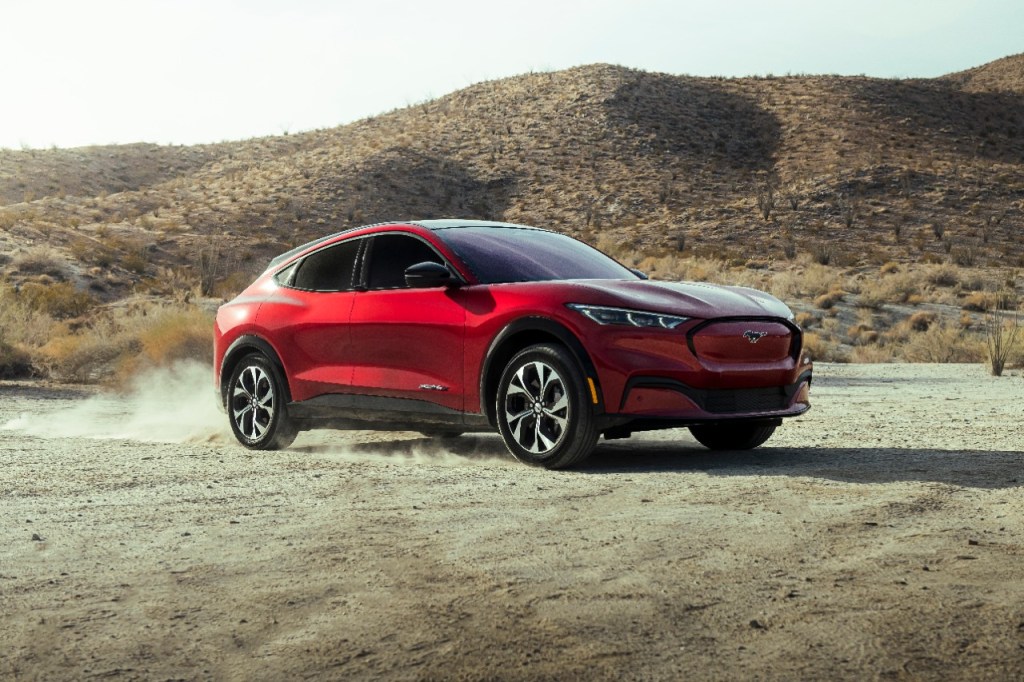
  • Utility of the Year: 2021 Mustang Mach-E

Yes, Ford takes two Ed Welburn-designed trophies.

2021 Hyundai Elantra: Look only at the care taken on the exterior sheet metal. (Image: Hyundai)

And on the subject of two: this is the second time the Elantra has taken the NACTOY Car of the Year, with the first being in 2012.

Briefly: there are 50 jurors who work for a range of publications—physical and digital—and broadcast outlets. Vehicles selected were those which were available for sale during CY 2020.

The Mustang Mach-E: Ford gets electric right with this model. (Image: Ford)

Thoughts:

  • Elantra: The seventh generation of a sedan has gotten a lot more attention and investment—even as other OEMs are retreating from the segment. Hyundai didn’t stint. What’s more, the company has rolled out three versions—the everyday driver, a hybrid and a performance variant from the start.
  • F-150: The F-Series has been the best-selling pickup in the U.S. for 44 years running, so (1) the team that built this new one knows a whole lot about how to put together trucks and (2) they surely don’t want to be the ones who break that streak. Odds are more than good that this new F-150 will handily rack up the 45th year.
  • Mustang Mach-E: Not only does this vehicle make us rethink what a ‘Mustang’ is, but it also reminds us that the company that made the automobile accessible to everybody in 1908 is doing the same thing for electric vehicles in 2021. And what’s more, it is a damn good execution.–gsv
2021 F-150: Clearly unstoppable. (Image: Ford)

Jeff Stout of Yanfeng: The Inside Story

“Exterior design gets them in the vehicle. Interior design keeps them there.”

That may be an old truism, but it is likely accurate.

Consider—what if you’re in the market for a new car and see something that really looks awesome. You know that you’d be proud each and every time you walk up to it in your driveway. You know that you’d be proud to have it in your driveway so your neighbors can see what incredible taste you have.

So you open the door, climb inside, get behind the wheel and—meh.

Nothing special. Maybe underwhelming.

So you figure that this may not be the best choice. After all, while you’re going to see the outside of the vehicle for a minute or two as you approach it, you’re going to be looking at—and using—what’s on the inside for hours on end.

Interiors matter.

A whole lot.

And as the transportation industry moves toward a state where there may be less ownership and increased use of ride hailing, what is going to make the most difference between using Service L and Service U may be the interior execution and amenities.

Yanfeng is a global supplier, with more than 240 branches and some 64,000 employees networked around the world. It specializes in interiors, seating, cockpit electronics, passive safety and more.

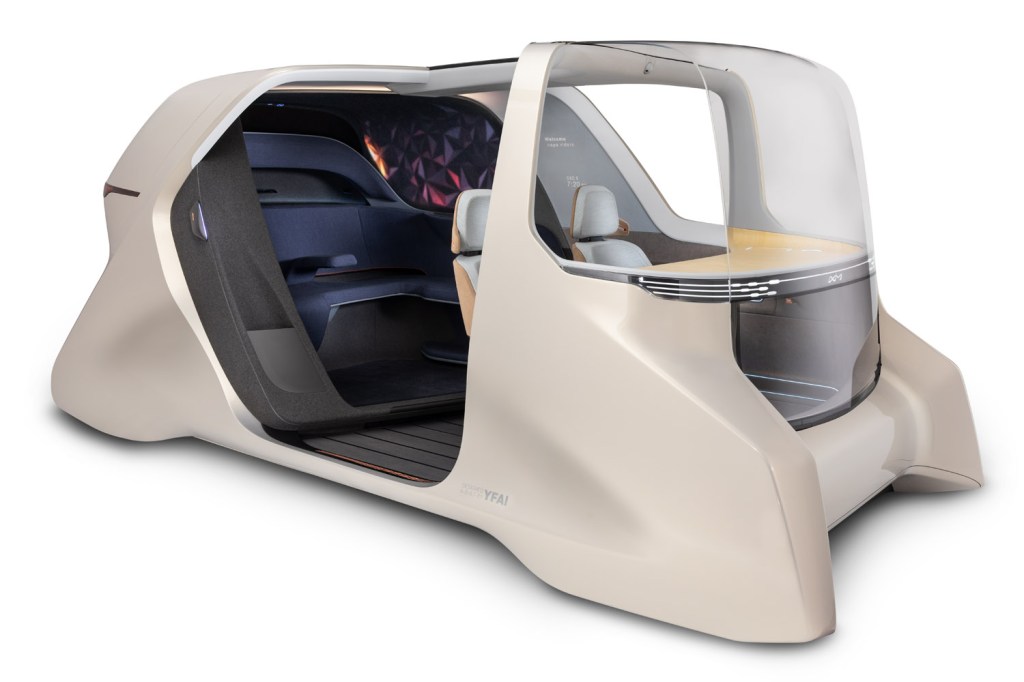
Yanfeng XiM 20 concept model: determining the elements of the interior moving forward. (Image: Yanfeng)

Jeff Stout leads global research into technology and mobility for Yanfeng. (To the point of the wide span of the company’s operations, he has an office in Holland, Michigan.)

One of the areas that he and his colleagues are most interested in is what electrification and automation are going to mean vis-à-vis automotive interior development.

For example, in an EV, where there is certainly a consideration when it comes to using stored energy, they are looking at improved thermal management approaches, such as using large interior surfaces—from door trim panels to headliners—as heat sources rather than relying on the blower of a conventional HVAC system.

When it comes to autonomous driving, there are a range of considerations, from monitoring driver awareness for Levels 2 and 3, to how do you assure that the interior of a vehicle is sanitized in shared vehicles so that people are willing to climb in one that someone has climbed out of. (In this case, one of the answers is UV light.)

Stout talks about these and other topics on this edition of “Autoline After Hours” with “Autoline’s” John McElroy, Pete Bigelow of Automotive News and me.

It is an hour-long, wide ranging discussion that goes from the inside of vehicles to the market at large, to an analysis and assessment of what’s happening now and what could happen in the not-too-distant future.

And you can see it here. —gsv

Mercedes Hyperscreen in the Age of the Jitterbug

Age 55-64. That’s the point at which the mean net worth of a person in the U.S. is in excess of $1-million. Specifically, according to the most recent figures from the Federal Reserve, it is $1175,900.

For those 65-74 it is more, $1,217,700.

For those beyond that, less, $977,600.

Mercedes-Benz has announced the MBUX Hyperscreen. It is a screen that will be offered as an option in the forthcoming EQS, an electric version of the Mercedes S-Class.

The Hyperscreen is approximately 56 inches wide—think from one side of the car to the other—and covers 377 square inches.

There are 12 actuators under the screen that provide haptic feedback.

The Mercedes MBUX Hyperscreen: information-intensive. (Image: Mercedes-Benz)

There are 8 CPU core, 24-gigabyte RAM and 46.4 GM per second RAM memory bandwidth.

It will activate a massage functions in the seats. It will remind you of someone’s birthday.

Navigation. Entertainment. Climate. The status of the electric propulsion system. Oh, and the “classic cockpit display with two circular instruments has been refreshed with an all-new digital look” for the Hyperscreen.

The price of a Mercedes S-Class starts at about $173,000.

Odds are, the EQS will be a bit more expensive.

Which leads to a question of the type of person who is likely be able to afford the EQS. Probably someone who is in a higher income bracket. Which according to the aforementioned Federal Reserve figures is likely to be someone who is in a higher age bracket.

The issue of cognitive overload provided by the Hyperscreen certainly things like a possibility.

After all, at the risk of being ageist: those Jitterbug phones have huge buttons and a simple interface. . . .–gsv

China Sales Compared to U.S.—and They’re Not Done Yet

According to Automotive News, for 2020 there were 14,645,049 light vehicles sold. This is down 14.4% compared with the total number for 2019, 17,104,792. Which is to say that while COVID-19 had an impact on overall sales, it wasn’t as substantial as it had been feared to be.

China, too, was affected by the pandemic. And its sales were affected, as well.

That said, numbers for the first 11 months of 2020 have it, according to LMC Automotive, that there were 21.64 million light vehicles sold in China. About a third more than U.S. sales.

And there is still an additional month to go in the Chinese market.

In November there were 2,710,957 vehicles delivered in China. So if that number was repeated in December, that would be a total of 24.35 million units, or nearly 10 million more than were sold in the U.S.

One thing that is interesting about the China market is that the top-selling brands are probably not what you’d expect.

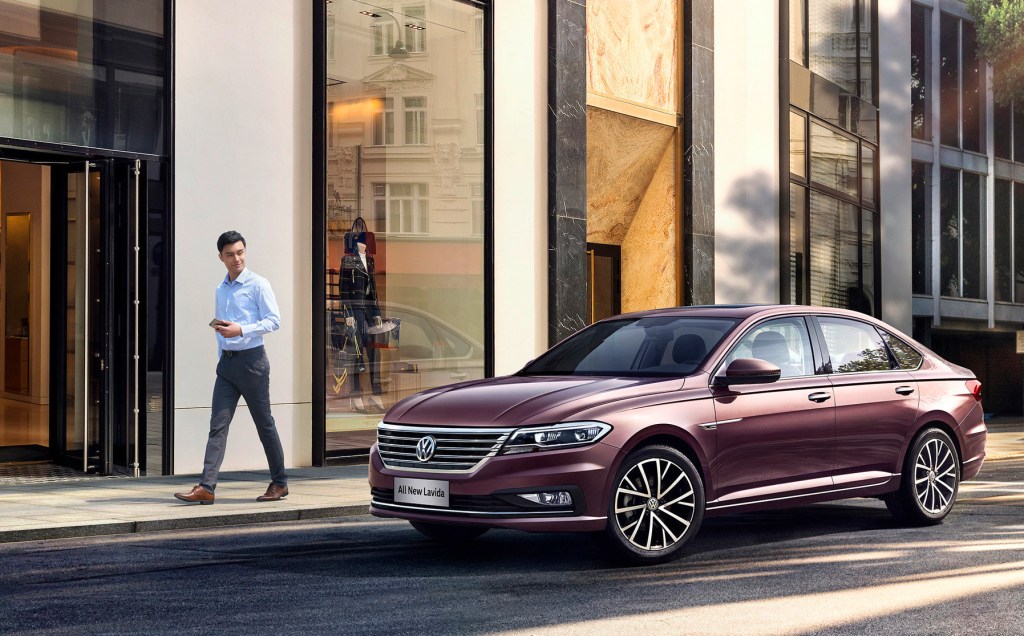
Volkswagen Lavida–number-one in China. (Image: Volkswagen)

The number-one brand in terms of sales and production is Volkswagen. What’s more, the top-selling vehicle is the Volkswagen Lavida, a Passat-like sedan that is available only in China. The car was the best-selling model in China in 2019, and even the folks at Volkswagen acknowledge, “but hardly anyone in Germany has ever heard of it.”–gsv

New Look for GM

This is General Motors’ logo since 2015:

(Images: GM)

This is GM’s logo since today:

While the kerning on the top logo looks a bit off (look at the top left of the “M” in relation to the “G”), it does have an appearance that one could argue is “classic” General Motors: A substantive, staid business that is solid (especially with the horizontal bar, which appears as though it could be made out of ultra-high-strength steel).

It looks as though it is saying: “This is a Fortune 500 company.”

The new logo is different.

It is friendlier. More casual.

Something that could be affixed to a trendy bag or arm patch on a technical jacket.

If the top logo is that of a company on the Dow Jones, the new logo is one that says, “I’m not out of place in the S&P”–the index that includes Apple, Microsoft, Amazon, Facebook. . .and Tesla.

Sharon Gauci, GM executive director of Global Industrial Design, said of the new design was carefully ideated and crafted: “At every step we wanted to be intentional and deliberate because this logo signifies creative and innovative thinking across the global General Motors family.”

One of the objectives of the new logo is to telegraph a message that GM, especially as it undertakes a massive electrification effort–30 electric vehicles globally by the end of 2025–and is a leader in autonomous driving tech, is an of-the-moment relevant company, not a classic, predictable manufacturer of shiny metal objects.

Of course, people buy vehicles, not logos (in 2005 GM started putting postage-stamp size GM logos on all of its vehicles, which is stopped doing in 2009), so the graphic design team has done their bit, now it is up to the rest of the organization to deliver.–gsv